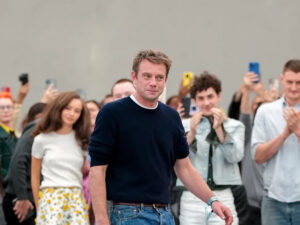
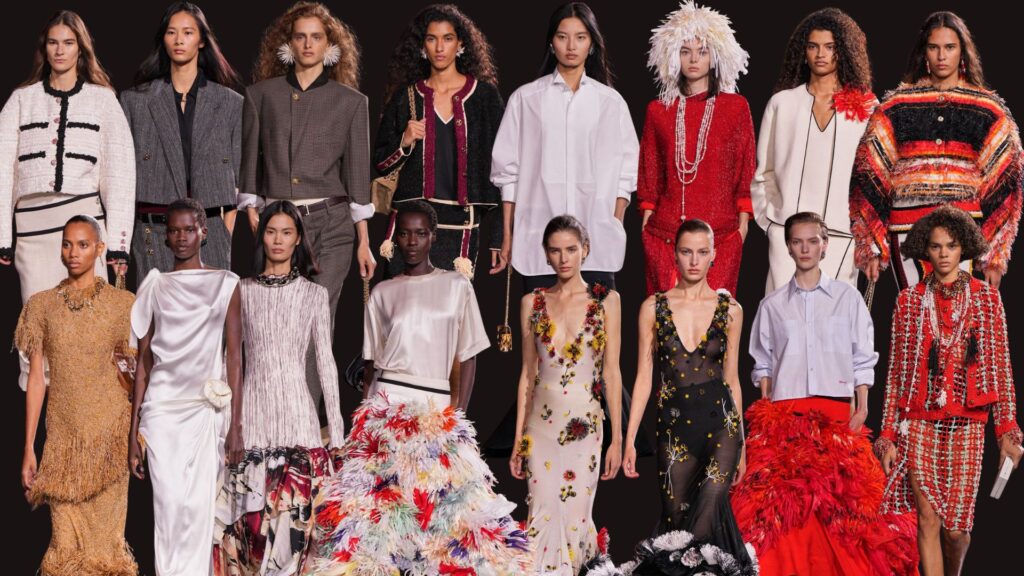

Matthieu Blazy’s debut for Chanel was the perfect finale to Paris Fashion Week, beautiful, thoughtful, and quietly revolutionary. As one of the most anticipated shows of the season, it carried the kind of expectation that only a house like Chanel can command. Blazy, only the fourth designer to lead the maison in its 115-year history. It was clear he took the challenge not as a burden but as an invitation to reimagine. The result was sublime with a collection that respected the brand’s roots while charting a luminous new path forward.
The Grand Palais became a galaxy for the night. Beneath suspended planets like Saturn’s rings, Jupiter’s swirls, and Earth’s blue marble while guests sat surrounded. The mood was set by the haunting notes of Clair de Lune and Holst’s The Planets. When the lights dimmed, Blazy began his story with a look that said it all. A grey tweed pantsuit with a cropped jacket and wide-leg trousers. It was a nod to Gabrielle Chanel herself, her love of menswear, her rebellion against conformity and a signal that Blazy understood the essence of the house.
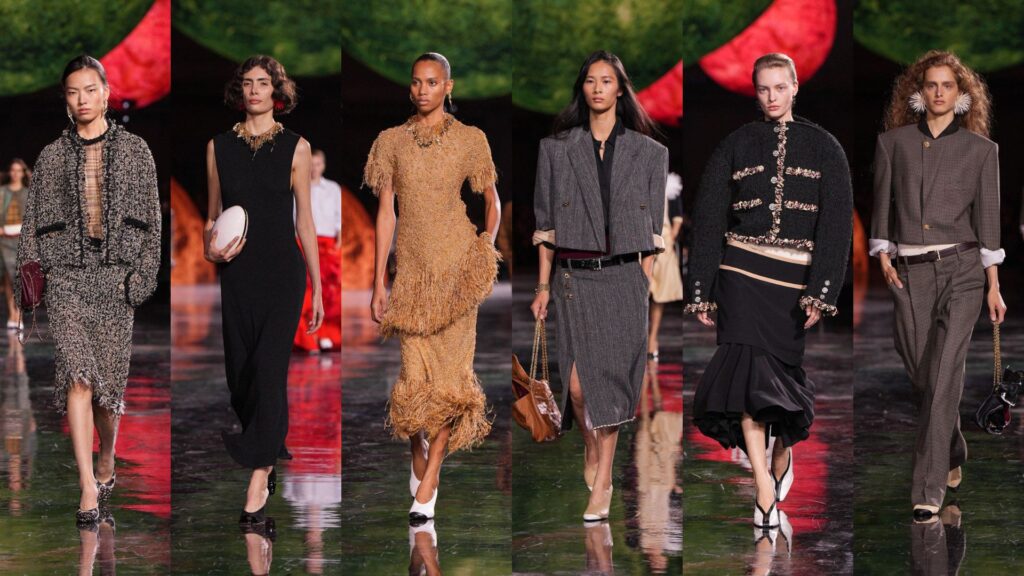
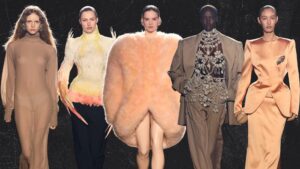
From there, the collection unfolded in chapters: Un Paradoxe, Le Jour, and L’Universel. Each explored the push and pull that defines Chanel — masculine versus feminine, structure versus fluidity, nostalgia versus reinvention. Tweed, the house’s most recognisable symbol, was handled with extraordinary sensitivity. Rather than treating it as something precious, Blazy let it breathe. Some jackets came loosely woven, others frayed at the hem, while a few appeared to disintegrate into fringe. The palette was largely monochrome, punctuated by soft pinks, mint greens, and that vivid tomato red that ran like a pulse through the collection.
Shirting emerged as the new Chanel uniform. In collaboration with the French shirtmaker Charvet, Blazy introduced boxy cotton button-downs tucked into cascading silk skirts or sculpted tweed trousers. One look paired a crisp shirt with a voluminous red skirt covered in feather-like tendrils; another combined an oversized tuxedo shirt with a swooping black satin skirt. Blazy’s mastery lies in his understanding of proportion and touch. He brought Chanel back to the hand, to the feel of fabric, the comfort of fit, and the real pleasure of clothes meant to be worn.
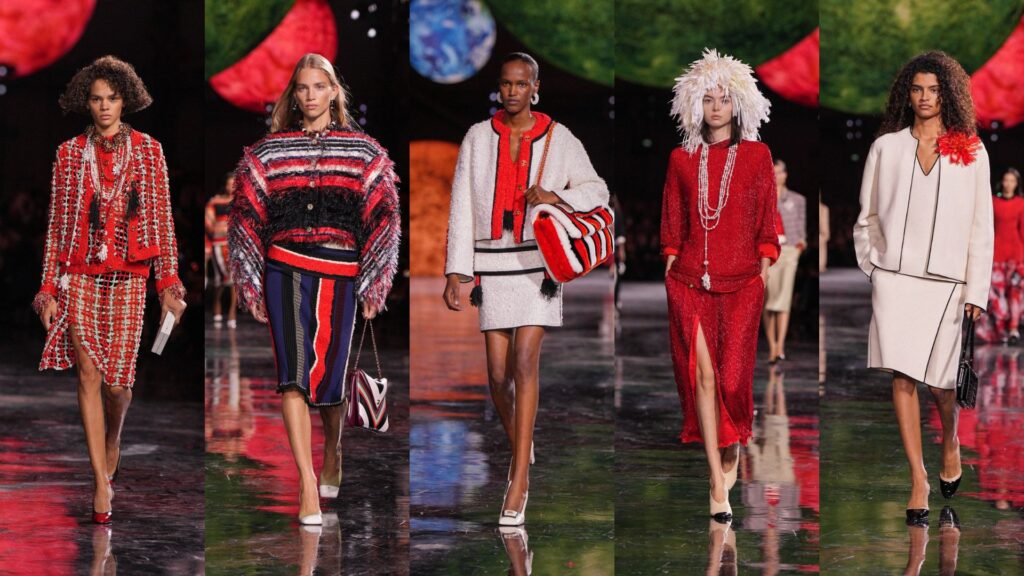
The iconic 2.55 bag appeared crushed and loved, its burgundy lining revealed like a memory resurfaced. Accessories hinted at playfulness with oversized totes, red-striped leather, flower pom-pom earrings. These became proof that he’s thinking not only of legacy but of life. The message was clear: Chanel isn’t a relic; it’s a living, breathing idea.
The show closed with model Awar Odhiang gliding down the runway in a feathered skirt that caught the light like stardust, her smile contagious. It was a moment of pure joy. The kind that fashion rarely allows itself anymore. Blazy’s Chanel isn’t about spectacle for its own sake; it’s about emotion, ease, and the quiet confidence of clothes that feel personal.
In the end, this debut felt less like a disruption and more like a reawakening. Matthieu Blazy didn’t rewrite Chanel; he listened to it.
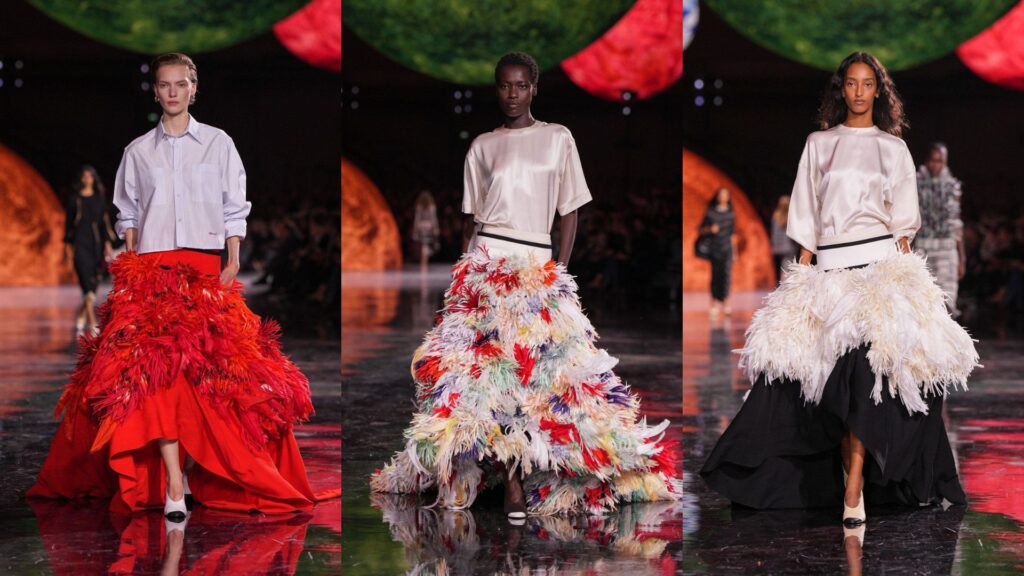
Photo Credit: Vogue Runway