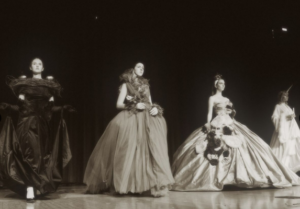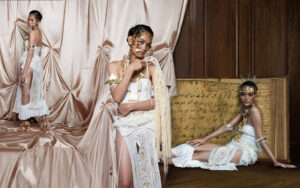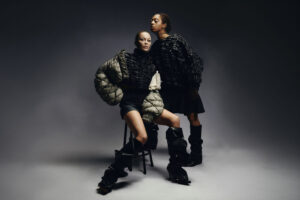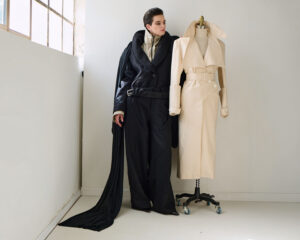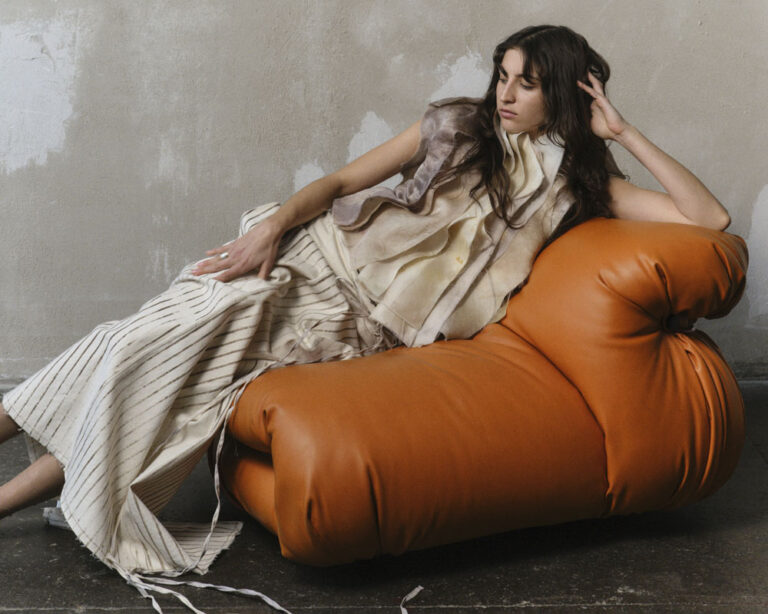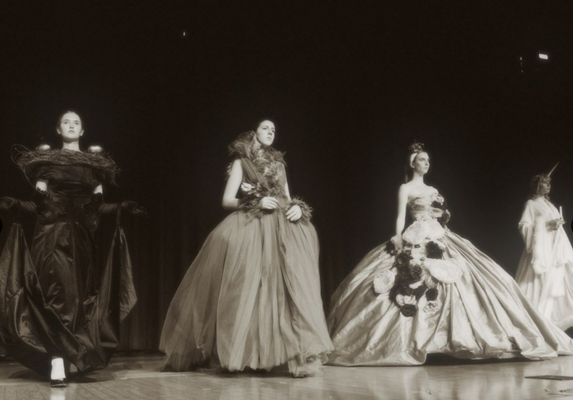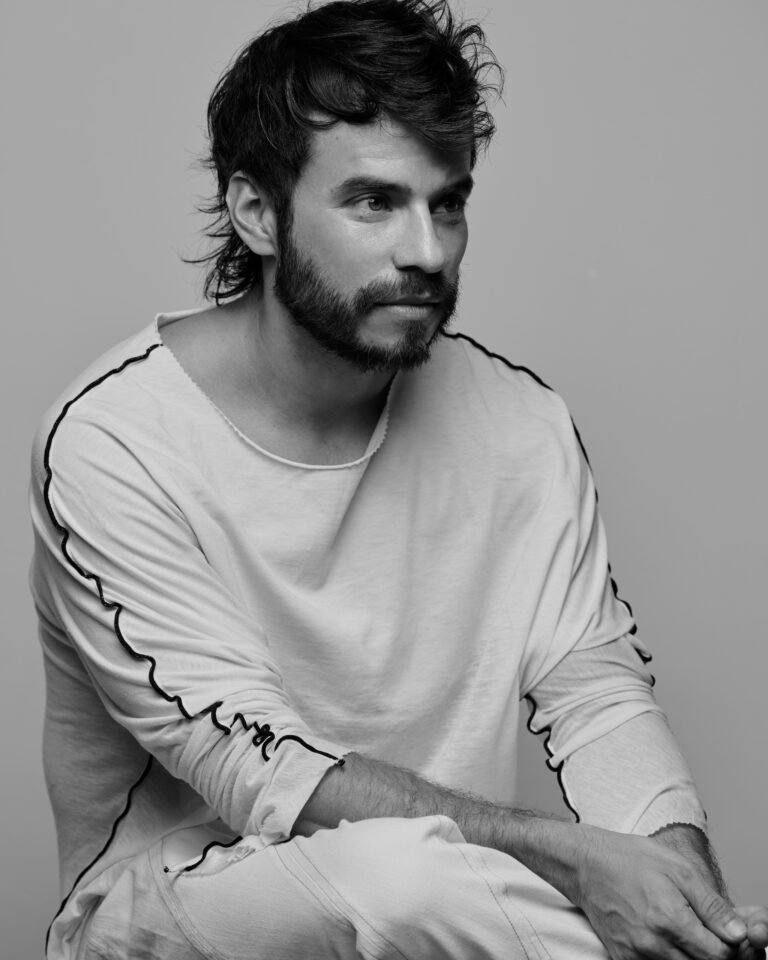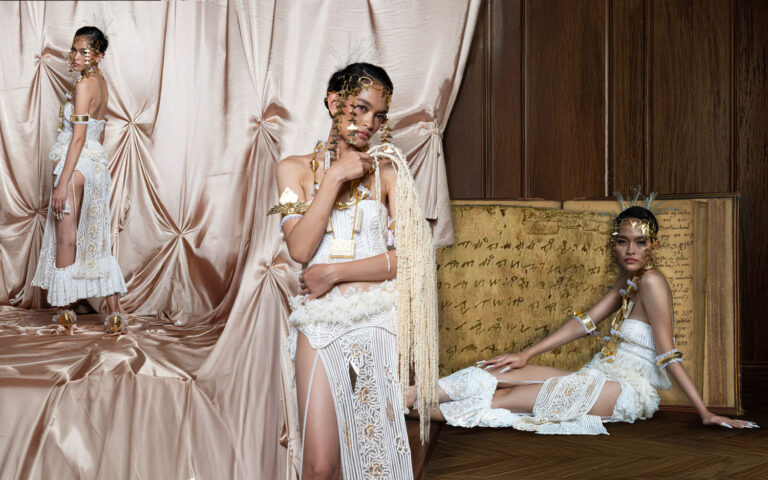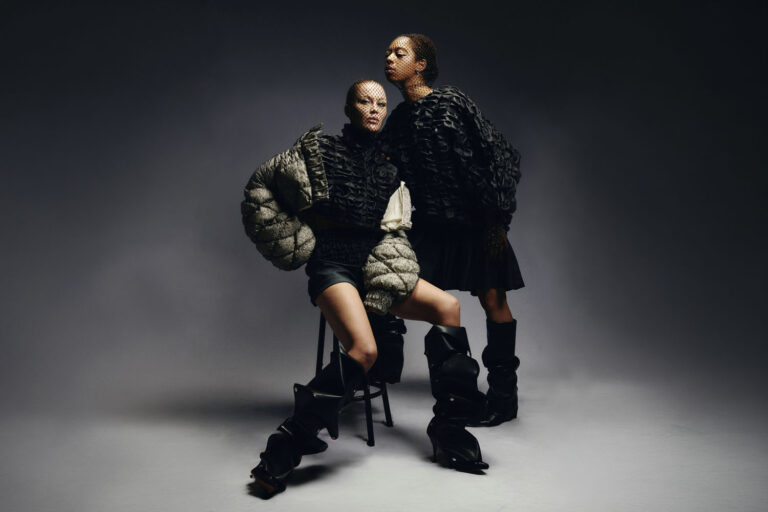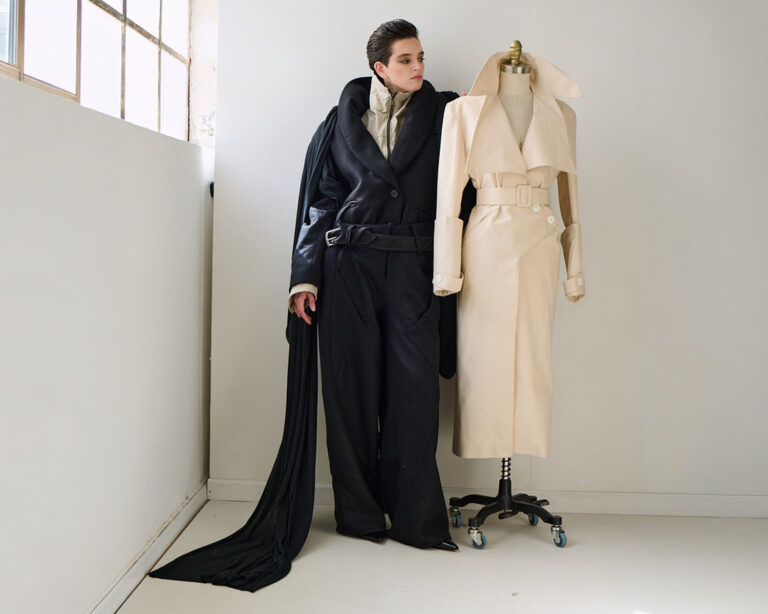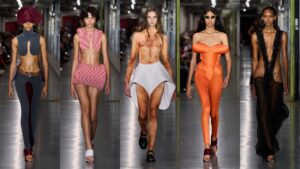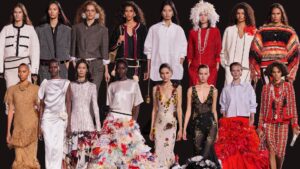


In A Second Without Inertia, designer Yinghan Qian treats fashion as a form of imaginative archaeology, where garments become relics, memory becomes material, and identity is something continually reconstructed rather than fixed.
In A Second Without Inertia, Yinghan Qian approaches fashion less as clothing in the conventional sense and more as a perceptual field: a place where memory, sensation, and identity lose their fixed edges. The project unfolds like a quiet proposition. What if the present were not entirely determined by the past? What if a garment could hold that fragile possibility of beginning again?
The title itself carries the emotional charge of the collection. Qian describes its origin in deeply personal terms, emerging from “feeling trapped in a very linear understanding of life,” where the present seemed overcoded by what had already happened. She calls that burden a kind of “inertia,” even “algorithm karma,” and imagines the collection as a search for release: “a moment where I could genuinely begin again.” It is from this desire that A Second Without Inertia takes shape, not as a dramatic rupture, but as a softer, stranger loosening of time.
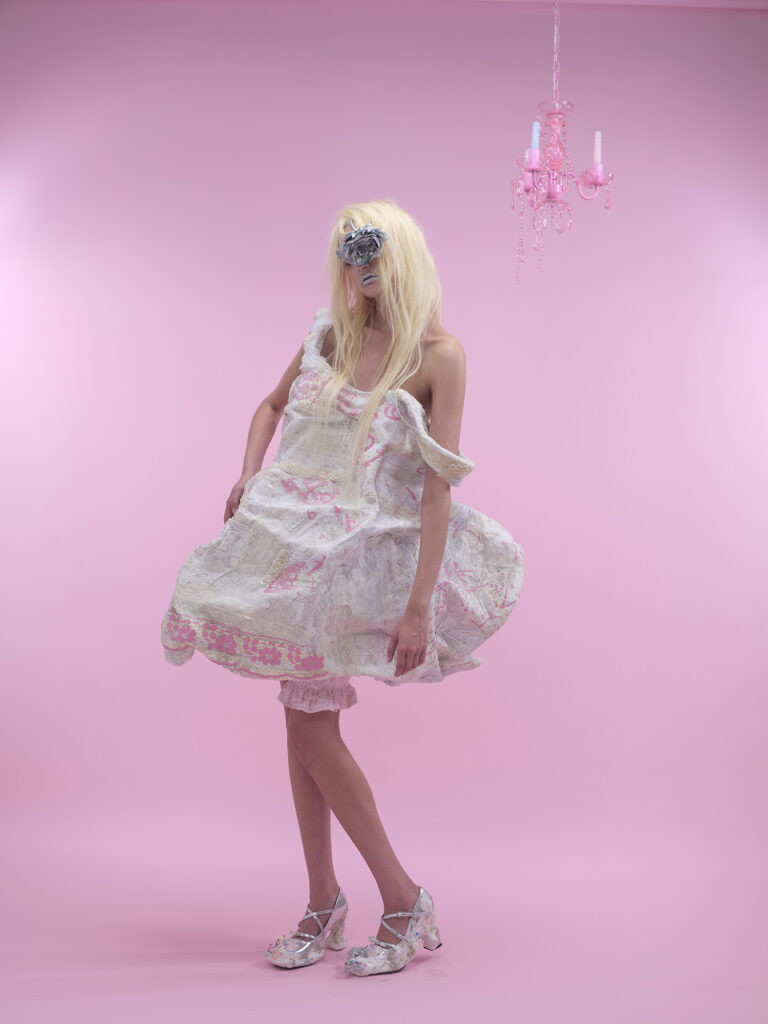
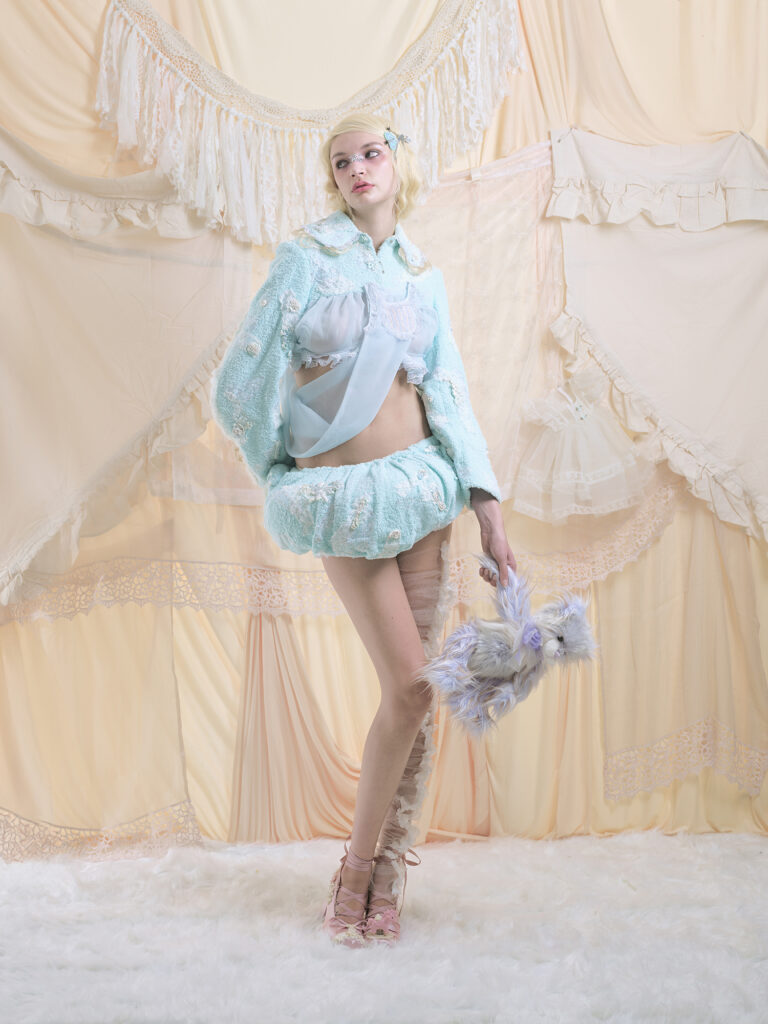
That sensibility runs through the project’s imagery and material language. Nothing here feels fully settled. Objects appear suspended, blurred, or strangely scaled; garments resemble relics; surfaces suggest shells, stones, lace, towels, beads, and other familiar materials displaced into unfamiliar relations. Rather than building a direct narrative, Qian creates an atmosphere of partial evidence, as though the viewer has entered a fictional archive composed of emotional residue and unfinished clues.
This is where the project’s idea of “imaginative archaeology” becomes especially compelling. Qian does not treat identity as something singular waiting to be uncovered. Instead, she approaches the self as something assembled through fragments, contexts, memories, relationships, and material traces. In her words, “excavating the self” is not about finding one stable truth, but about “tracing scattered connections and assembling partial remains.” That distinction matters. It prevents the work from collapsing into autobiography, even while it remains intimately personal.
The collection’s invented artifacts, its “fake fossils” and relic-like forms, are central to this effect. They imply history without confirming it. They feel excavated, but from where exactly remains unclear. Qian is interested in that instability: the way objects can suggest duration, memory, and transformation while resisting a single fixed reading. In this context, the garments are not simply clothes to be worn, but carriers of suspended meaning. They point beyond themselves, operating, as Qian puts it, “more like a kind of pointer, similar to the finger pointing to the moon.”
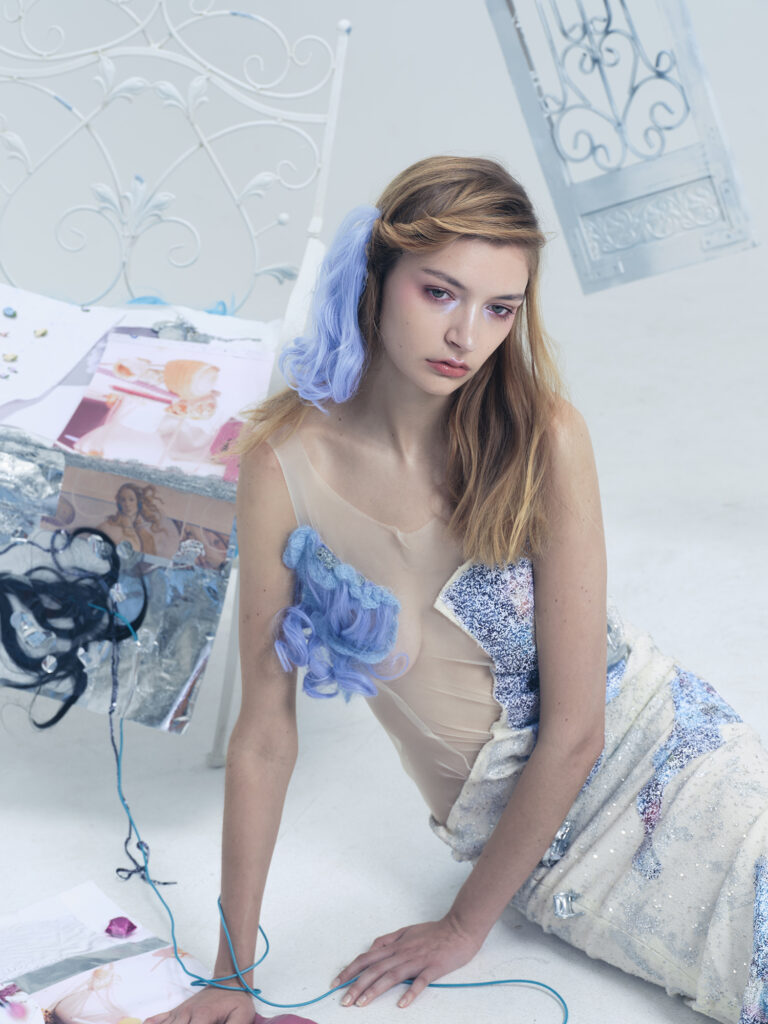
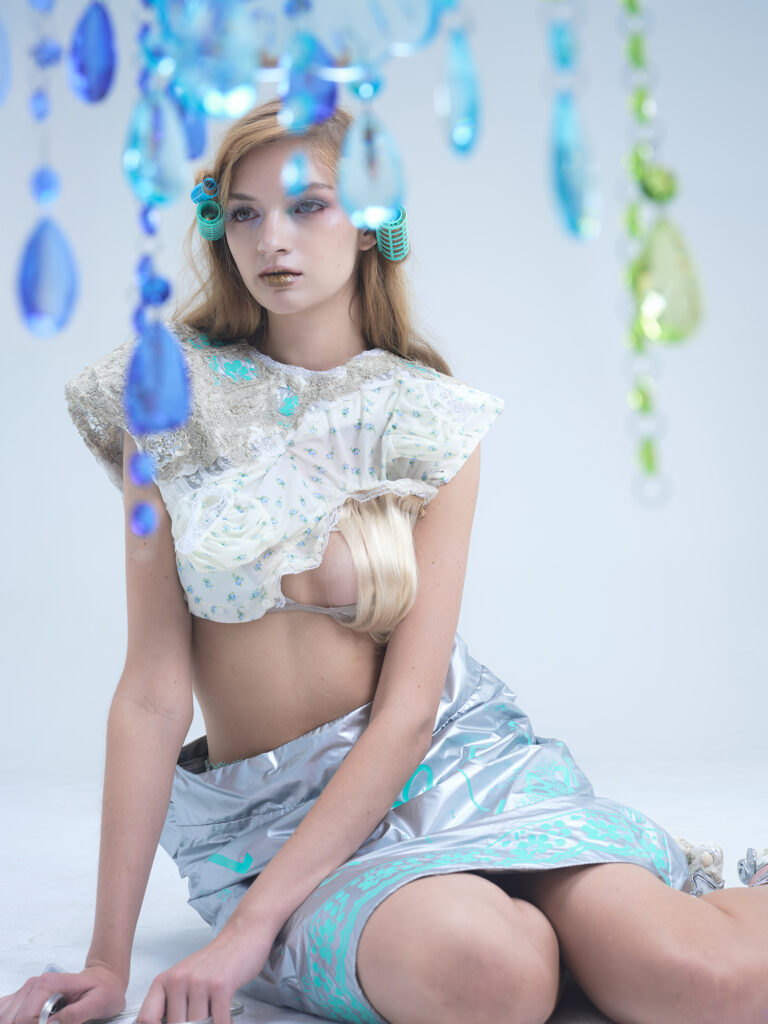
What makes the work resonate is that its abstraction never feels empty. Even its most elusive gestures are anchored in precise states of attention. One of the project’s key moments came, Qian explains, from staring at water droplets on her phone screen while in the bathtub. As her concentration drifted, vision itself began to shift, blurring, sharpening, distorting. That experience became a way of understanding perception as unstable, dependent on the condition of the mind. In the collection, blur is not just an aesthetic effect; it becomes a translation of wandering attention. Suspension resists linear sequence. Changes in scale recall both childhood fantasy and the disproportionate logic of memory.
Childhood, in fact, is present throughout the project, though never nostalgically. Qian is careful not to use memory as a literal sourcebook. For a long time, she resisted returning too directly to childhood because she feared it would make identity feel more fixed rather than less. What changed was not the material of memory itself, but her relation to it. After meditation and a broader engagement with Zen Buddhism, earlier fragments became available again, not as proof of origin, but as open matter for transformation. Childhood appears here less as biography than as a perceptual mode: a capacity for absorption, play, and strange internal logic.
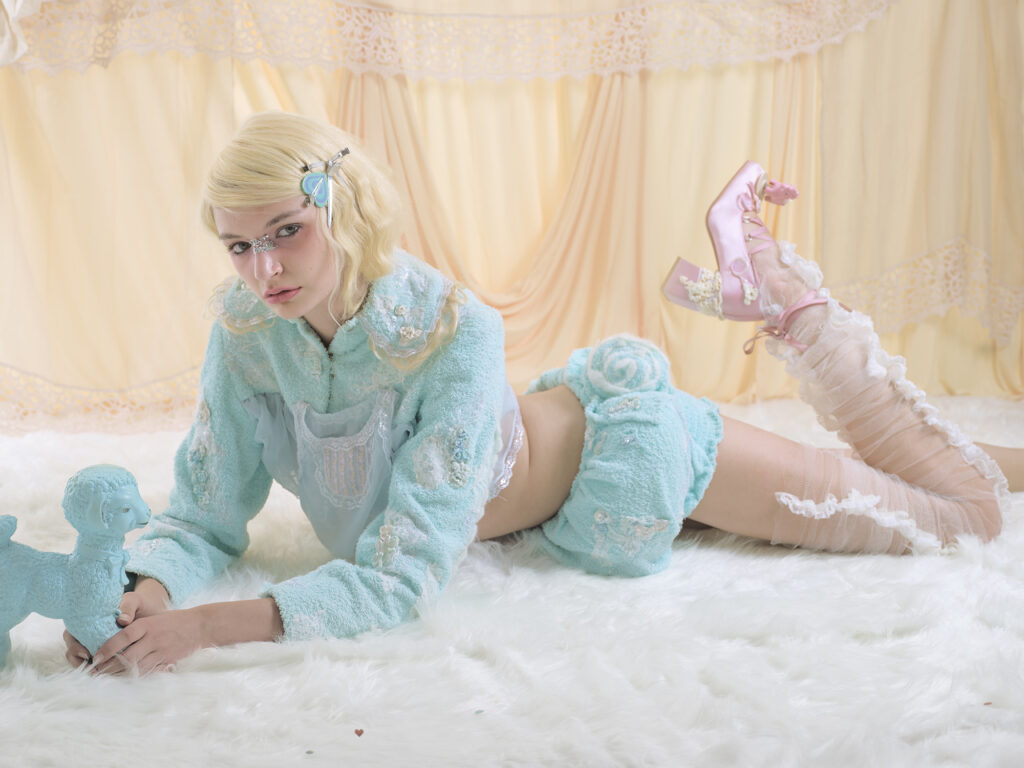
That idea of play is one of the project’s most revealing undercurrents. Qian compares her process to connect-the-dots drawings, where isolated points gradually form a structure through relation. This feels like an apt description of the collection as a whole. Nothing announces itself too quickly. Meaning accumulates by association: through repeated textures, through displaced objects, through the tension between intimacy and estrangement. A towel or bead no longer remains merely functional; once lifted out of its ordinary use, it becomes charged with atmosphere.
There is also a notable discipline to the work’s looseness. Qian speaks candidly about the challenge of translating nonlinear thought into a coherent visual language. Her ideas, she says, move “in a web-like way,” which means the danger is not abstraction itself but arbitrariness. The success of A Second Without Inertia lies in how it holds onto diffuseness without dissolving into disorder. Its world is porous, but not vague. Its logic is unconventional, but felt.
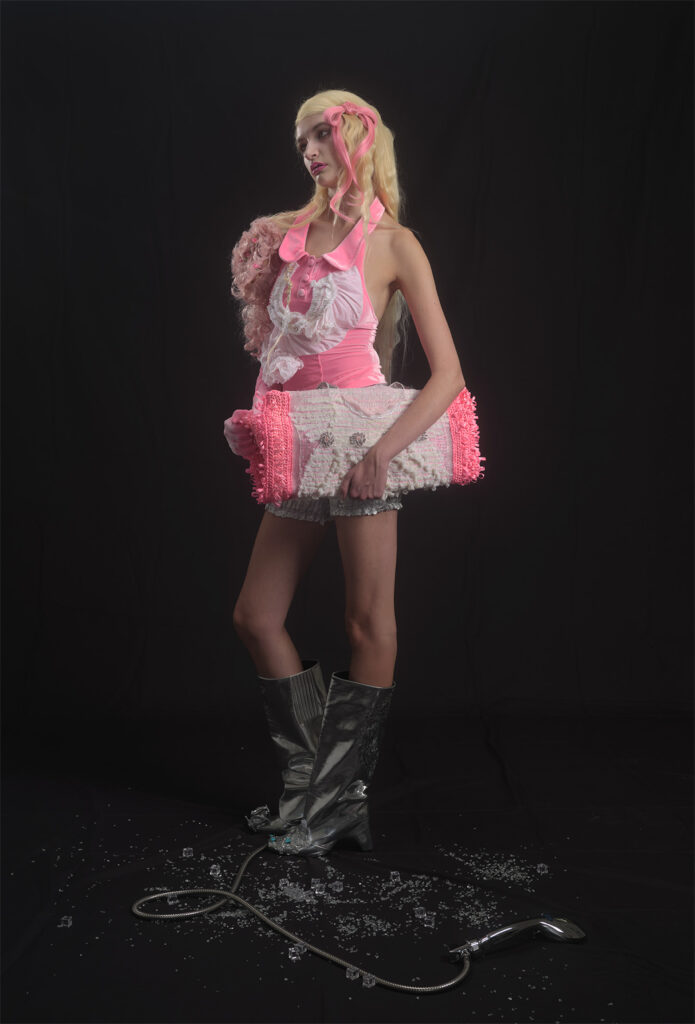
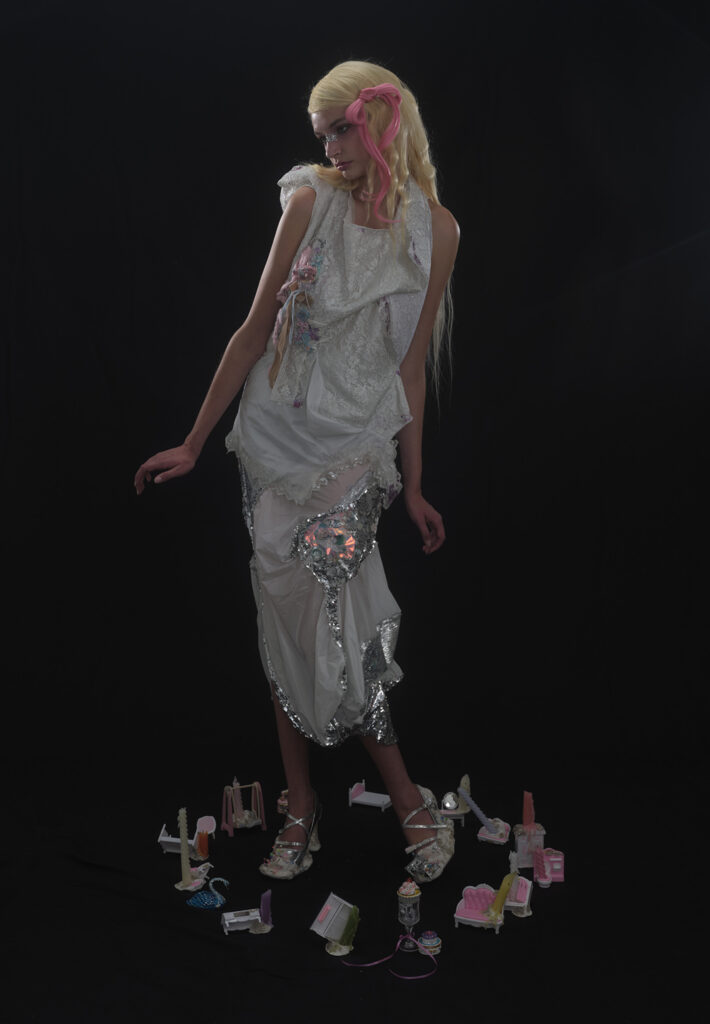
As a fashion project, it is most persuasive when read as an environment of thought rather than a resolved statement. Qian makes clear that this mode of working belongs specifically to this collection; in a more commercial context, she would think differently about function and wearability. Here, though, clothing becomes part of a larger metaphoric system. The garments do not conclude meaning. They keep it open.
That openness is ultimately what lingers. A Second Without Inertia does not offer a clean story about healing, nor a simple celebration of reinvention. Its emotional tone is quieter than that. Qian describes it not as optimism, but as “a sense of lightness, or release. Not a complete break, but a moment where things feel less fixed.” In a fashion landscape that often demands instant legibility, that subtlety feels like the project’s real strength. It is a collection about the possibility that the self, like matter, like memory, is always in the process of dissolving and reforming, and that somewhere inside that instability, another beginning may already be taking shape.