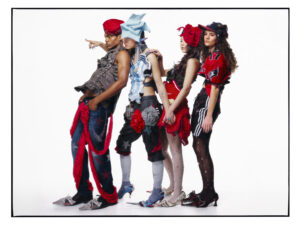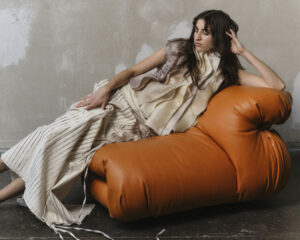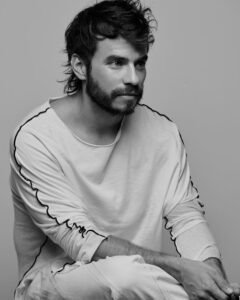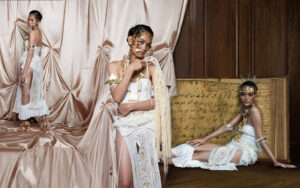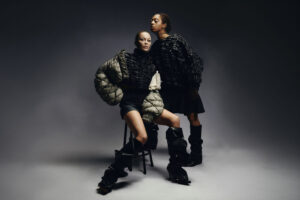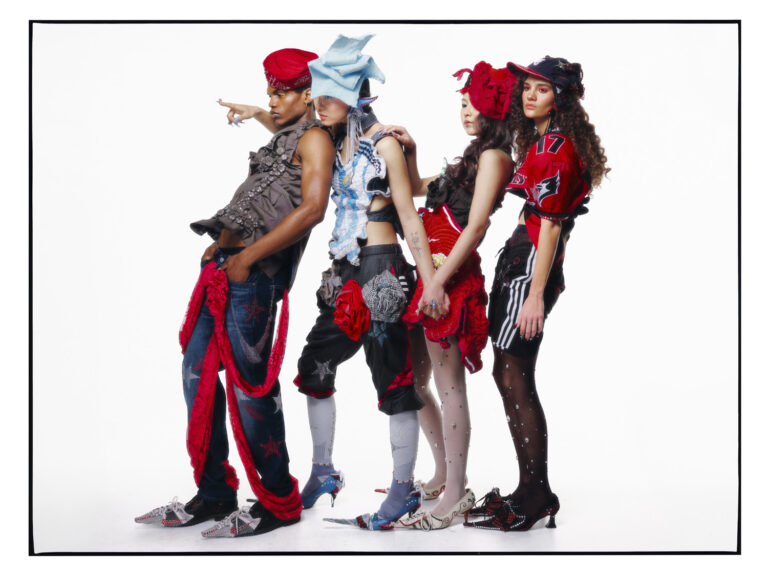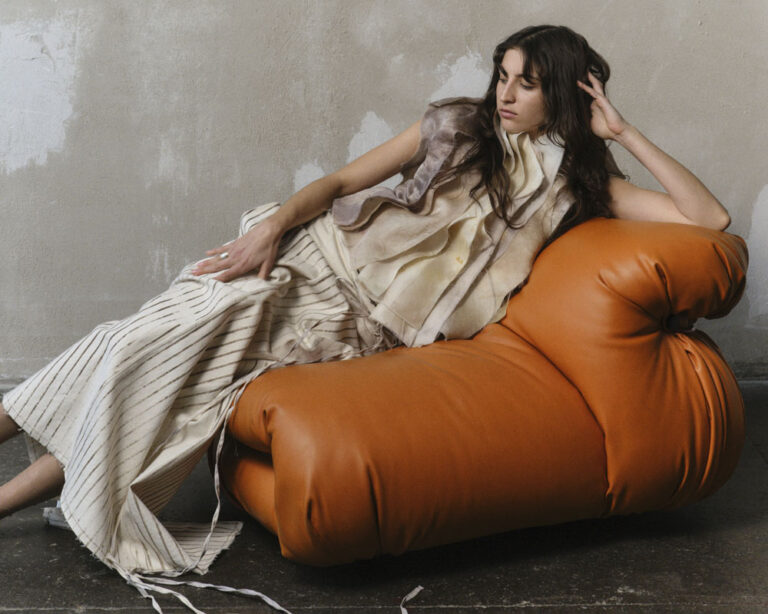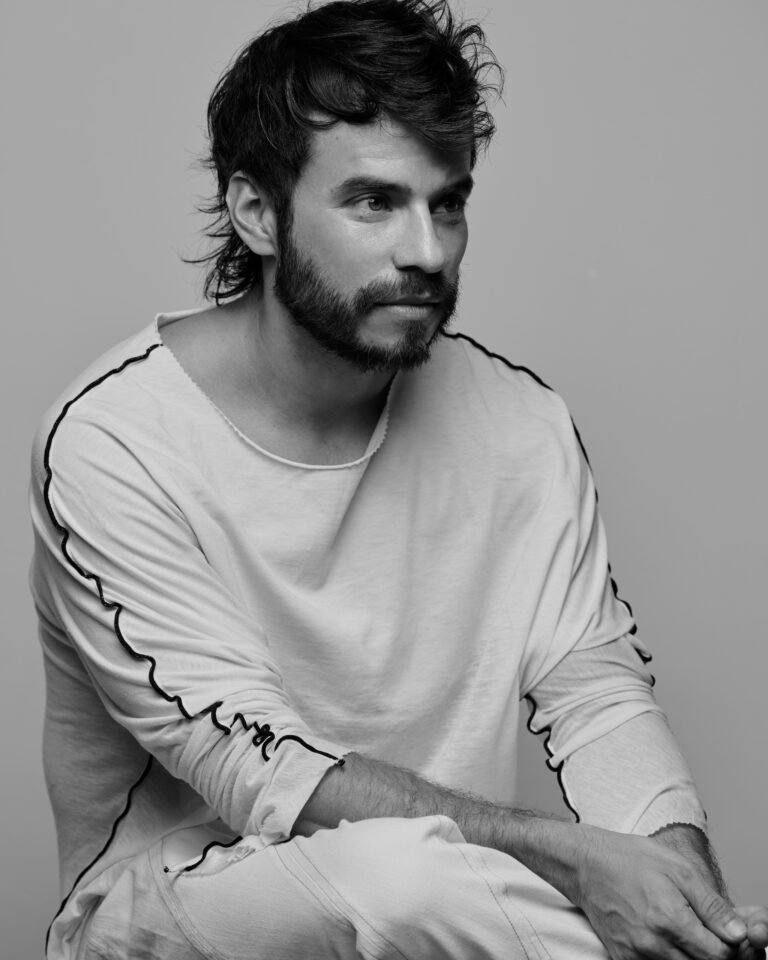
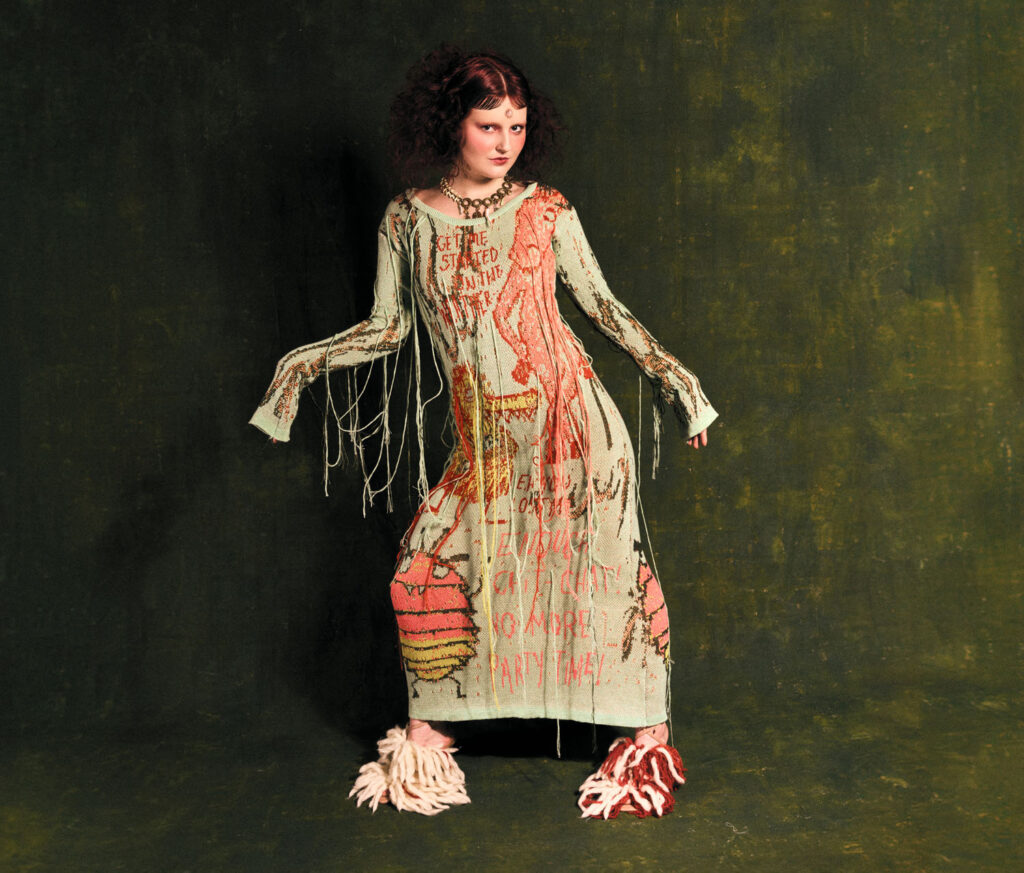

There’s something a little mischievous about Peytie Sarfeh’s work, and that’s exactly the point. The London-based designer creates knitwear that feels playful, characterful, and slightly theatrical, but underneath the whimsy is a deeper fascination with human behavior: how we present ourselves, how we perform for each other, and how strange that performance can sometimes be.
For Peytie, design often starts with looking. Museums, libraries, old imagery, that’s usually where the first thread appears. They’re drawn to places like the Huntarian Museum, the Natural History Museum, and the National Portrait Gallery, using research as a way into whatever subject they want to explore next. Images tend to lead, and from there, a collection starts to take shape.
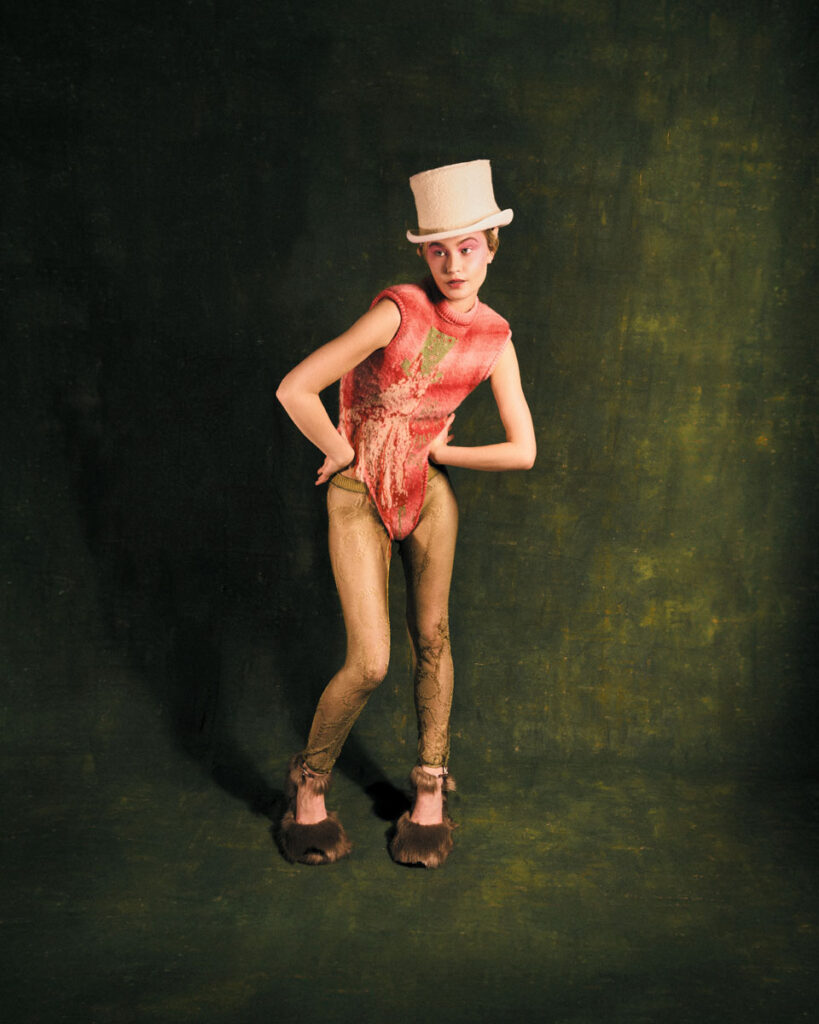
That curiosity about people has been a constant in their work. “I think I’ve always been fascinated by how humans behave, and how we’ve socialised ourselves,” they say. As an autistic person, Peytie describes often feeling like they’re observing those behaviors from the outside, watching how people interact and carry themselves, and wondering what sits beneath all of that. “I want to know why we poise ourselves in certain ways and what lies beneath our socialisation.”
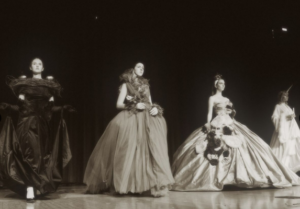
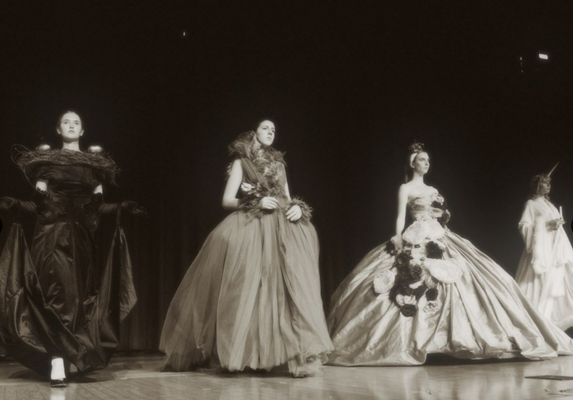
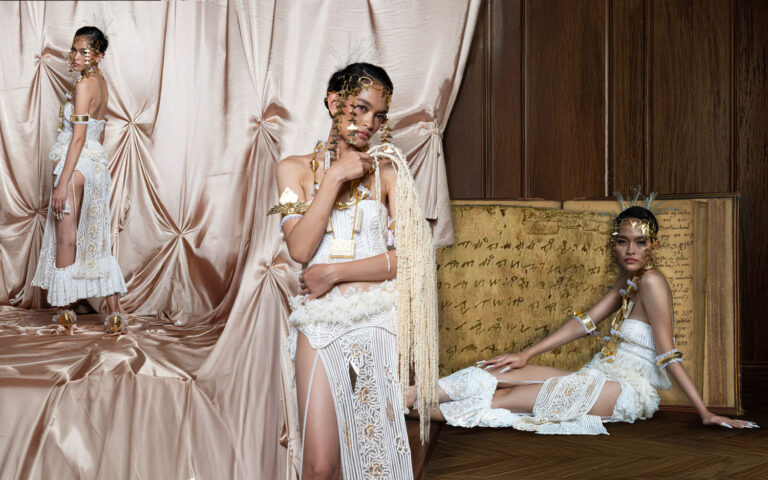
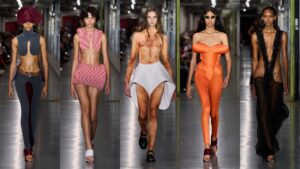
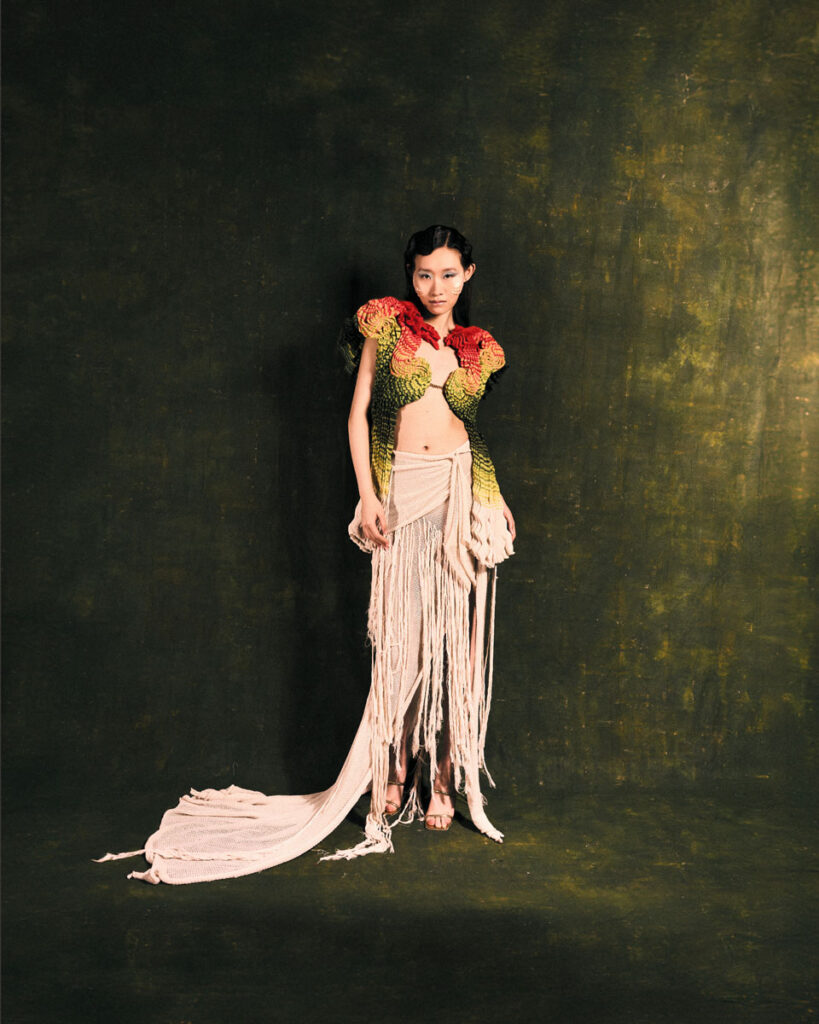
You can feel that question running through their designs. Rather than starting with a conventional fashion reference, Peytie sometimes begins with a creature, then builds a look around its personality. In Our Nature Isn’t Human, one of those characters became a magpie-like figure, complete with a nest-like top and shiny objects strung around the waist, “almost like a cheeky collector.” It’s funny, a little chaotic, and deliberately less polished than the kind of poise they’re interested in pushing against.
That collection, in many ways, says a lot about how Peytie thinks. They began it while researching whether humans are innately good or evil, but the more they read, the less useful that question felt. What interested them more was the idea that humans are not separate from nature at all. Nature is the foundation. From there, Our Nature Isn’t Human became a theatrical way of exploring that thought, using animal traits, human-like characters, and exaggerated silhouettes to ask something bigger about instinct, behavior, and identity.
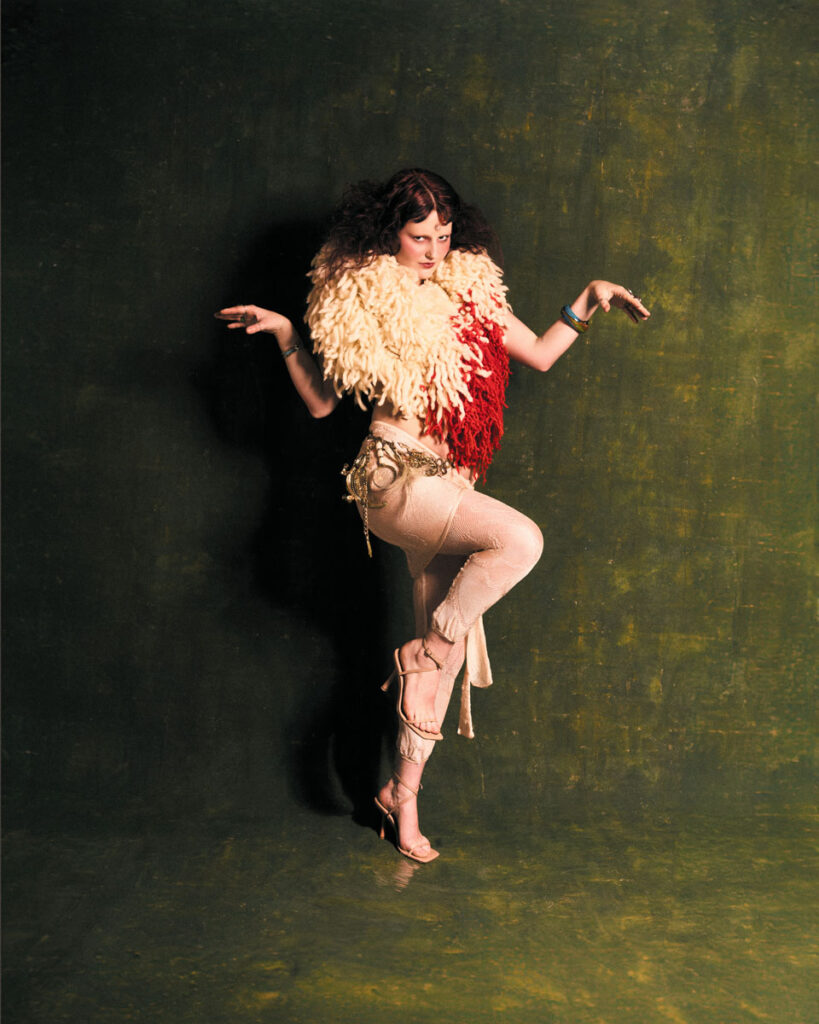
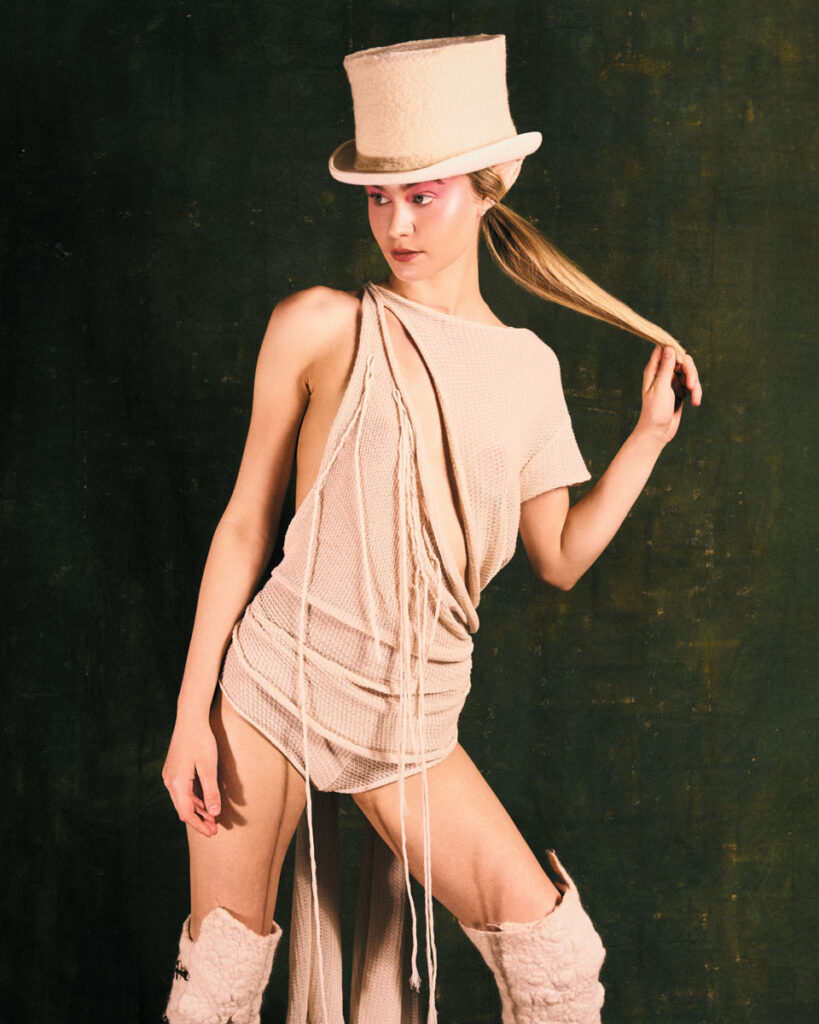
When Peytie talks about their work, there are two things they always come back to: the inspiration behind the pieces, and the relevance of knitwear itself. And for them, knitwear is far from just a medium, it’s part of the message. They love that it holds both history and possibility at once: “It’s so rooted in tradition and craft, but also can be an exciting pathway for the future.”
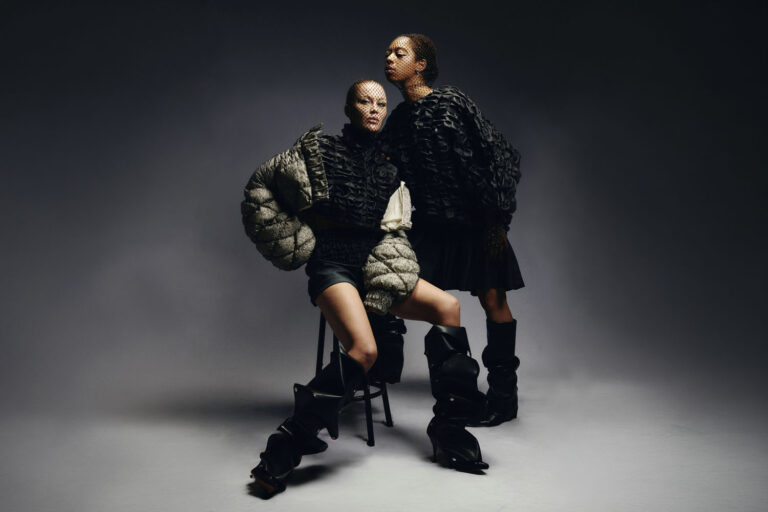
That tension is really where their work comes alive. Peytie is clearly interested in the traditional side of knitwear, the techniques, the structures, the craft knowledge that has been built over time — but they’re just as excited by the freedom it offers. They talk about knitwear as something sculptural, a way of creating shapes and textures that would be much harder to achieve through woven fabric. For them, learning the technical side of knit isn’t separate from experimentation; it’s what makes experimentation possible.
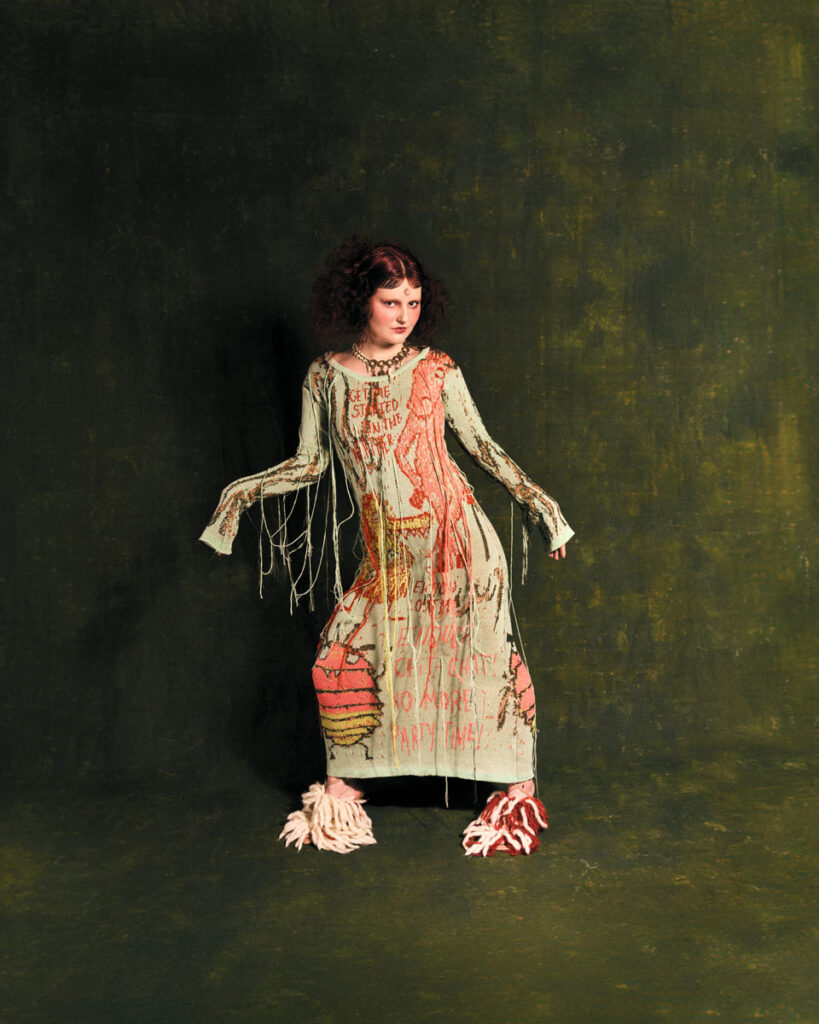
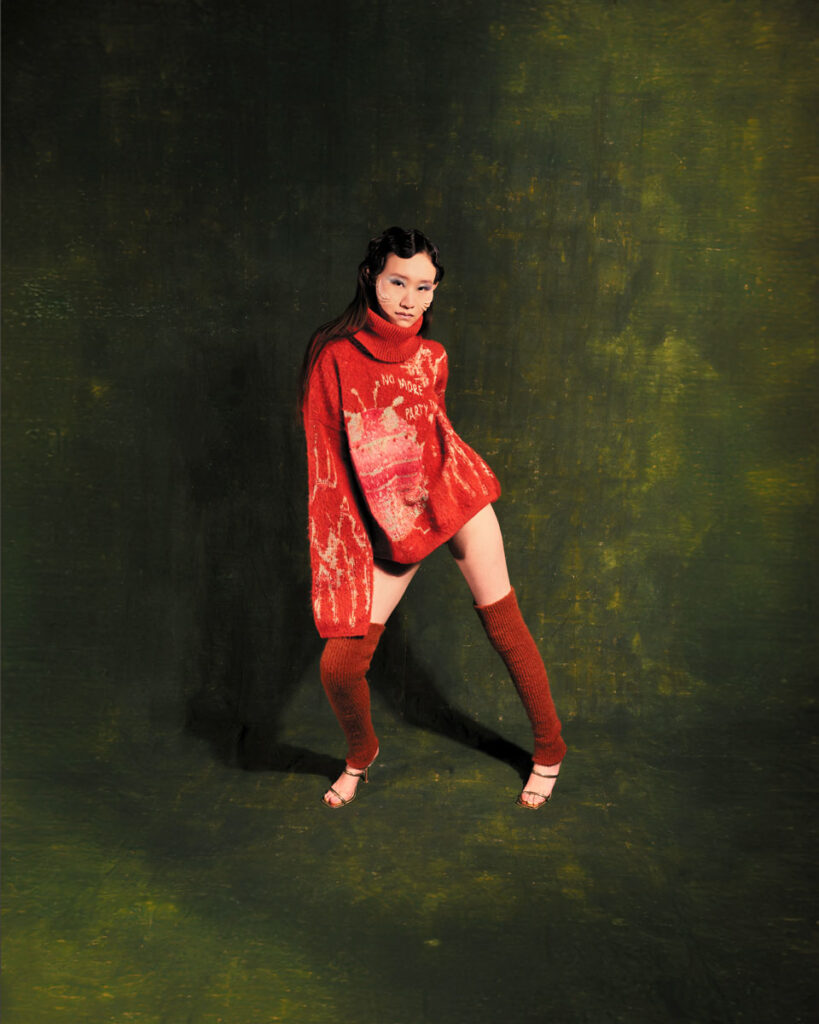
It’s also what makes their approach feel so fresh. Rather than rejecting knitwear’s familiar language, they work with it. Traditional stitches and graphics, including checks and Fair Isle, can become the starting point for silhouettes that feel stranger, looser, and more expressive. There’s respect for the foundation of the craft, but no interest in leaving it untouched.
That same spirit carries into the way Peytie thinks about dressing more broadly. They want to bring more play and whimsy into how people dress, not just because it looks good, but because it can reconnect people with a younger, more honest version of themselves. There’s something generous in that idea, the suggestion that clothing can be a way back to instinct, softness, and self-expression.
And maybe that’s what makes their work resonate. However imaginative the pieces become, Peytie’s intention is actually very human. They want people to feel more like themselves when they get dressed. Fashion, for them, has always been a form of communication, especially when words are harder to find. In that sense, their knitwear isn’t just about texture or shape. It’s about making space for expression, for humor, for oddness, and for all the things that sit just outside social polish.