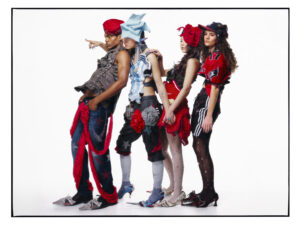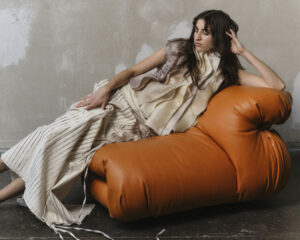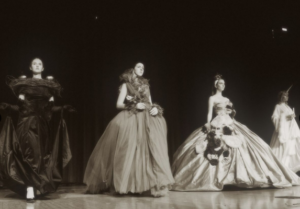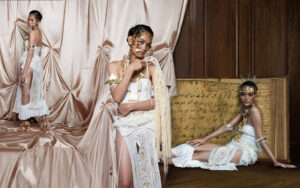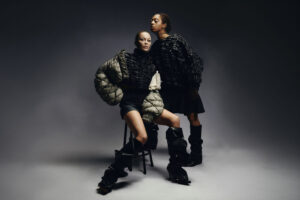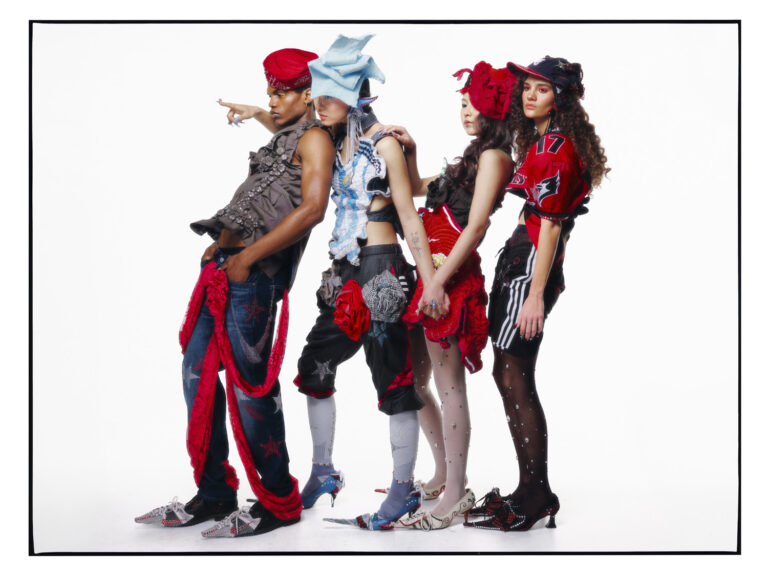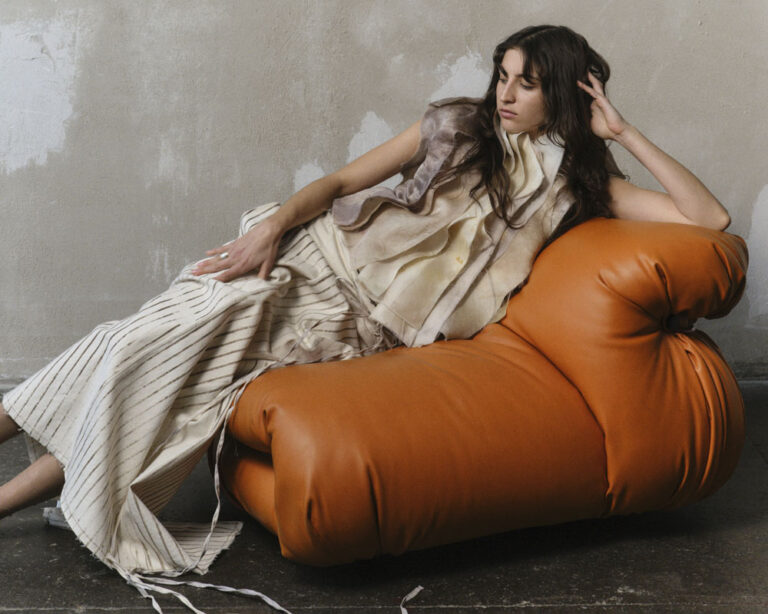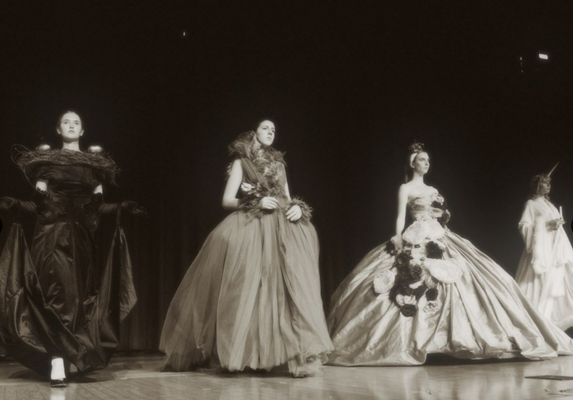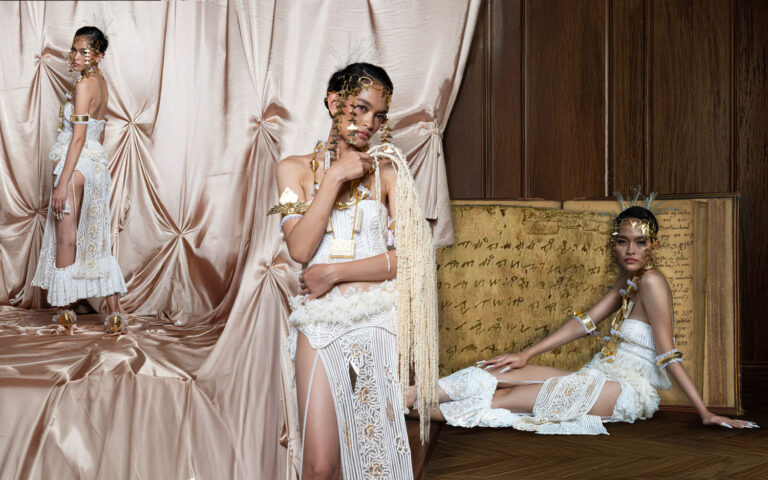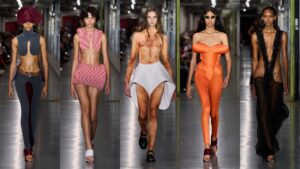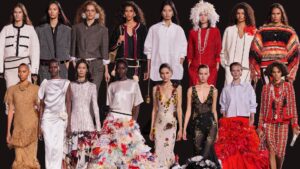
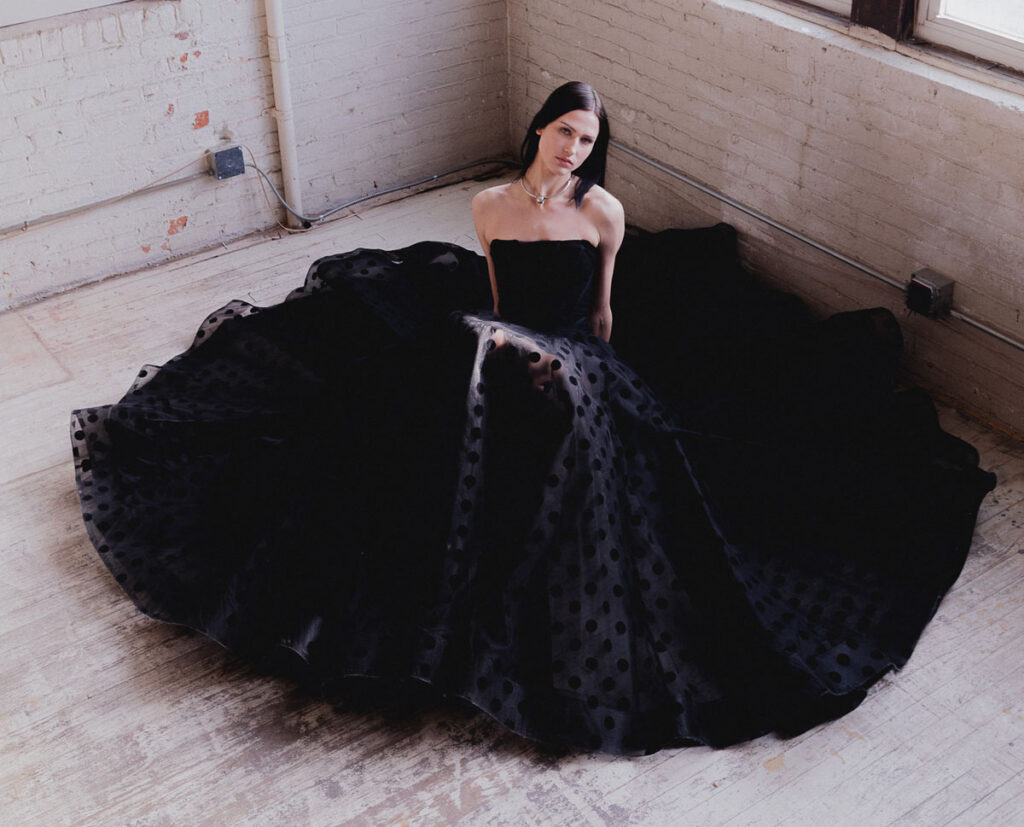

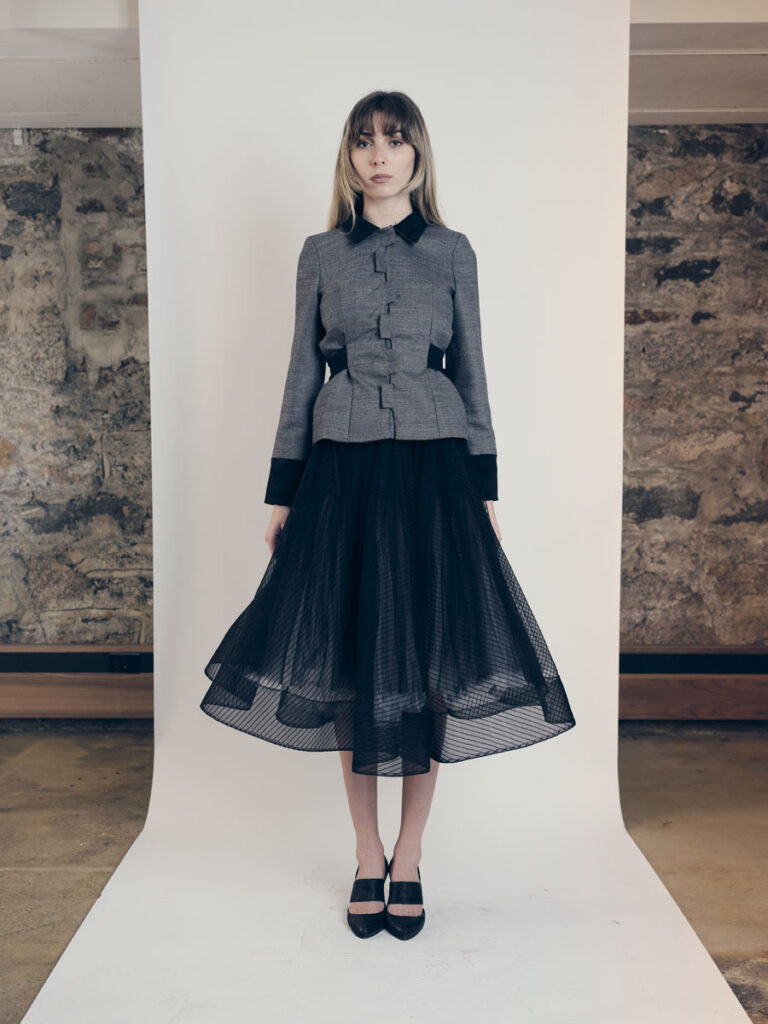
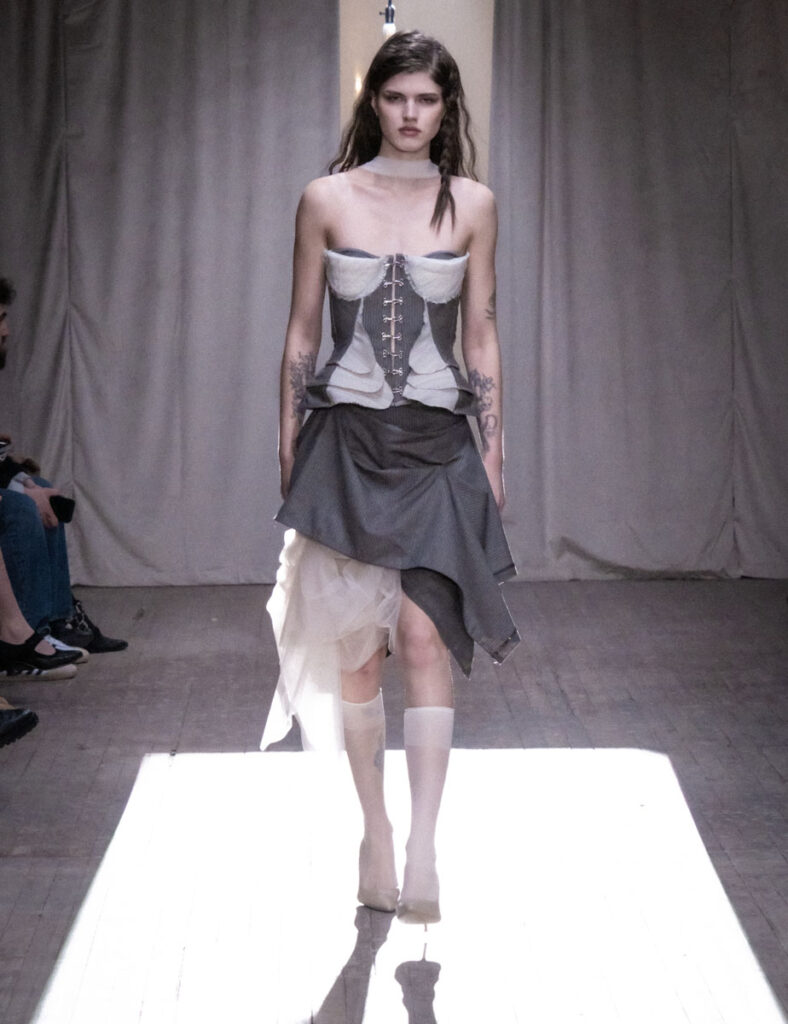
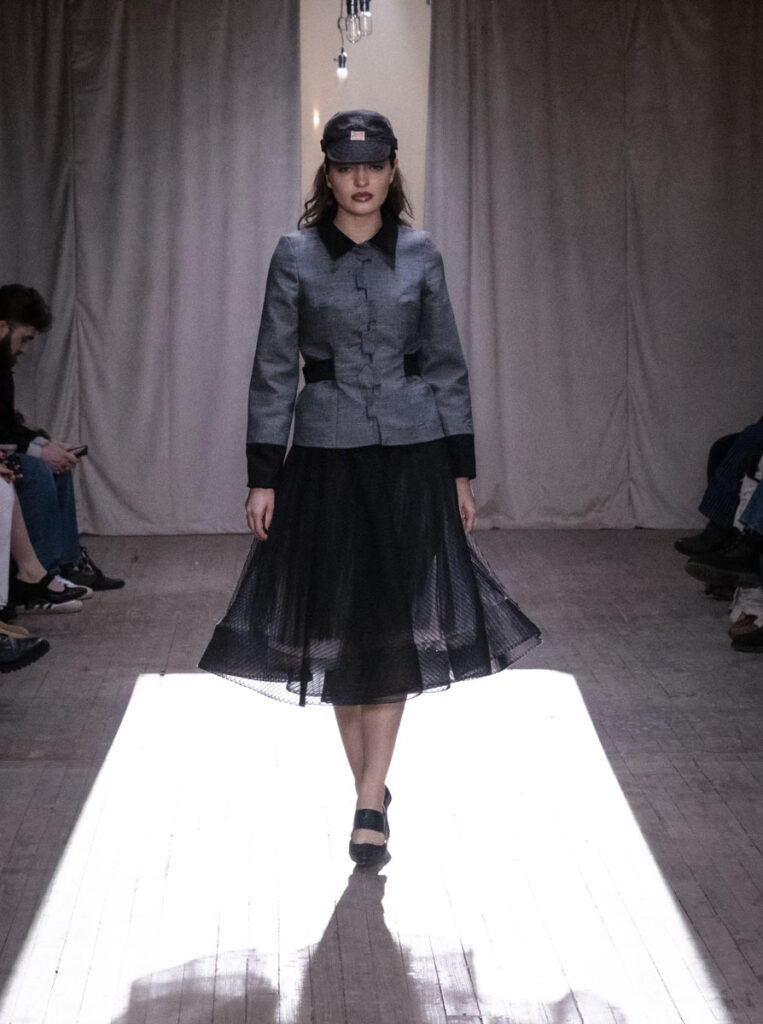
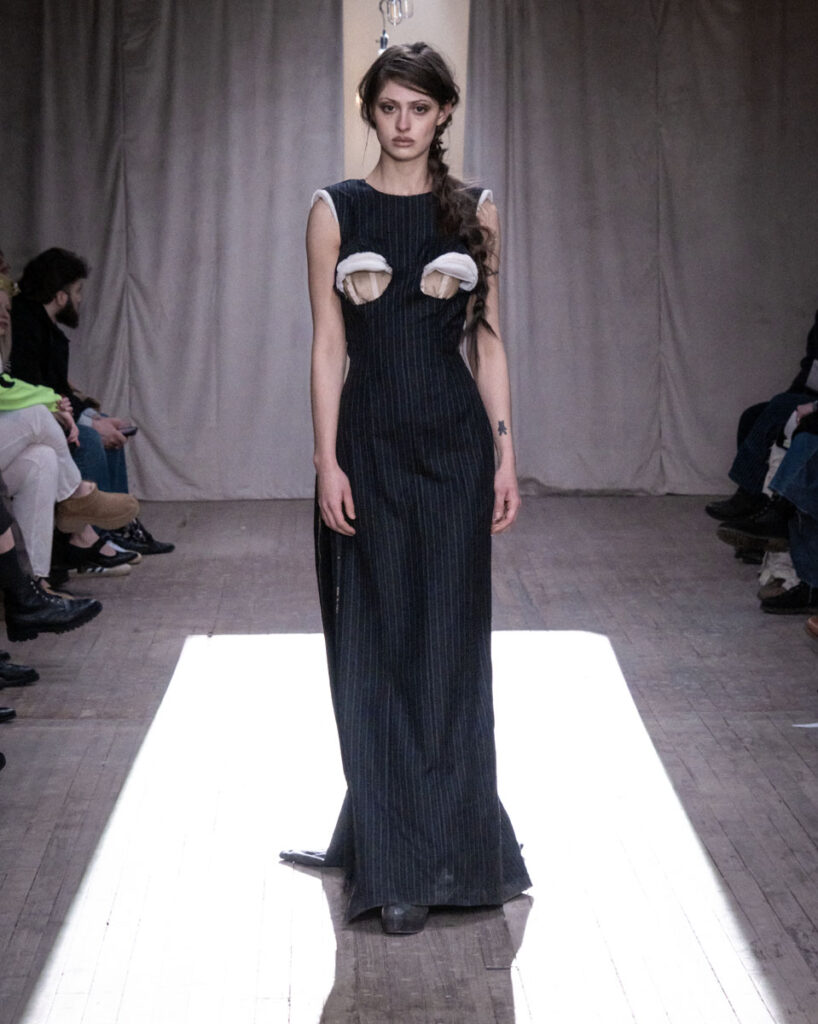
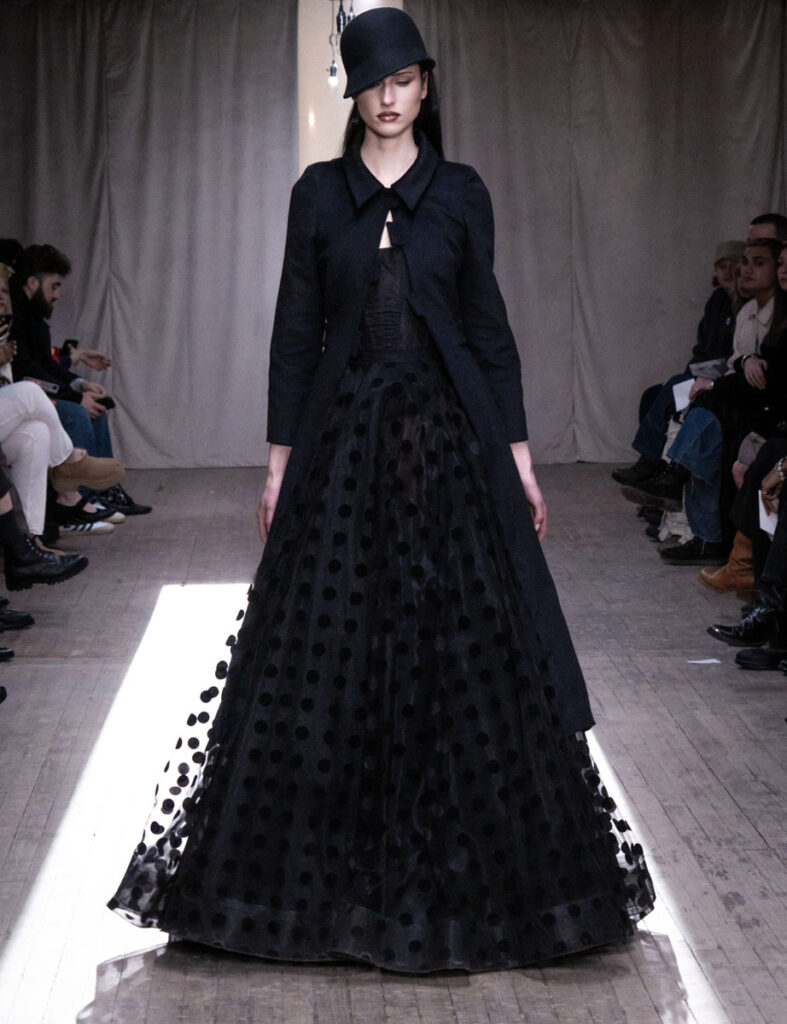
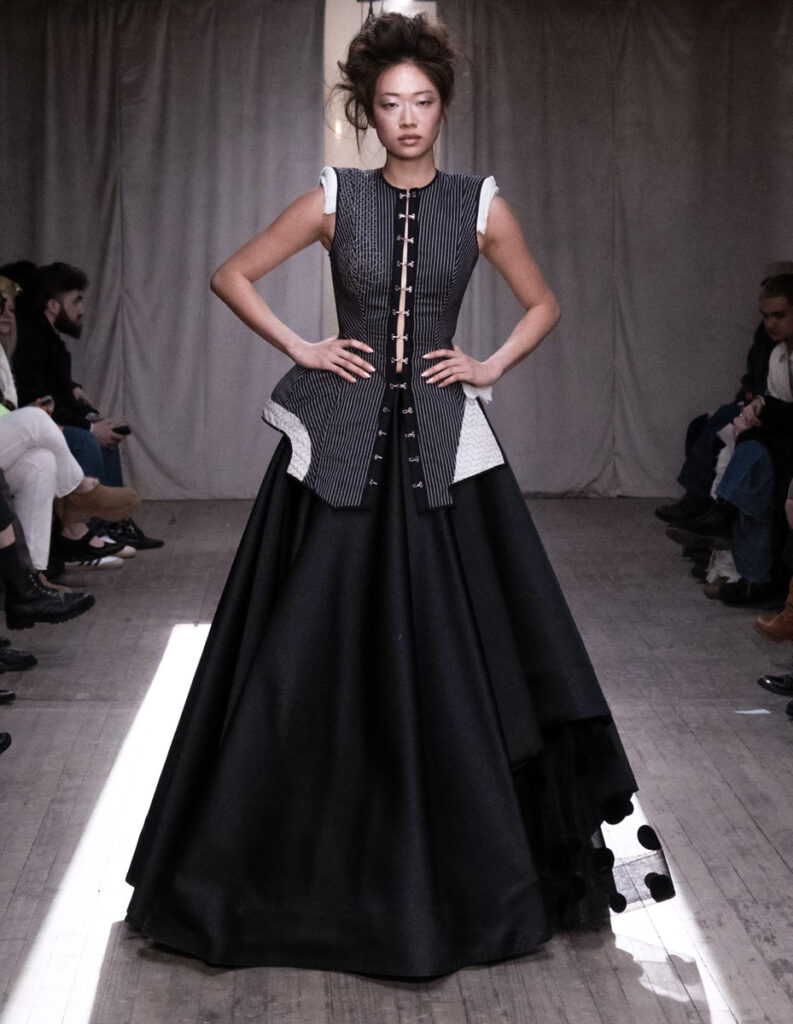
Yuval Sorotzkin approaches fashion with a clear focus on what holds a garment together. In her work, construction never sits quietly in the background. It becomes part of the language. In Work in Ruins, corsetry, exposed stitching, horsehair, padding, fragmented tailoring, and unfinished seams do more than decorate the surface. They anchor a practice rooted in haute couture technique, hand craftsmanship, and a strong conceptual point of view.
Sorotzkin treats garments as living structures rather than finished surfaces. She brings the inner architecture of clothing into view and makes the process of making part of the final expression. In Work in Ruins, she reveals the supports, tensions, and mechanics that usually remain hidden. That choice gives the work emotional force. The garments feel precise, sensitive, and deeply intentional.
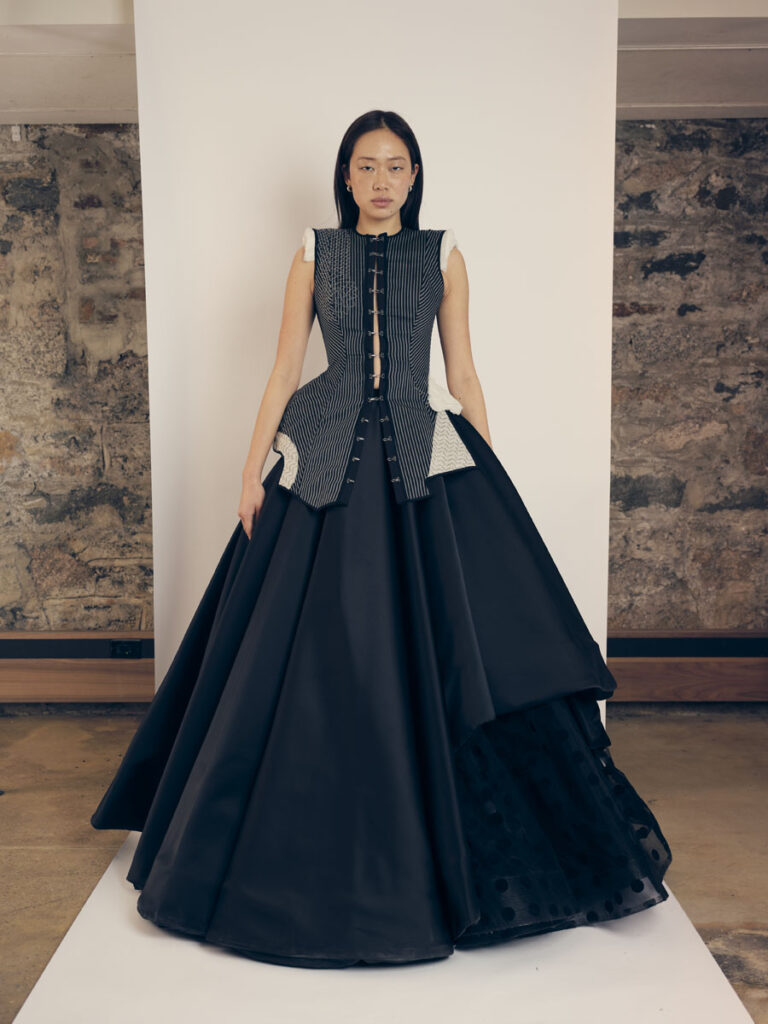
Photography: @nicholasasotelo @portesda
Casting: @ohmygodrawni
Styling: @trecholopis
Production: @tulafaye_ @evviel @cameronirish @jasonsimoe
Talent: @michelle.lii @quinnlanreynolds
She describes her practice as an exploration of the relationship between structure and emotion. That balance sits at the center of the collection. “What exists inside the garment, the internal frameworks, supports, and tensions, is the structure,” she explains, “and rather than concealing it, I’m interested in giving it space.” That instinct says a great deal about her design language. She does not separate technical construction from feeling. She uses one to express the other.
Her technical depth runs through the work from the start. Sorotzkin began sewing at the age of 10, inspired by her grandfather, a pattern maker in Paris for Ted Lapidus. That early introduction shaped her respect for discipline, precision, and garment construction. It also shaped the way she sees fashion now. For Sorotzkin, craftsmanship does not polish an idea after the fact. It helps build the idea from the beginning.
Photography: @nicholasasotelo @portesda
Casting: @ohmygodrawni
Styling: @trecholopis
Production: @tulafaye_ @evviel @cameronirish @jasonsimoe
Talent: @michelle.lii @quinnlanreynolds
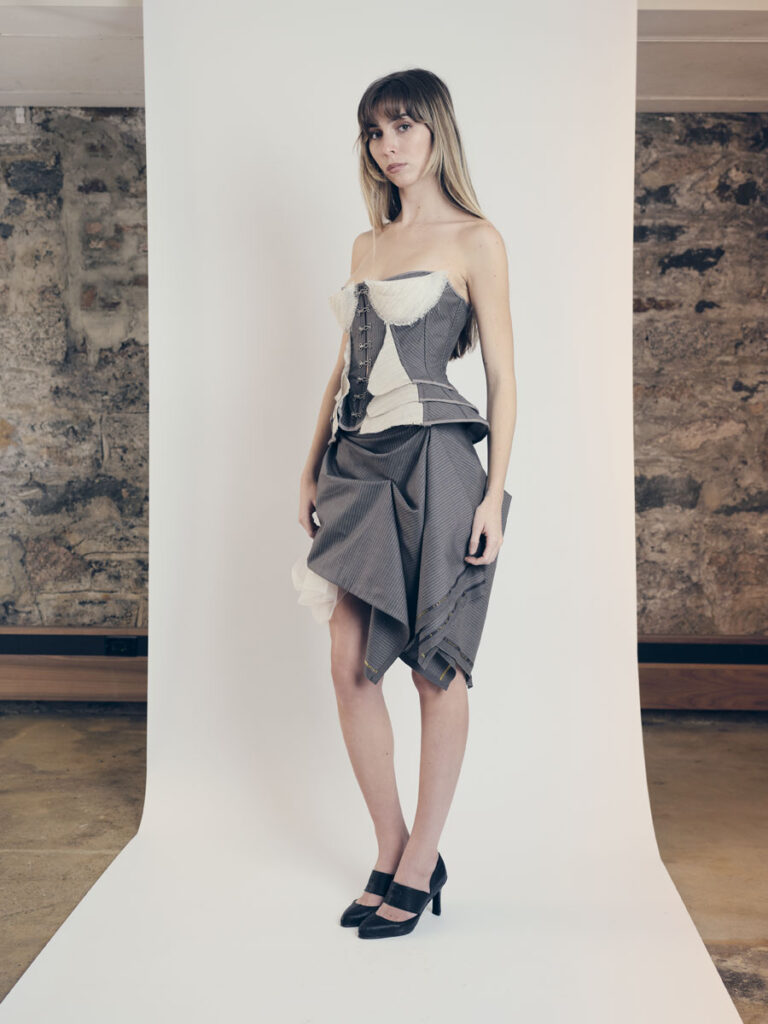
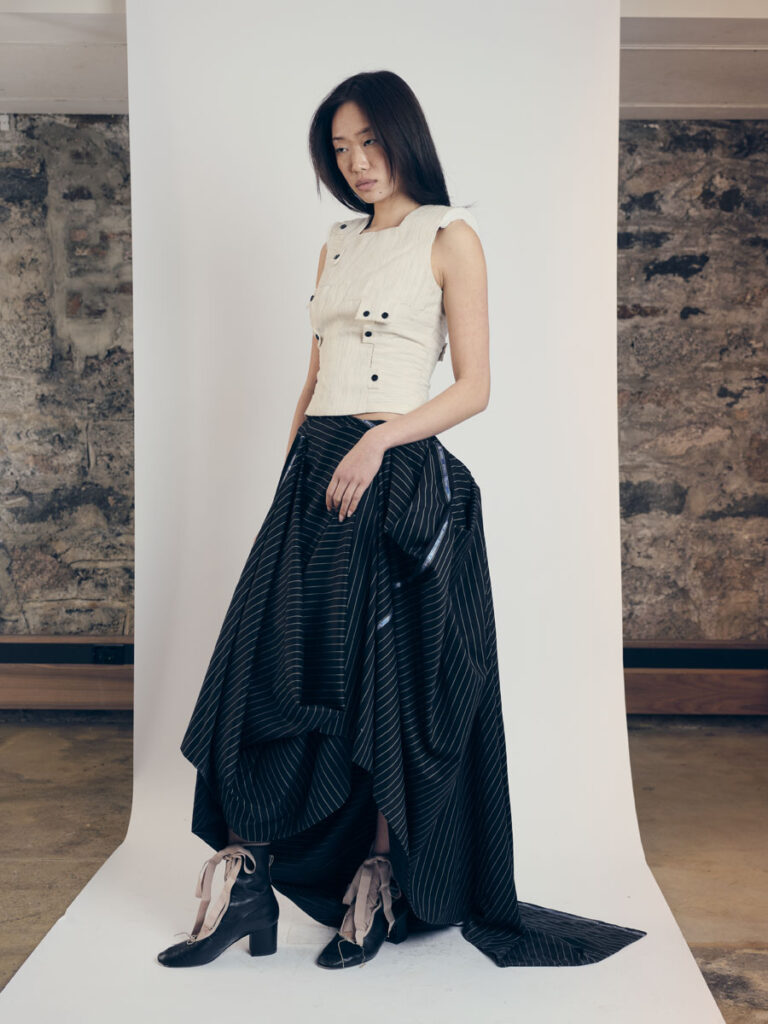
Work in Ruins began as a response to “pain and instability, both personal and collective,” she says. The collection grew out of the tension of living through uncertainty while still having to move forward. Sorotzkin wanted to understand how clothing could hold that contradiction. Instead of approaching those questions only through symbolism, she worked through them materially. Her garments hold rupture, repair, control, and vulnerability at the same time.
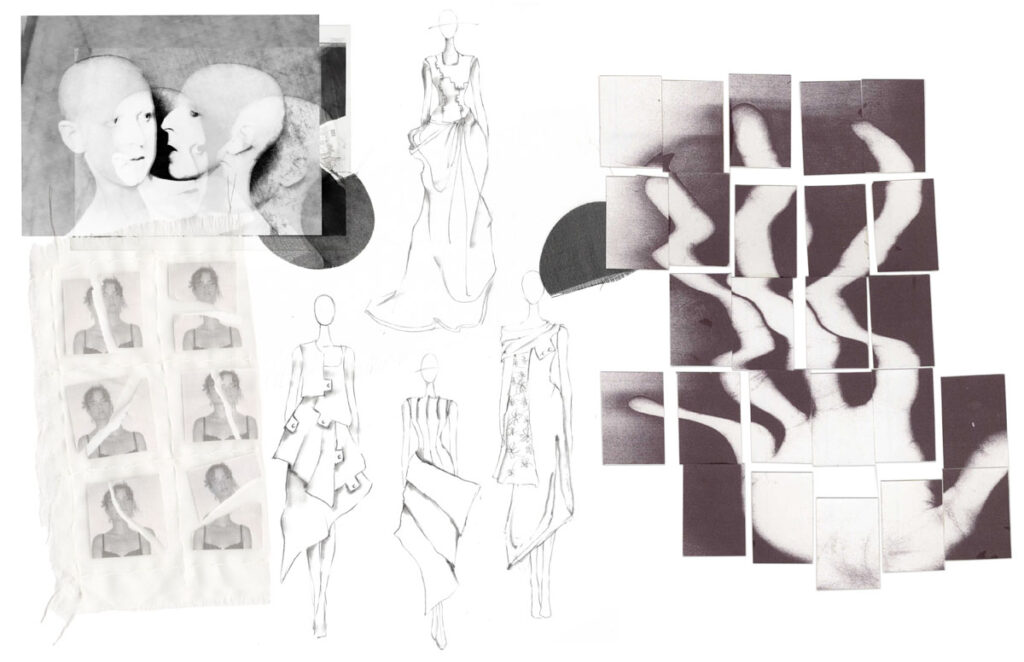
That conceptual rigor grows out of a strong research process. Sorotzkin starts with an emotional or conceptual framework, then expands it through visual research, often in dialogue with contemporary and modern artists. From there, she moves into draping and fabric manipulation. She lets the material shape the direction of the piece before refining it through sketching, pattern-making, fittings, and construction. The process feels both intuitive and exact. She keeps emotional intent and technical execution in close conversation throughout.
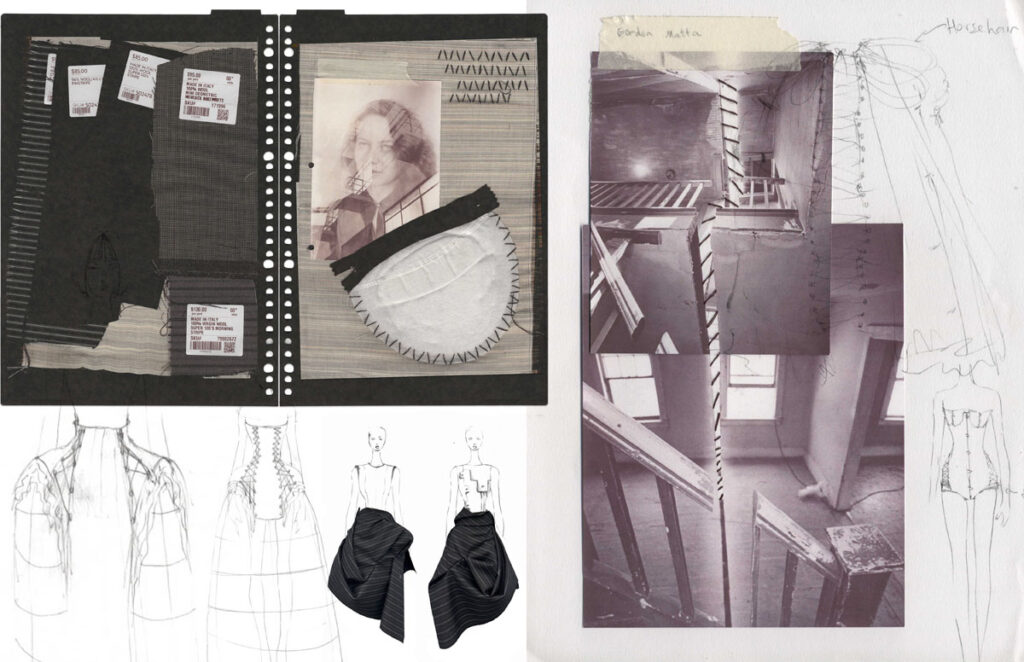
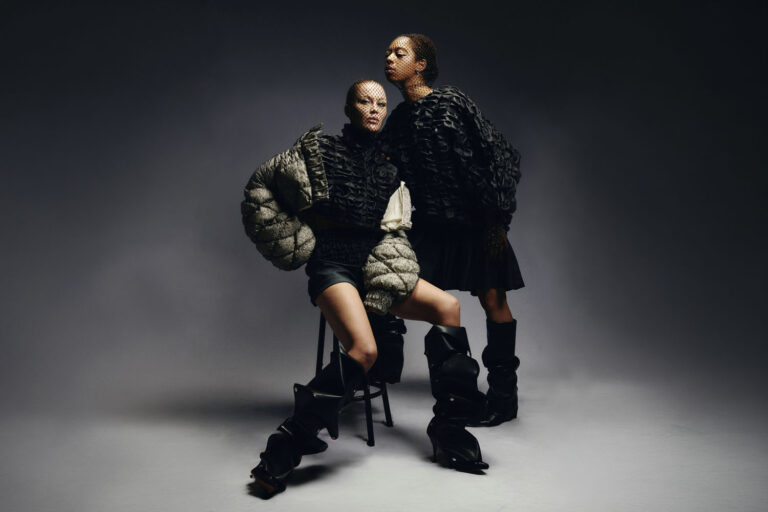
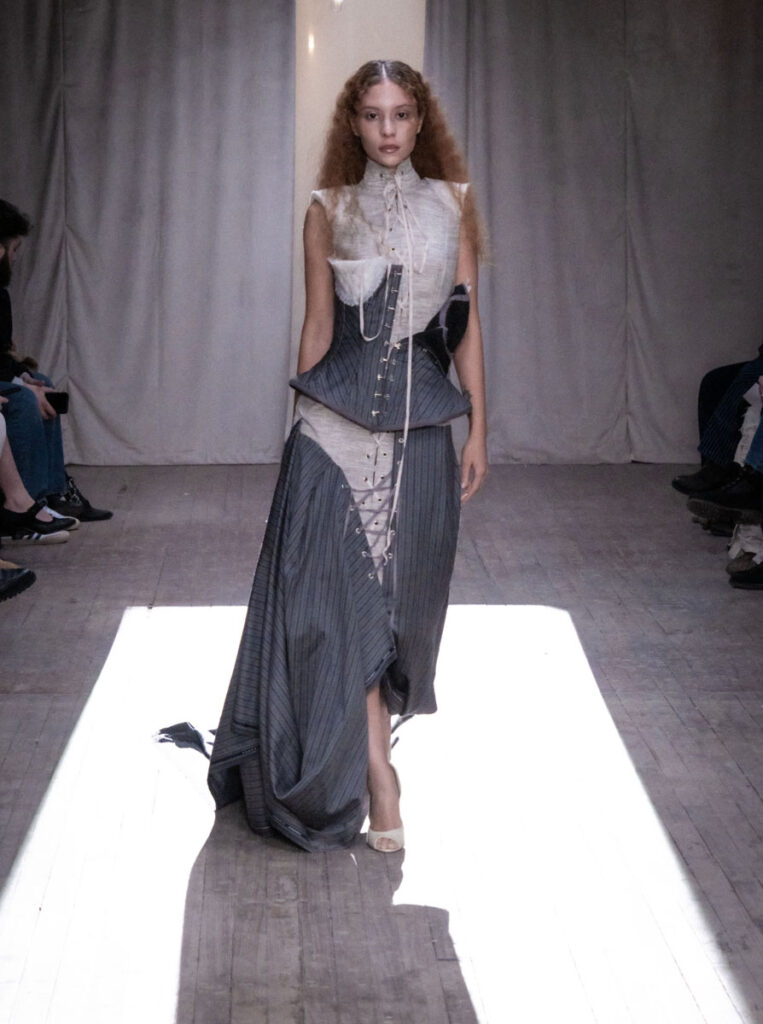
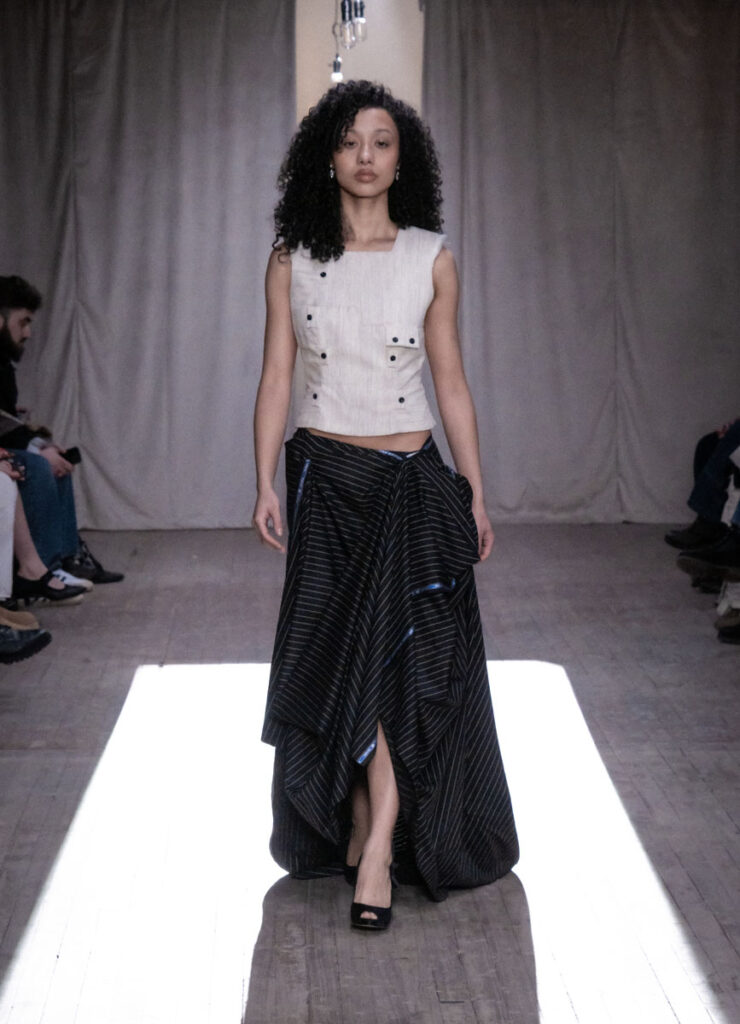
Draping plays a central role in this approach. It lets Sorotzkin work intuitively while staying close to the body. It also creates space for tension, movement, and distortion to emerge through the material. She often combines rigid linear elements with freer draped forms. That contrast gives the silhouettes their charge. The garments feel vulnerable, but never weak. They hold themselves with discipline, even when they seem to shift, slip, or come apart.
That tension matters to Sorotzkin. “Fragility represents vulnerability, and vulnerability can be incredibly powerful,” she says. This idea runs through the collection with clarity. Her garments do not treat exposure as failure. They treat it as a form of strength. By bringing inner structures to the surface, she creates clothing that feels honest about what it takes to hold shape under pressure.
Photography: @megmccstudio
Casting: @ohmygodrawni
Styling: @trecholopis
Production: @tulafaye_ @_evviel_ @cameronirish @jasonsimoe
Talent: @fran.ci.ni.a @claudiasantangelo_ @makedao @michelle.lii @iisabelmontserrat
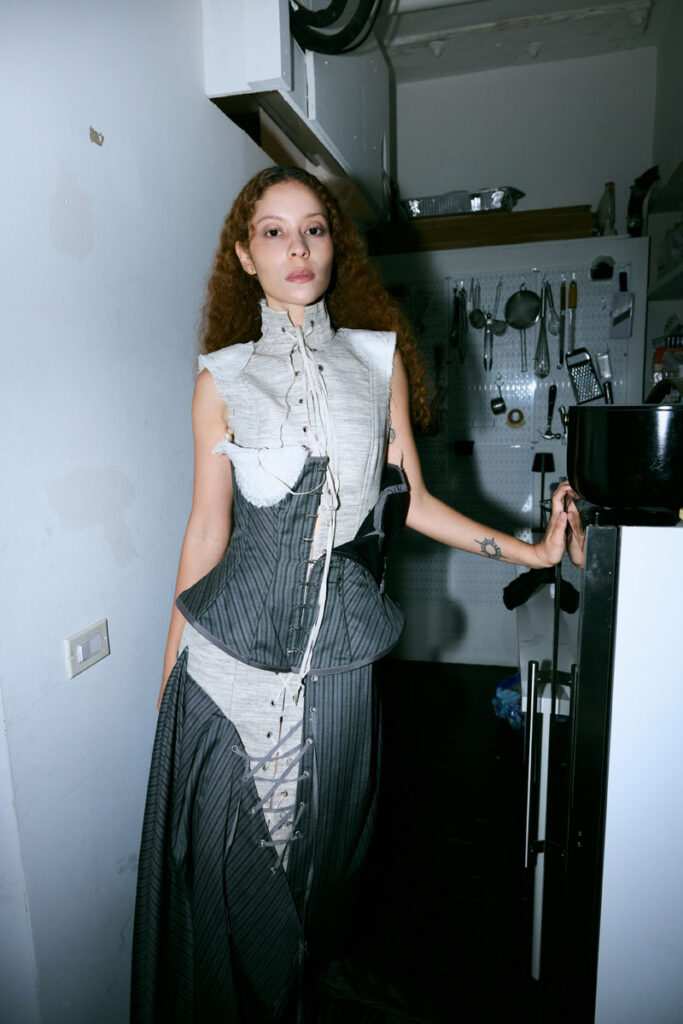
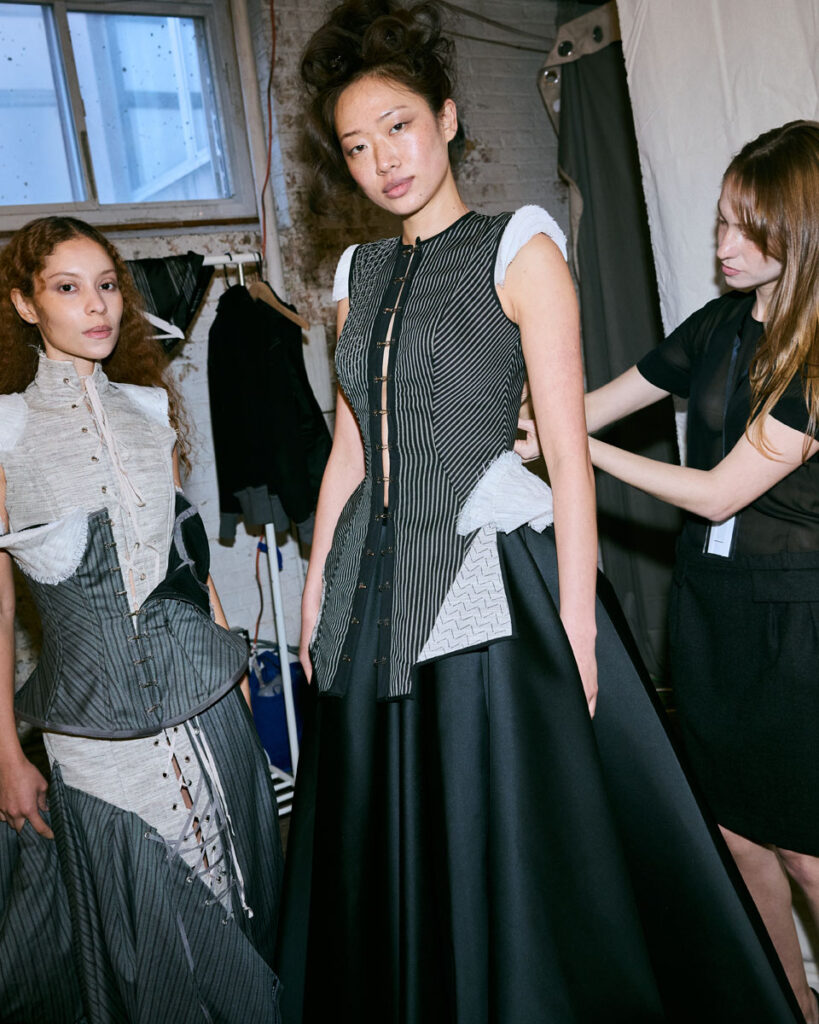
The technical demands of Work in Ruins are considerable. Sorotzkin worked with corsetry, padding stitch, horsehair structure, reconstructed tailoring, and extensive hand-finishing. At the same time, she wanted the garments to look unresolved or in transition. That balance between control and apparent collapse appears clearly in her collapsing corset dress. She describes the base of the piece almost like a dress form: stable and structured. Around it, fabric drapes and falls as if the garment sits mid-creation. A finished corset appears to slip away from the structure. The effect creates a strong sense of suspension between construction and deconstruction.
What makes Sorotzkin’s fashion practice especially compelling is her use of craftsmanship. It never feels decorative or nostalgic. It feels active, exacting, and purposeful. She is drawn to haute couture because it demands precision, discipline, and commitment. She also values the way it allows thought, technique, and vision to meet. In her work, couture methods do not simply signal refinement. They become tools for research, tension, and expression.
Across her collections, Sorotzkin has developed a distinctive design language grounded in couture-informed construction, deconstruction, and material sensitivity. Work in Ruins makes that especially clear. The collection presents a designer with a strong command of technique, a serious investment in process, and a point of view that feels both disciplined and emotionally resonant. This is work built from knowledge as much as intuition.
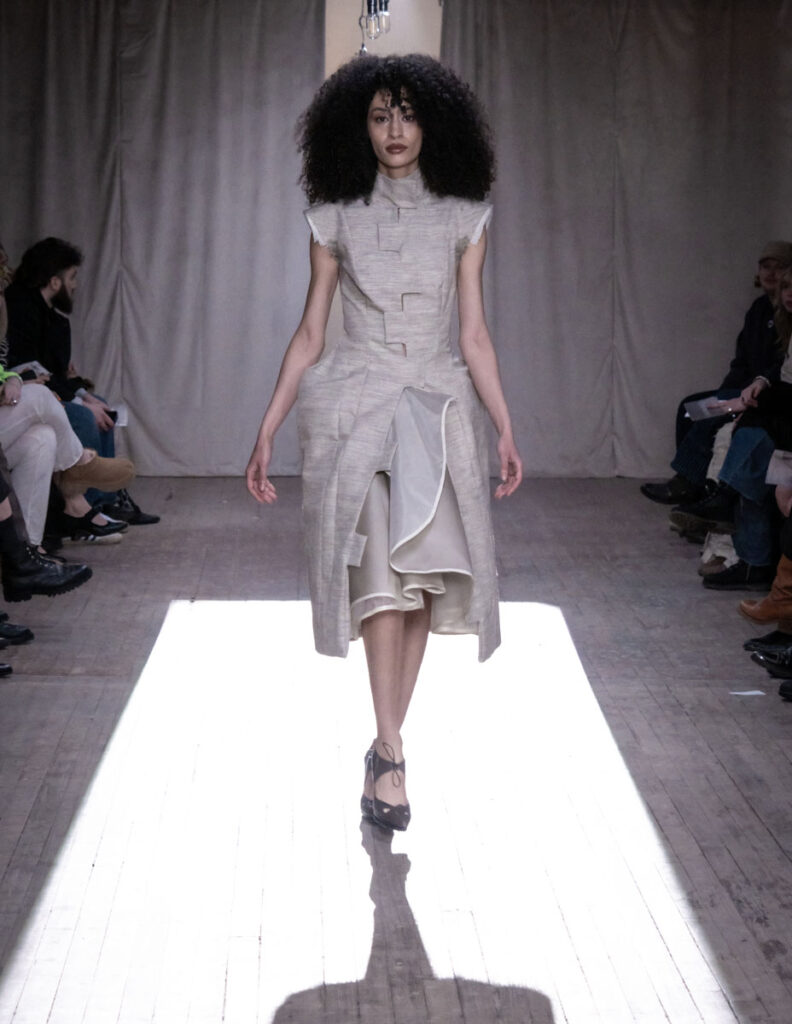
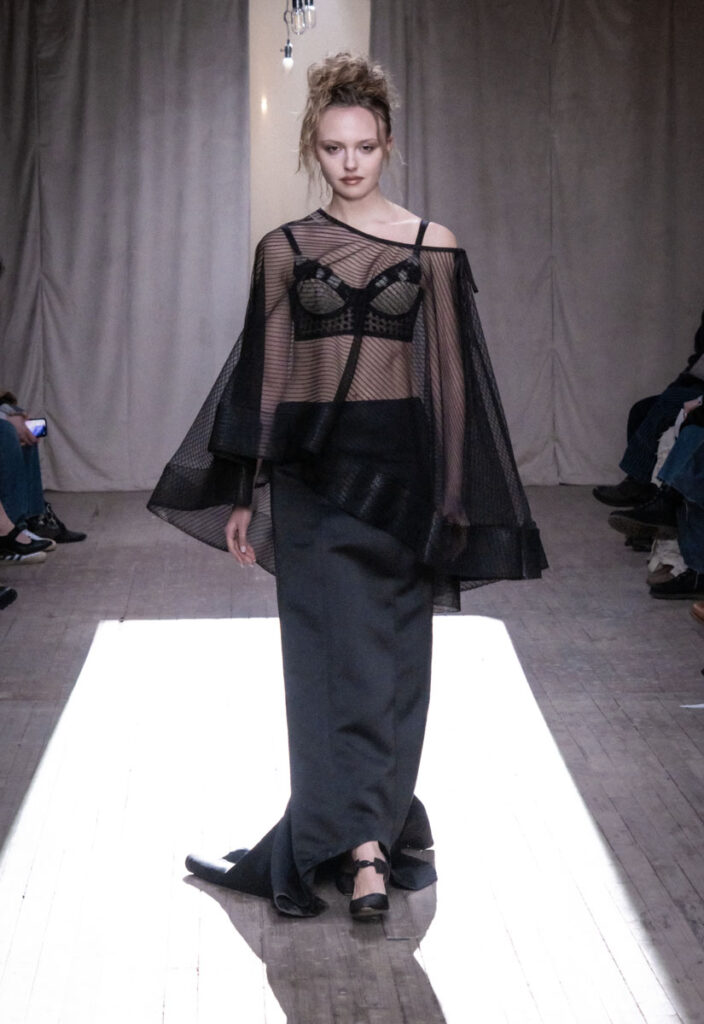
Sorotzkin continues to expand her practice, including the presentation of her Spring/Summer 2026 ready-to-wear collection in New York this April. That momentum makes her design language feel even more assured. She connects technical rigor to emotion with real clarity. She also trusts garments to reveal their own internal logic. Her work does not rely on surface impact alone. It holds attention because every decision, from structure to finish, feels considered.
With Work in Ruins, Yuval Sorotzkin offers a powerful argument for clothing as something more than adornment. In her hands, garments become records of construction, reconstruction, and emotional tension. They reveal not only how they are made, but also what they can express when craftsmanship becomes both discipline and language.
Production lead: @tulafaye_
Production: @yuvalsorotzkin, @evviel @eclectiqnyc @cameronirish @jasonsimoe @annikahayes @ashnayakoob
Casting Director & producer: @ohmygodrawni
Casting Associate: @ranellegee
Styling: @trecholopis
Makeup Lead: @mulletxbarbie
Hair Leads: @styleclassedge @maliab0
Photography: @portesda
Lighting: @marcelblakeley