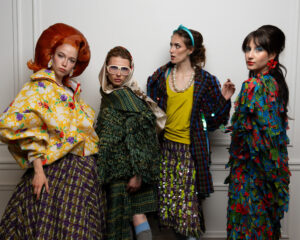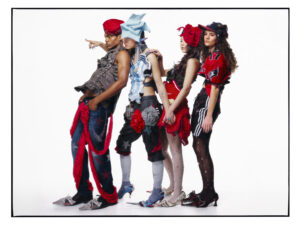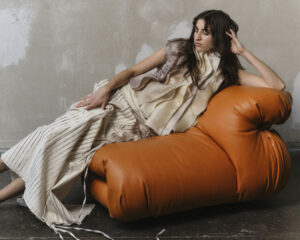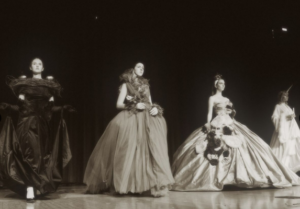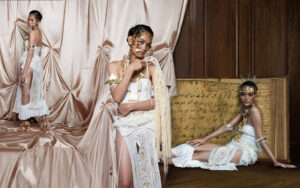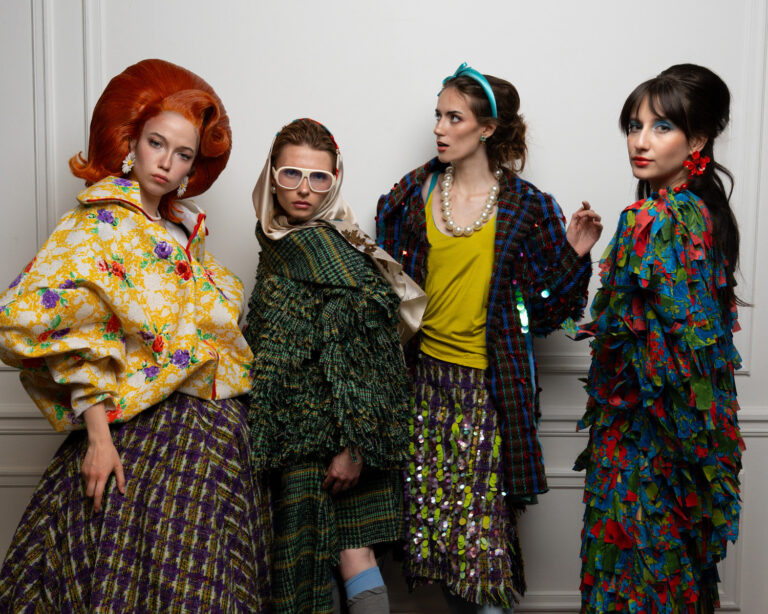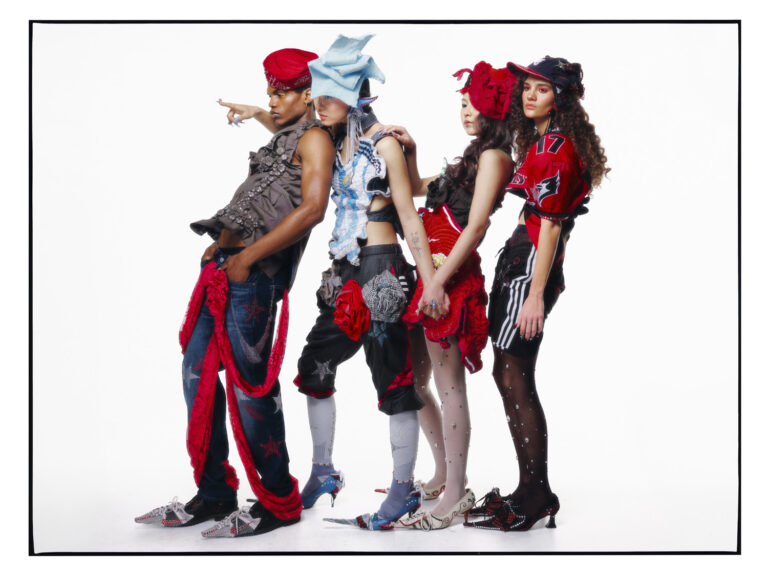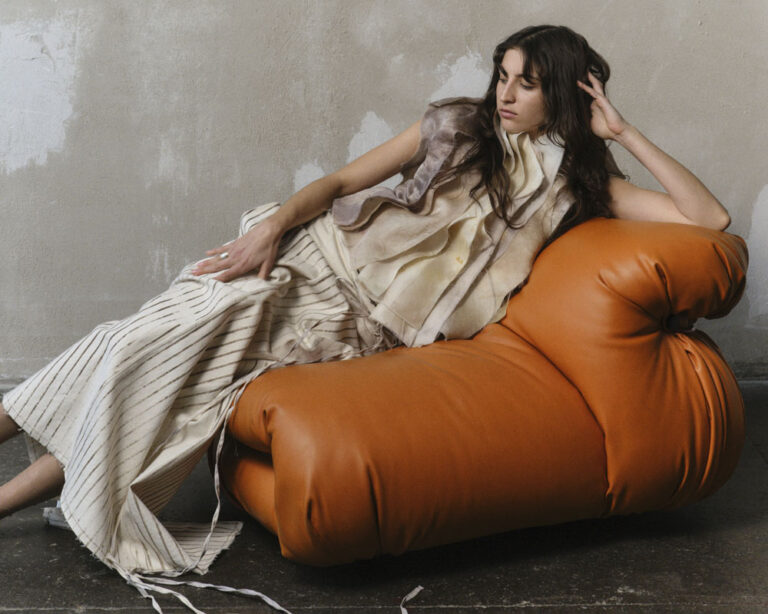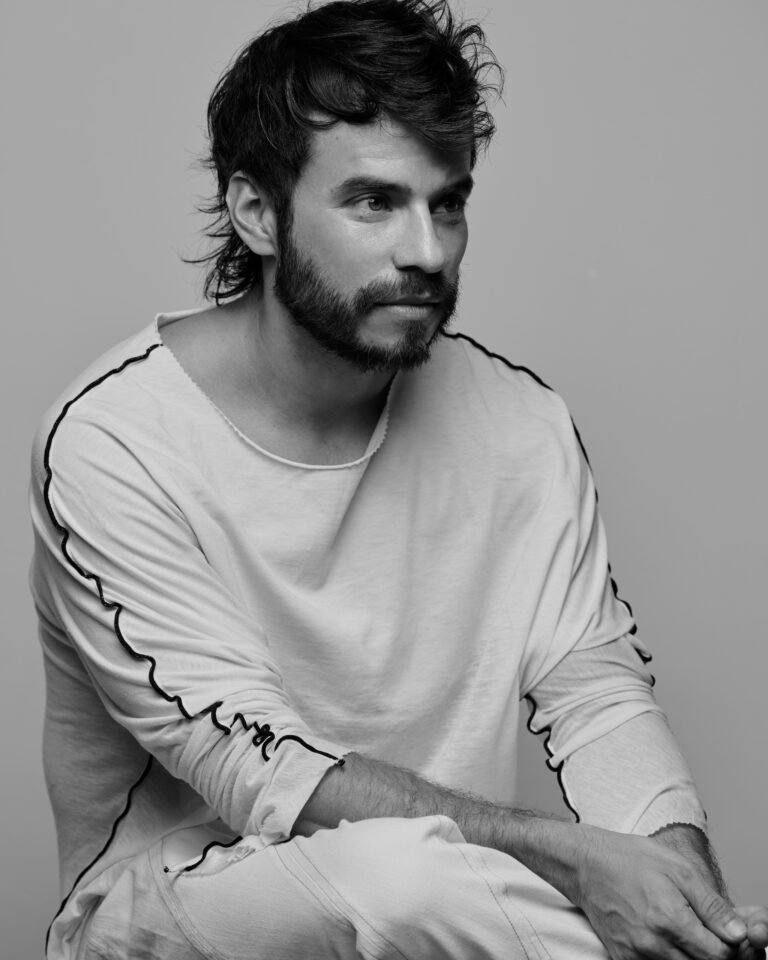
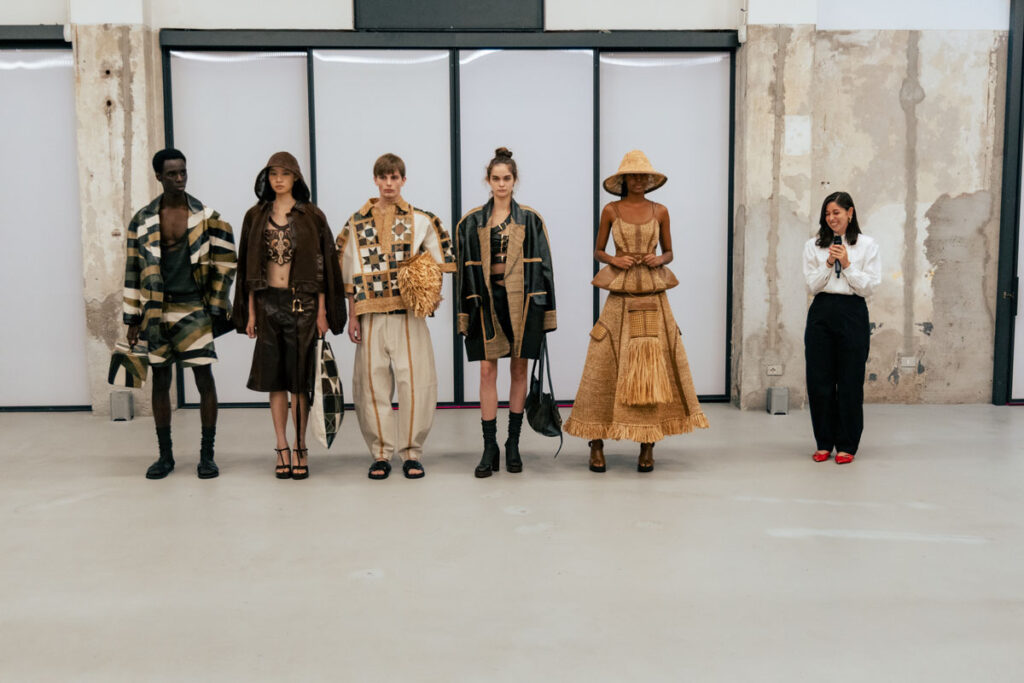

For Inbal Heffer, fashion is not a fixed image of identity but a way of holding many histories at once. In Urban Fields, the Tel Aviv–based designer draws from her grandparents’ immigration from Morocco to Israel in the 1950s, building a collection that moves between Casablanca and the Galilee, between tailoring and workwear, and between inherited memory and contemporary design.
The starting point for the project is intimate and literary at once. Inspired by the fable of the Town Mouse and the Country Mouse, Heffer uses the tension between urban and rural life as a lens for understanding her own family story. That contrast became a way of thinking about identity itself: shifting, layered, and shaped through movement. As she explains, “Their journey shaped the way I think about identity – not as something fixed, but as something formed through movement, adaptation, and the connection between different worlds.”
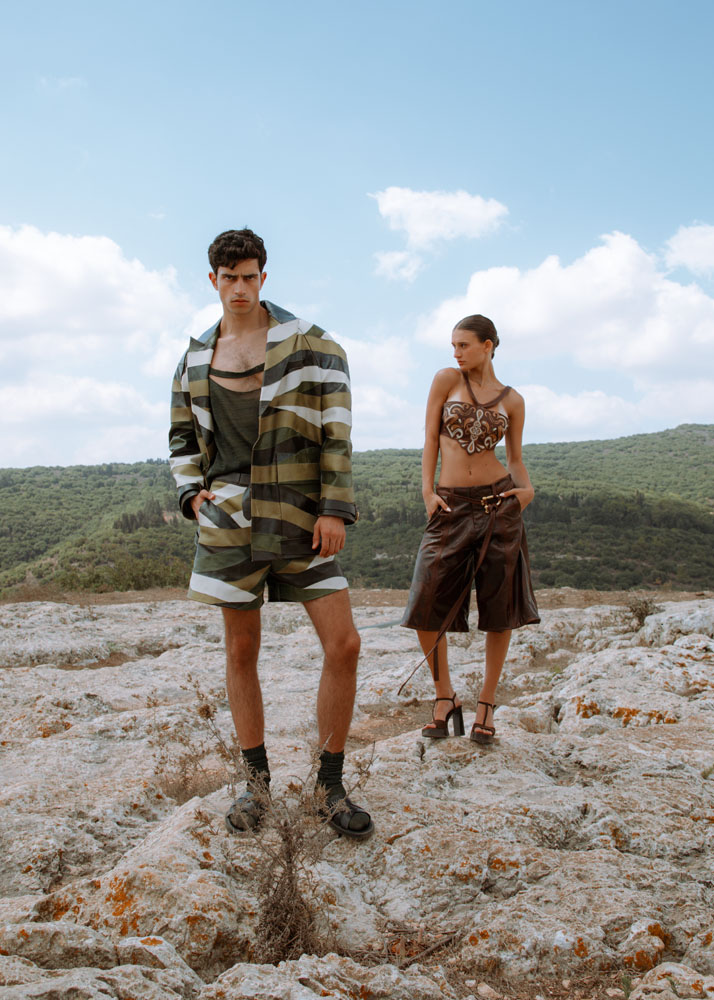
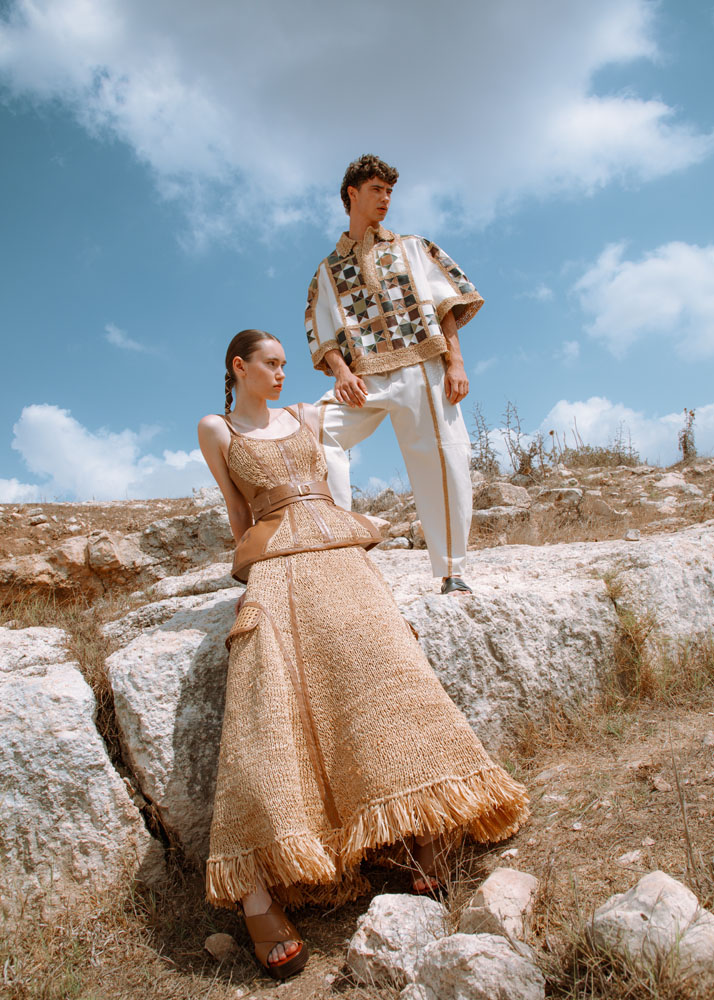
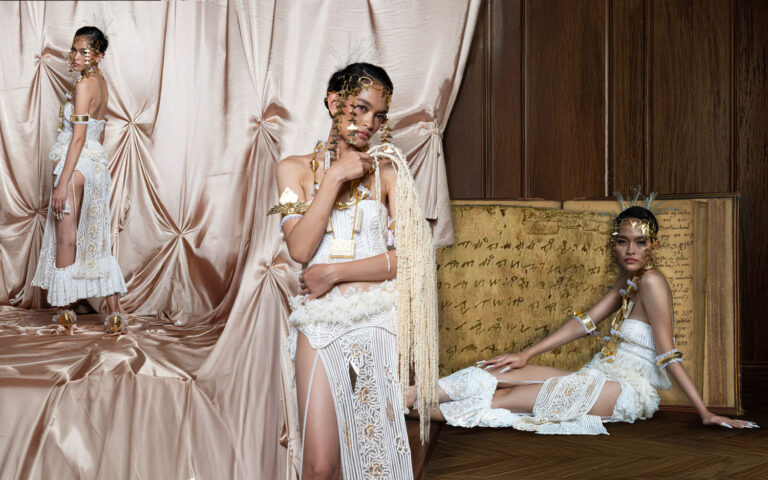
That idea runs through every part of Urban Fields. The collection’s five looks for women and men bring together influences that might once have seemed separate: 1950s tailoring informed by family photographs from Morocco, and local workwear shaped by labor, modesty, and everyday function in Israel. Rather than treating these references as opposites, Heffer lets them exist in dialogue. Structured jackets meet shorts and tank tops; formal silhouettes are softened by raw texture and handwork; utility and ornament share the same garment.
The result is especially compelling because it comes from lived experience. Heffer’s childhood in the Galilee and her adult life in Jaffa inform the collection not just visually, but emotionally. She describes the urban and the rural as “different states of mind,” with the city representing “rhythm, structure, and precise tailoring,” while the rural is tied to “material, nature, craftsmanship, and slower processes.” Rather than choosing one over the other, she designs from the space where both can coexist.
Material plays a central role in expressing that coexistence. Straw and leather anchor the collection in a tactile, grounded world, one connected to land, utility, and craftsmanship. Heffer’s attraction to natural materials also reflects a personal and environmental sensibility, allowing her to work in what she describes as a more “direct and honest way with texture and structure.” Even the challenges of combining straw and leather became part of the project’s language, requiring patience, experimentation, and close attention to each material’s individual qualities.
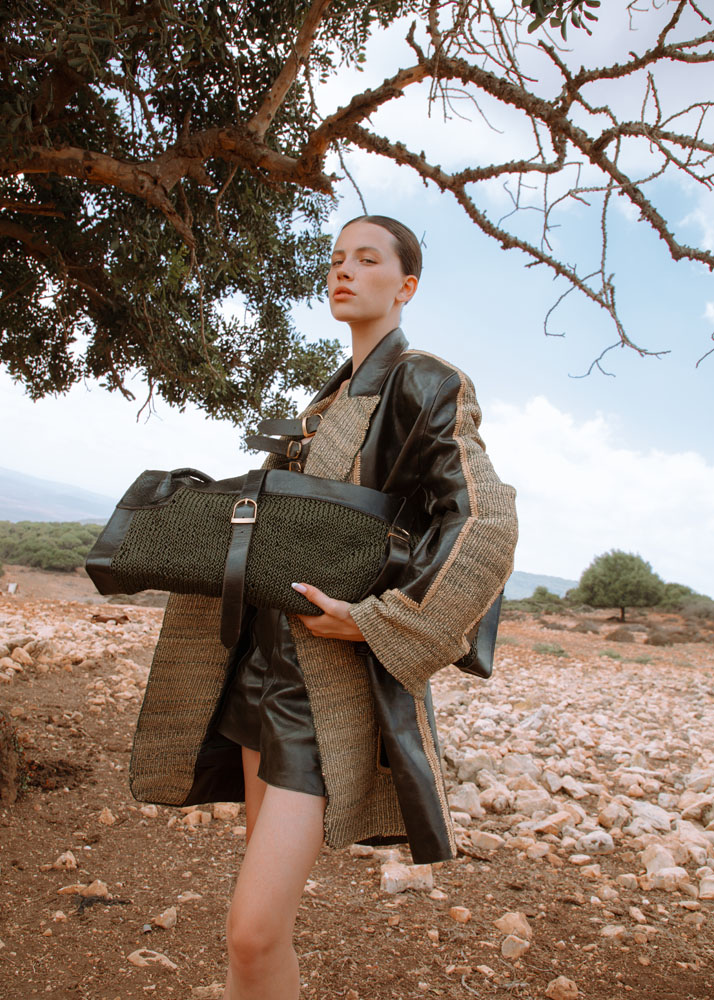
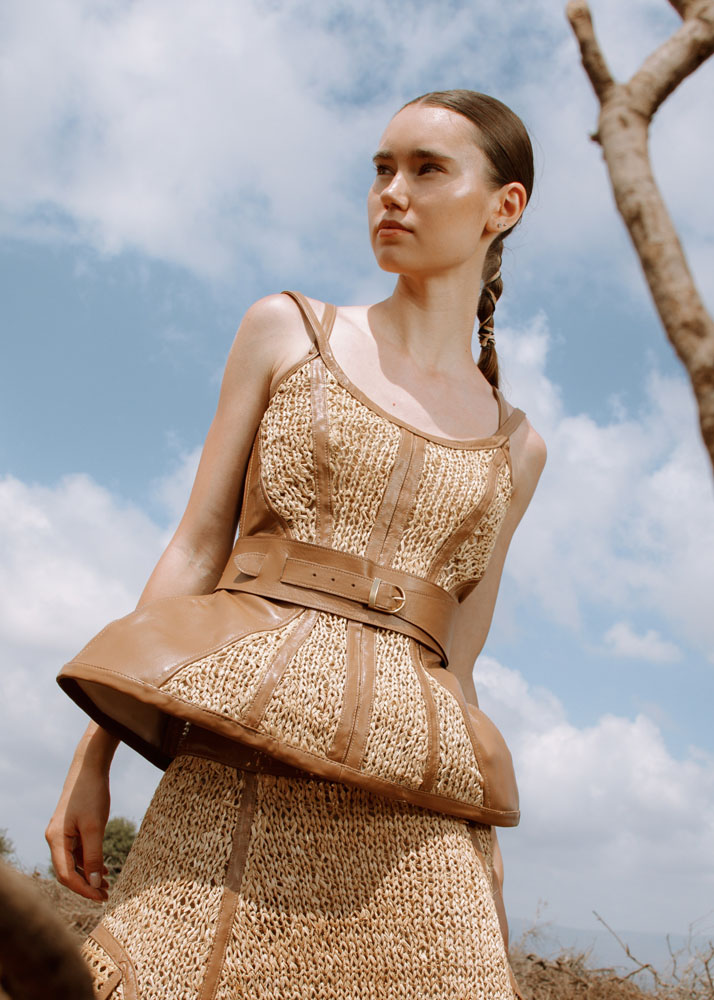
The emotional core of Urban Fields, however, may be found in its handcraft techniques. Knitting appears as a direct homage to Heffer’s grandmother, who taught her to knit at the age of ten and sparked her first connection to fashion design. Patchwork, meanwhile, becomes more than a technique: it is a philosophy. By assembling different pieces into a new whole, Heffer mirrors the way memory, migration, and identity are themselves constructed. In this collection, patchwork is not decorative excess but a method of cultural and personal repair.
Moroccan culture enters the collection with similar subtlety. Heffer avoids literal quotation, choosing instead to work through memory and visual continuity. A sentimental gold bracelet her grandmother brought with her to Israel inspired textures and details in the garments, while the ornamental traditions of Safi and the ceramic surfaces of Jaffa create a bridge between past and present. These references do not function as costume; they become part of a personal design language shaped by family history and daily life.
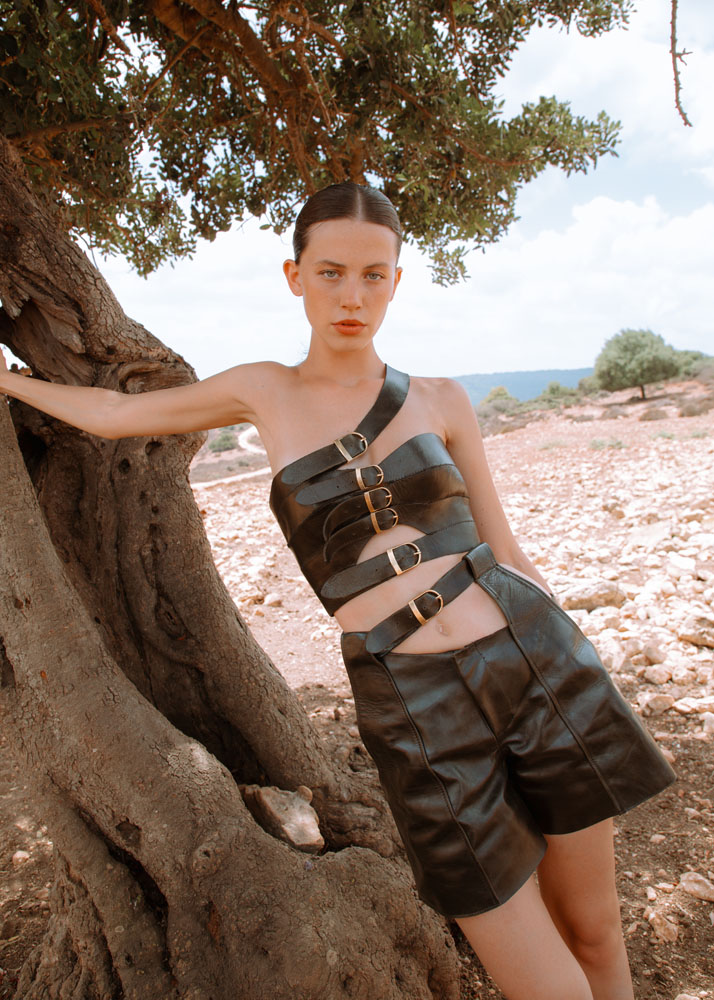
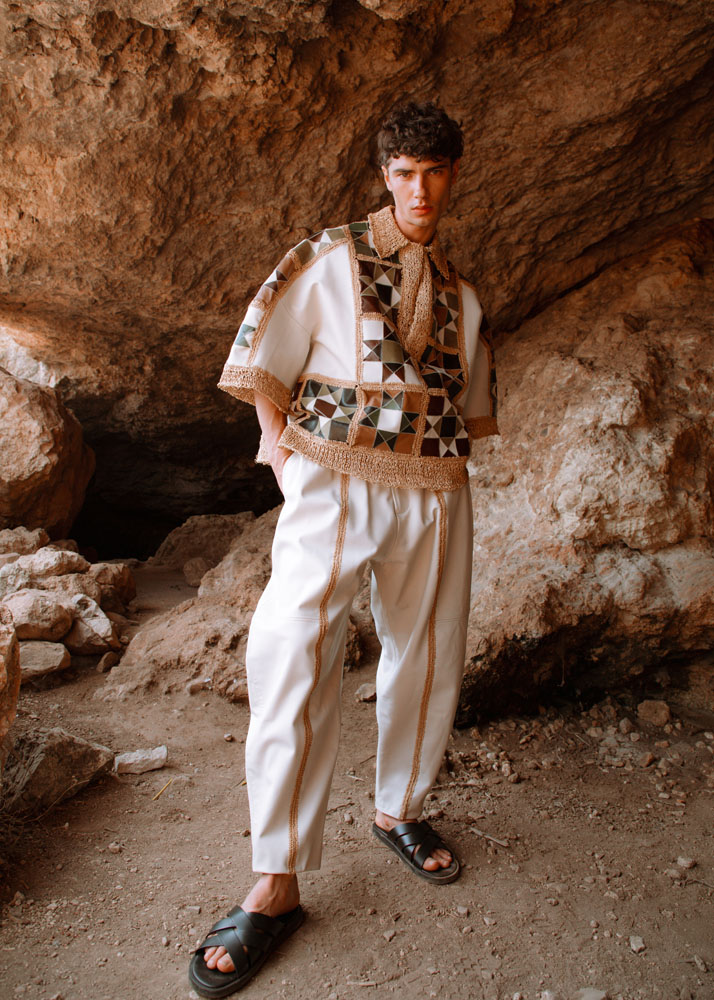
What makes Urban Fields resonate is its refusal to simplify identity. The collection does not offer a single origin story or a clean opposition between then and now. Instead, it proposes that identity can be open, layered, and unresolved in productive ways. Heffer puts it clearly: “I hope people feel that the collection opens up a space where identity can be complex and not singular – a place where different worlds can coexist.”
That vision has already found recognition. The collection received the Innovation main award at the Mittelmoda International Fashion Award in Milan in 2025, along with recognition in TheOneSEASONLESS category and a special mention from the Italian press. Yet what stands out most in Urban Fields is not only its acclaim, but its clarity of voice. It is a collection that understands fashion as a carrier of memory, place, and emotional inheritance.
Inbal Heffer’s work suggests that garments can do more than dress the body. They can hold contradiction, trace migration, and make visible the quiet ways family history continues to shape the present. In Urban Fields, the urban and the rural do not compete. They are woven together into something newly personal: a layered design language rooted in heritage, craft, and the possibility of becoming.