
Fashion often celebrates self-expression as though it has always been available to everyone. Emerging designer Felicija Kaciulyte questions that assumption. Her graduate collection at ESMOD Paris explores what happens when individuality exists within a culture that encourages conformity instead. Drawing on family photographs from Soviet-occupied Lithuania, she uncovers the quiet ways people expressed themselves through clothing. Rather than focusing on grand acts of rebellion, she shines a light on subtle choices that carried deep personal meaning.
“I wanted to see if that statement was still true in an era where conformity was implied and expected,” Kaciulyte says. “Will people still make the effort or is it something that isn’t worth fighting for?”
That question became the starting point for her graduate collection. Instead of researching fashion history through museums or archives, Kaciulyte looked much closer to home. A conversation with her creative design tutor, Patrick Stephan, sparked the idea. He explained how he studied his students’ outfits every morning because clothing revealed so much about the person wearing it. The discussion encouraged Kaciulyte to examine her own wardrobe before turning her attention to the past.
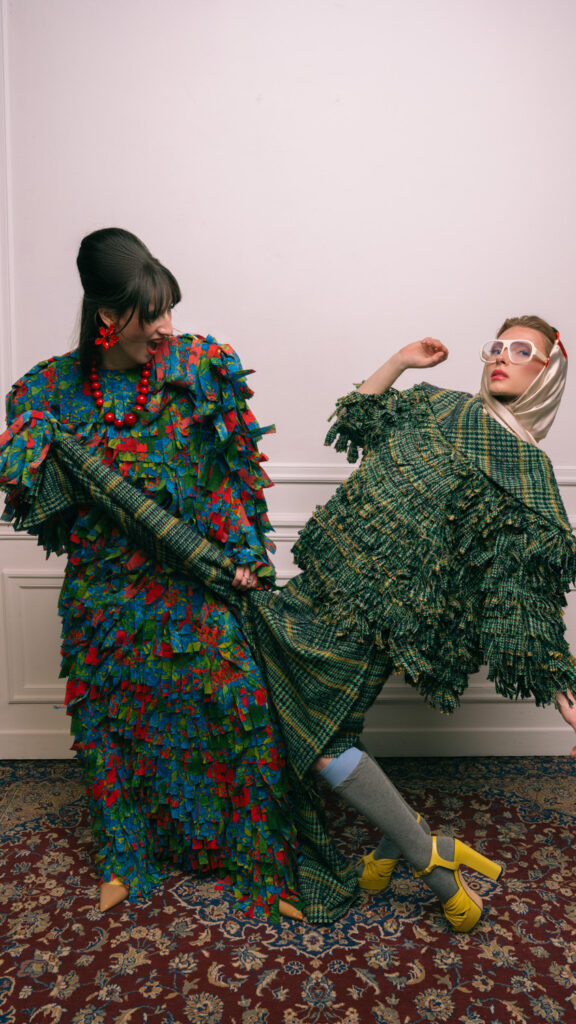
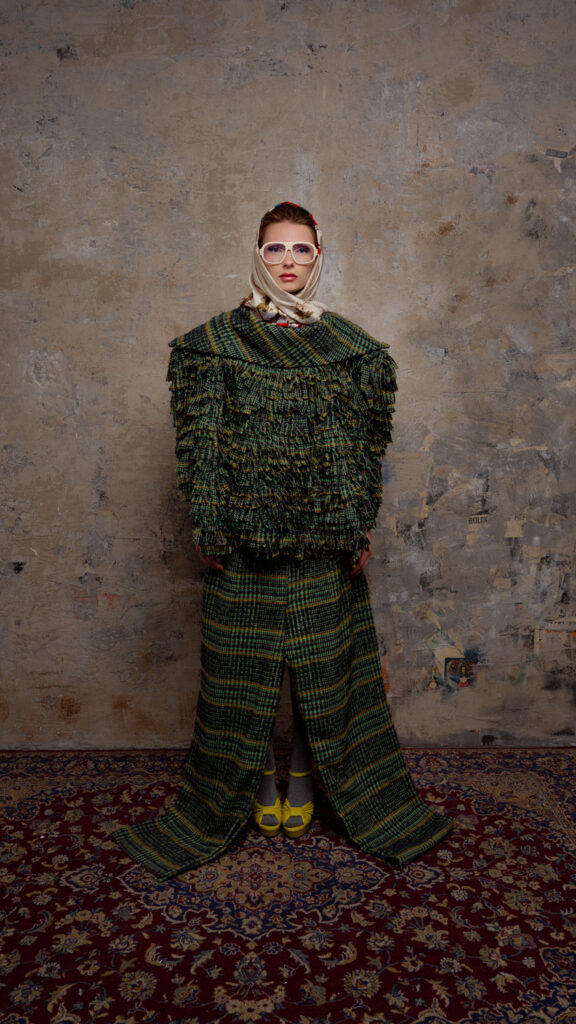
She called her grandfather and asked him to search through old family photograph albums. Together, they spent days scanning images from different decades. As the archive grew, so did her project. The photographs revealed more than changing fashions. They showed personality. A carefully altered waist, an oversized coat, layered patterns or handmade embroidery became signs of individuality during a time when clothing often promoted uniformity.
“I was hoping to show that Soviet-occupied Lithuania never let go of their individuality or style,” she explains.
Rather than recreating the outfits in the photographs, Kaciulyte studied what made them feel personal. She noticed repeated textures, unusual proportions and garments altered by hand. These observations shaped every look in the collection. Each design connects directly to a group of family photographs, but none of them copy the originals. Instead, they translate the spirit of those images into a modern wardrobe.
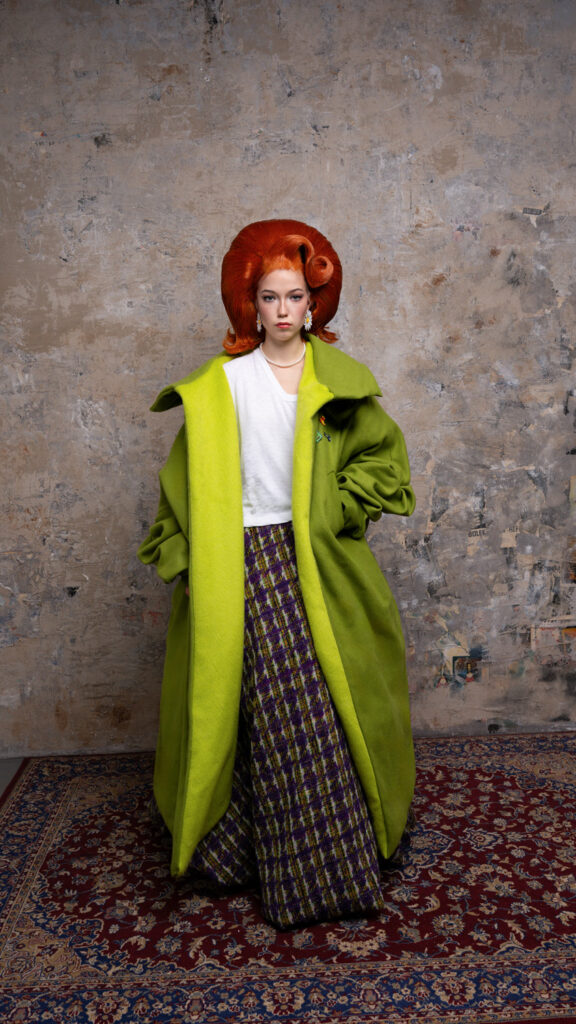
That approach defines her wider design philosophy. Familiar garments become the foundation for experimentation. Bomber jackets, knee-length skirts and classic tailoring appear throughout the collection, but exaggerated sleeves, oversized shoulders and softened proportions transform them into something unexpected. The garments look slightly borrowed or handed down, echoing the resourcefulness she found throughout her research.
Although the collection embraces couture techniques, comfort remained a priority from the beginning. Kaciulyte tested every piece on models throughout the design process. She wanted people to move naturally, sit comfortably and enjoy wearing the clothes. That balance between craftsmanship and ease became one of the collection’s greatest strengths.
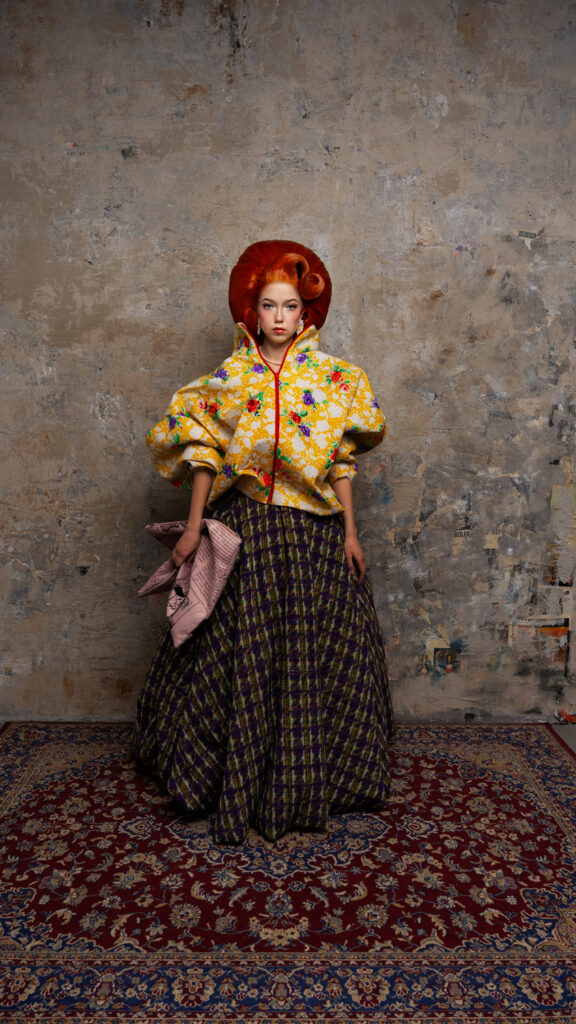

The materials also tell an important story. Kaciulyte worked exclusively with deadstock fabrics, which often meant adapting her ideas when certain textiles became unavailable. Instead of seeing those limitations as setbacks, she embraced them. The process reflected the same creativity she admired in her research, where people worked with whatever materials they could find.
Colour became another way to challenge expectations. Rather than following seasonal trends, Kaciulyte built her palette around the strange and often overlooked shades she found while researching Soviet interiors and domestic life. Institutional greens, faded pastels and unusual combinations inspired colours she playfully named “Snot Green” and “Rotten Yellow.” They reject conventional ideas of beauty while celebrating the unexpected character of everyday life.
Handcraft sits at the centre of the collection. Every embroidery was completed entirely by hand, turning decoration into storytelling. Each stitch reflects the care and individuality that first caught Kaciulyte’s attention in her family photographs. Instead of adding embellishment for its own sake, she uses embroidery to strengthen the emotional connection between the garments and their inspiration.
One look captures that philosophy especially well. Playing Dress Up, an embroidered jacket paired with a knee-length skirt, takes an everyday silhouette and transforms it through detailed handwork. The skirt hides another personal detail. Its lining features reproductions of Kaciulyte’s own family photographs, weaving her research directly into the garment. The accompanying wig, created in collaboration with a drag queen, extends the collection’s conversation about identity and transformation. Together, the look celebrates craftsmanship while embracing collaboration and self-expression.
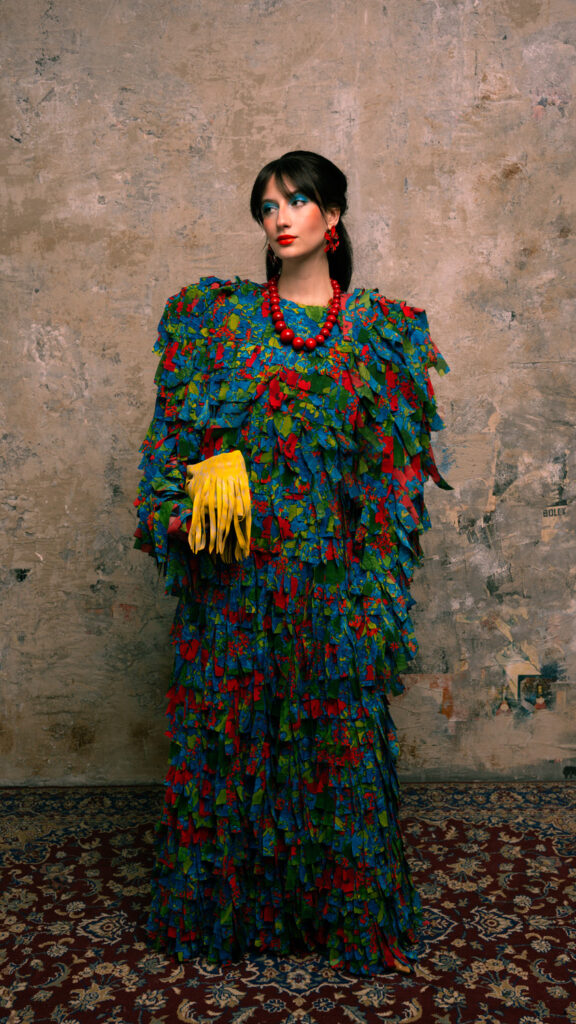
Although the collection looks to the past, it also reflects on the present. Working through family photographs from the 1950s to the 1990s encouraged Kaciulyte to think about fashion today. She believes social media and fast-moving trends can sometimes blur personal identity. Yet the images of her family told a different story. Across decades, each person maintained a distinct sense of style despite changing circumstances.
“I still filter out what resonates with me and what is just interesting but not for me,” she says.
That mindset continues to guide her work. Looking ahead, Kaciulyte hopes to develop her interest in embroidery, embellishment and textile experimentation. She also wants to create garments that invite interpretation instead of dictating how they should be worn. For her, clothing should never belong to one audience or one aesthetic. The wearer completes the design by making it their own.
Kaciulyte’s graduate collection introduces more than a promising young designer. It reveals a thoughtful approach to fashion that values research, craftsmanship and human connection in equal measure. By looking closely at the smallest details—a stitched flower, an oversized sleeve or a faded family photograph—she reminds us that individuality rarely disappears. It simply finds new ways to be seen. own.