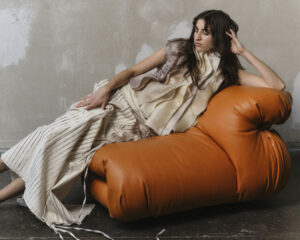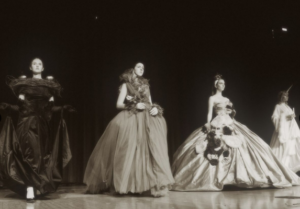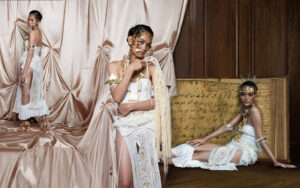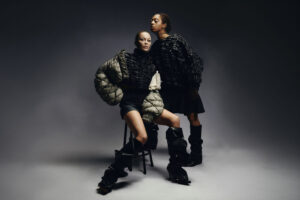
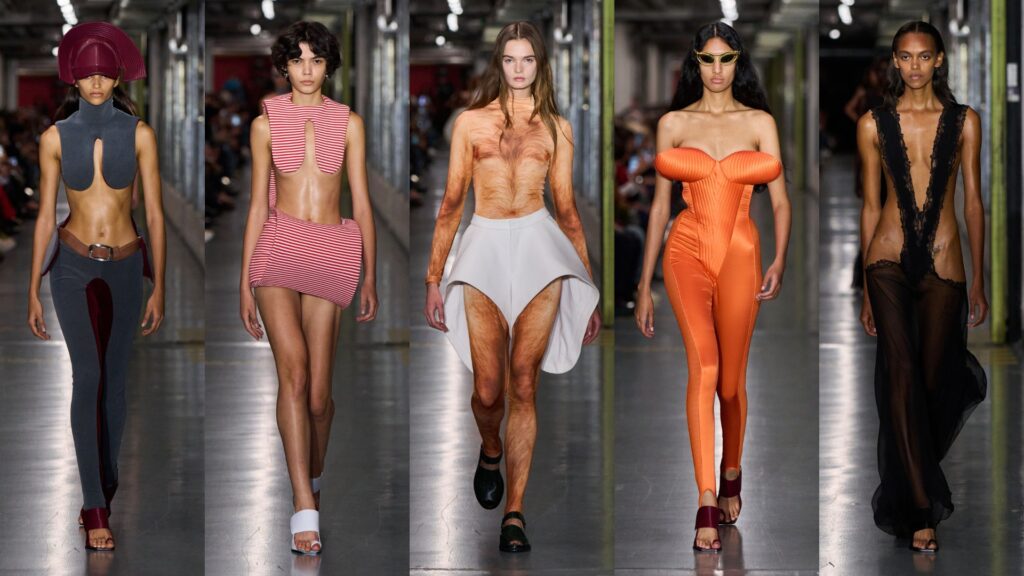

Duran Lantink’s debut for Jean Paul Gaultier was everything you’d hope for from a designer stepping into the house of the original fashion provocateur — bold, unapologetic, and laced with just the right amount of shock value. The Dutch designer didn’t hold back, pulling from Gaultier’s legacy of rebellion and theatricality while injecting it with his own brand of futuristic chaos.
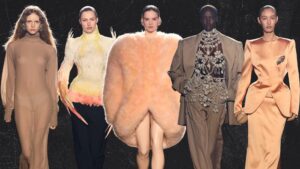
Presented in the dim, subterranean setting of the Musée du Quai Branly, the show set the tone before a single look appeared. It was messy, eccentric, and full of character. A fitting stage for a designer who thrives on tension between beauty and absurdity. The opening look, a hybrid between Gaultier’s iconic cone bra and Lantink’s inflated “bumper” shapes, instantly declared this wasn’t a nostalgia act.
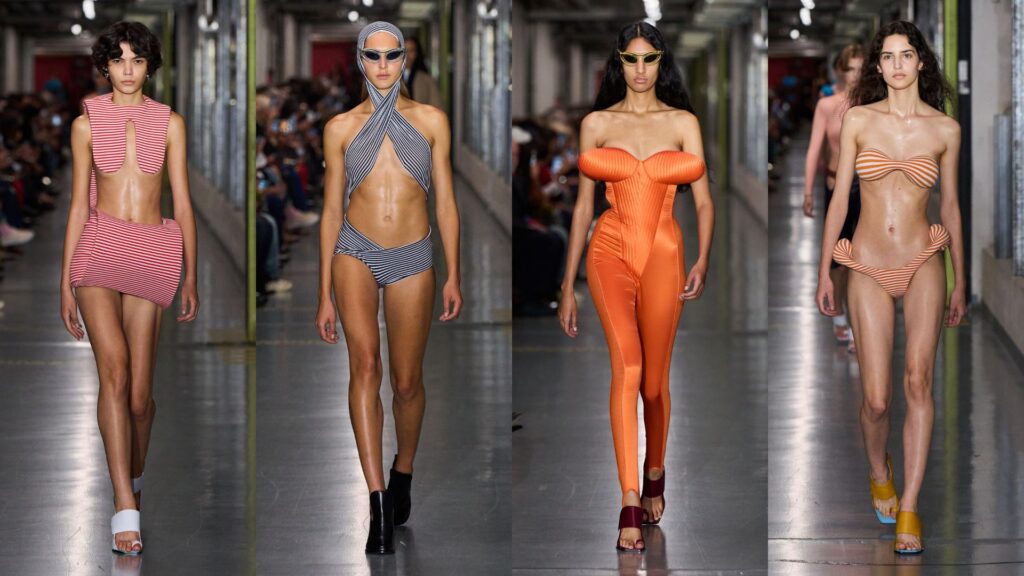
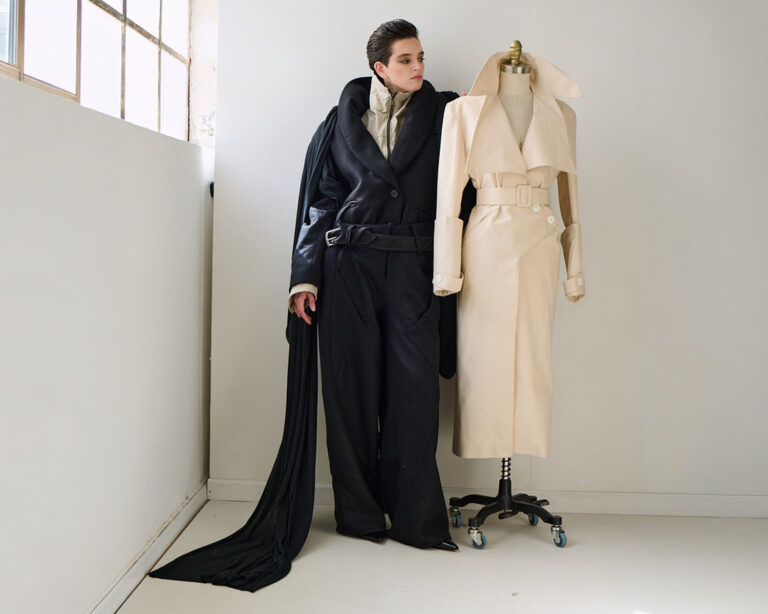
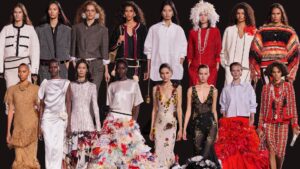
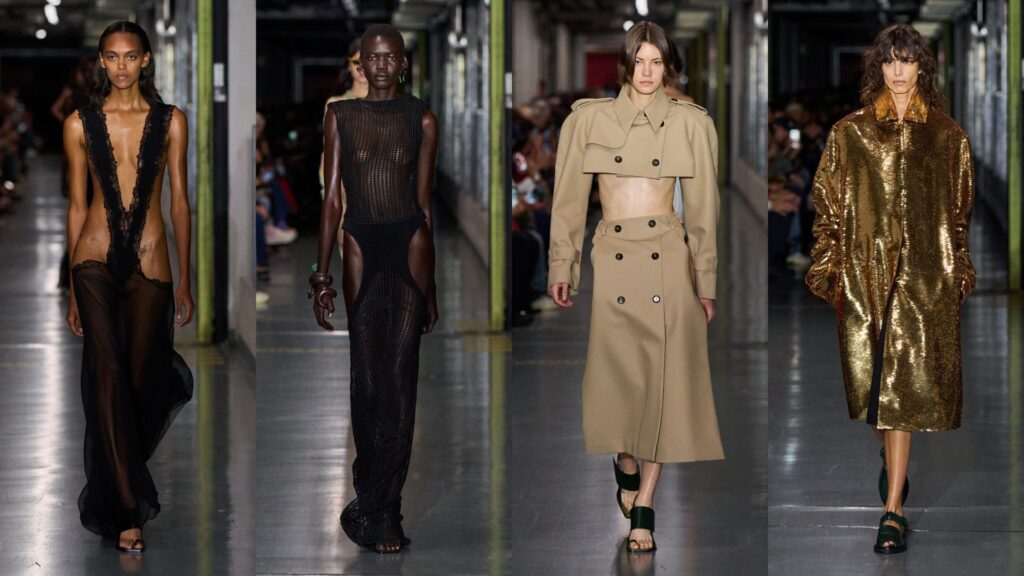
Lantink said he didn’t dive into the archives so much as “twist memories” of Gaultier into something current. And you could see that throughout the collection — not as literal homages, but as distorted reflections. Classic Gaultier symbols like the Breton stripe, tattoo-print mesh, and sailor hats were reimagined with a surrealist edge. A trenchcoat sliced into two, its skirt reshaped into a boxy, almost architectural silhouette. Stripes spiraled across bodies instead of running straight, and those sailor caps? They morphed into trapeze-line tops. It was familiar, yet strange — exactly the kind of playful distortion Gaultier himself would have loved.
Then came the full-throttle moments that made the audience squirm, laugh, and pull out their phones. Bodysuits printed with hairy torsos and cartoonish organs. A latex look that left nothing to the imagination. And a few pieces so revealing they flirted with performance art. It was all very Lantink being confrontational and body-conscious. Despite the theatrics, there was wearability tucked between the madness. Trompe-l’oeil printed tops and leggings, cropped jackets curling upward like sailor hats, and softly sculpted gowns all hinted at commercial potential.
But beneath the provocation was a clear respect for Gaultier’s legacy of using fashion to question social norms. Where Gaultier once put men in skirts and corsets, Lantink pushed further into questions of gender, identity, and self-expression — only now, in the age of digital spectacle.
It’s worth noting that Gaultier himself was never just about shock. He was about wit, a designer who turned clichés into something subversive and chic. Lantink gets that. He doesn’t replicate the past; he toys with it.
There was even a sense of humor in how self-aware it all felt, as if Lantink knew people would be both scandalized and entertained, and that’s precisely the point. In a world of polished minimalism, Lantink’s Jean Paul Gaultier feels alive and unpredictable.
It’s not all going to be for everyone nor should it be. But that’s what makes it feel right for this house. The bad boy of fashion might have found his modern heir.
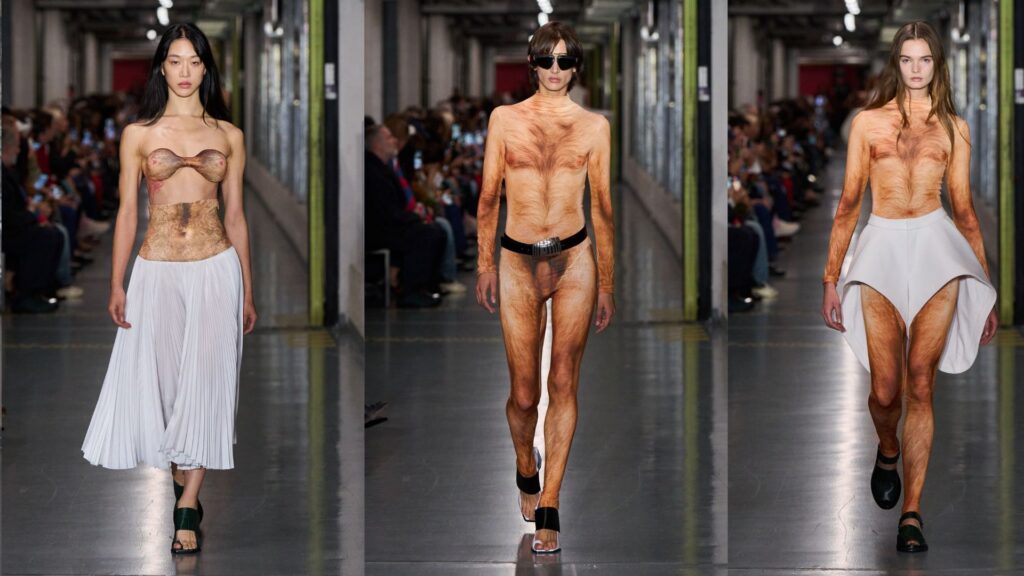
Photo Credit: Vogue Runway