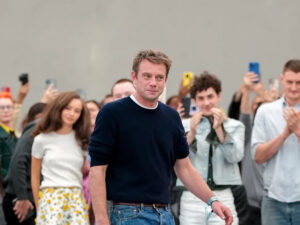

Michael Rider’s much-anticipated debut at Celine was more than just a runway show—it felt like a reset, a breath of fresh air, and a homecoming all at once. Held inside Celine’s historic headquarters on Rue Vivienne, the atmosphere was intimate yet grand, despite the Paris rain. Guests walked into the house—literally—past Celine-branded bikes adorned with straw bags and up into an open-air courtyard, where seats were arranged in the shape of the label’s iconic Triomphe logo. A massive silk foulard floated above the runway, beautiful but not quite weatherproof, as attendees clutched umbrellas during unexpected summer showers. The mood, however, remained celebratory.
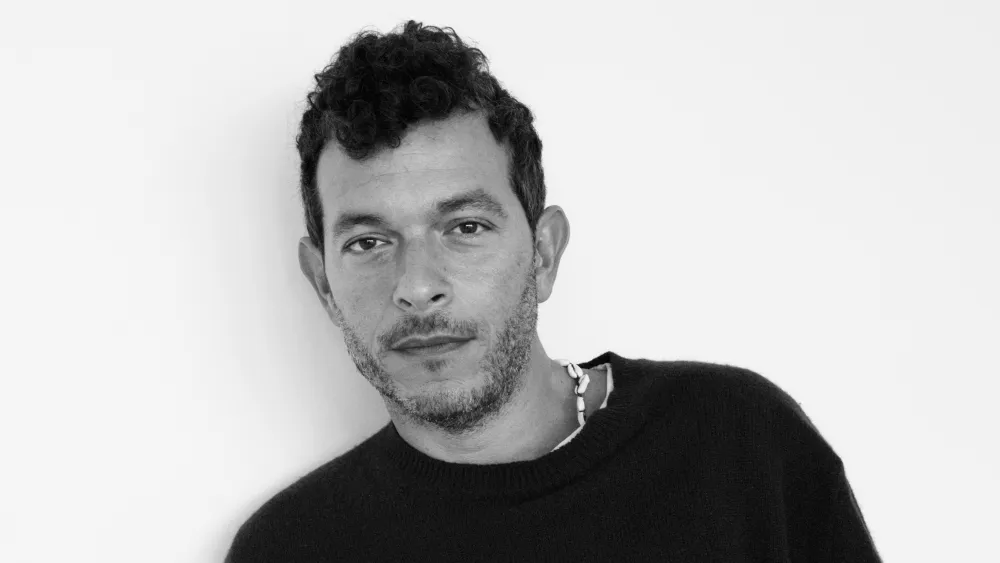
Rider is no stranger to Celine. He spent nearly a decade at the house under Phoebe Philo’s reign before taking the reins at Polo Ralph Lauren. Now, after a seven-year absence and following Hedi Slimane’s sharp-edged era, Rider returns to usher in a new chapter. One that feels both rooted in the brand’s heritage and refreshingly forward-looking.
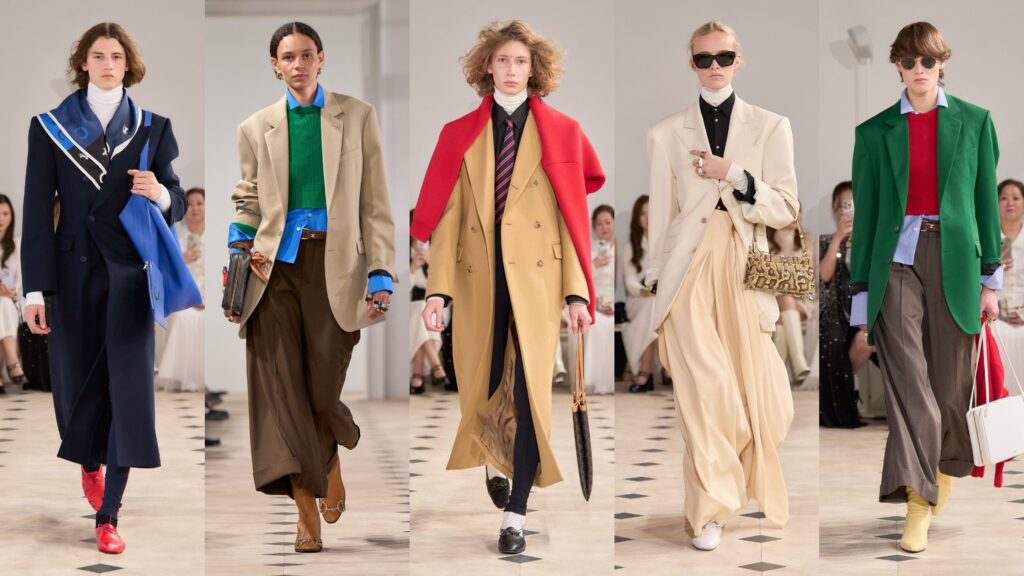
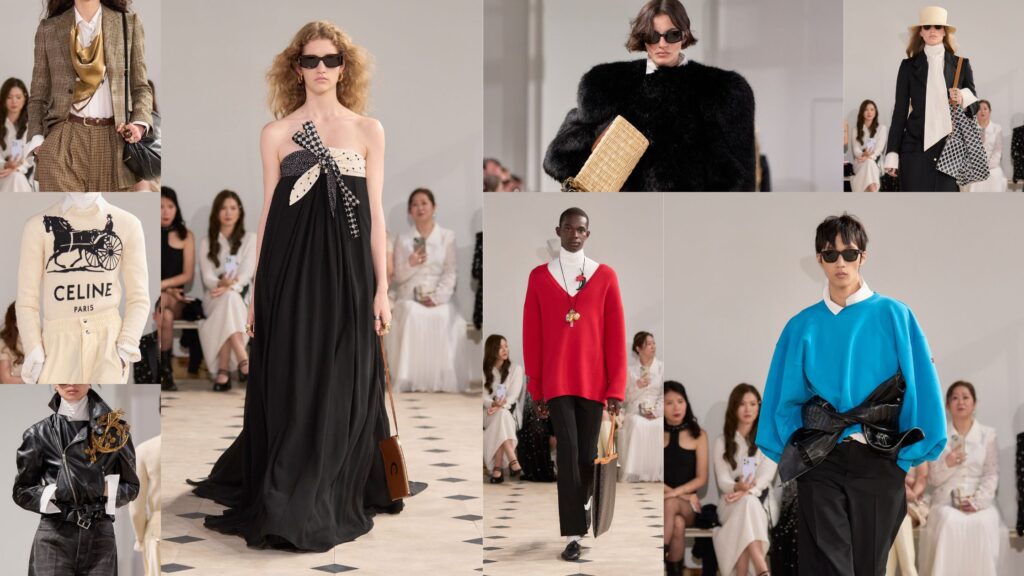
From the first look of his Spring/Summer 2026 collection, it was clear Rider wasn’t trying to erase what came before. Instead, he built on it. The show opened with sharply tailored jackets, wide-legged pants tucked into boots, light ruffles, and nods to skinny silhouettes. There were glimpses of his past mentors: the architectural tailoring of Ghesquière, the off-kilter polish of Philo. But this wasn’t a greatest hits reel. Rider’s voice came through loud and clear—a thoughtful blend of prep, polish, and poetic ease.
The collection cleverly mixed American sportswear with Parisian styling. You had cropped wide-leg trousers with button-downs, rugby shirts made in cashmere, blazers with uneven collars, and sweater-vests over fluid shirts. Scarves already hinted at in the show invites were tied around necks or looped into belts. Gold accessories were everywhere: chunky chains, signet rings, bangles stacked on one arm. It was maximalist styling layered over minimal, wearable pieces—a smart way to make high fashion feel accessible again.
Eveningwear got its moment too. A delicate black crochet gown and a sequin strapless dress paired with an ultra-cropped tuxedo jacket were standouts, balancing elegance with edge. Bags also made a statement, especially a bright blue tote with a curved, smile-like zipper, an instant classic in the making. These were clothes and accessories meant to live real lives, to be worn and re-worn, to age with the wearer and gather stories.
What was most impressive, though, was the attitude that permeated the whole show. Rider didn’t rely on gimmicks or spectacle. Instead, he made great style feel tangible again. There was something wonderfully human in the clothes—a sense of lived-in luxury, of quiet self-assurance. It was the kind of styling that made you want to go home and immediately rethink your wardrobe. Not to copy the look, but to recapture the feeling.
Post-show, Rider described Celine as standing for “quality, for timelessness and style—ideals that are difficult to catch, and even harder to hold on to.” He’s right. In a world full of fleeting trends and loud opinions about taste, his collection offered something rare: confidence without arrogance. There was no over-explaining or over-designing. Just beautifully made clothes with personality and purpose.
In the end, what Rider achieved with this debut was more than a strong first collection—it was a clear vision for Celine’s future. One that bridges the poetic clarity of the Philo era with his own contemporary sensibility. He didn’t just step into big shoes, he carved out a new path, one that feels distinctly his own.

And while the rain may have tried to steal the moment, it didn’t stand a chance. Underneath that silk foulard, amid the sound of raindrops and camera shutters, a new chapter at Celine quietly and confidently began.