
How do you follow up a designer like Jonathan Anderson? That was the question hanging over Jack McCollough and Lazaro Hernandez as they made their debut for Loewe this season. For more than a decade, Anderson redefined the brand, turning it from a Spanish leather house into one of the most exciting, idea-driven luxury labels in the world. His Loewe was quirky, intellectual, playful, and often strange in the best way.
For McCollough and Hernandez, the answer was simple. You bring your own rhythm into it. And that’s exactly what they did. Their collection, shown in Paris, felt like a fresh start. The show opened on a bright note, literally. A large Ellsworth Kelly painting, Yellow Panel with Red Curve, greeted guests at the entrance. Its sunny tones perfectly captured the mood: upbeat, optimistic, and energized. “Energy” was a word the duo used a lot when previewing the collection, and it showed in every piece that came down the runway.
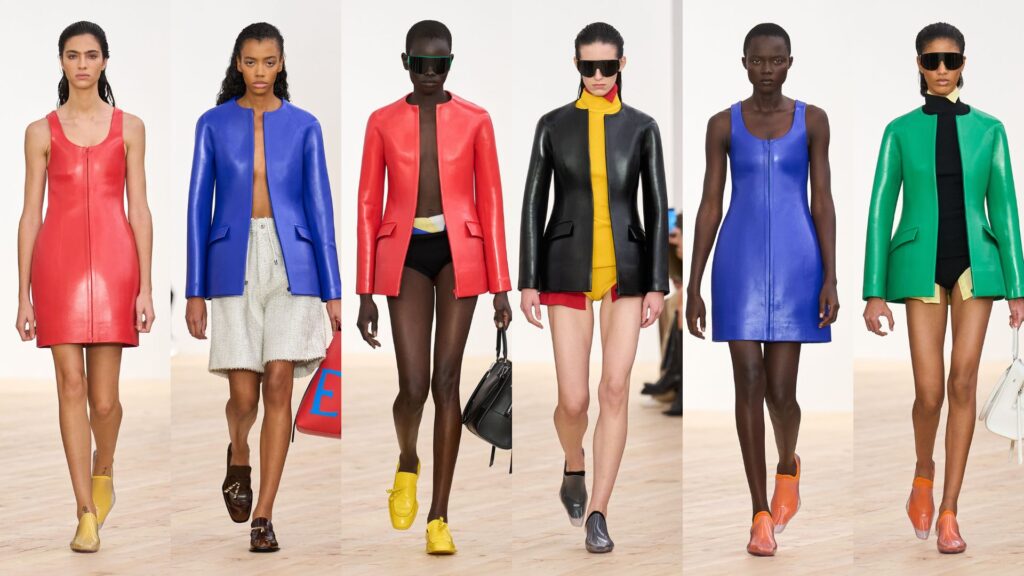
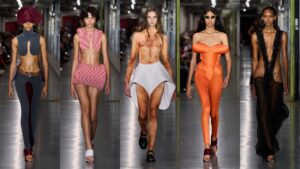
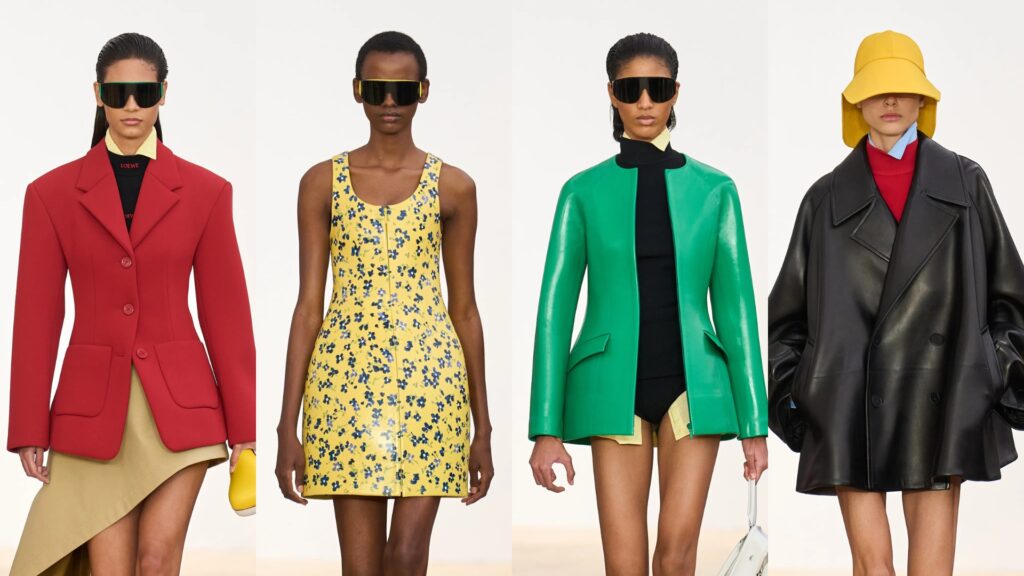
The first looks were a mix of sculpted leather jackets, molded to the body like second skin, and easy, sportif separates that nodded to their New York roots. You could immediately sense that this was a new Loewe, one that felt a little more casual, a little more sensual, and very alive. There was an element of heat to it, both literal and emotional. Hernandez himself said that what he wanted to bring back to Loewe was “a certain Spanishness with heat, skin, and emotion.” That came through clearly in the way the clothes moved: slinky towel-like dresses that looked kissed by the sun, cropped tanks that clung just so, and draped dresses that twisted and wrapped around the body with ease.
The pair have always had a deep understanding of women and how they want to feel in clothes. Their years at Proenza Schouler made them experts in that effortless intersection between city dressing and real life. Here, they brought that same ease into the world of Loewe. Jeans, for example, weren’t really denim—they were shredded leather, lightweight and flexible, molded to look like your favorite pair of Levi’s. Knit polos came in sunny primaries, softly draped over the body rather than fitted. And bomber jackets were worn with nothing underneath.
Their technical playfulness didn’t stop there. Some of the most striking pieces were the towel dresses made from 3D-printed fabric that mimicked the plush pile of terrycloth, and the leather “yarn” tanks that held their sculptural shape with embedded wire. Elsewhere, there were glossy, heat-sealed jackets shaped like bells, and windbreakers made from an experimental silk Gore-Tex hybrid. The level of craftsmanship was quietly staggering, but never showy. It’s the kind of high craft that doesn’t need to scream to be seen.
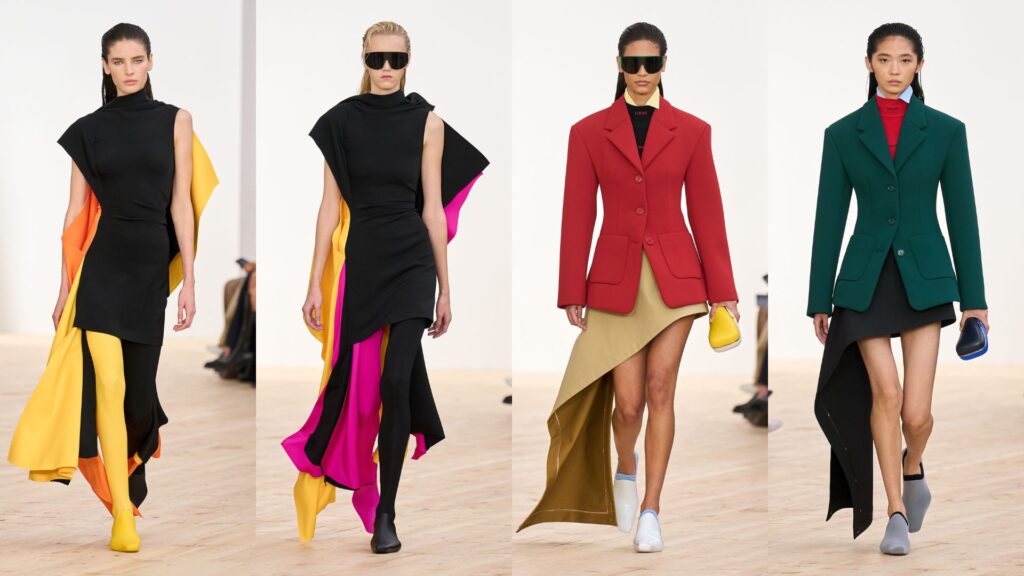
Color was a big story this season—not just for Loewe, but across European fashion in general. The designers leaned into it fully. Pillarbox reds, canary yellows, deep blues, and warm creams danced across the runway, offset by flashes of metallic and unexpected pastels. A red blazer with exaggerated proportions drew audible murmurs from the audience—and even caught the approving eye of Pedro Almodóvar, seated front row. (It doesn’t get more Spanish than that.)
The accessories, too, were strong indicators of where this new Loewe is heading. The key bag, a single-handle Amazona, came in supple suede, crocodile, and slouchy leather—a balance of refinement and ease. Footwear was equally intriguing: rubber court shoes, canvas pumps wrapped in leather cords, and glossy kitten heels paired with colorful ankle socks. It all felt slightly offbeat but still chic, in that “you didn’t overthink it” kind of way.
If Anderson’s Loewe was about cerebral craft and conceptual storytelling, McCollough and Hernandez’s Loewe feels more instinctive—rooted in movement, texture, and feeling. There’s less irony, more sincerity. You can sense that they’re not trying to outsmart the brand’s legacy, but to live inside it. Their work feels emotional, sensual, and grounded in the everyday.
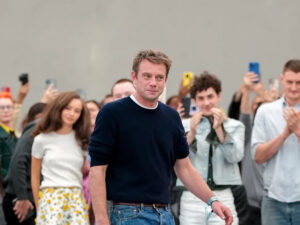
The show’s pacing reflected that energy. It built steadily from cool minimalism to vibrant maximalism, closing on shimmering gowns and sculptural fluidity. The applause began even before the finale walk finished—a clear sign that something had clicked. When the duo came out, wearing matching red and blue polos (a playful nod to Americana and to each other), the crowd rose to their feet. It wasn’t just polite enthusiasm; it was genuine excitement. You could feel that this was the start of something promising.
What’s most interesting about this debut is how the two designers managed to blend their Proenza Schouler DNA with Loewe’s deep Spanish heritage. On paper, it might sound like a clash—New York practicality meets Madrid sensuality—but on the runway, it made perfect sense. The collection had the structure and clarity of their earlier work, but with a looseness that felt distinctly Mediterranean.
It’s easy to see why people were curious, even skeptical, about this appointment. Loewe under Anderson was a phenomenon, one of the few brands that managed to be both critically adored and commercially successful. For anyone stepping into that, the pressure would be immense. But McCollough and Hernandez didn’t shy away from that legacy,they respected it. They didn’t try to reinvent Loewe overnight. Instead, they focused on continuity: keeping that spring in its step while adding their own stride.
And that’s what makes this collection such a great start. It didn’t scream for attention; it didn’t need to. It simply worked. The clothes felt wearable yet elevated, modern yet human. They invited you in, rather than standing back and asking you to decode them.
At its core, Loewe was about joy, about reconnecting with the tactile pleasure of clothing. There’s still room for growth, of course. The collection wasn’t revolutionary, and it didn’t have that surreal edge. But maybe it didn’t need to. What it offered instead was something rarer in fashion right now: optimism. The kind that makes you look forward to what comes next.
Photo Credits: Vogue Runway