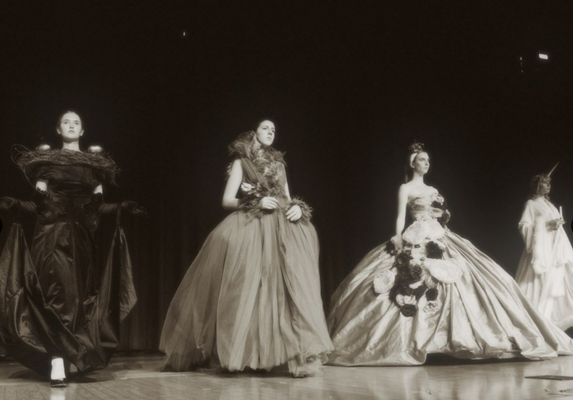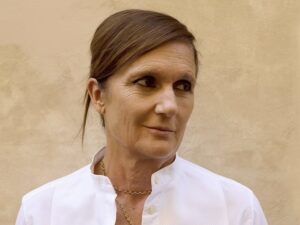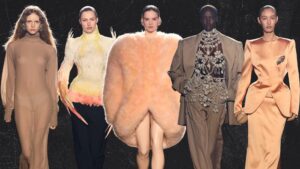


In Esther Park’s world, fashion is not just fabric and form, it is memory materialized, emotion stitched into silhouette. The New York–based designer has built her creative language around one of the most profound relationships in her life: the bond between mother and daughter.
Growing up in New Zealand, Park witnessed her mother’s quiet grace and formidable strength. “She was powerful, resilient, yet moved through life with an elegance that felt almost otherworldly,” she recalls. It was this duality, tenderness bound with ferocity, that became the foundation of her work. Park imagines her mother as a swan: a guardian who shields, nurtures, and fiercely protects, yet whose wings sometimes weigh heavy with control.


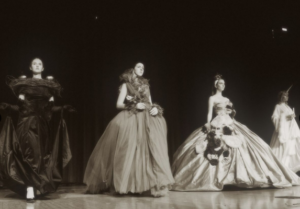
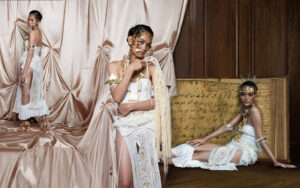
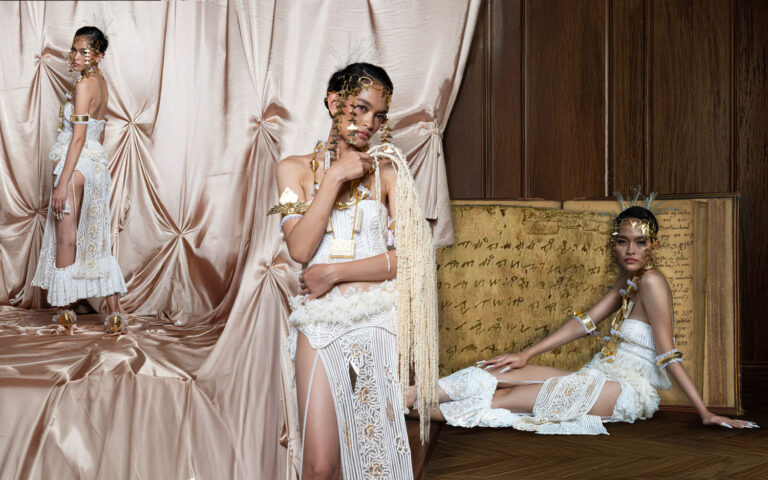
This tension, between protection and possession, softness and strength, guided Park’s exploration of textile and form. Rather than relying on traditional couture embellishments, she chose pumice stones, a porous volcanic rock native to her childhood landscape, and coated them in enamel. At first glance, they appear as delicate beadwork; up close, they reveal their rough, primal truth. “I wanted to spark that moment of curiosity,” she explains, “a surface that feels strangely familiar yet difficult to place.”
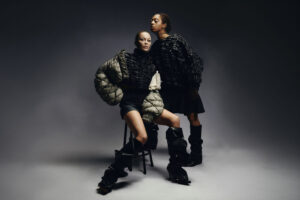
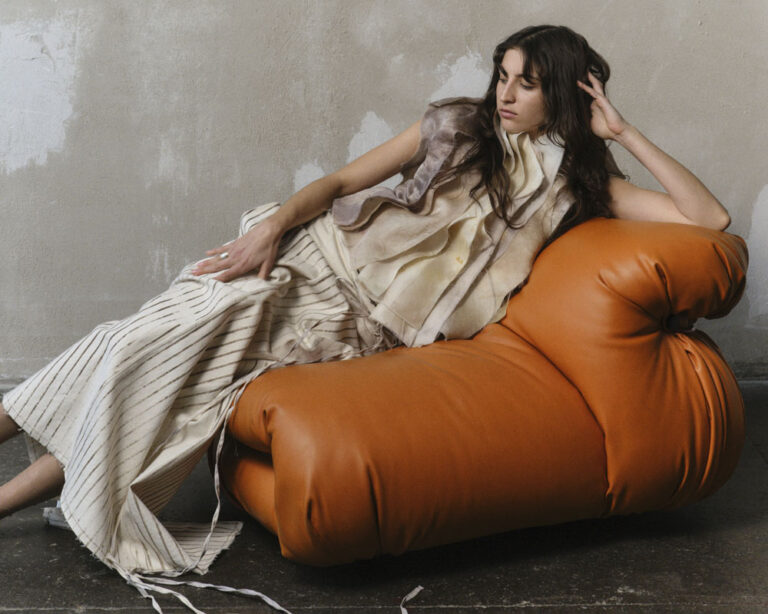
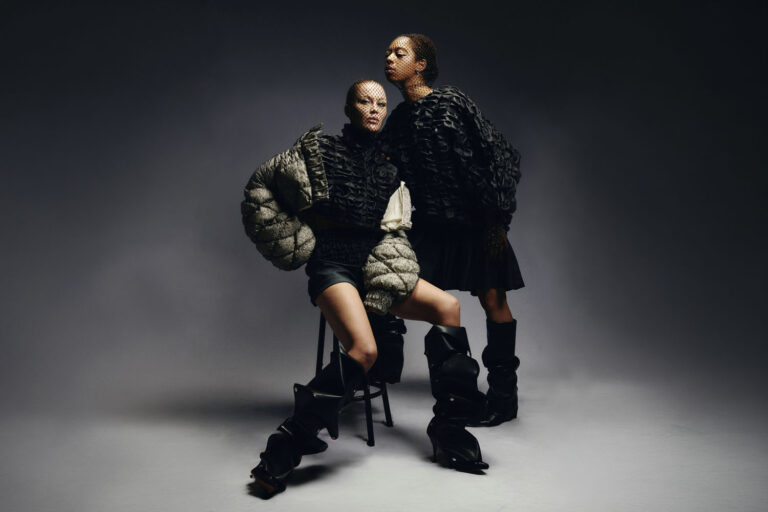
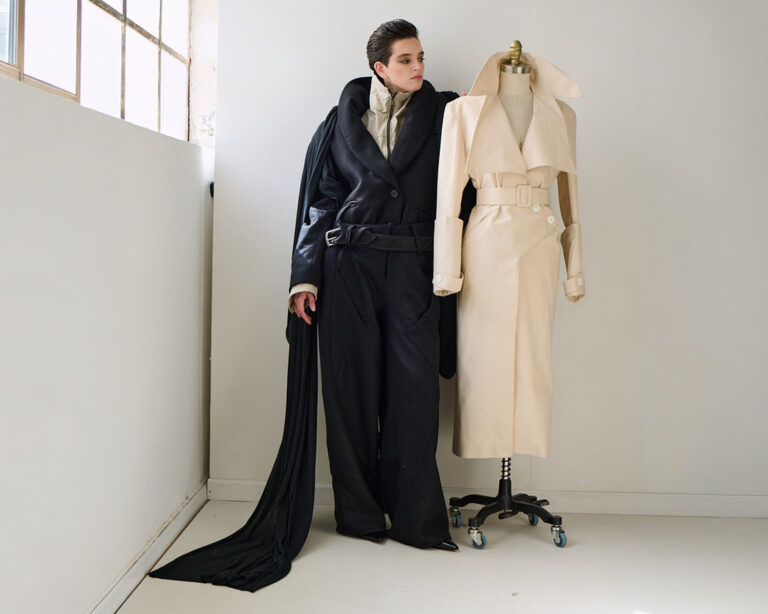
Silhouettes echo the same contradictions. Constricted bodices give way to sweeping skirts, garments shift between restrictive tailoring and fluid drapery. Horsehair hymo, a coarse material typically hidden in the interiors of jackets, emerges boldly in dresses, paired with the enamel-coated stones. Cotton canvas contrasts against smooth, flowing textiles. The result is fashion that feels both intimate and unyielding, evoking, as Park puts it, “vulnerability encased in strength.”


Personal memory is not only embedded in material, but in imagery. Park reimagined Hwatu, the traditional Korean playing cards she grew up with, into six original designs drawn from photographs of herself and her mother. They bear titles such as Embrace and Umbrella, each an illustration of maternal devotion, a protective wing, a leash of love, a shelter from storms. These cards became visual anchors for the collection, translated into her distinctive beading language.
Park’s inspirations span beyond family. The raw choreography of Pina Bausch’s The Rite of Spring informed her approach to movement and silhouette, garments shifting between grace and animalistic tension. The sculptural playfulness of artist Ross Bonfanti’s “Concreatures” sparked her experimentation with hard-yet-playful materials. What emerges is a body of work that is deeply personal yet universal, a reflection of how memory, heritage, and artistry intersect.


For Park, the process was anything but straightforward. “The most testing moments were in material development, which was driven almost entirely by trial and error,” she admits. Straying from traditional couture methods, she built a practice rooted in experimentation. Failed attempts became lessons, guiding her toward a language that felt authentically her own.
What lingers after viewing her work is not only the visual impact but the emotional resonance. It is a reminder of how family bonds, complicated, tender, protective, suffocating, shape us. Park believes these relationships are “a universal love language,” and through her designs, she invites others to see fragments of their own stories reflected in hers.
As she looks ahead, Park envisions her future practice as a continuation of this dialogue between memory and material. “Every project has its own distinct material language,” she says. “It’s not about forcing a medium to communicate a concept, but about discovering and nurturing the language each story demands.”
With her vision rooted in intimacy and experimentation, Esther Park is carving a space for herself in fashion where design becomes more than adornment, it becomes a vessel for memory, a testament to love, and an exploration of the fine line between care and control. This journey now enters a new chapter as she takes on the role of Creative Director at Kubeko for their 2026 collection, expanding her practice onto a broader stage while continuing to nurture the dialogue between memory and material.
Follow Esther Park on Instagram here.