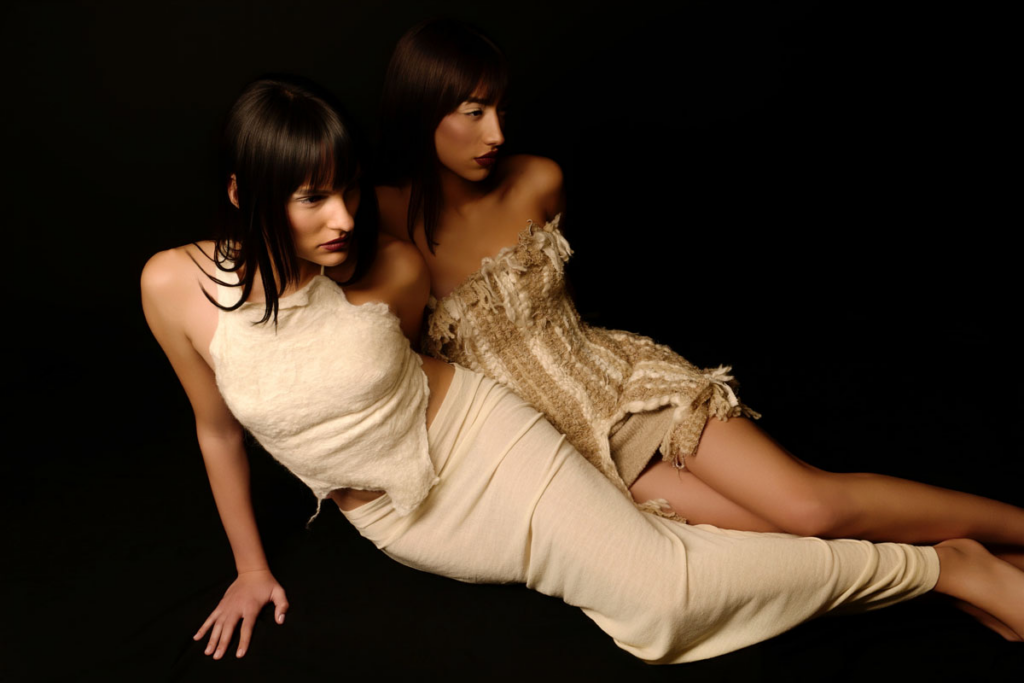

For Alisa Dudaj, this collection began not with a sketch, but with a pause. At a time when she felt creatively adrift, searching outward for references and direction, she found herself increasingly disconnected from her work. Conversations about identity and personal language circled around her, yet the answers felt distant, until she realized that what she was looking for had never been far away.
“As an Albanian, my strongest memories were moments spent with my grandmother, watching her knit and crochet,” Dudaj recalls. Those memories, intimate and tactile, became the emotional foundation of the collection. Instead of chasing inspiration elsewhere, she began to look inward, toward her own history, her family, and the cultural rituals embedded in everyday Albanian life. That shift marked the beginning of a deeply personal body of work rooted in heritage, memory, and the act of making by hand.
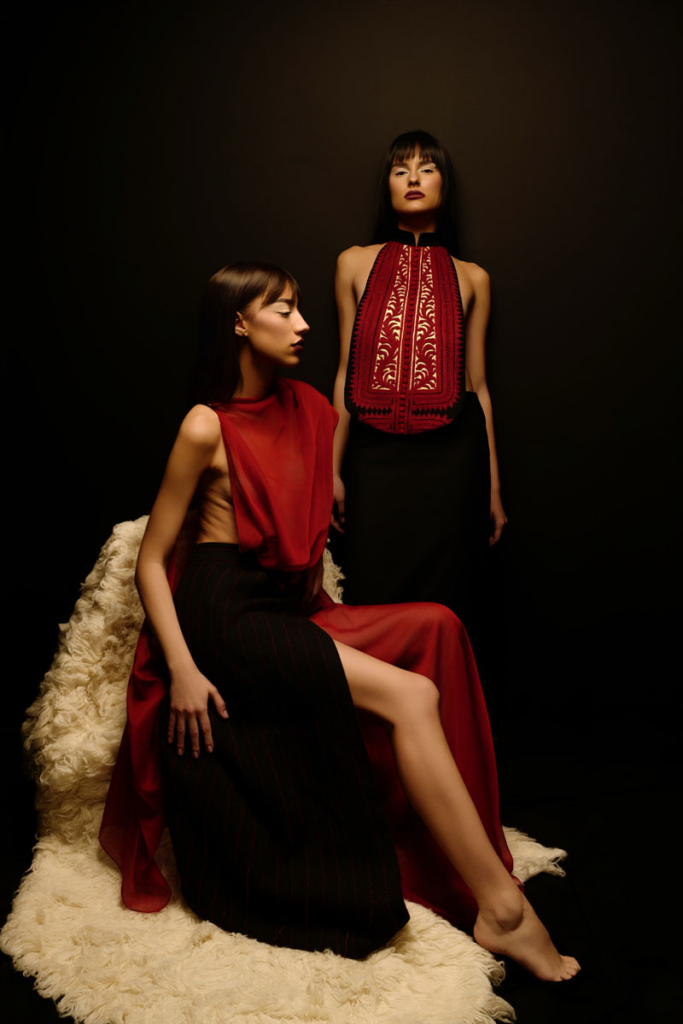
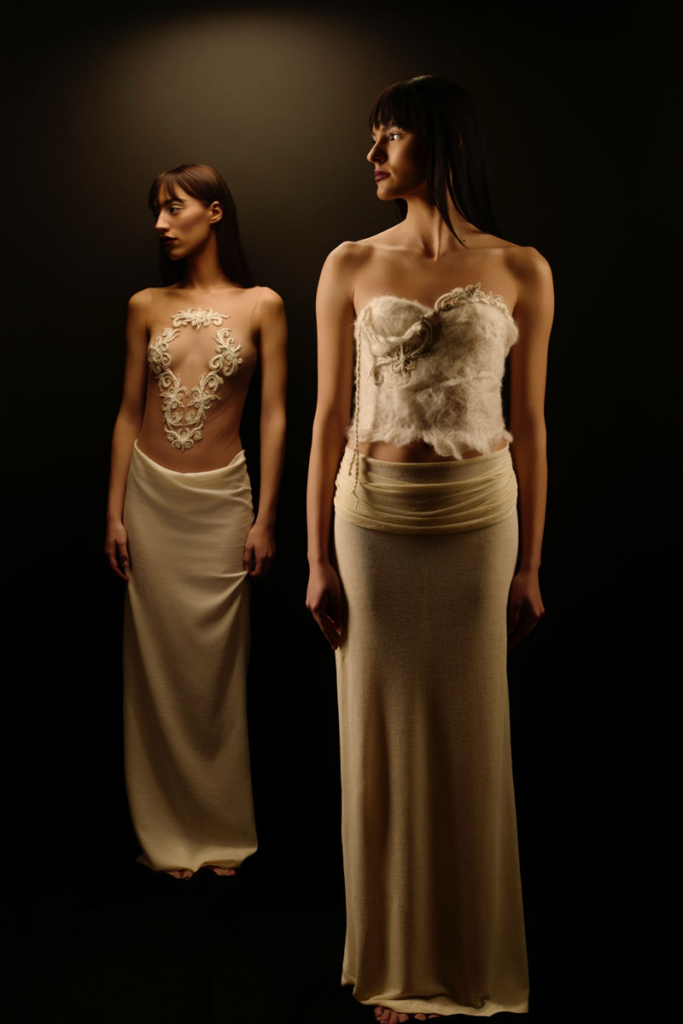
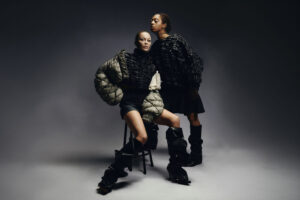
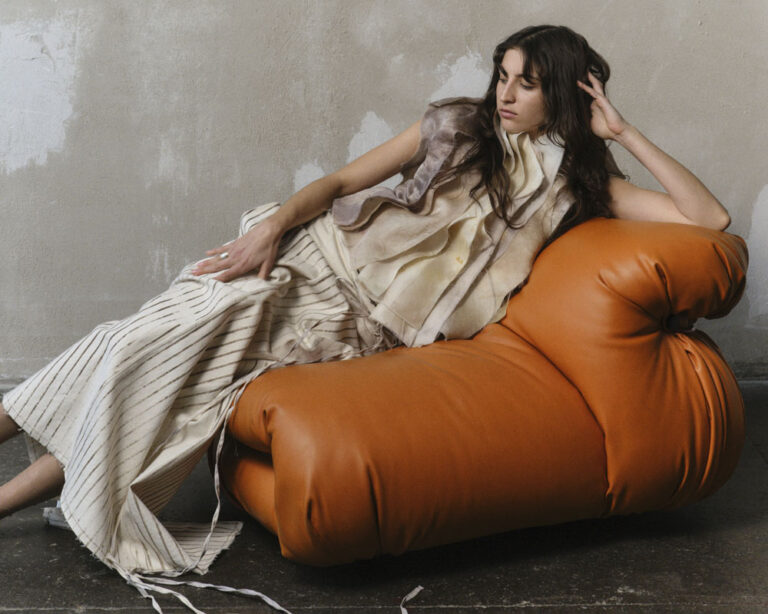
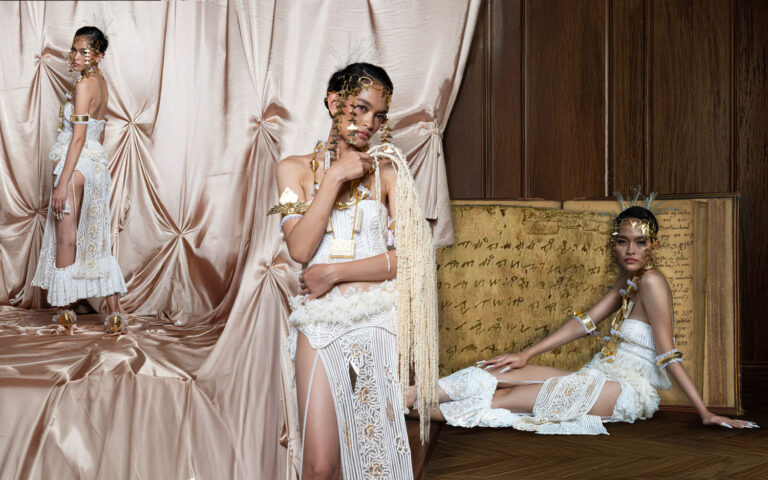
The collection draws inspiration from traditional Albanian clothing, celebrating not only its visual language but also the processes behind it. Hand embroidery, weaving, and wet felting, techniques once practiced as part of daily life, are central to each garment. Dudaj approaches these methods with reverence, not as decorative gestures but as carriers of meaning. “Using traditional techniques allowed the garments to feel like they were telling a story,” she explains. Each stitch and texture becomes a quiet narrative, honoring craftsmanship in a world increasingly defined by speed and disposability.
Working slowly is not simply a preference for Dudaj; it is a philosophy. In contrast to an industry driven by immediacy and constant production, her process values patience, touch, and presence. “Working slowly allows me to pause and truly appreciate the details,” she says. Handwork creates space for reflection, for both the maker and the wearer. The garments are designed to be experienced, not consumed, carrying visible traces of time, care, and intention.
Sustainability emerges naturally from this way of working. Dudaj often sources natural fibers from deadstock materials, allowing the available fabric to guide the design rather than forcing materials to fit a predetermined concept. “In many cases the creative process begins with what materials are available,” she notes. Especially for simpler pieces, the fabric itself becomes the starting point. This approach not only reduces waste but also ensures that each garment develops its own character. Because of the handmade techniques involved, no two pieces are ever identical, each one holding a distinct sense of memory and permanence.
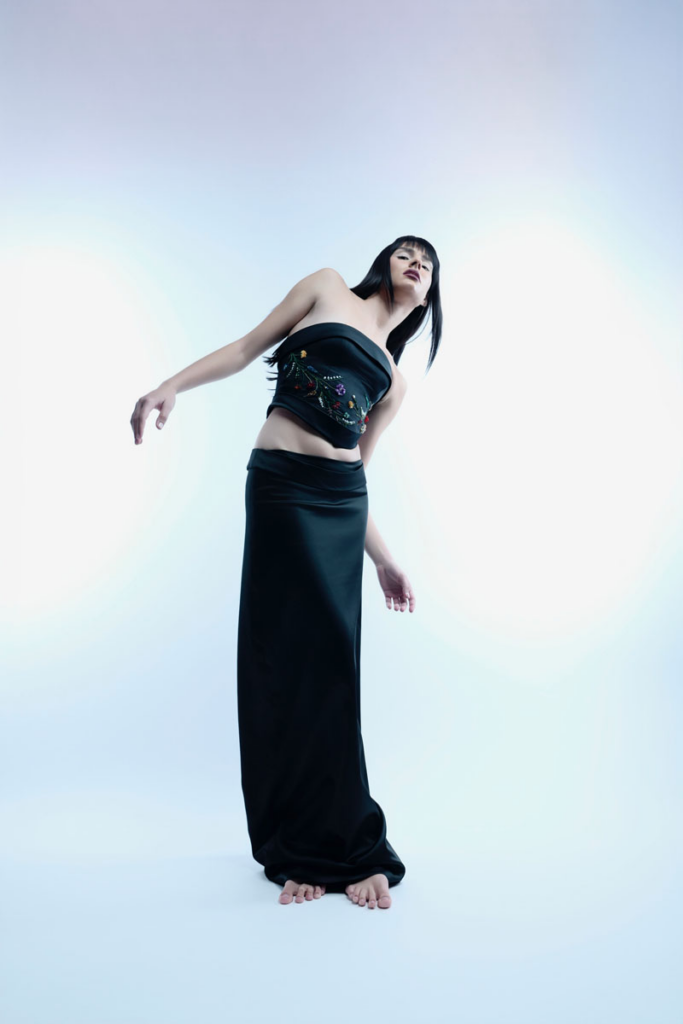
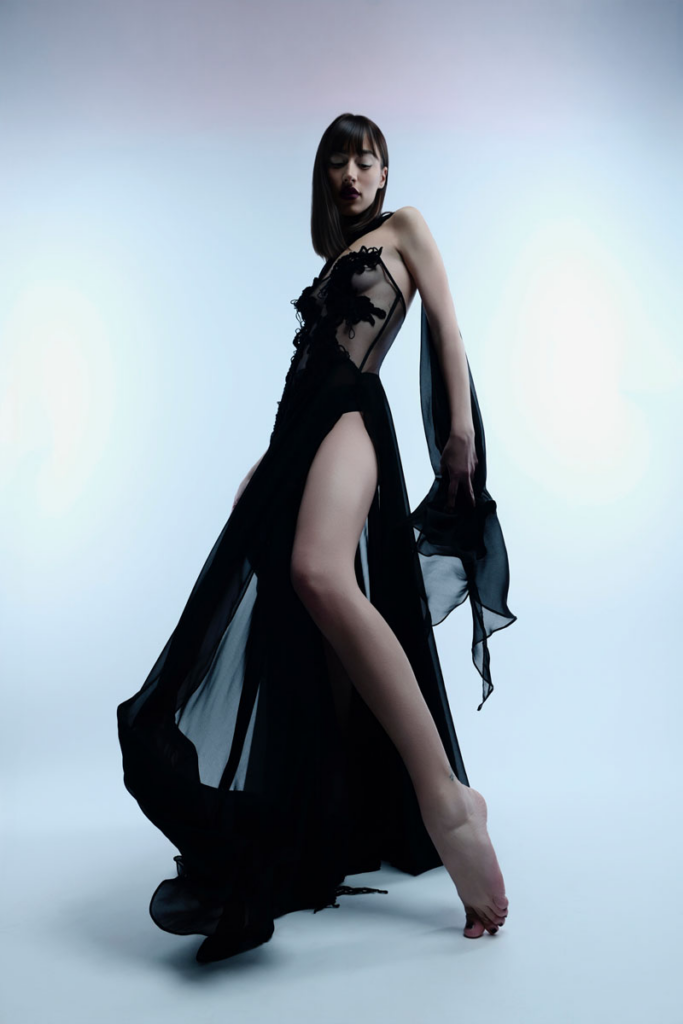
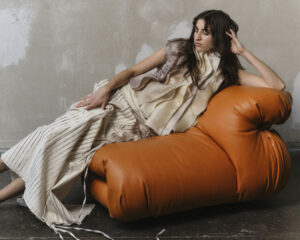
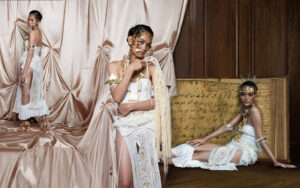
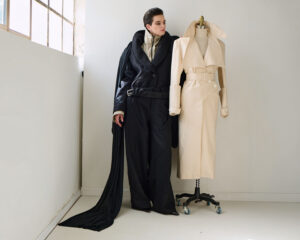
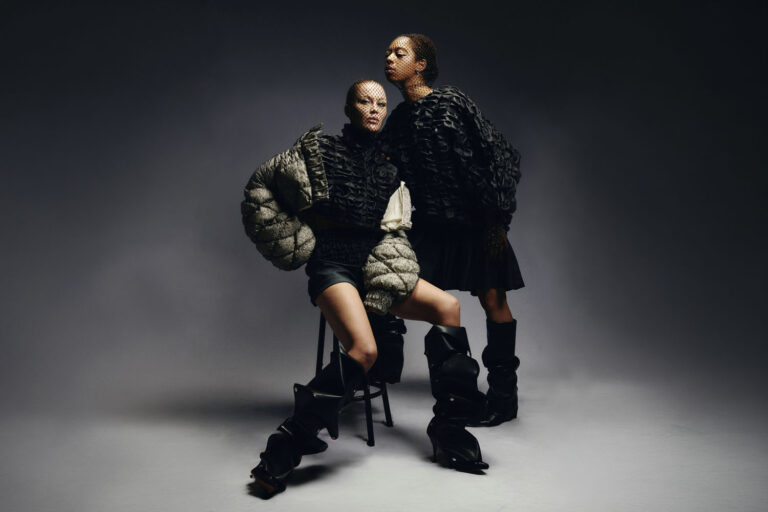
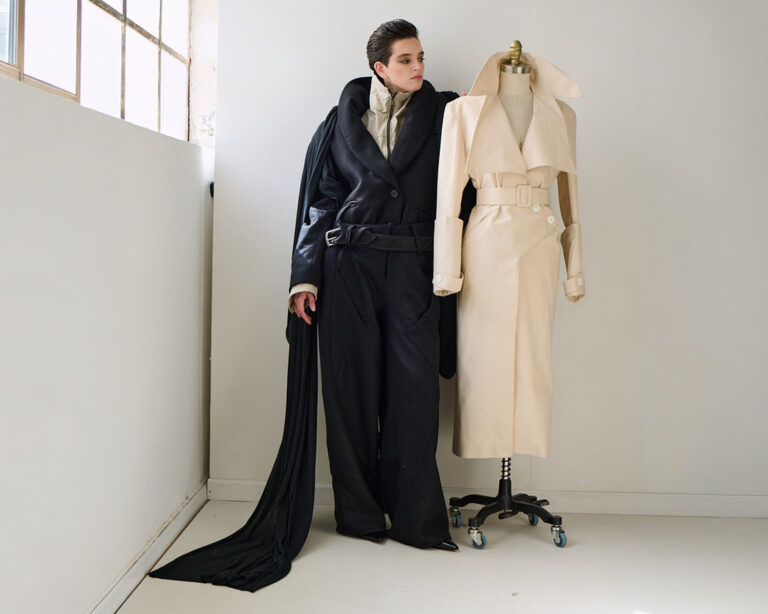
Rather than recreating traditional garments literally, Dudaj translates cultural memory through subtle, contemporary details. Silhouettes are modern, confident, and wearable, while embroidery and texture quietly reference the past. Her aim is not nostalgia, but continuity. “The goal is to honor tradition without being nostalgic, creating pieces that feel relevant and rooted in today’s world,” she explains. In this balance, tradition becomes something living and evolving, not frozen in time.
A key visual and conceptual reference for the collection came from the photographic archive of Pietro Marubi. His images document Albanians wearing their everyday clothing, capturing dress as lived experience rather than spectacle. For Dudaj, these photographs were essential in shaping her research and visual language, reinforcing the idea that clothing holds social, emotional, and historical weight.
Creating the collection independently came with challenges. The time-intensive nature of handcraft meant that each piece took days to complete, with little room for shortcuts. “If something does not work, you often have to start again from scratch,” Dudaj says. Collaborating with artisans in Albania also required patience. Many are trained in strictly traditional ways, which can make it difficult to push toward unconventional ideas. Yet this tension, between preservation and experimentation, mirrors the essence of her work.
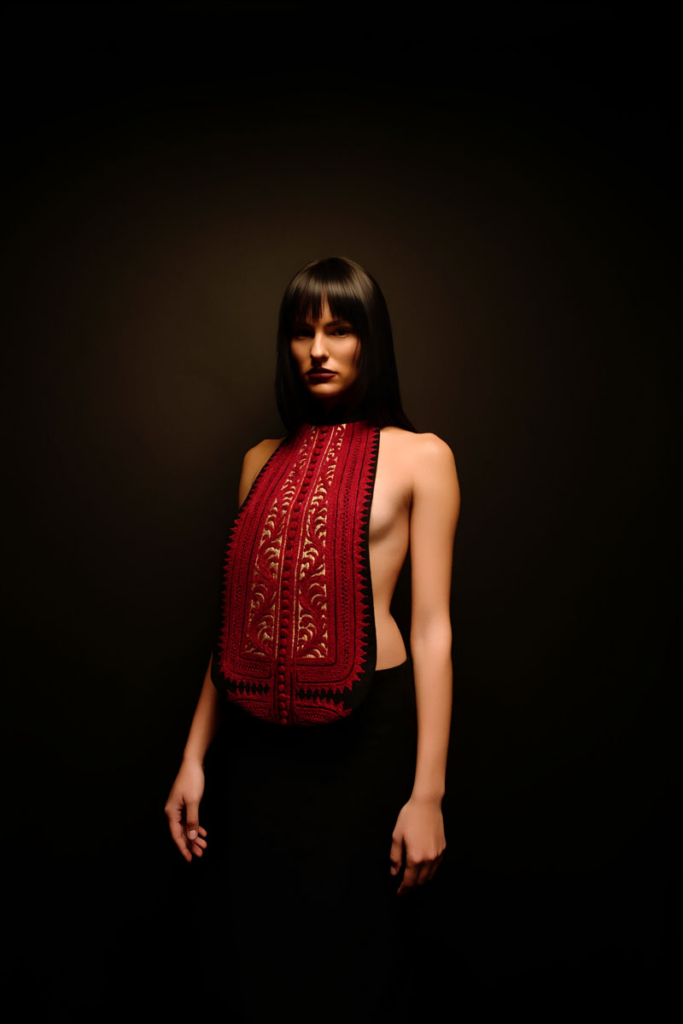
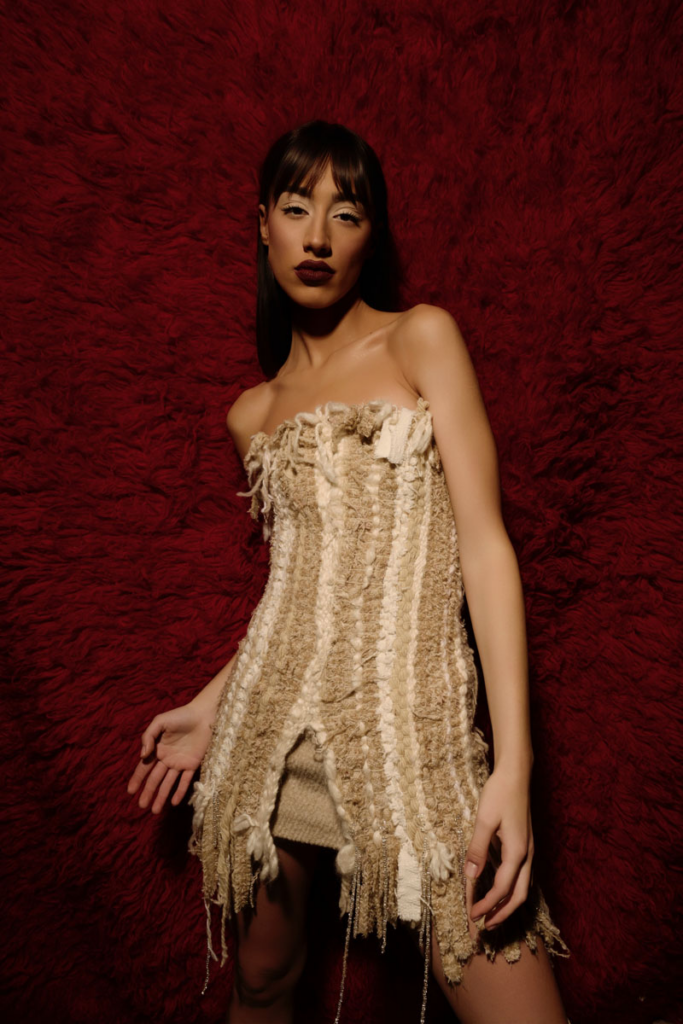
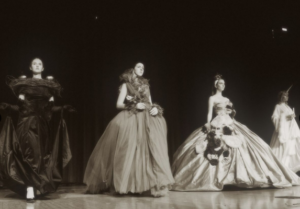
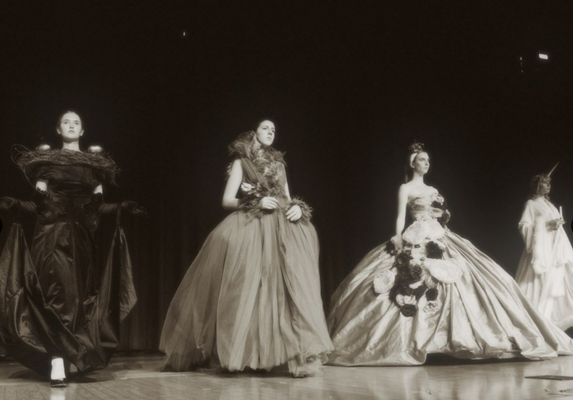
The photoshoot itself became an extension of the collection’s spirit. Longstanding collaborations fostered trust and creative openness, allowing the garments to remain central while still creating a sense of drama and atmosphere. Each image reflects the same care and intentionality present in the making process.
When asked if there is one garment that holds a particularly special story, Dudaj does not hesitate. “All of them do.” Every piece carries its own process, memory, and emotion, making it impossible to separate one from another. This emotional connection is precisely what she hopes wearers will feel. “I want them to feel like they are telling a story, something personal, layered, and meaningful.”
Looking ahead, Dudaj’s vision extends beyond her own practice. She wants her work to be seen globally, not only for herself, but for Albanian culture as a whole. “There have always been incredible artists, many of whom never had the opportunity to share their work with the world,” she says. Through her work, she hopes to help change that narrative, showing that Albanian identity continues to evolve, and that tradition and contemporary expression can exist together, stitched into the present.