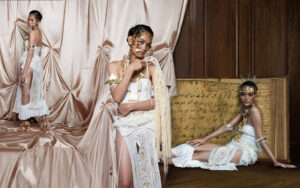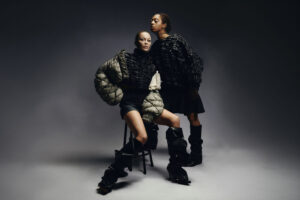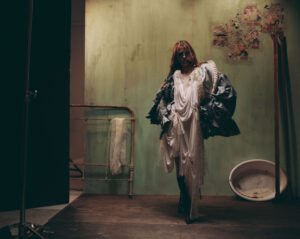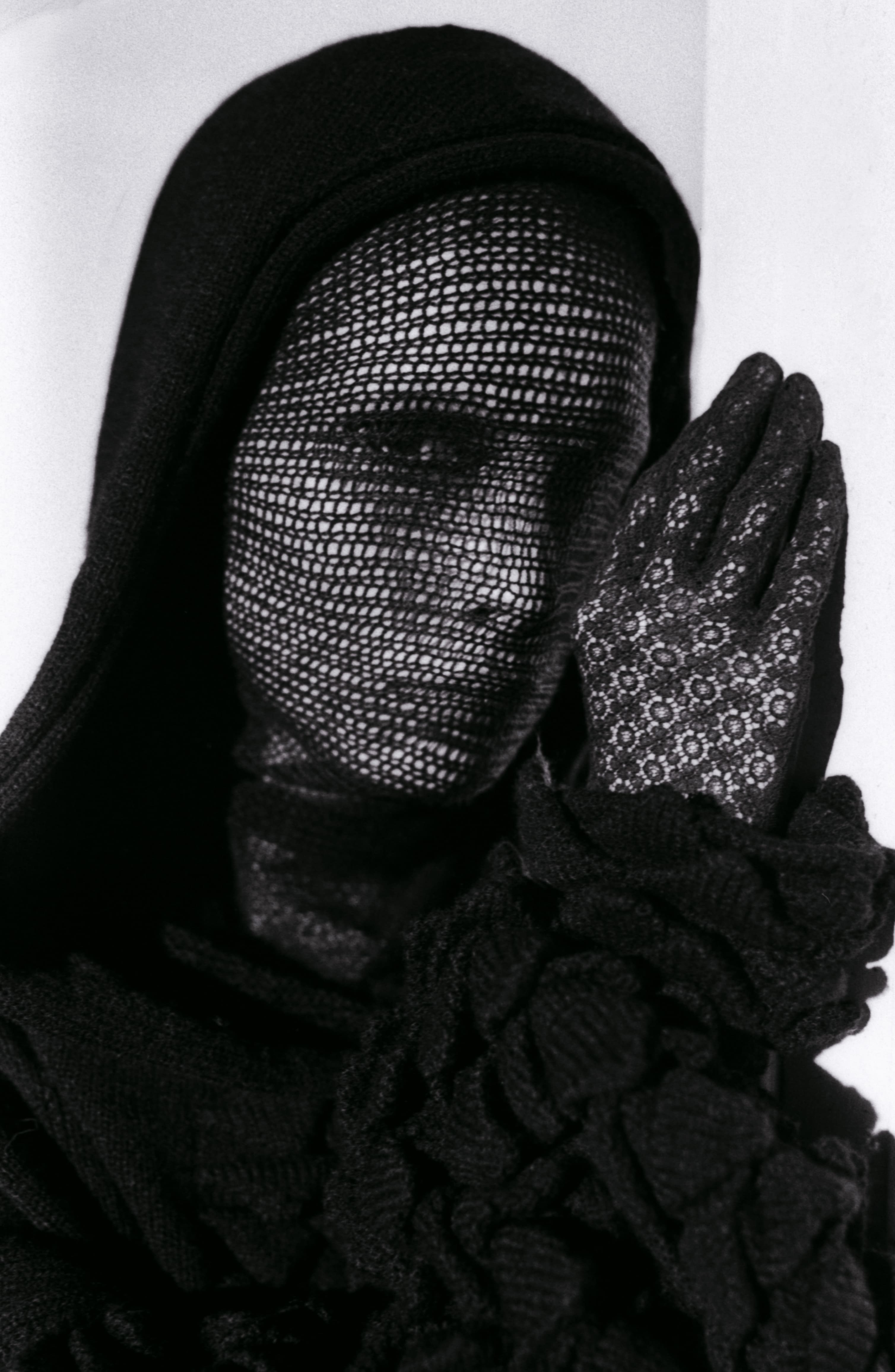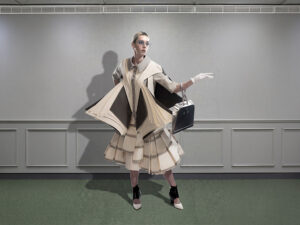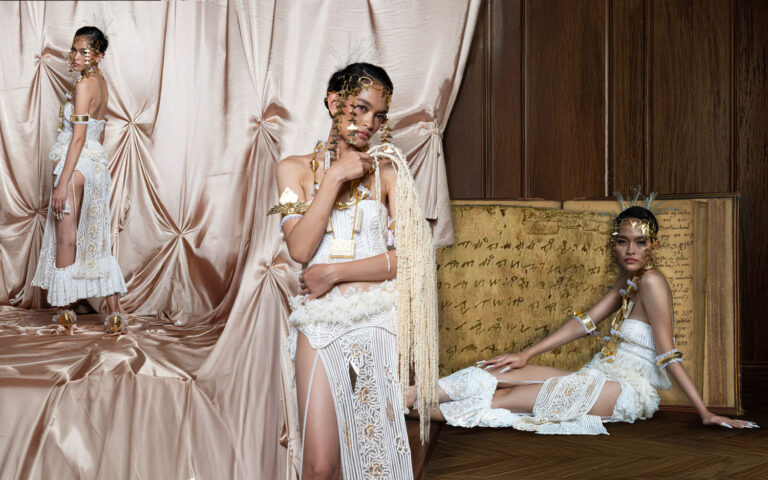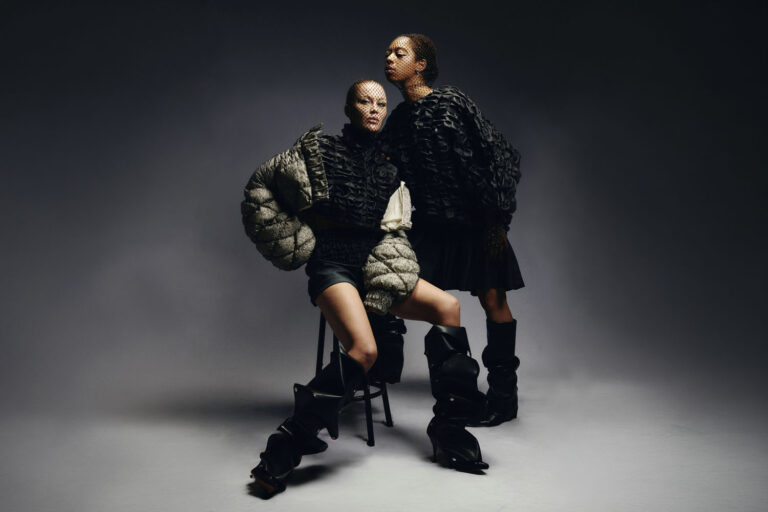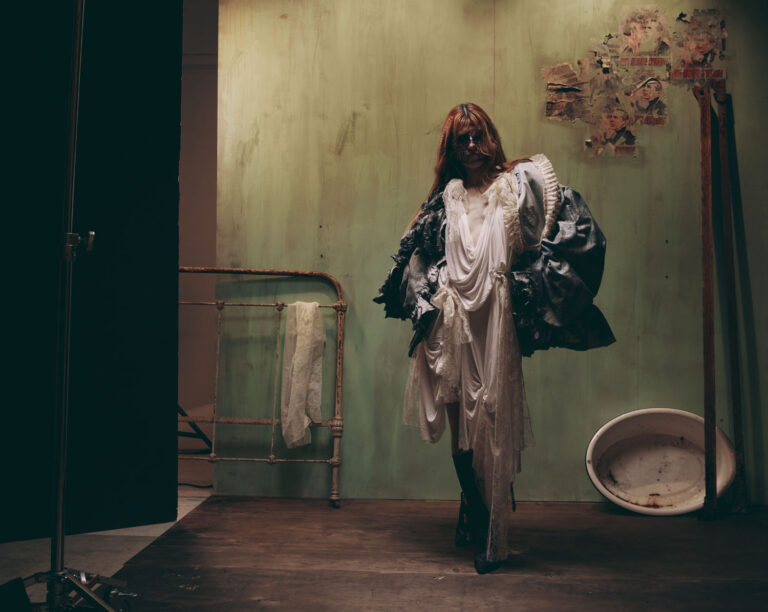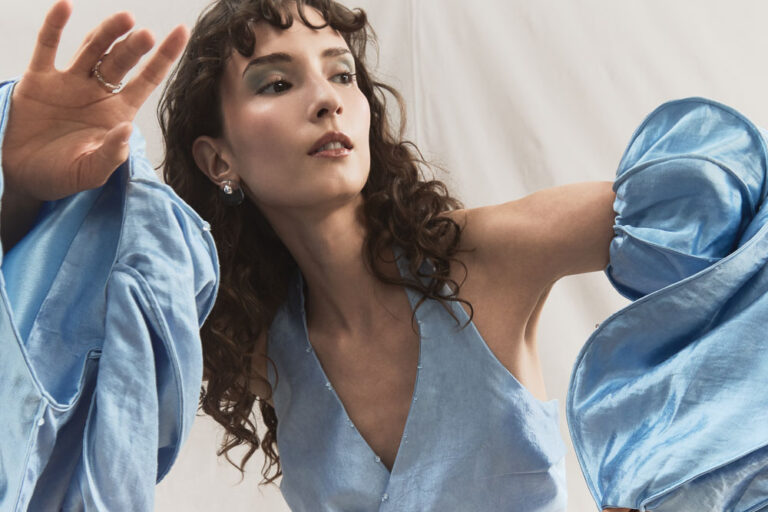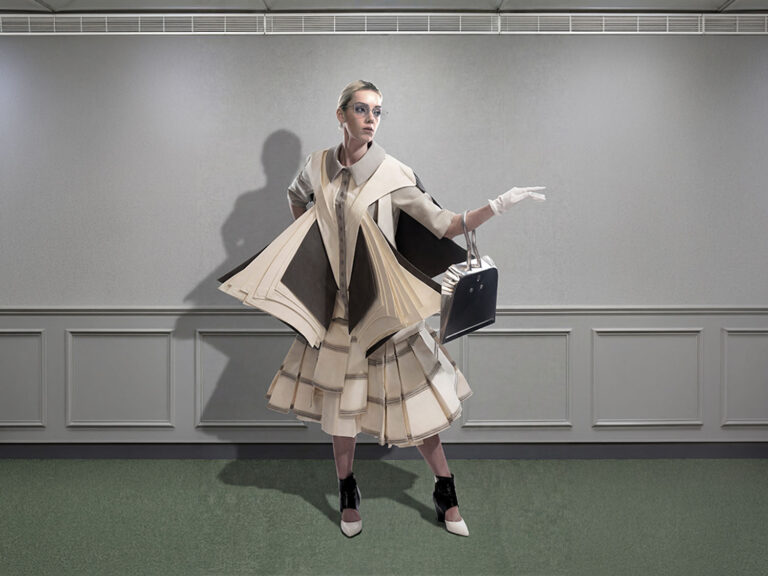
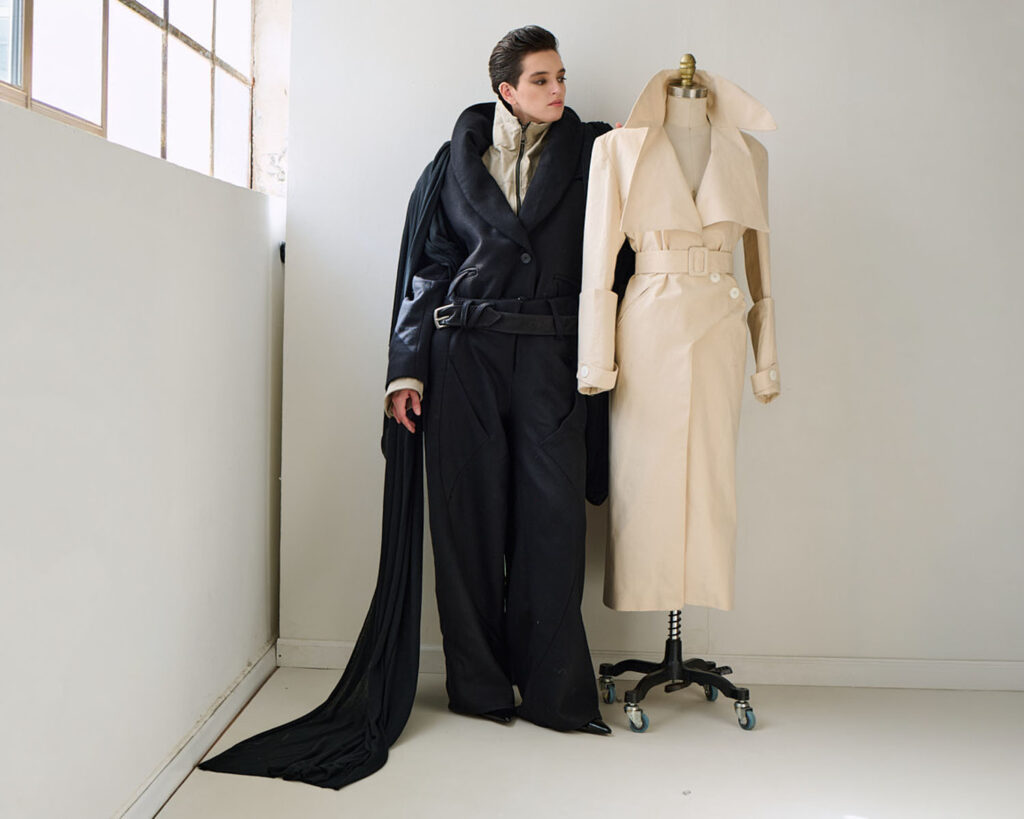

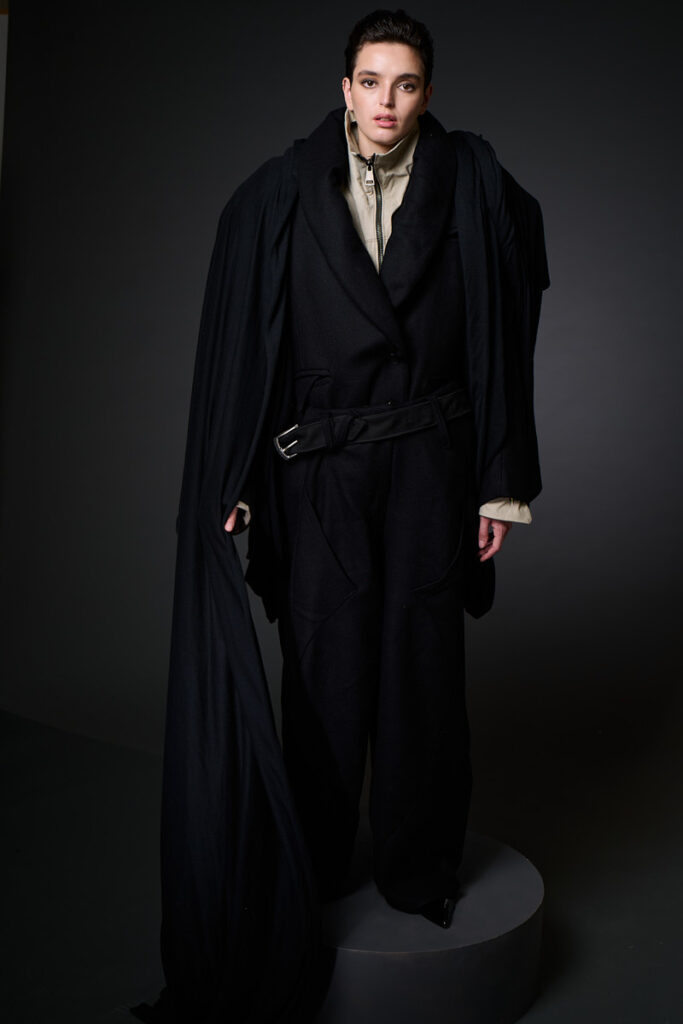
Fashion often reflects the world around us. For Ofek Danino, it also asks us to question how we respond when that world begins to change. Created during his studies at Shenkar College, his latest collection explores chaos as a state where familiar order collapses and people must redefine their relationship with the world. Inspired by Alfred Hitchcock’s The Birds, the project presents chaos not only as an enemy but also as a condition people must learn to live with.
The collection unfolds through a visual world that balances tension with stillness and threat with everyday life. Instead of searching for certainty, it explores how people create meaning when logic no longer offers clear answers. Danino avoids proposing a solution or imagining a new order. Instead, he embraces uncertainty as an essential part of the human experience. Within that uncertainty, fear exists alongside adaptation, hope and the possibility of a new beginning.
Although chaos became the project’s central theme, it did not shape the collection from the beginning. The idea emerged during a research course at Shenkar College, where Danino studied designer Joe Strassner. While researching his life, he discovered that Strassner served in the First World War. The experience deeply influenced both his thinking and his creative practice. That discovery encouraged Danino to reflect on his own relationship with chaos and the ways it shapes creative expression.
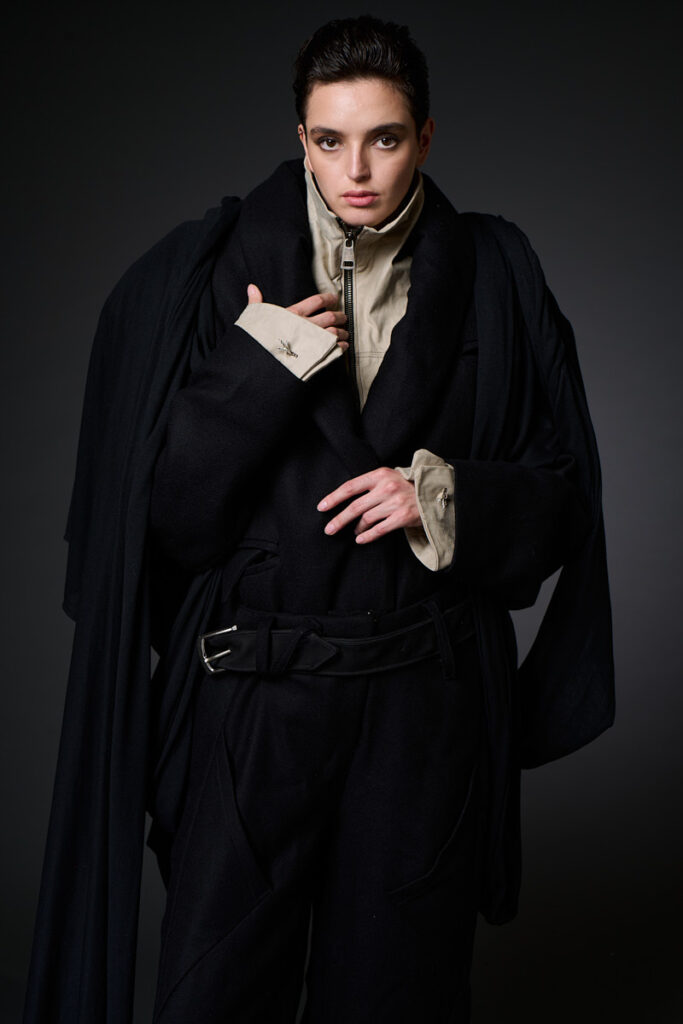
At the same time, he was living through the reality of war in Israel while serving as a reservist. Even so, he never intended to create a collection about war. His interest lay elsewhere. He wanted to understand what happens when everyday life no longer follows familiar rules. What do people hold onto when certainty disappears? How do they adapt when logic fails to explain the world around them?
As his research progressed, those questions became more important than the idea of chaos itself. Danino realised the collection focused less on destruction and more on the human response to it. As he explains, the project became about “the way we choose to respond” when certainty disappears. That shift shaped every creative decision, from the atmosphere of the collection to the smallest design details.
This perspective also influenced his interpretation of The Birds. Danino did not treat Hitchcock’s film as a visual reference. Instead, he focused on the unsettling feeling it creates. What fascinated him most was the film’s refusal to explain why the attacks happen. The absence of answers transforms something ordinary into a source of fear. For Danino, that uncertainty reflects the emotional space he wanted his collection to inhabit. When people cannot explain chaos, they cannot fully control it either.
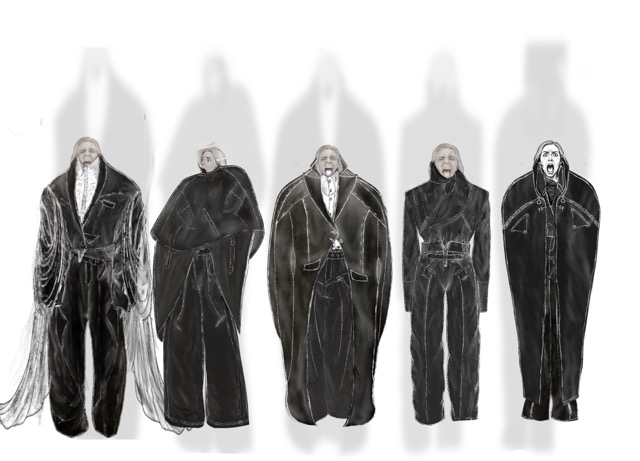
Rather than recreating scenes from the film, he used its emotional language to build his own narrative. The collection invites viewers into a world where uncertainty becomes familiar. Instead of resolving tension, it asks people to remain within it and discover their own meaning.
That approach also transformed Danino’s design process. Earlier in his studies, he often thought about garments first. This project encouraged him to reverse that process. He began by creating an emotional atmosphere before considering silhouettes, construction or materials. Feeling came before form. Research guided every decision, allowing the concept to develop naturally instead of forcing visual solutions too early.
This process also changed the way he thinks about communication through fashion. Danino does not expect everyone to interpret the collection in the same way. In fact, he welcomes different readings. Rather than delivering a fixed message, he hopes viewers pause, reflect and form their own emotional connection with the work. Success, for him, depends less on explanation and more on whether the collection makes someone feel something.
The research surprised him in another way. He expected to spend months studying chaos. Instead, he found himself exploring human behaviour. The deeper he investigated the subject, the clearer his design decisions became. He learned that meaningful research produces stronger design. Instead of searching for aesthetics, he focused on understanding the idea first. The garments followed naturally.
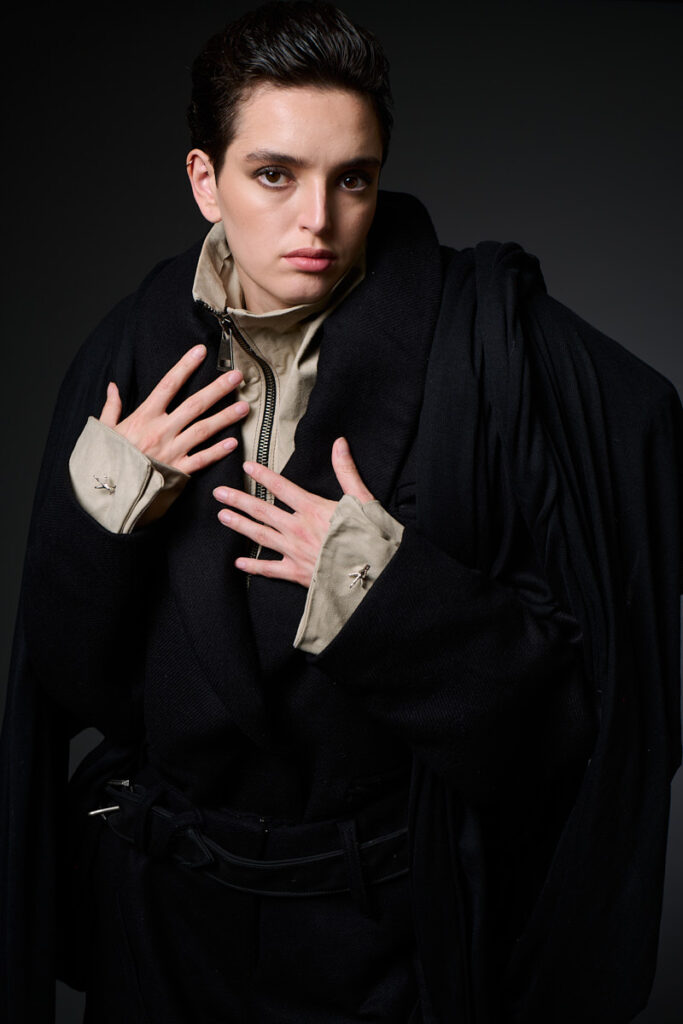
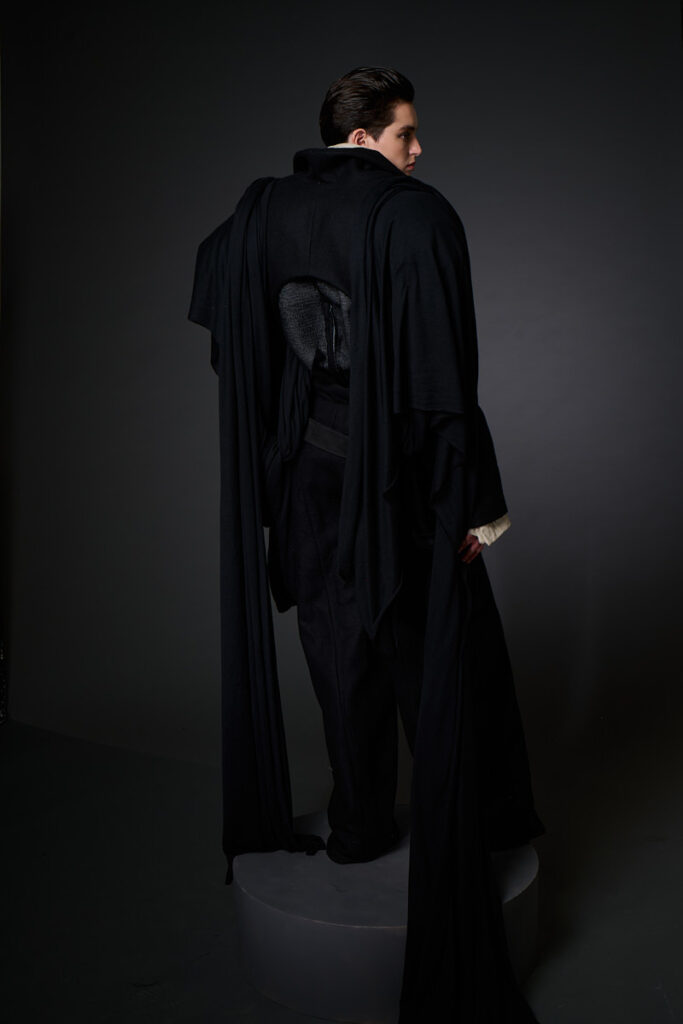
That lesson continues to shape his ambitions. Danino believes designers should never stop learning. He wants to keep refining his design language through curiosity and research while gaining experience inside an established fashion house. Heritage especially inspires him. He hopes to work with a brand that has built its identity over decades, allowing him to study its history before contributing his own perspective. For him, great design respects the past while creating space for the future.
Ultimately, Danino’s collection refuses easy conclusions. It does not attempt to solve uncertainty or explain chaos. Instead, it accepts both as unavoidable parts of life. Through fashion, he explores how people adapt when familiar structures disappear and how resilience often grows from embracing the unknown rather than resisting it.
In doing so, Ofek Danino demonstrates that fashion can communicate far more than style alone. It can become a space for reflection, inviting people to confront uncertainty with curiosity instead of fear. That quiet exploration gives the collection its lasting impact, reminding us that even in moments of chaos, there is always room for hope, adaptation and the possibility of beginning again.