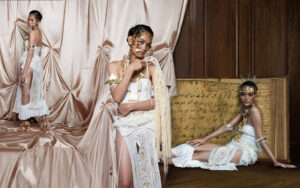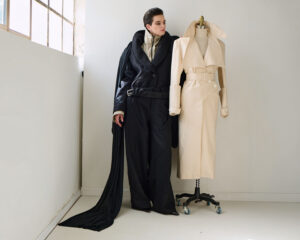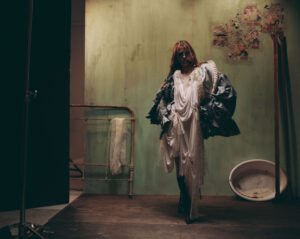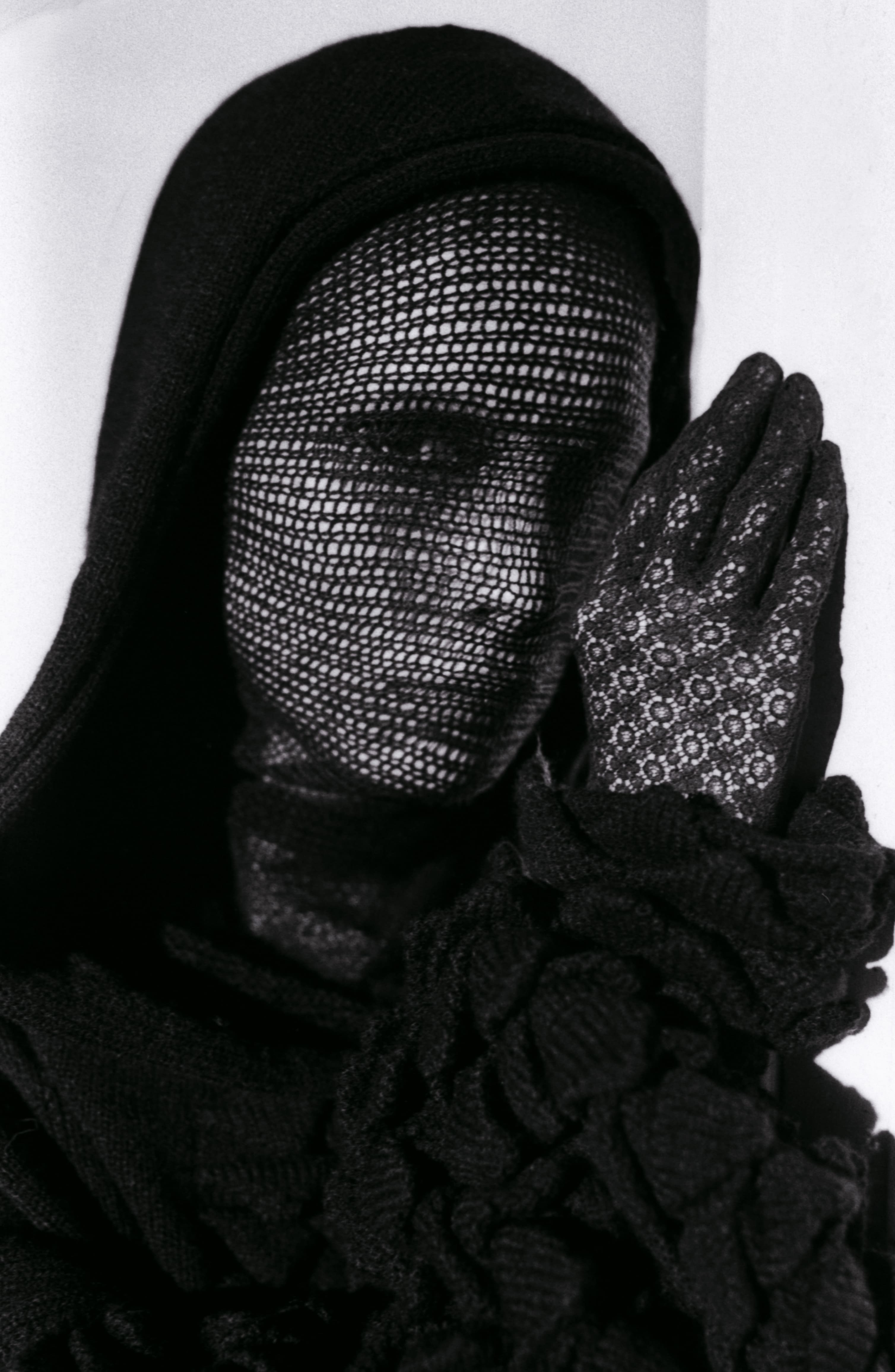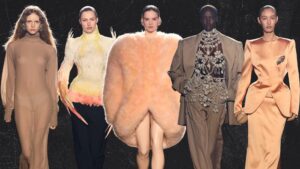

For Sohyun Jeon, fashion grew from a desire to tell stories in a more tangible way. Before studying fashion design in New York, she trained as a graphic designer in South Korea, focusing on motion graphics. She loved the way design could communicate through line, composition, colour, and movement. Over time, however, she became interested in creating work that could move beyond the screen and exist in physical space.
Fashion offered that opportunity. It allowed her to explore the same visual principles she valued in graphic design while working with the body, materials, and movement. Rather than seeing fashion as a new discipline, Jeon viewed it as an extension of her existing creative language. Garments became another medium through which she could communicate ideas and emotions.
A major turning point came during a trip to New York, when Jeon came across Camp: Notes on Fashion at The Metropolitan Museum of Art. Before that experience, she mainly understood design through digital and graphic media. The exhibition revealed fashion’s ability to operate as a visual and cultural language, bringing together theatricality, craftsmanship, identity, and atmosphere within a single creative vision.
New York itself also left a strong impression on her. During that trip, the city’s openness, diversity, and creative freedom made her feel that fashion could exist beyond fixed definitions. Surrounded by different cultures, styles, and ways of thinking, Jeon began to imagine fashion as a field where her background in graphic design could expand into something more physical, expressive, and three-dimensional.
“It made me realize that creativity does not have to remain within one discipline,” she says. “New York felt like a place where different forms of expression could coexist, and that energy made me want to develop my own visual language through fashion.”
That experience eventually influenced her decision to study fashion design in New York.
That realisation continues to shape her approach today. Jeon often starts with line, rhythm, proportion, and composition before considering a garment category. She studies how forms travel across the body and how silhouettes change through movement. Her background in motion graphics also influences the way she thinks about transformation. She approaches garments as moving compositions rather than static objects.
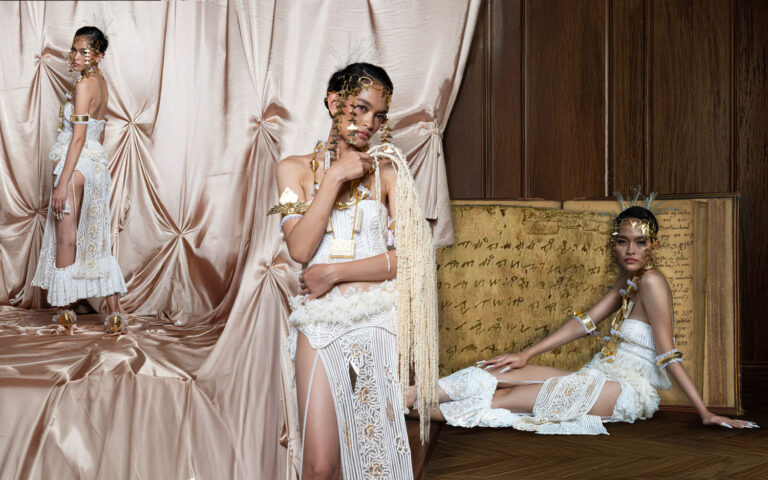
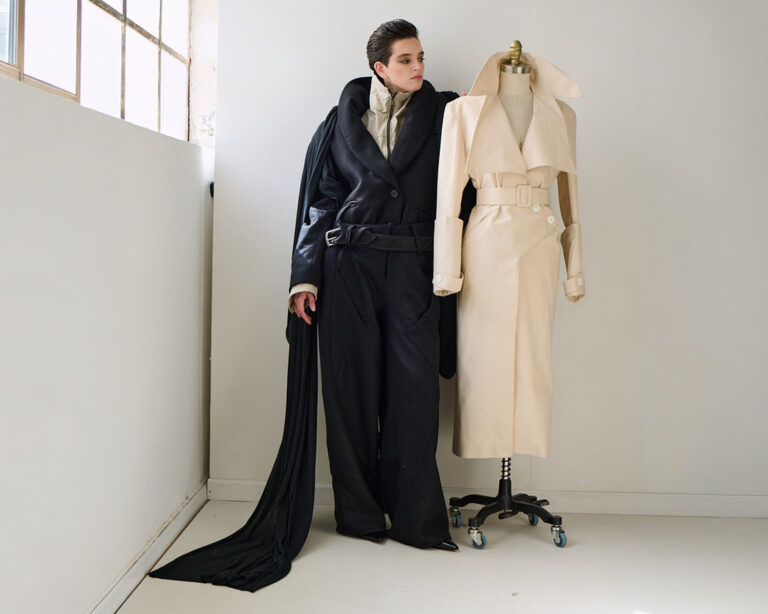
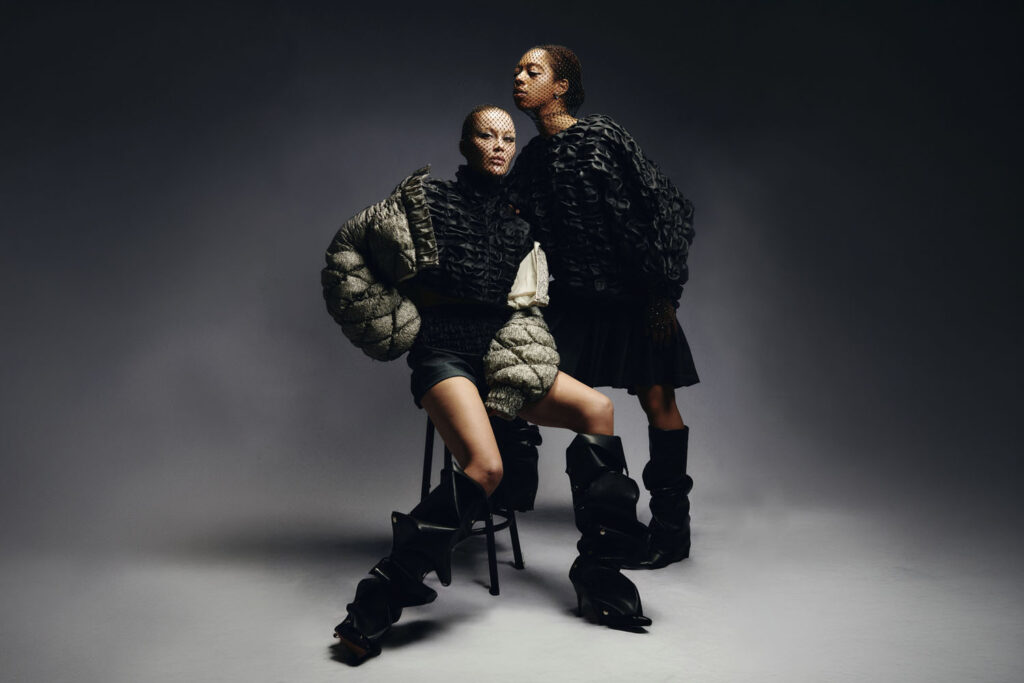
These ideas became the foundation of Dermal Script, her thesis collection at the Fashion Institute of Technology. Inspired by the lines of the palm, the collection explores identity through texture, form, and movement. The concept emerged from Jeon’s fascination with palm lines as something both universal and unique. Everyone has them, yet no two patterns are exactly the same.
“I was drawn to the idea that these small, often overlooked markings could be viewed as a kind of personal script,” she explains.
The collection’s title reflects that concept. “Dermal” refers to the skin, while “Script” suggests writing or a system of marks. Together, the words describe a silent language carried by the body. Jeon became interested in the symbolic quality of palm lines and the stories they seem to hold. To her, they suggest memory, experience, and identity.
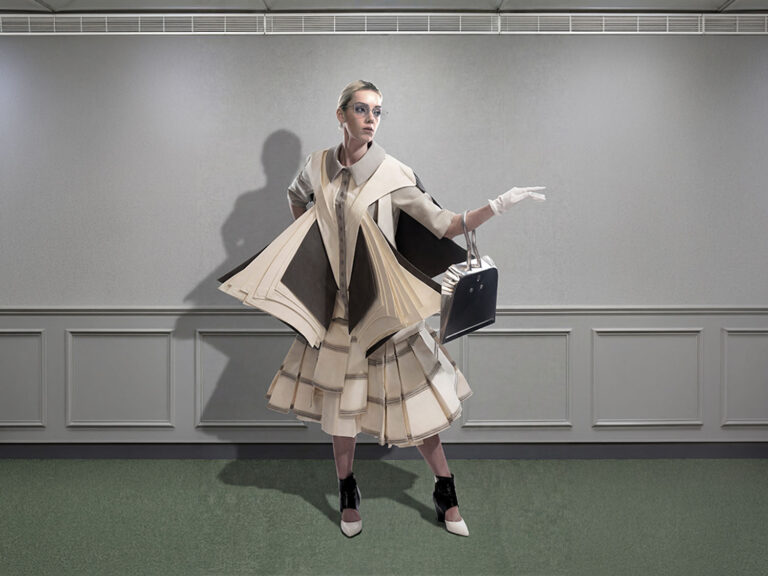
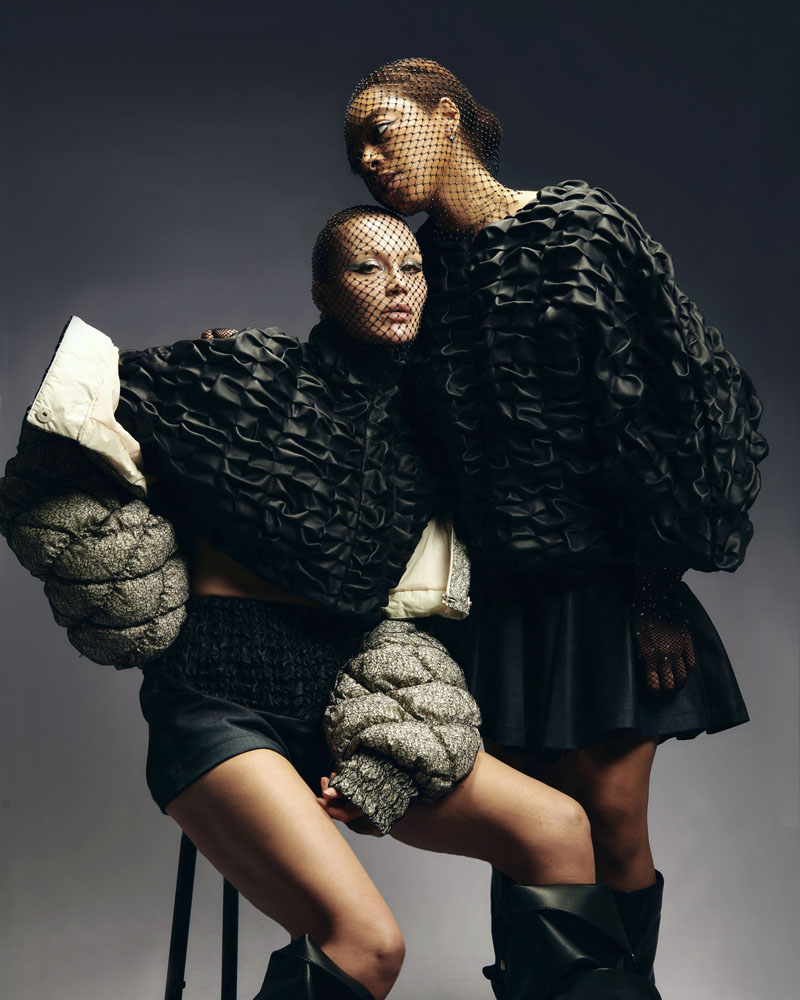
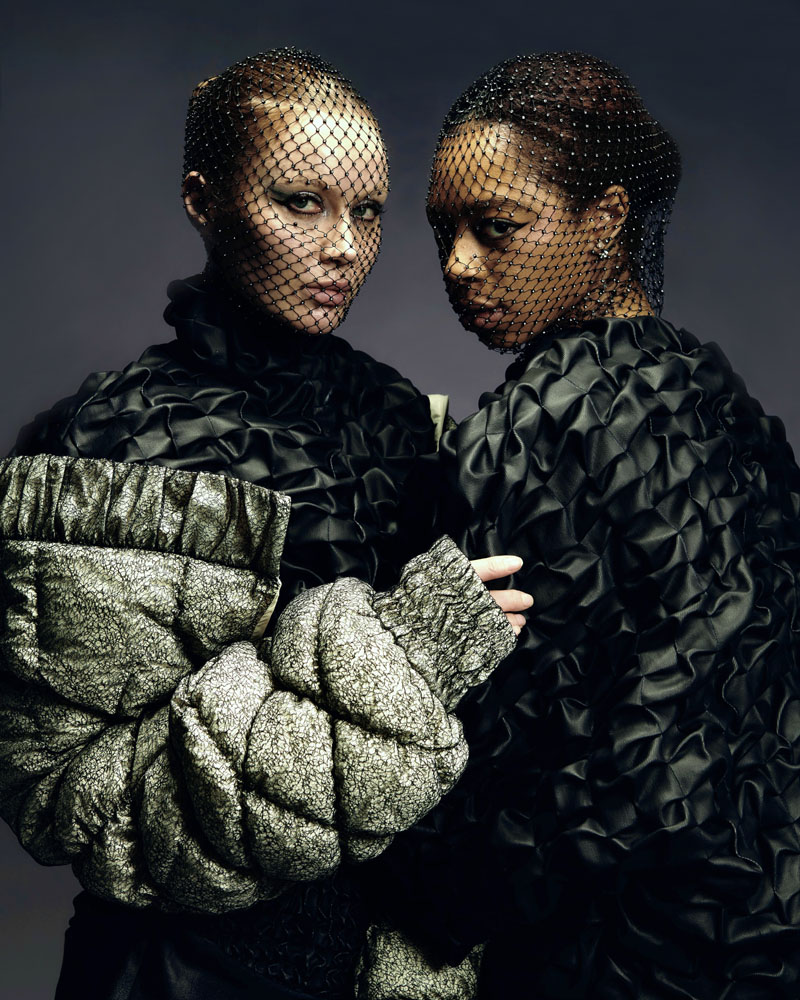
Instead of copying palm lines directly, she focused on their character. She studied their curves, intersections, rhythms, and varying depths. Those observations became the starting point for a series of material experiments. Through shirring, smocking, gathering, and curved seam construction, she translated those qualities into garment form.
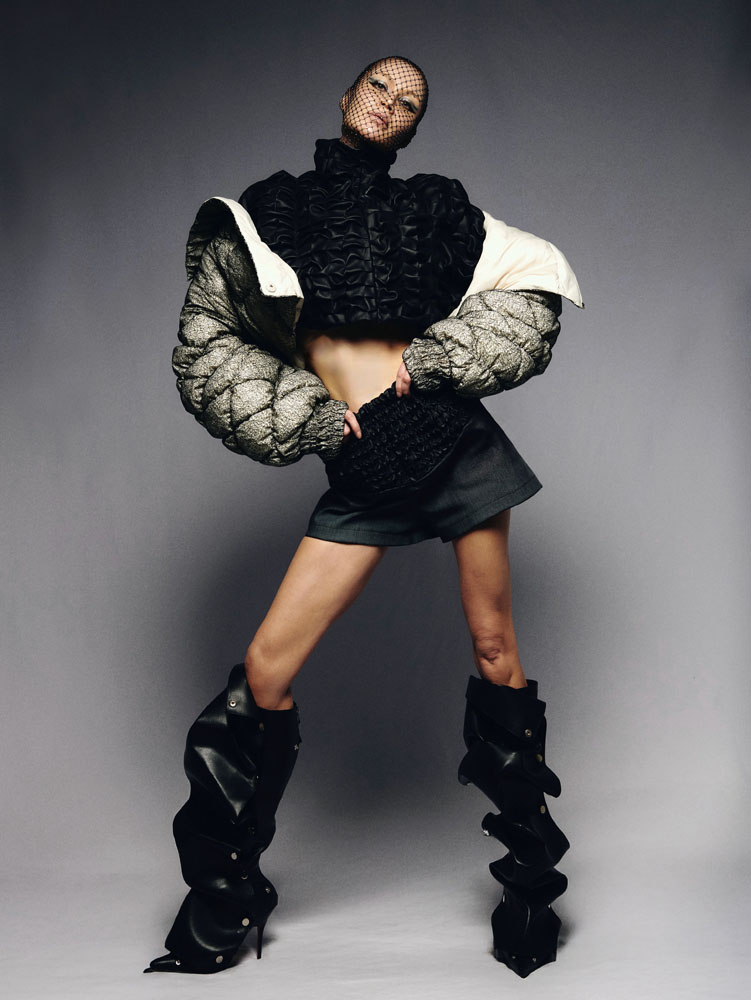
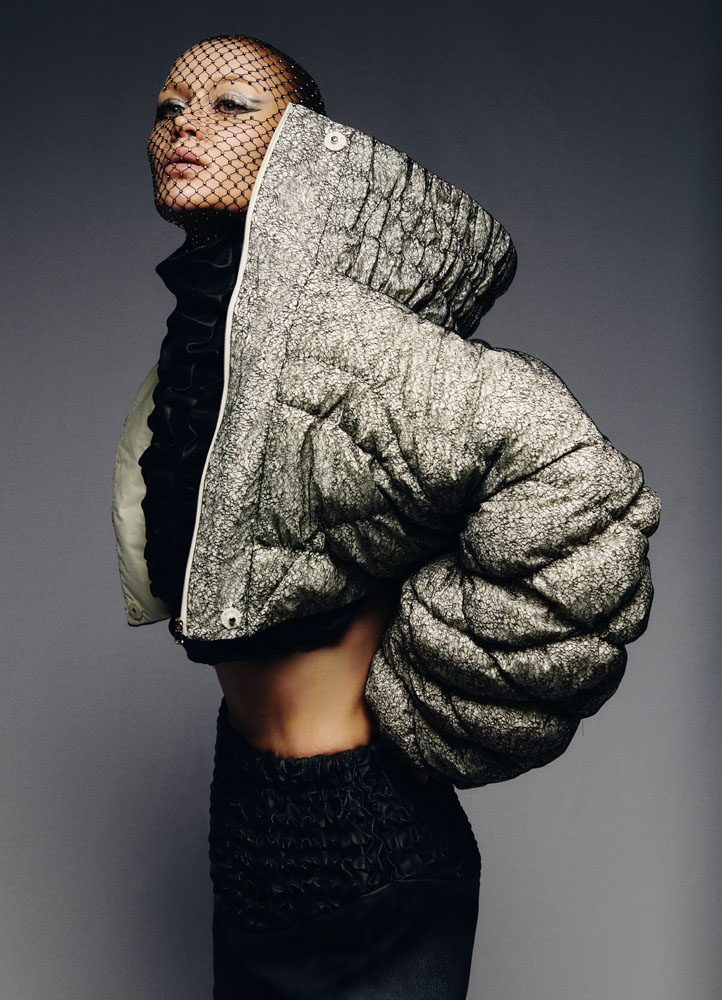
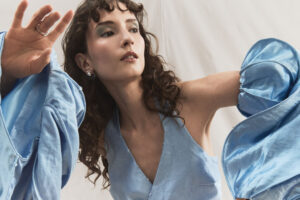
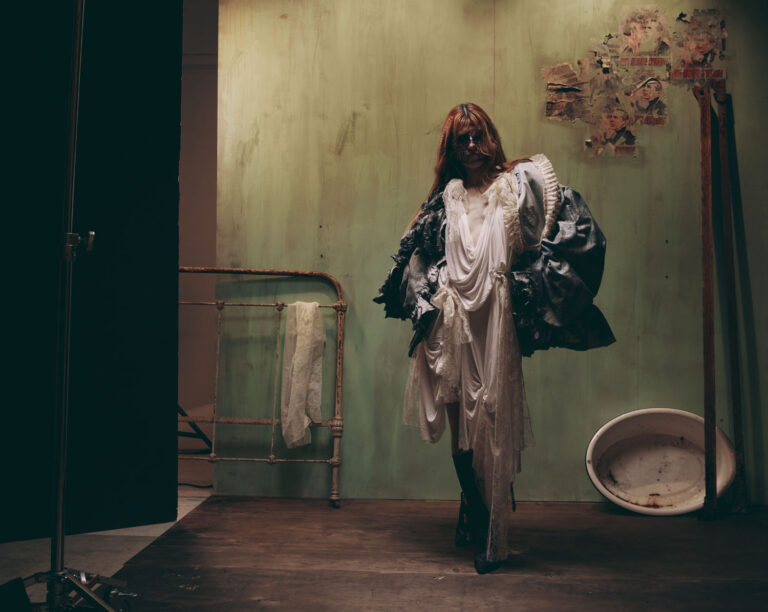
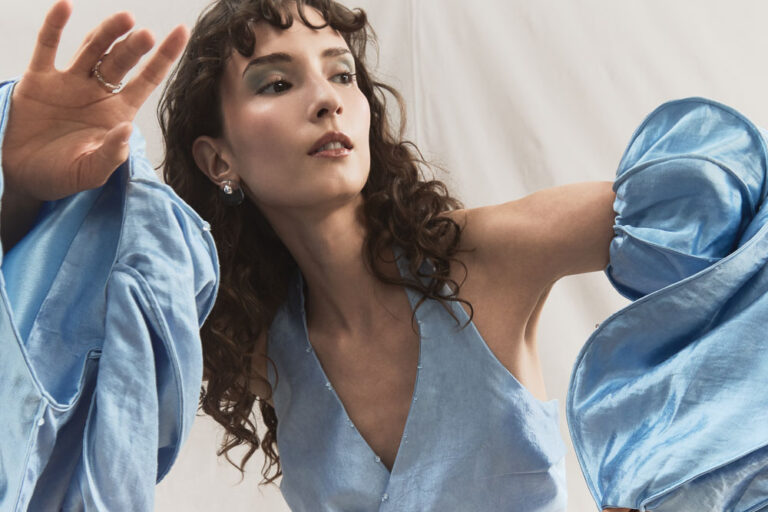
Texture plays a central role throughout the collection. A sculptural puffer jacket combines double-layered nylon and sheer mesh with organic shirring lines that echo the flow of palm creases. Dense smocking compresses fabric into raised surfaces that contour the body. Laser-treated coated denim gradually reveals the material beneath, exposing hidden layers and creating subtle transitions across the garment.
The result is a collection that constantly shifts between structure and fluidity. Fabrics expand, contract, and respond to movement. Surfaces appear to evolve as the wearer moves. Jeon wanted the garments to feel alive and connected to the body rather than simply sitting on top of it.
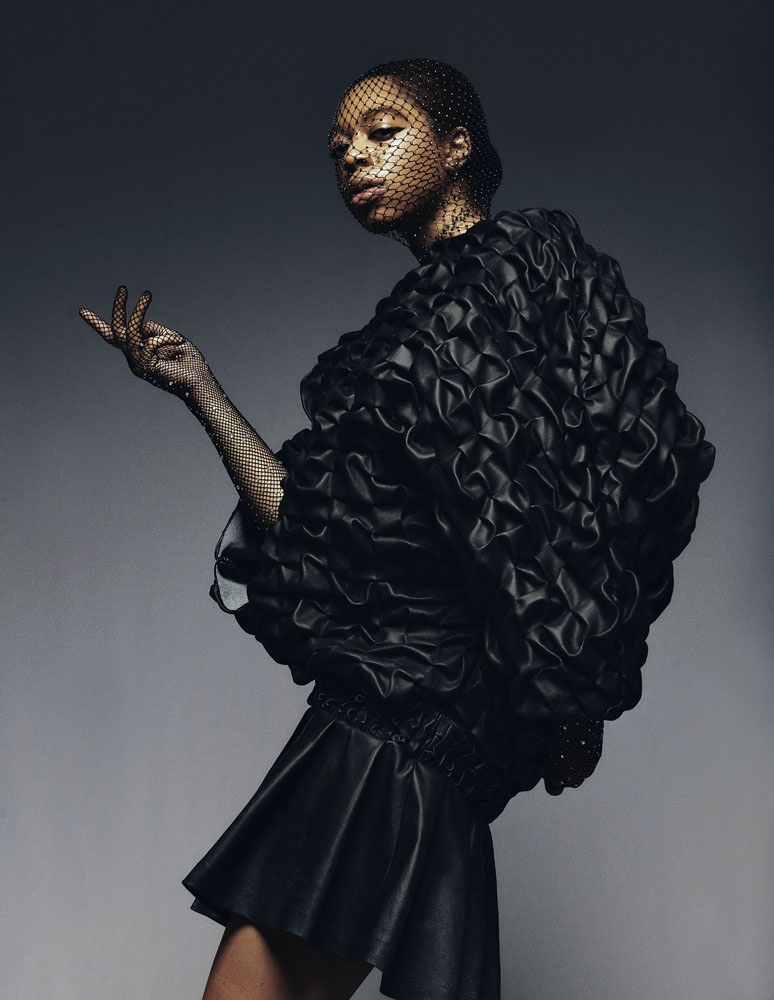
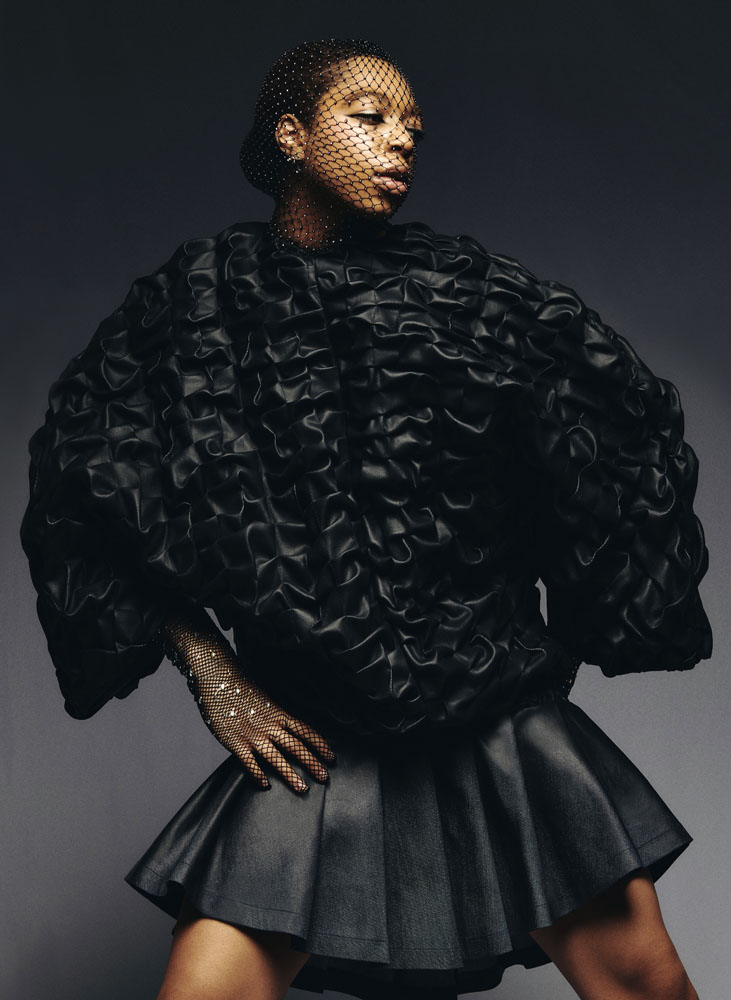
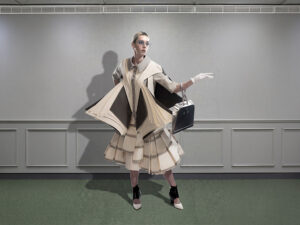
One look captures these ideas particularly well. An oversized dolman dress combines dense smocking with a softer, more fluid lower silhouette. The upper section creates a cocoon-like shape around the body. Below, laser-treated denim gradually exposes the blue material beneath its dark surface. The contrast between concealment and revelation reflects one of the collection’s central themes.
For Jeon, identity is never fixed. Personal experiences, culture, memory, and environment continuously shape it. Palm lines became a powerful metaphor because they belong to the body while also suggesting an individual story. Throughout Dermal Script, garments reveal and conceal in equal measure. Layered materials create moments of exposure and protection. Changing silhouettes reinforce the idea that identity remains in constant motion.
Bringing those concepts to life presented several challenges. Jeon wanted to capture the feeling of palm lines without making the reference too literal. She also worked with techniques that dramatically changed the behaviour of fabric. Smocking and shirring affect both fit and volume, making outcomes difficult to predict.
As a result, experimentation became an essential part of the process. Jeon produced numerous samples and tested different scales, densities, and directions. She adjusted patterns repeatedly as fabrics responded in unexpected ways. Developing the laser-treated denim required similar patience and refinement.
“There were many moments when the fabric behaved differently from what I had planned,” she says. “Instead of forcing it to match the original sketch, I learned to observe those changes and allow them to influence the final design.”
That mindset became one of the collection’s most important lessons. Rather than controlling every outcome, Jeon learned to work alongside the material. The process strengthened her confidence as a designer and helped her trust her own visual instincts.
Today, she sees Dermal Script as the beginning of a larger conversation. She plans to continue exploring the relationship between body, material, and identity through tactile surfaces, adaptable forms, and experimental construction techniques. The collection reflects a journey that has taken her from South Korea to New York. More importantly, it marks the emergence of a design language that feels distinctly her own.
Although her medium has changed, her core interest remains the same. Through line, movement, texture, and form, Jeon continues to explore how visual language can communicate human experience. With Dermal Script, those ideas take physical shape, transforming personal markings into garments that invite viewers to consider the stories carried quietly within the body.