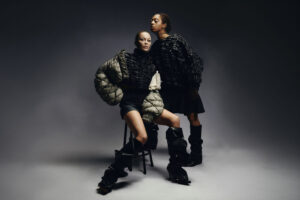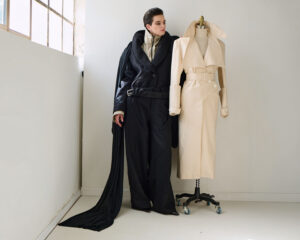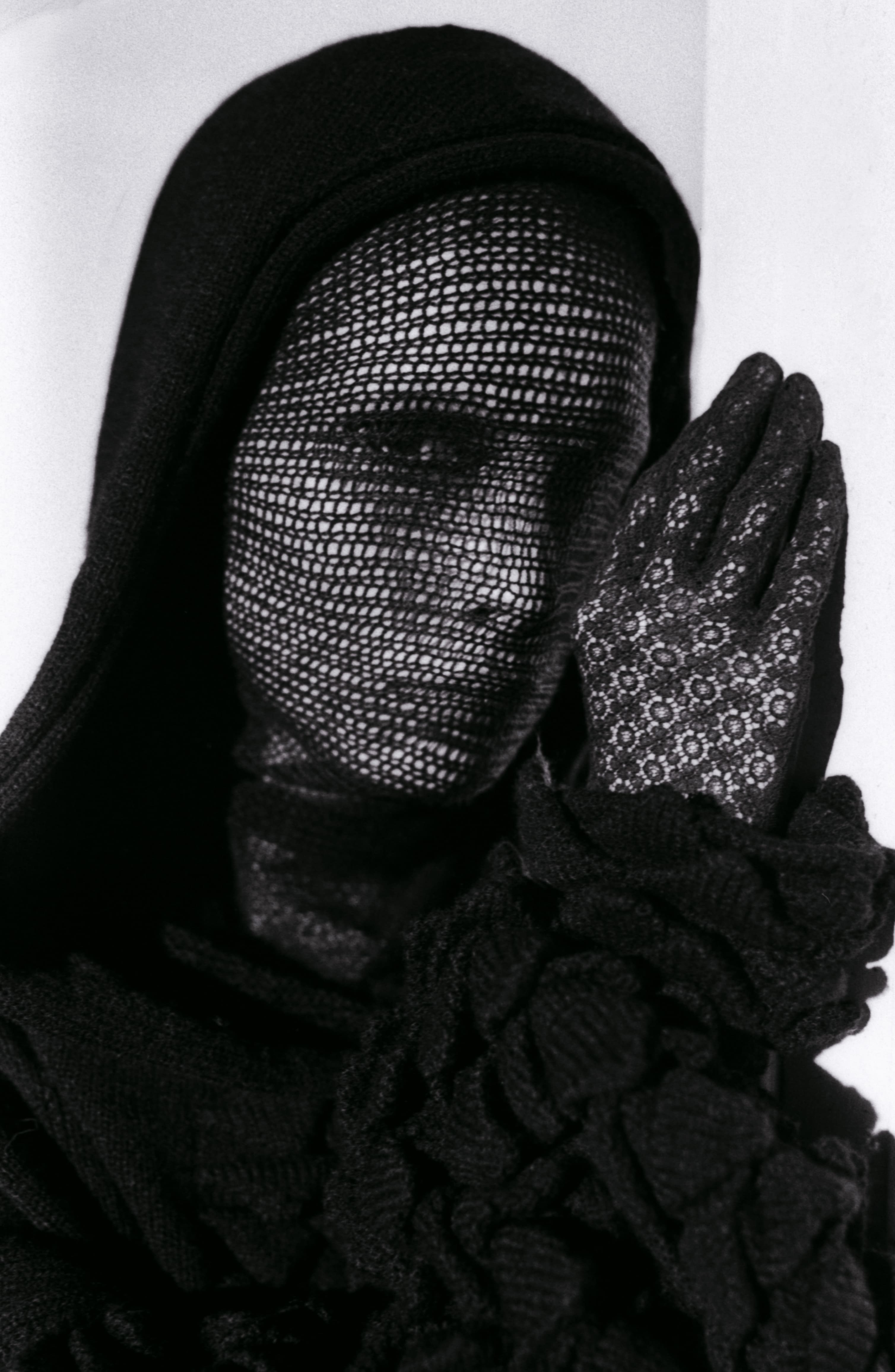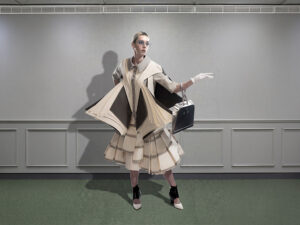

For Aida Aqilla Marsaben, this collection began long before sketches, fabric swatches, or fittings. Instead, it began with home.
Growing up surrounded by Lampung traditions, stories, and values, Aida never viewed culture as something distant. Rather, it shaped her identity from an early age and eventually became a foundation for her work as a designer. So when the ESMOD Jakarta student started developing her graduate collection, she naturally returned to a philosophy that had always felt close to her: Sai Bumi Ruwa Jurai.
Meaning “One Land, Two Lineage,” the philosophy describes the relationship between Lampung’s two major indigenous communities, the Pepadun and Saibatin peoples. More importantly, it speaks about harmony. It celebrates the idea that different identities can share the same home while remaining connected through mutual respect. For Aida, those values felt especially relevant today, particularly in a world that often focuses on differences rather than connections.
“The philosophy reflects diversity, unity, and the ability to live together in harmony,” she explains. “It mirrors the balance between tradition and modernity that I wanted to achieve in this collection.”
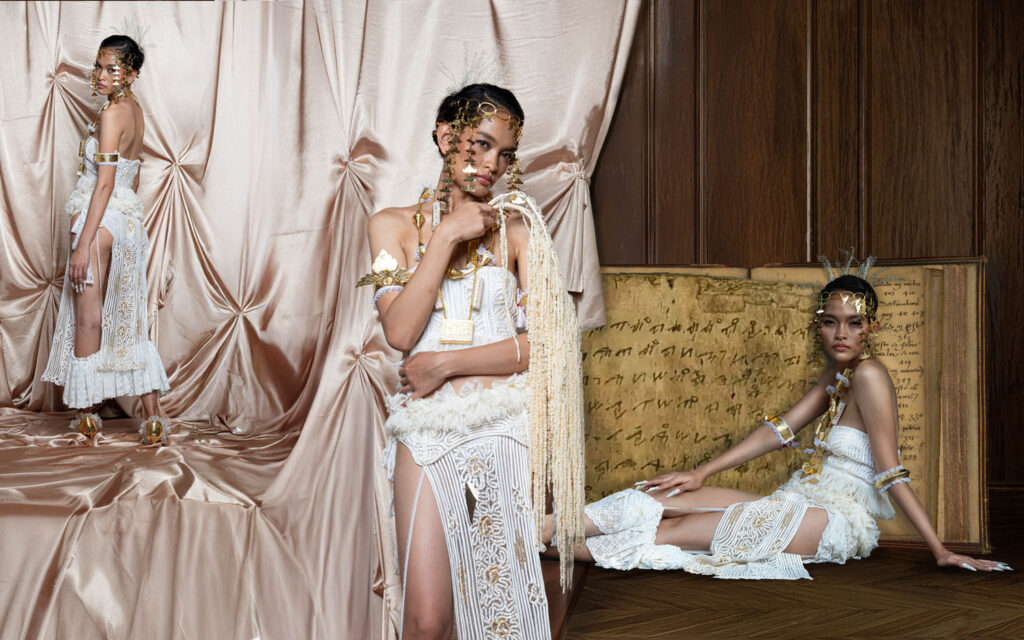
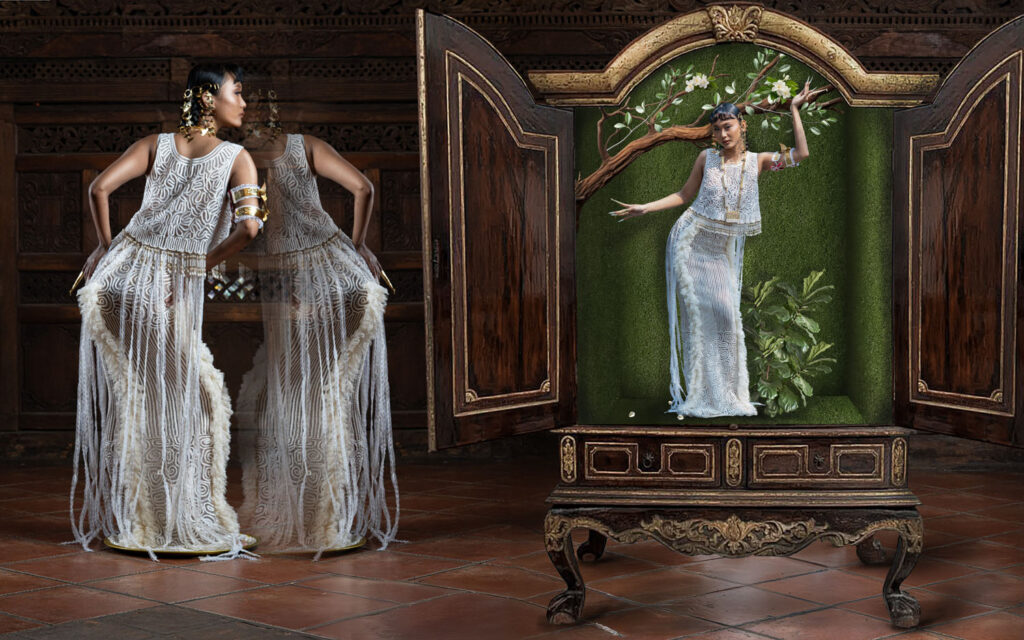
As a result, that idea became the foundation of Nikkeu, a bridal lingerie collection that brings traditional Lampung craftsmanship into a contemporary setting. While bridal lingerie and indigenous textile traditions may seem worlds apart, Aida saw an opportunity to connect them. Rather than treating heritage and modern fashion as opposites, she wanted to demonstrate how they could strengthen one another.
The project also reflects her own journey as a designer. During her studies at ESMOD Jakarta, she specialised in lingerie design. Through that experience, her perspective on the category began to shift. Instead of seeing lingerie as purely functional, she started to understand its emotional significance.
“Studying lingerie design led me to view lingerie as much more than undergarments,” she says. “It is a symbol of confidence, femininity, and a deeply personal transition in a woman’s life.”
Because of that perspective, Aida became interested in how cultural storytelling could exist within such an intimate form of fashion. Eventually, that exploration led her to Sulam Usus, one of Lampung’s most distinctive textile traditions.
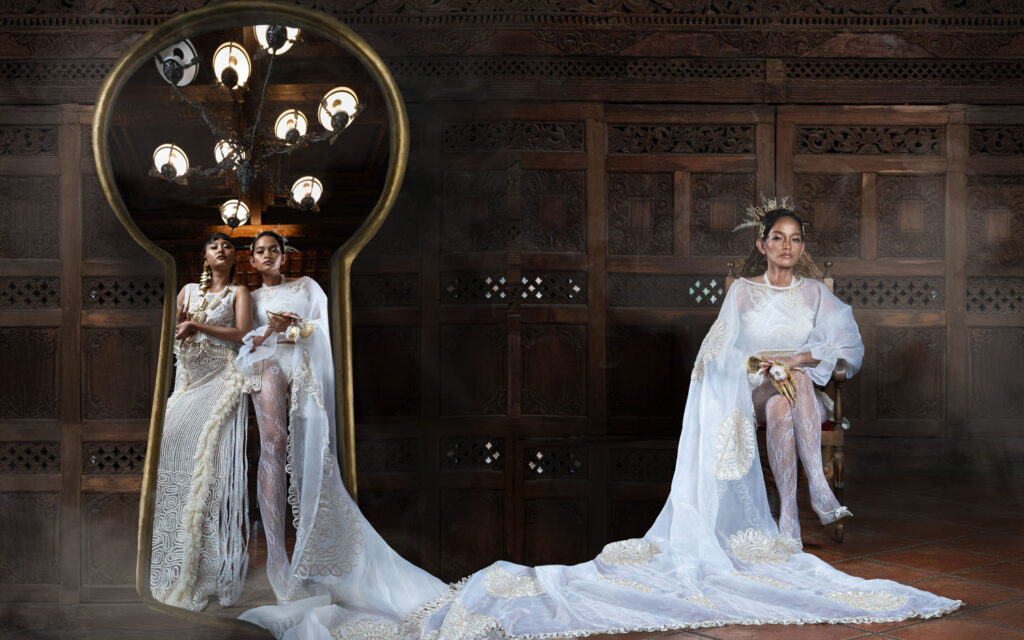
Artisans create Sulam Usus by connecting narrow strips of fabric into intricate patterns. As a craft, it requires patience, precision, and extensive handwork. For generations, Lampung communities have used it in ceremonial dress. Today, it remains one of the region’s most recognisable forms of craftsmanship. In addition, Indonesia recognised Sulam Usus as an Intangible Cultural Heritage in 2013, highlighting its cultural significance.
For Aida, however, the craft represented more than visual inspiration.
Historically, Lampung communities used Sulam Usus as part of bebe, a chest covering worn in traditional bridal attire. Once she discovered that connection, it immediately resonated with her research. Bridal lingerie offered a contemporary way to revisit the craft’s original purpose. At the same time, it provided an opportunity to introduce Sulam Usus to people who may never have encountered it before.
“I wanted to create a connection that would help people understand its original purpose and cultural significance,” she explains.
Rather than simply borrowing decorative motifs, Aida immersed herself in the tradition. She worked closely with female artisans in Lampung to understand the techniques and values behind the craft. Meanwhile, she interviewed cultural figure and designer Aan Ibrahim, whose work helped expand Sulam Usus beyond traditional ceremonial garments and into contemporary fashion.
Those conversations became an important part of the collection’s development. Not only did they strengthen her research, but they also deepened her understanding of the craft. More importantly, they reminded her of the responsibility that comes with working with cultural heritage.
“It was important for me to ensure that the traditional elements remained authentic while also adapting successfully to modern design requirements,” she says.
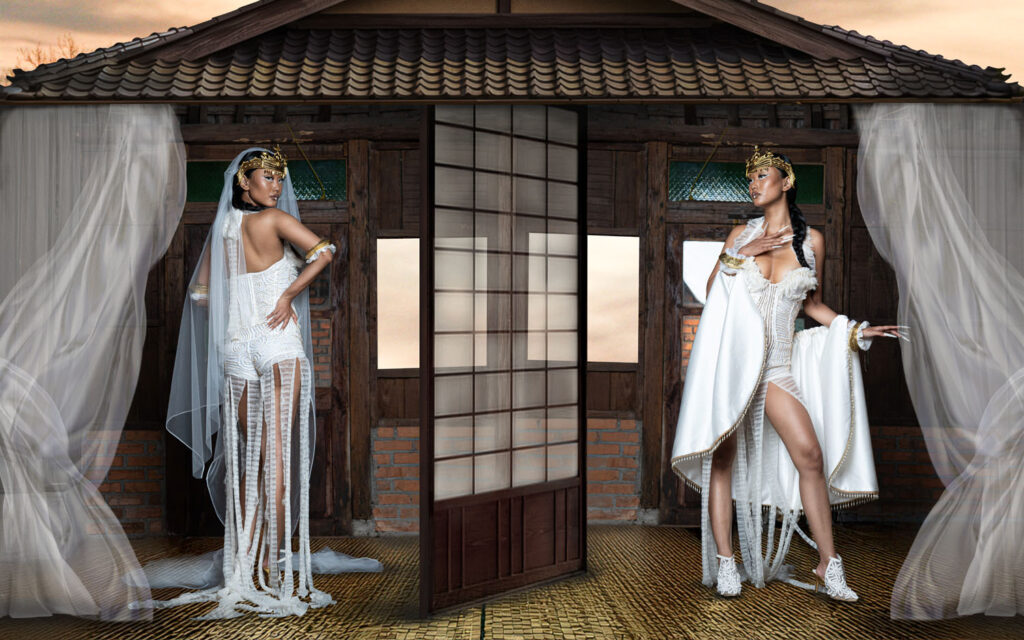
The design process required extensive experimentation. Traditional techniques do not naturally fit the stretch fabrics commonly used in lingerie. Therefore, Aida spent time testing different approaches and refining construction methods. Through that process, she found ways to integrate Sulam Usus into modern silhouettes without compromising its identity.
At the same time, the challenge went beyond technical execution. She also needed to translate a cultural philosophy into clothing. However, doing so required subtlety.
“The greatest challenge was communicating a meaningful cultural narrative without making the design feel overly literal,” Aida says.
Instead of relying on obvious symbols, she focused on craftsmanship and construction. As a result, meaning emerges through the details rather than surface decoration. Traditional techniques sit within clean, contemporary silhouettes, while handcrafted elements reveal themselves gradually. Consequently, the collection feels modern yet remains deeply connected to its cultural roots.
In many ways, that balance defines the entire project. Tradition meets innovation. Softness meets structure. Heritage meets contemporary design.
More importantly, the collection reflects something deeply personal.
“The most meaningful aspect of this collection is the opportunity to present Lampung culture through a deeply personal perspective,” Aida says. “This project is more than an academic assignment or a design exercise—it is a tribute to my identity, my family, and the cultural heritage that has shaped who I am.”
That sentiment sits at the heart of Nikkeu. Even the brand’s name carries personal meaning. Taken from the Lampung language, Nikkeu translates to “you.” Because of this, the name reflects Aida’s desire to create a connection between each garment and the person who wears it.
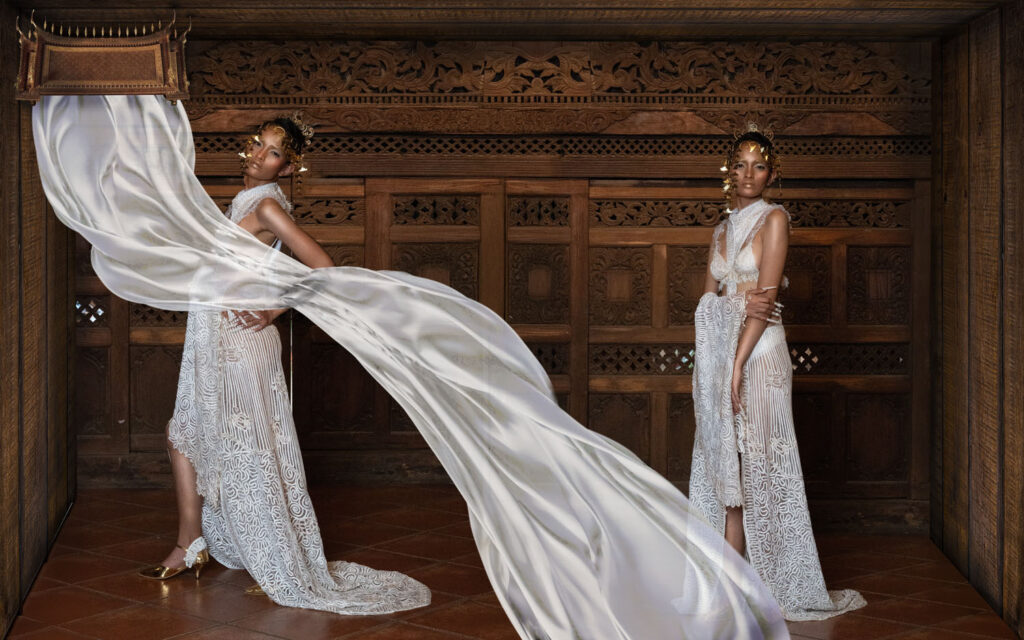
Beyond aesthetics, she hopes the collection encourages a deeper appreciation for cultural heritage. She wants wearers to feel confident. At the same time, she wants them to connect with the stories woven into every piece.
“I want people to feel beauty, confidence, and a deeper appreciation of themselves,” she says. “Beyond aesthetics, I hope people feel connected to a story that extends beyond fashion.”
Looking ahead, Aida hopes to continue developing Nikkeu as a platform for cultural storytelling. She plans to explore more traditional crafts and collaborate with local artisans. Through those future projects, she hopes to introduce more people to the richness of Indonesian heritage.
For many people outside Indonesia, Lampung remains relatively unfamiliar. Yet its cultural history is rich and deeply valuable. Through Nikkeu, Aida offers a new way to experience that heritage. Rather than presenting tradition as something fixed in the past, she demonstrates how it can evolve and remain relevant in the present.
Ultimately, this collection does more than reinterpret a traditional craft. It creates a bridge between generations, between heritage and innovation, and between local craftsmanship and a global fashion audience. In doing so, Aida reminds us that preserving culture is not only about remembering where we come from. It is also about carrying those stories forward.