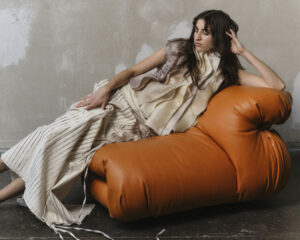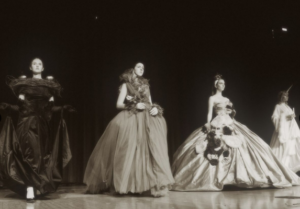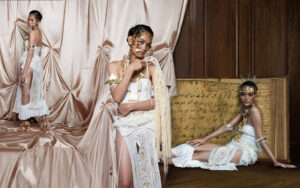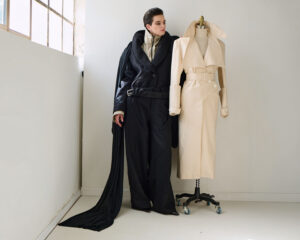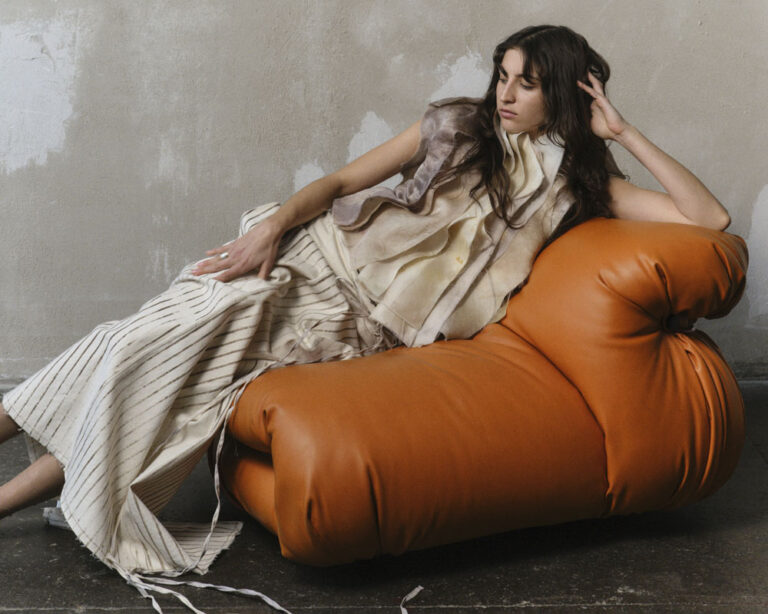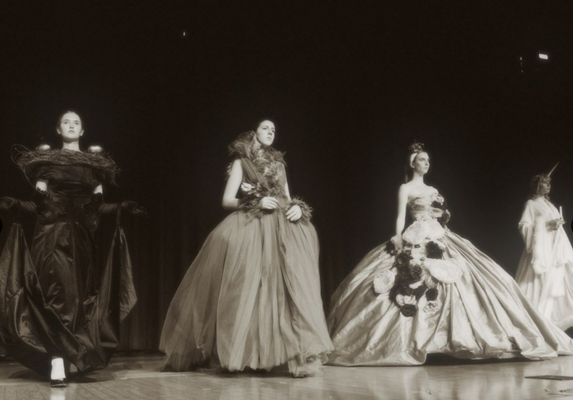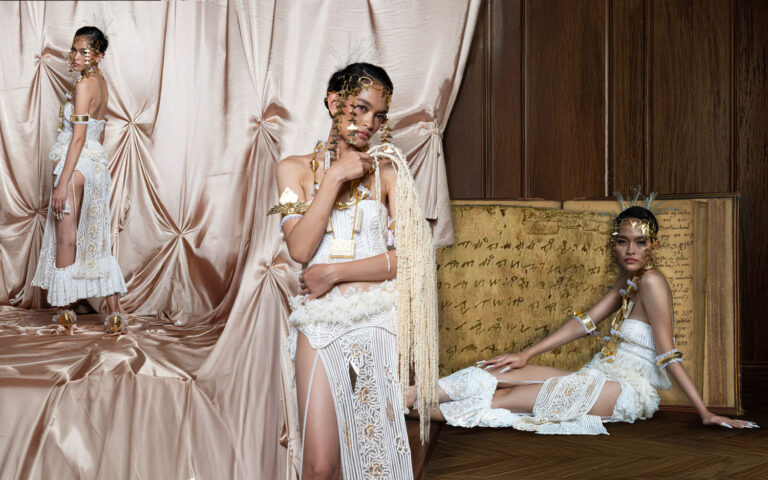

For emerging fashion designer Marcia La Vecchia Galan, clothing is more than aesthetics. It can carry energy, hold memory, and even protect the wearer. With her collection No Me Mires (“don’t look at me”), the Parsons School of Design student reimagines the superstition of the evil eye through sculptural, symbolic fashion. Her garments act as talismans, balancing protection and self-expression.
The evil eye is one of the world’s oldest beliefs, rooted in Mediterranean, West Asian, and Latin American traditions. It suggests that a jealous or admiring gaze can inflict harm. For Marcia, this idea was never distant, it was part of her childhood.
“As a child, I began experiencing intense migraines, and my Italian grandfather would perform traditional rituals from his homeland to remove the malocchio, or evil eye,” she says. One ritual involved the olive oil test: a drop of oil placed in water, its behavior revealing whether negative energy was present. “I was fascinated by the idea that one person’s energy could negatively affect another, and that someone else could use their own energy to heal.”
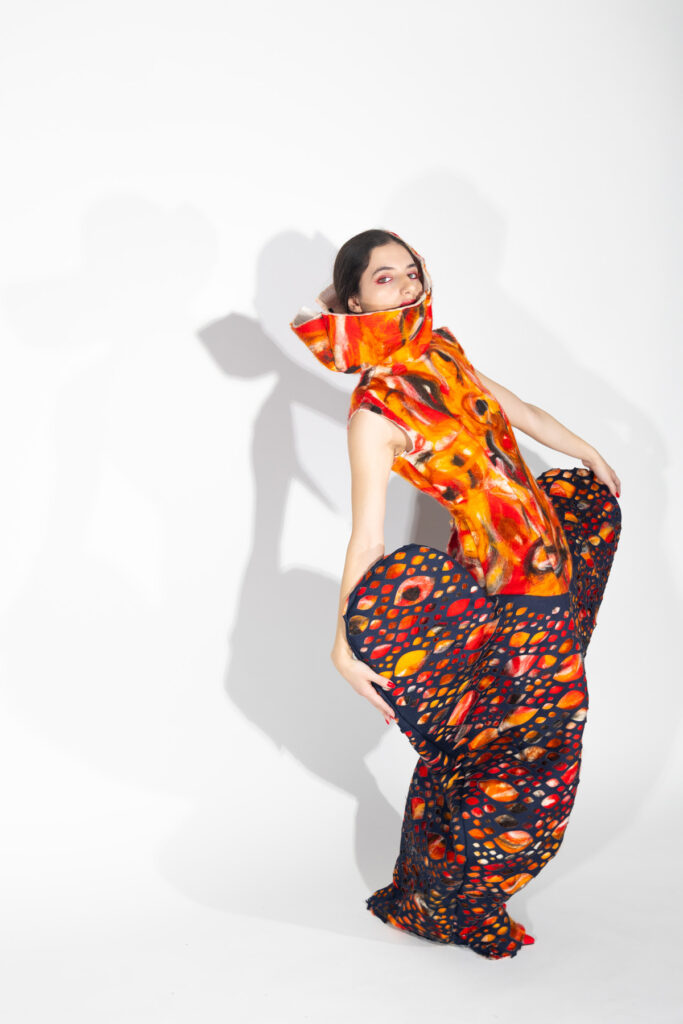
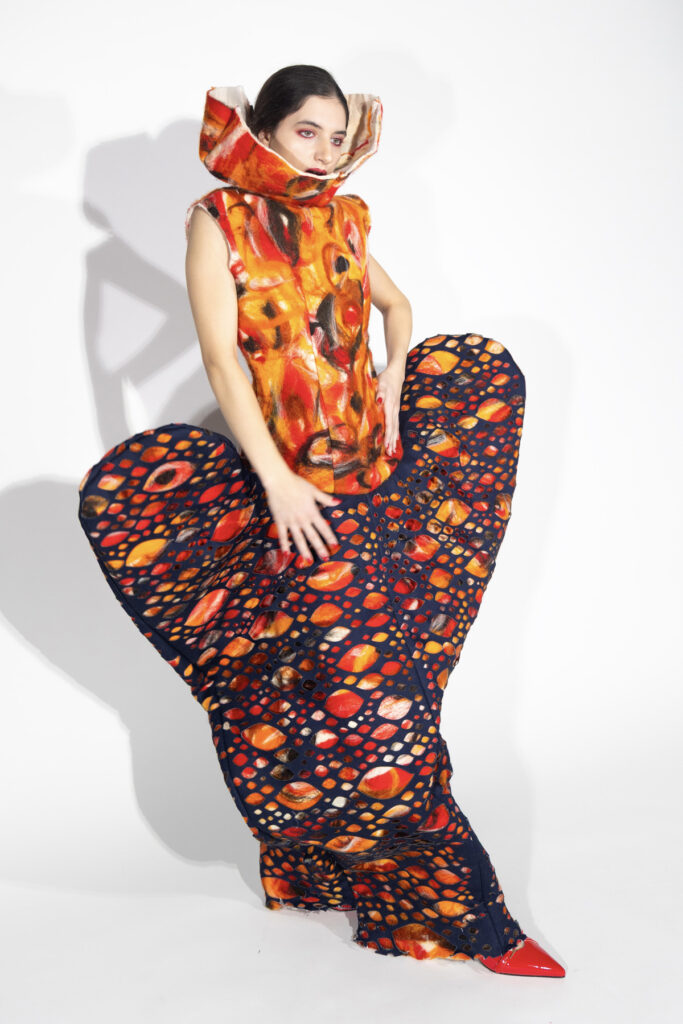
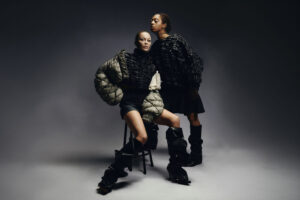
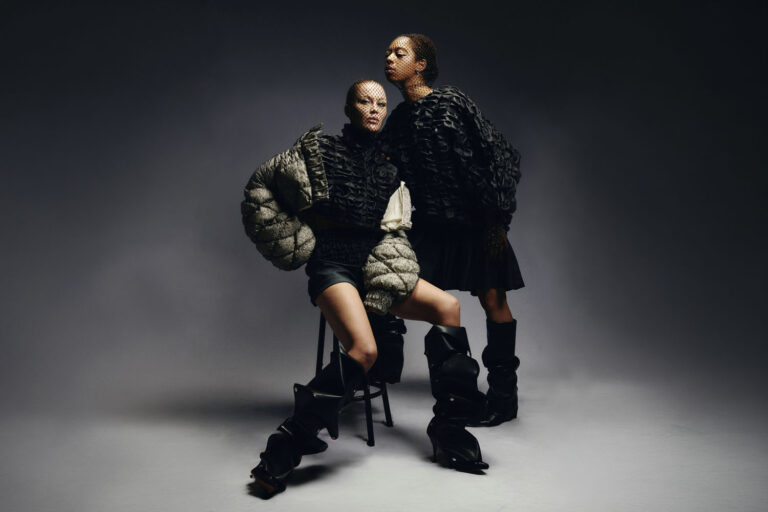
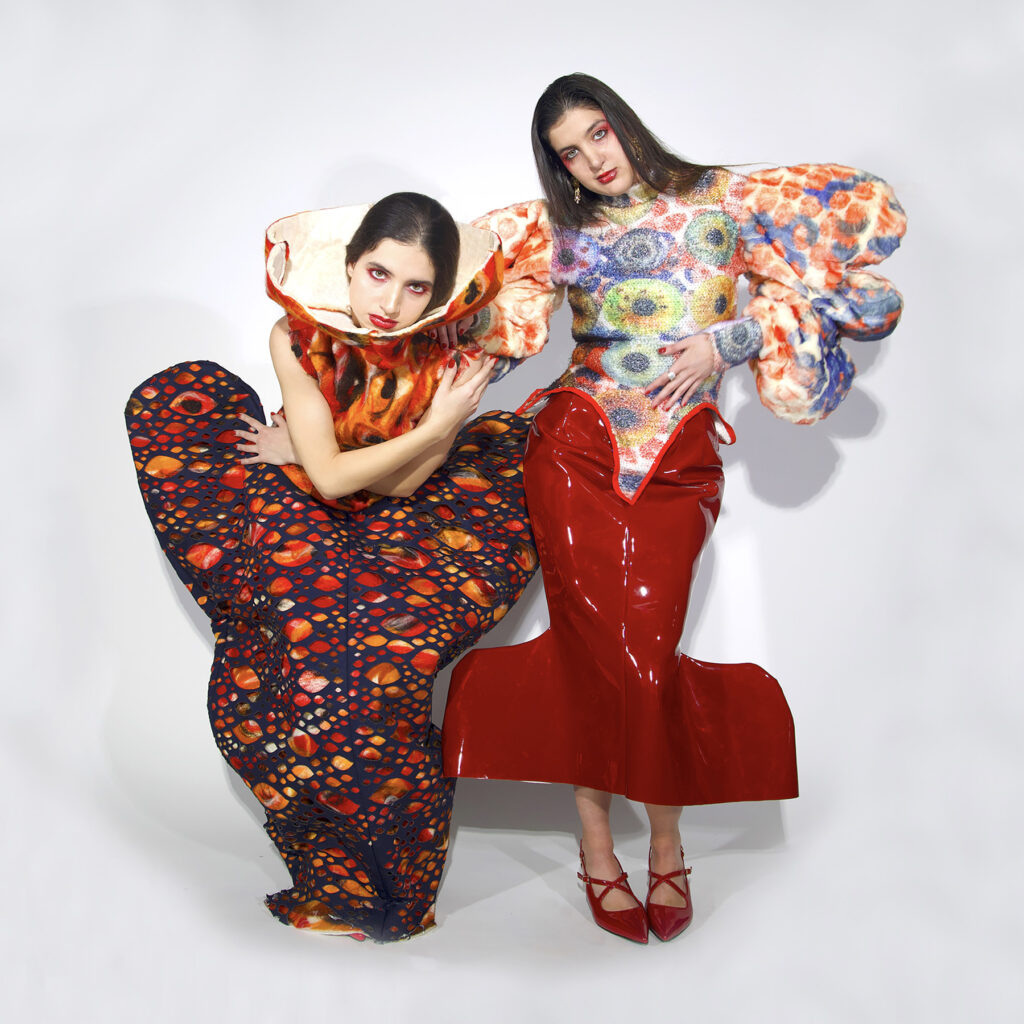
That fascination became the foundation for No Me Mires. Her palette centers on red, a color traditionally believed to ward off the evil eye. Her sculptural silhouettes echo the rounded shape of the eye, while their exaggerated scale suggests the emotional weight of harmful gazes. Heavy, structured forms turn garments into symbolic shields.
At the heart of the collection lies Marcia’s love of textile innovation. She crocheted fabrics by hand, sublimated them with collages of eyes, and felted wool embedded with motifs. A standout piece layers this felted base with laser-cut denim, each cutout shaped like an eye. Reflective vinyl surfaces reference mirrors, used in some cultures to deflect harm, adding both shine and symbolism.
“Experimenting with these and trying diverse techniques gives me, as a designer, the opportunity to make my garments even more personal and heartfelt,” she explains. The handwork, weeks of felting, smocking, or sublimating, felt deeply intentional. “The time and care that went into making everything by hand felt almost ritualistic, like the way someone curing the evil eye forms a strong connection with the person they’re healing.”
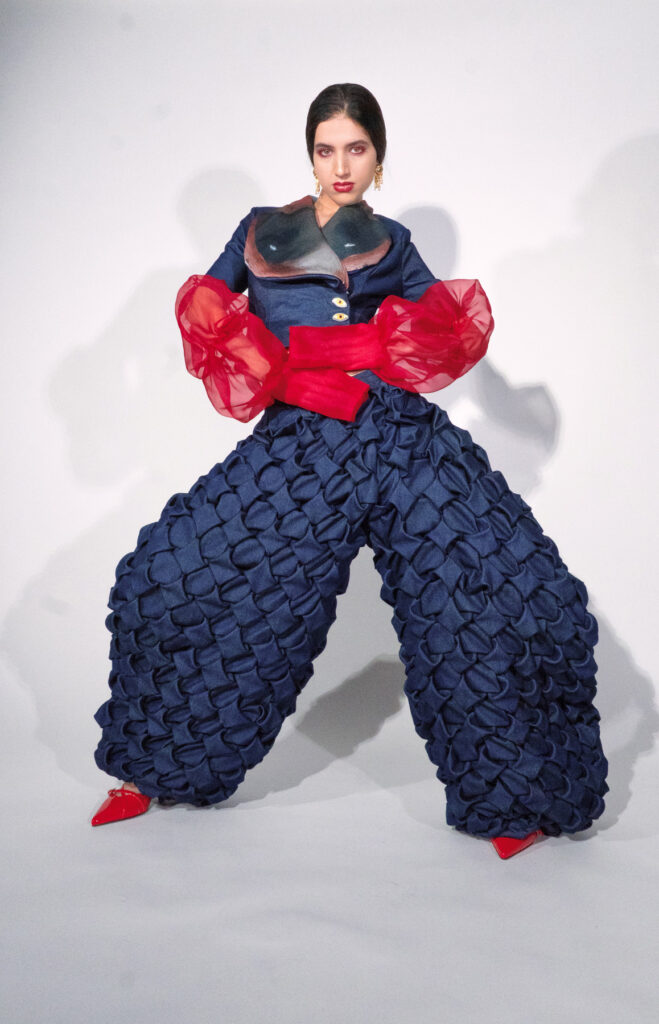
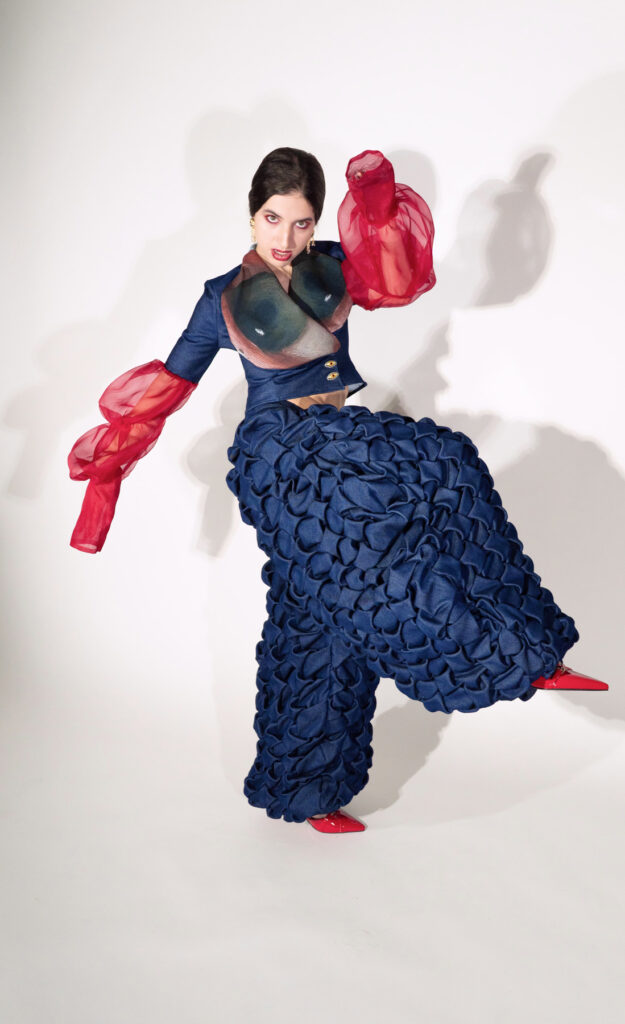
This labor-intensive process is central to her vision. Each stitch, fold, or cut becomes part of a ritual. Fabric is transformed into armor. “My goal was to create garments that radiate power and intensity while serving as talismanic symbols of protection,” she reflects.
The collection also explores what it means to be seen. Eye motifs appear across the garments, allowing them to “watch” the viewer. This inversion flips the superstition: the gaze that harms becomes the gaze that protects. For Marcia, it’s a dialogue about perception and exposure, concepts that feel especially urgent in the age of social media.
“My collection explores the evil eye not just as a historical or folkloric symbol, but as a living system of belief that still shapes the way people navigate power, envy, visibility, and protection today,” she says. By bringing ancient ritual into conversation with modern anxieties, she connects tradition with relevance.
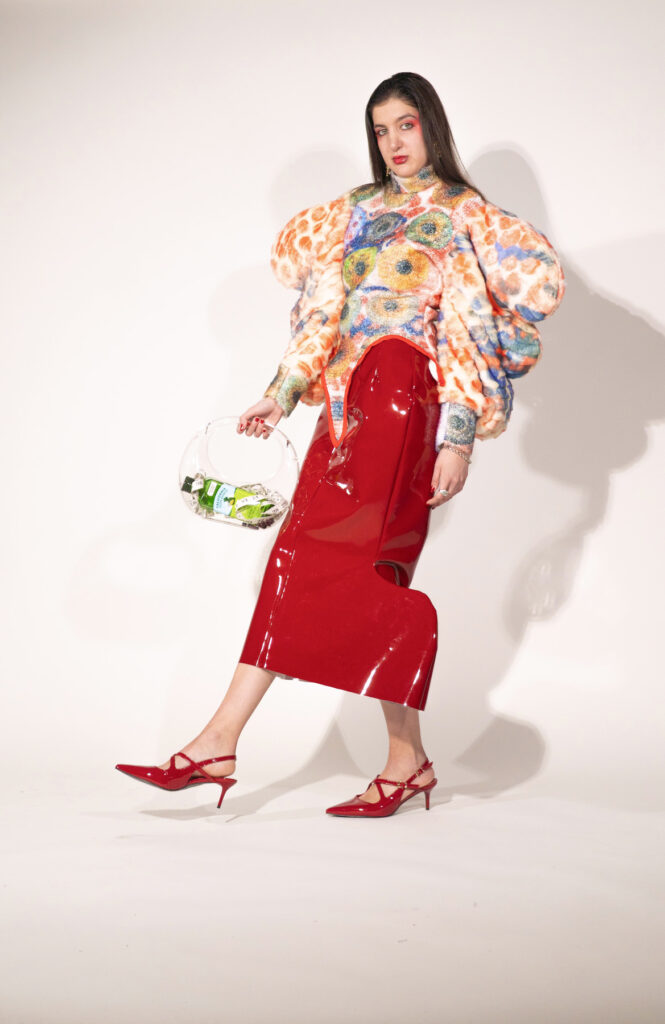
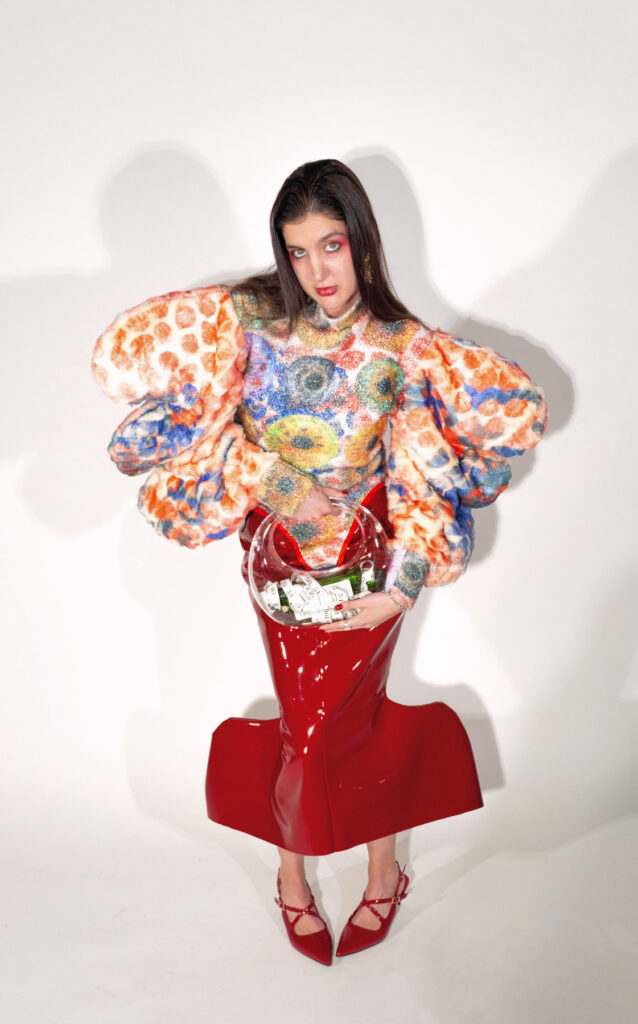
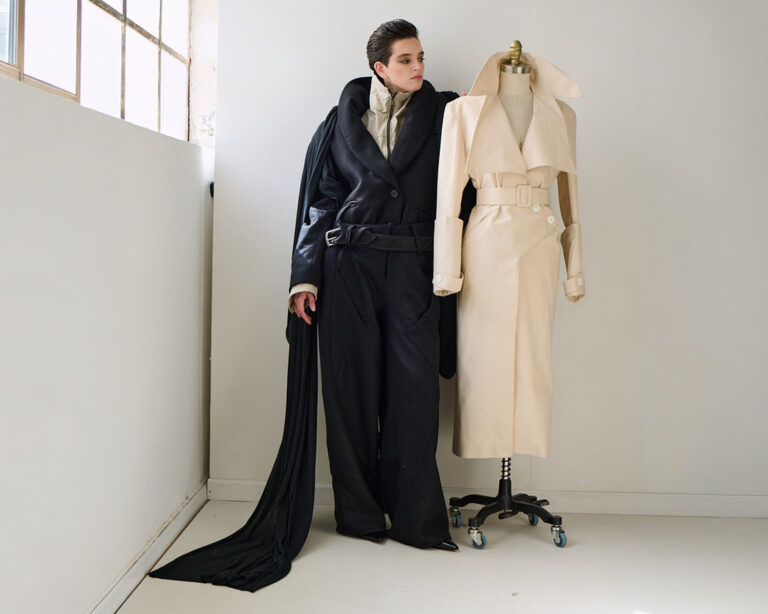
Working with models and photographers helped her modernize the theme further. The shoots emphasized the intensity of the eyes with makeup, poses, and styling that brought mysticism into sharp, modern focus.
Her education at Parsons School of Design shaped this approach. “It taught me that fashion is far more than aesthetics, it’s a powerful language of expression and a medium for storytelling that can be both intimate and disruptive.” With No Me Mires, she has created a collection that is deeply personal yet universal.
Looking ahead, Marcia hopes to expand the project and continue exploring spiritual and personal themes. For her, garments are not just clothes but contemporary armor, expressions of identity that shield as much as they speak.
With No Me Mires, she invites us to imagine fashion not only as something we wear but as something that protects us. Fabric becomes memory, symbolism, and strength woven into form.