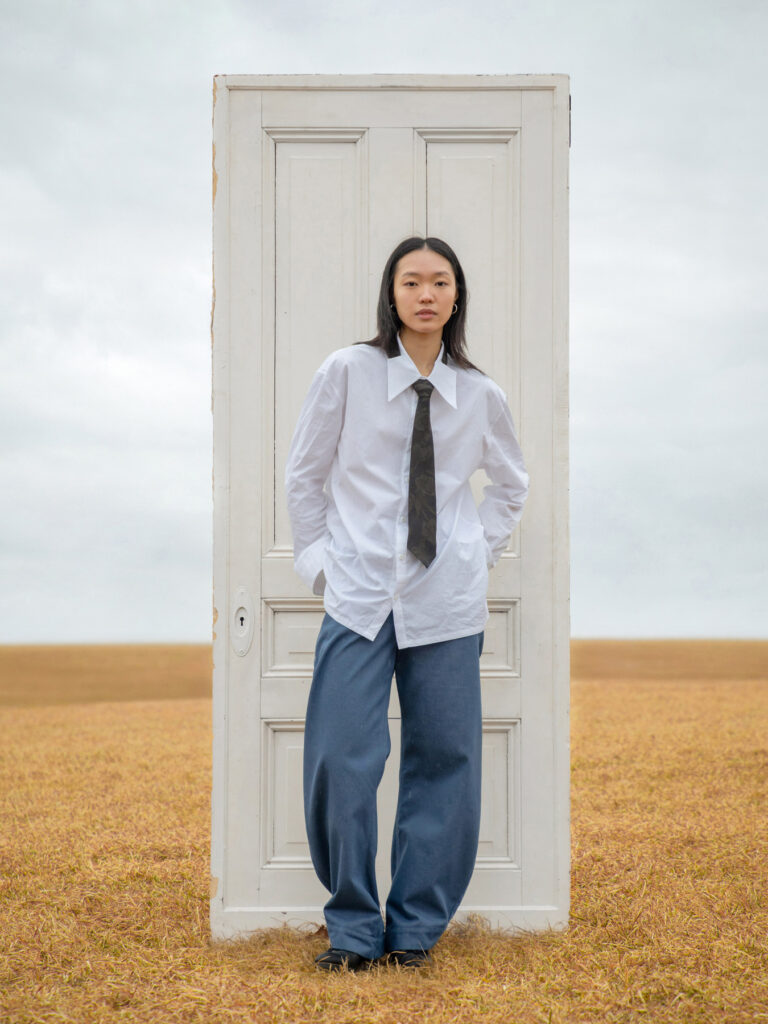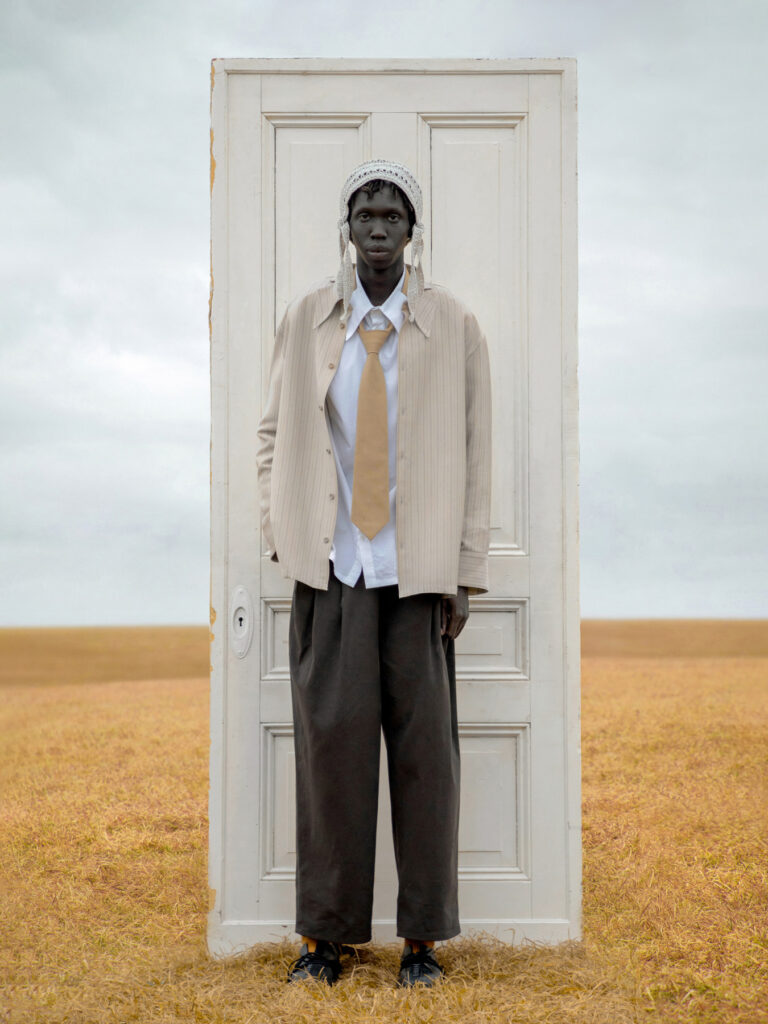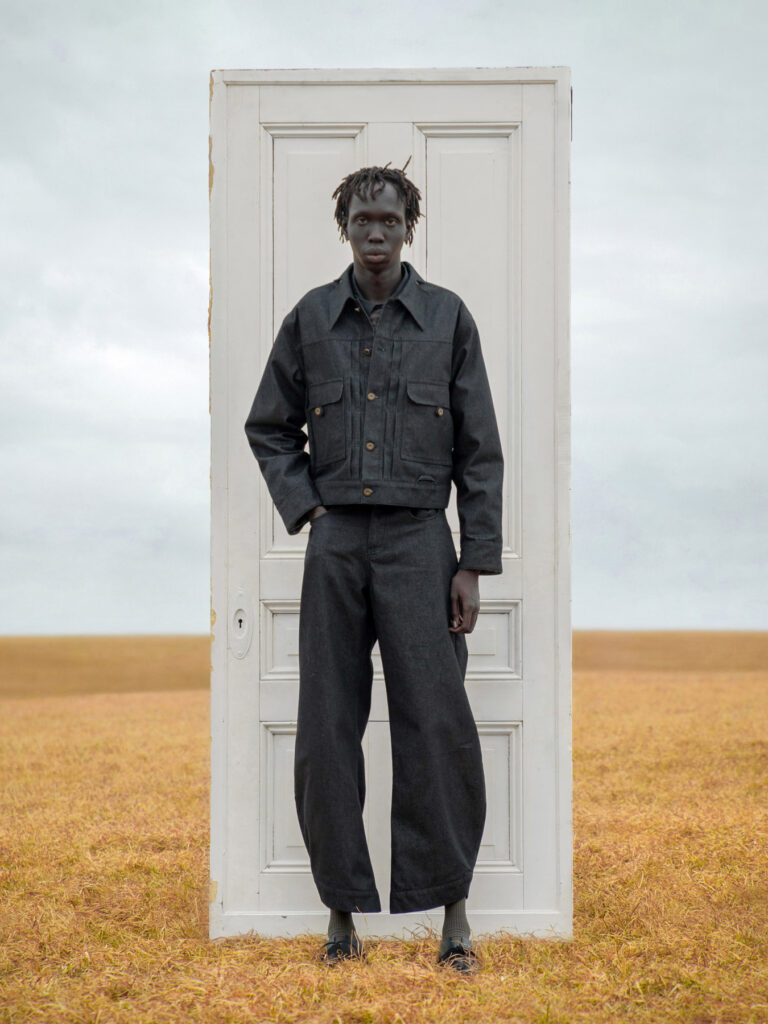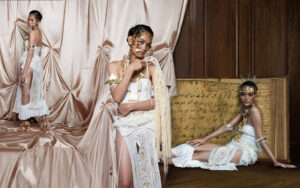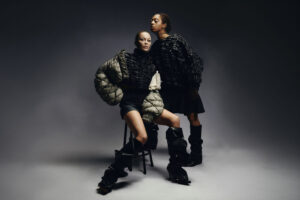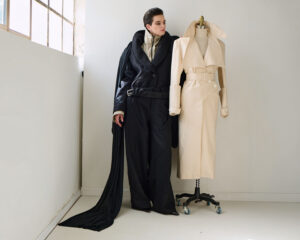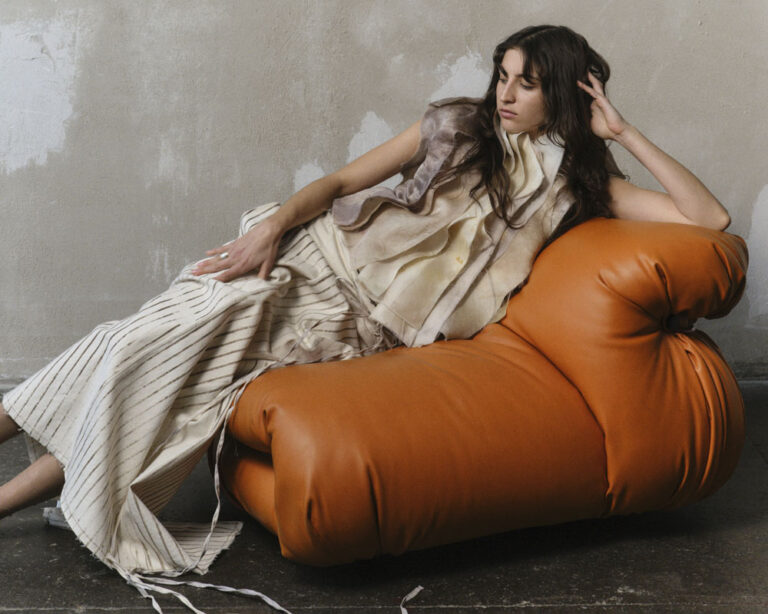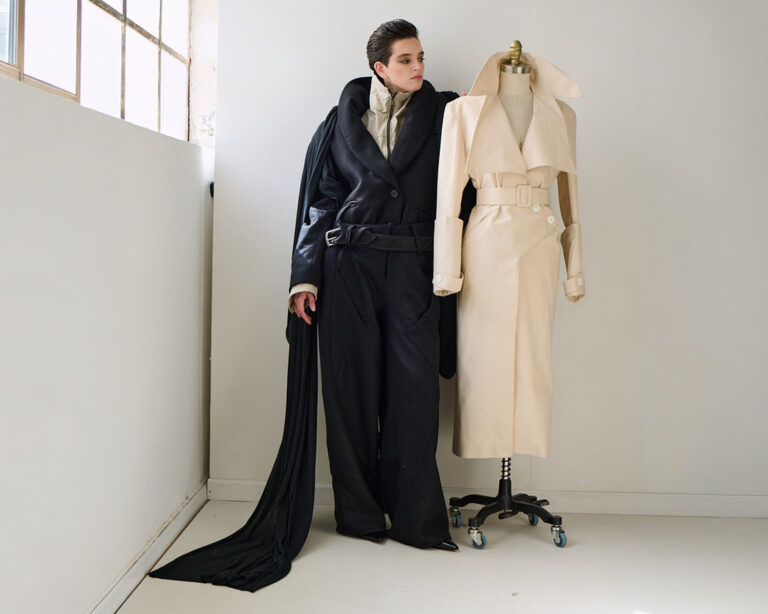
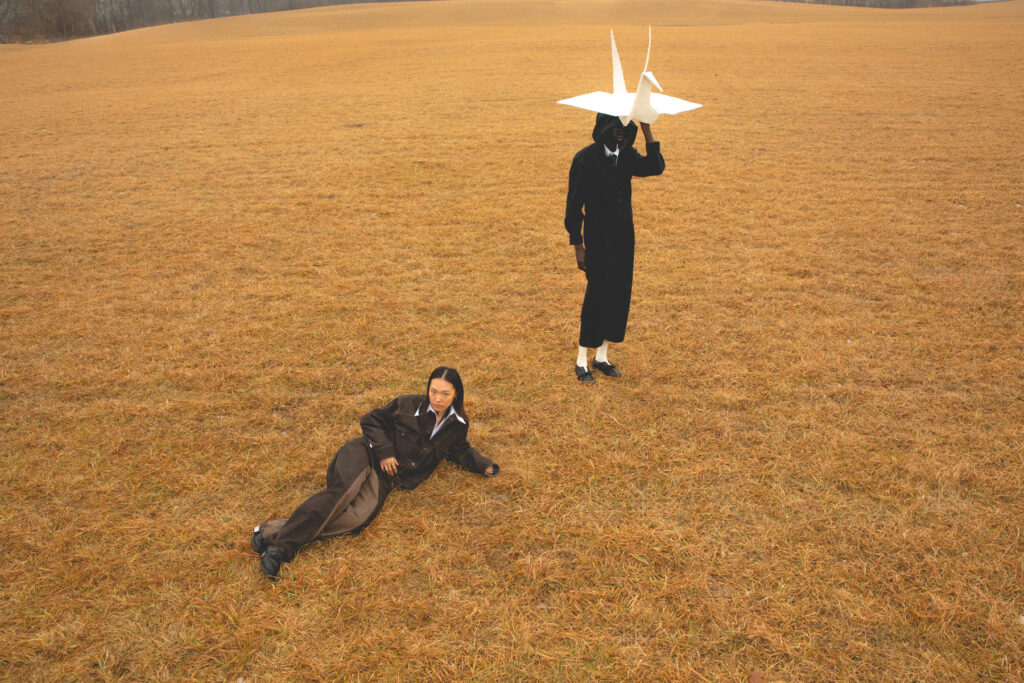

Fashion often thrives on spectacle, but Kubeko finds strength in quietness. For the New York–based label, design begins not with grand statements but with what they call a “shy rebellion.” It’s a rebellion not against others but against the desire to conform. “The world can be a loud place and society can be judgmental, making us prone to caging ourselves inside social masks,” the designers reflect. Instead of succumbing to that pressure, Kubeko seeks out small sparks of joy, a hidden print, an organic pocket, a contrasting fabric on the inside of a hood. “Change can start in baby steps,” they say. It is through these shy, subtle details that Kubeko reshapes how clothes can be both seen and felt.
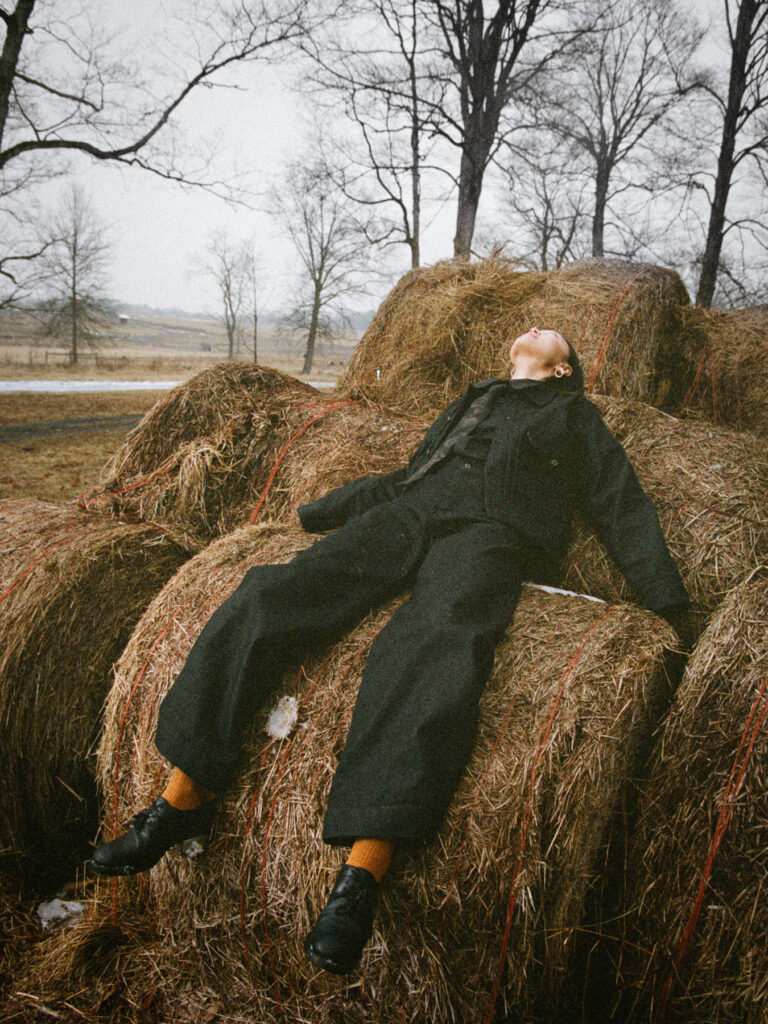
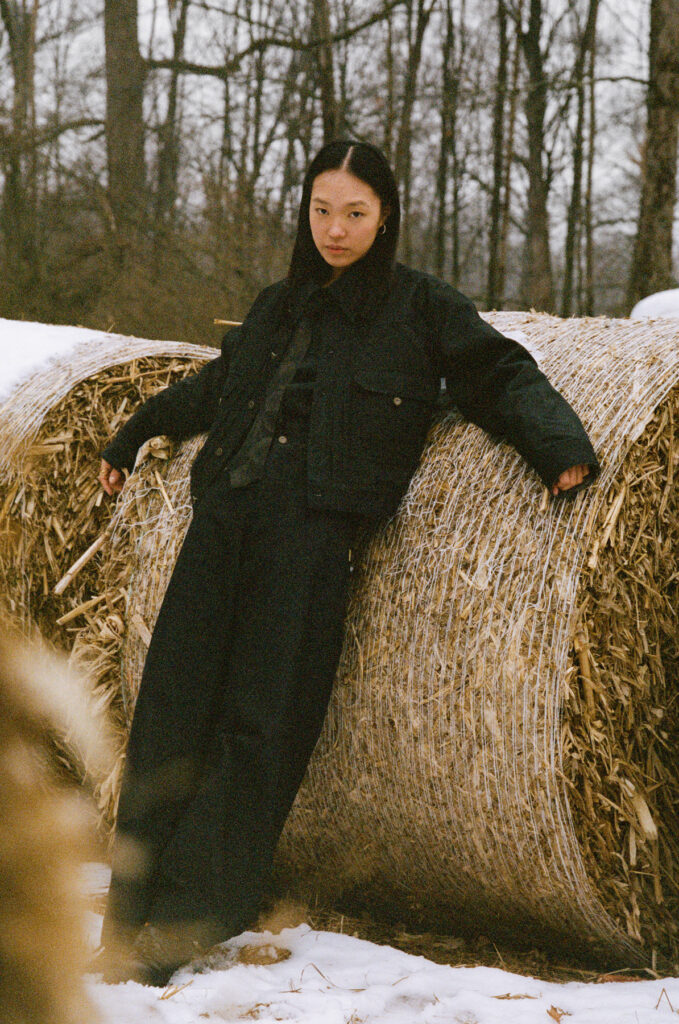
At the heart of the brand is Crying Boy, a character conceived as both muse and alter ego. He was born from a universal feeling, the push and pull between ambition and inertia. “We were talking about the idea of wanting to do grand things and being ambitious but in reality just lying down on your bed, unable to put your thoughts into actions and make your fantasies into reality,” they recall. From that starting point, Crying Boy emerged as a blank slate, minimally dressed, naïve, entrapped in an isolated room with only his thoughts for company. The act of opening a door and stepping outside becomes his journey toward transformation.
This fictional narrative mirrors the very real experience of the designers themselves. As a rising brand, navigating a competitive industry navigating a competitive industry, they describe being caught in a grey zone between knowing nothing and seeing everything. One admits, “I have mornings when I wake up, lying in bed, feeling like ‘wow I am Crying Boy.’ I was confining myself inside a bubble, always working in the studio. Recently I began to be outside more, to meet people again, and what once felt natural feels very strange and fresh to me.” Crying Boy’s hesitant wave to the outside world is, in truth, their own.

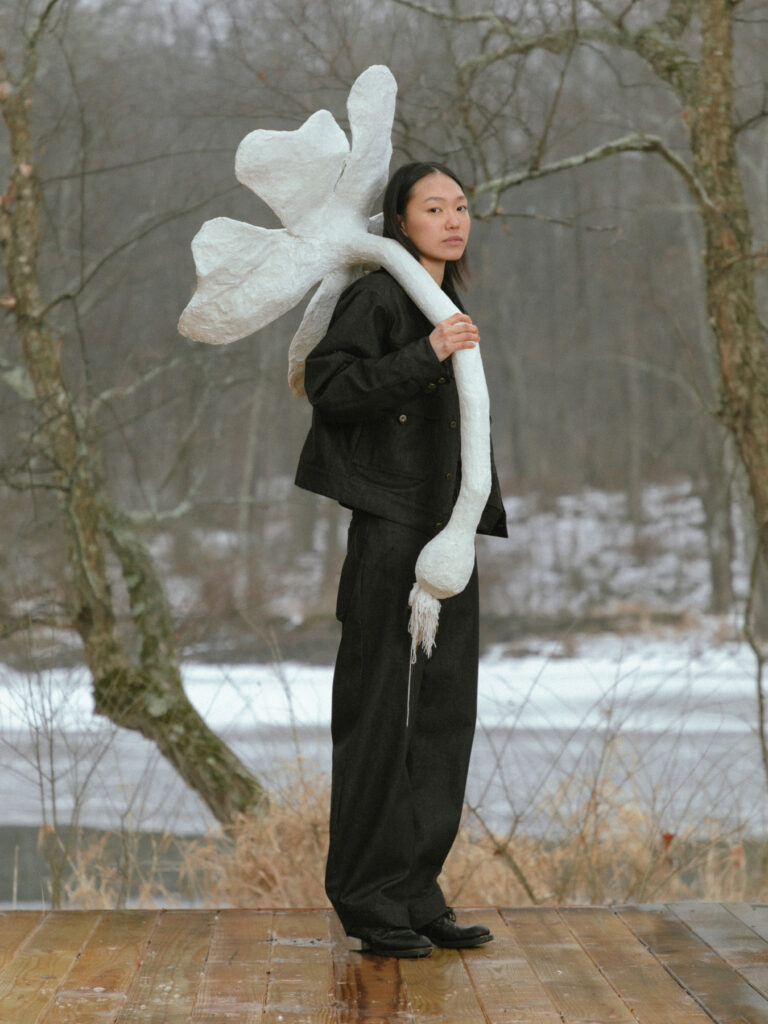
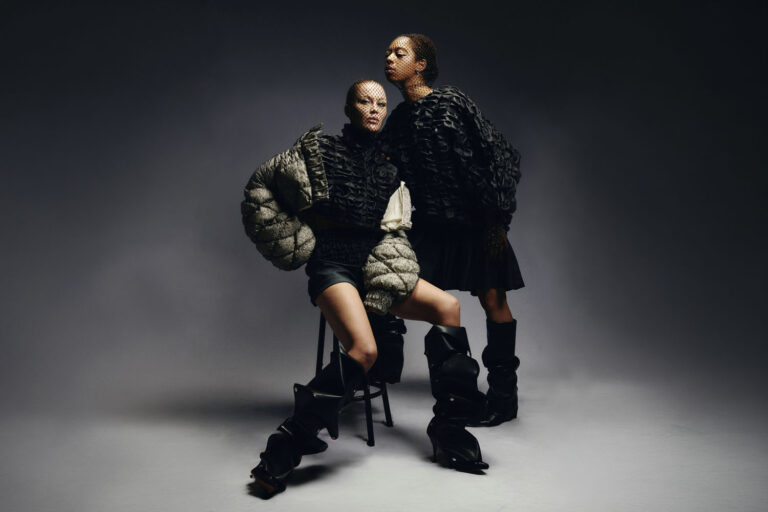
Kubeko channels these emotions directly into the garments. Tears are reimagined as elongated collars, droplet-shaped ties, or softly curved pockets. Details like indented cuffs or a fish-head intarsia graphic hide in plain sight, waiting to be discovered. The process is never formulaic but emerges through immersion in the narrative. “Often these designs come intuitively when we completely immerse ourselves in the story. Then, through layering these ideas, we weave them into a design vocabulary.” Each piece becomes a micro-version of a larger concept, sometimes literal, sometimes whispered through small design gestures.
The interplay between essence and appearance is crucial for Kubeko. Beyond the clothing, each collection is extended through animation, graphic design, and even 3D-printed objects. Crying Boy becomes animated, brought to life in virtual spaces, while product labels change each season to reflect the collection’s story. For their debut, the label featured Crying Boy holding a flower alongside the collection statement, transforming a functional tag into a narrative artifact. These interdisciplinary practices reinforce the idea that clothes are never just shells but carriers of essence.


Still, what makes Kubeko resonate most is its insistence on personal ownership. “It’s not a competition, more of developing yourself into a better version of yourself,” they emphasize. Clothes, for them, are not about the “best” but about being “purely yours.” A pair of pants lined with a secret printed fabric or a jacket with a hidden interior detail becomes meaningful only when someone wears it, remembers it, and lives in it. “When we design the clothes, the clothes are still ‘ours.’ But when they get introduced to the world, and one decides to purchase and wear our clothes, it becomes ‘theirs,’ and to our perspective, ‘yours.’”
That philosophy extends to how Kubeko wants people to encounter their world: with freedom and without pressure. Each garment, each hidden detail, each subtle choice is an invitation to connect in your own way. “We hope people can feel free to interpret and interact with the clothes in their own ways, without feeling the pressure to do so in a way that is suggested by others.”
As Crying Boy’s story evolves, so too does Kubeko’s. Future narratives imagine him exploring identity, society, and human connection, discovering how the outside world shapes him, and how he, in turn, shapes it. In many ways, the journey is less about him alone and more about everyone who sees themselves in him. For the designers, this is the quiet power of fashion: not spectacle, but recognition.
Kubeko captures it best in their ethos: “We present you neither the best nor second best, but what is purely ours – worn, carried, and engraved in fondness.”