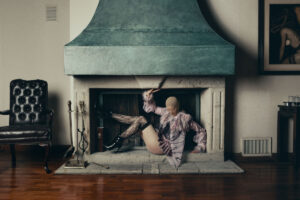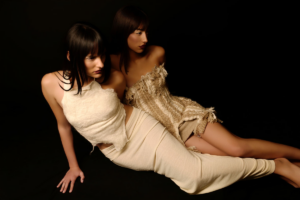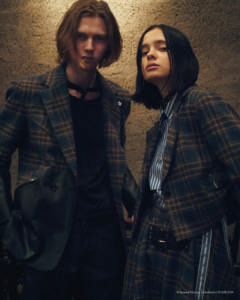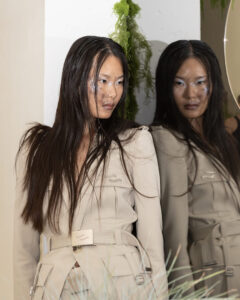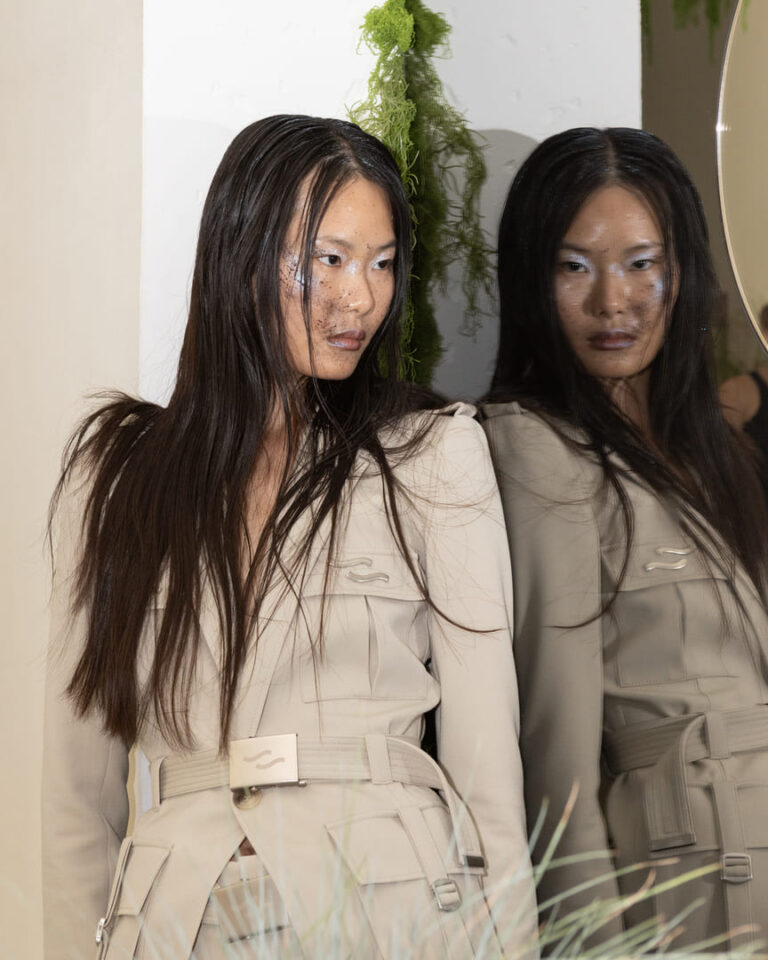
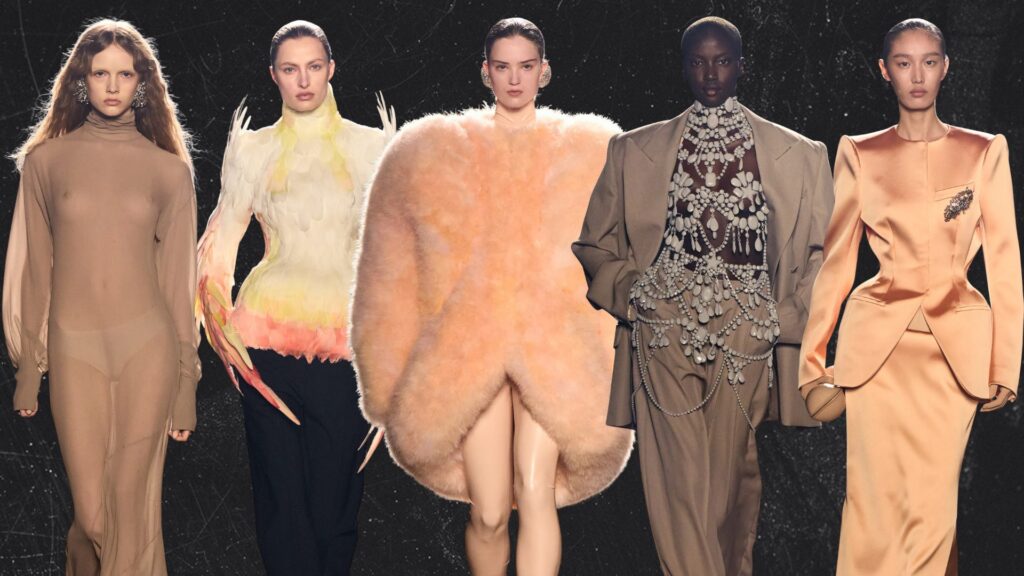

Miguel Castro Freitas’ debut at Mugler was a fascinating moment, a collection that honored the brand’s audacious DNA while quietly rethinking what sexy looks like today. Freitas titled the collection “Stardust Aphrodite,” and it played on contrasts: fantasy and reality, softness and structure, light and dark. The show took place in an underground Paris parking garage. But this time, the seduction came with more subtlety. The signature sharp tailoring was back, those incredible sculpted jackets that define Mugler’s visual identity.
You could sense that Freitas wasn’t trying to imitate his predecessors. Miguel Castro Freitas clearly understands the magnitude of the house he’s now leading. He didn’t try to outdo the late Thierry Mugler or replicate Casey Cadwallader’s athletic sensuality. Instead, he did something far more impressive: he redefined Mugler’s eroticism for a new generation. It was a debut that didn’t scream for attention but earned it quietly. It felt like the start of a thoughtful new era for Mugler — one where strength and softness coexist, where sexy doesn’t need to be obvious, and where glamour is reimagined for the now.
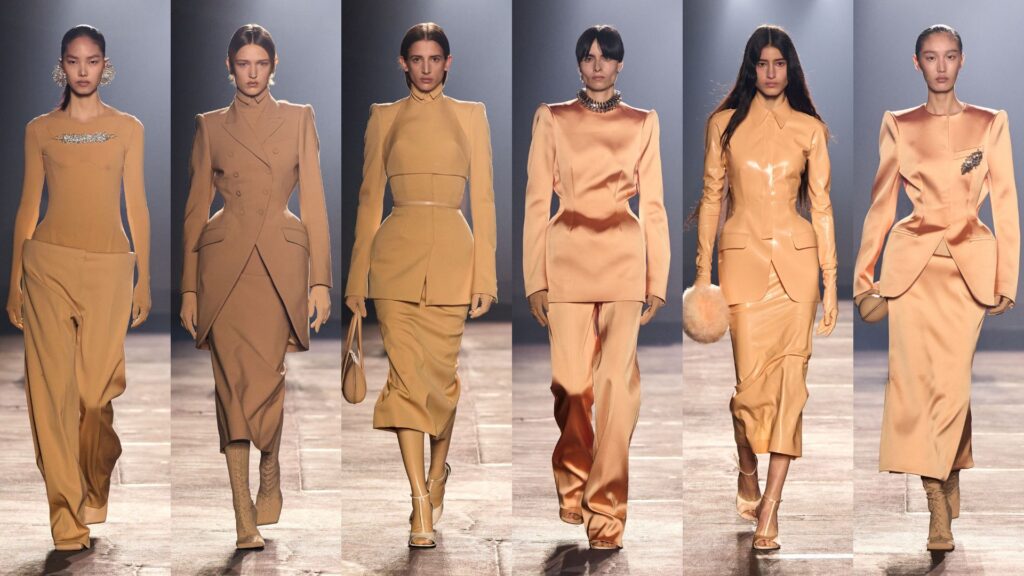
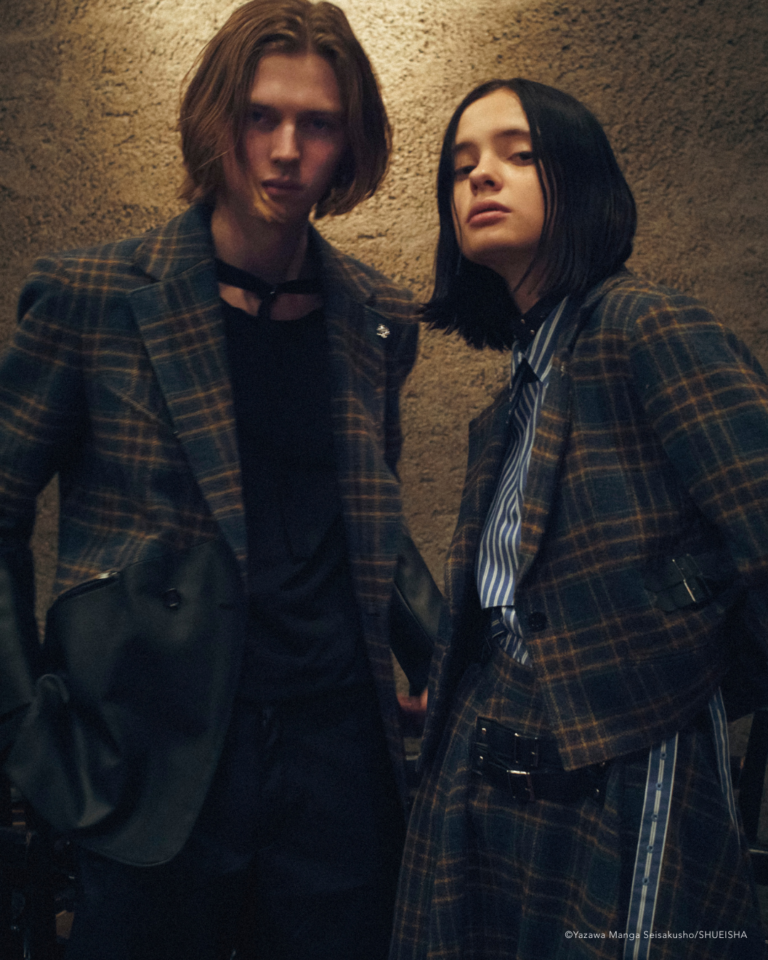
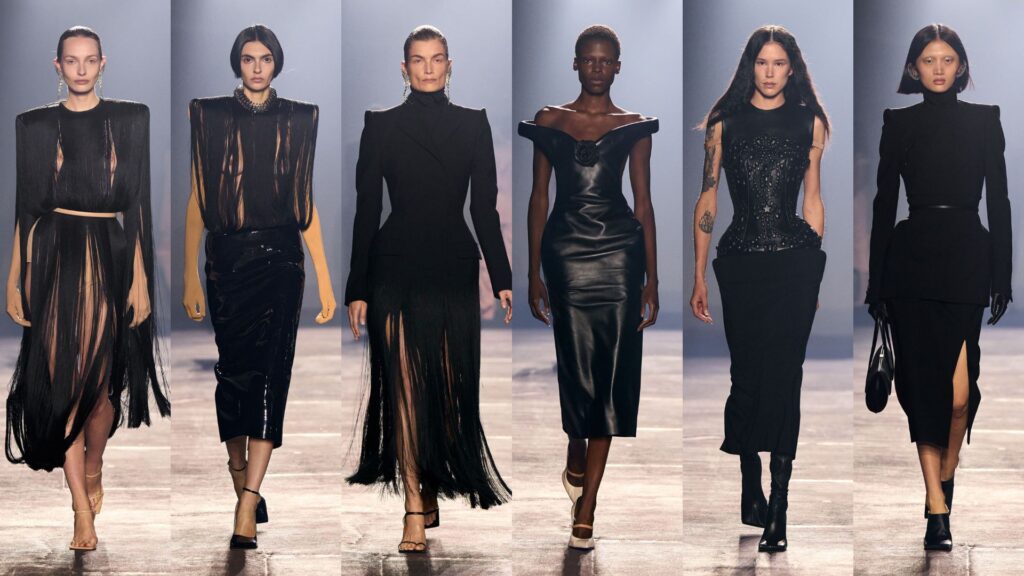
Freitas’ approach felt almost architectural. He leaned into the house’s history of body-sculpting silhouettes but gave them a lighter, more fluid touch. Vinyl skirts and trousers sat low on the hips, hugging but never constraining the body. Hourglass blazers curved subtly, not sharply, around the torso. A handful of pieces, especially the padded-waistband pants, showed a designer who understands structure. The tailoring throughout was impeccable, and that alone would have been enough to signal a strong start.
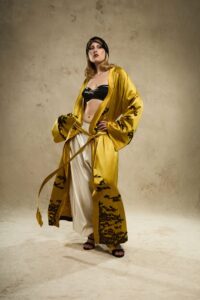
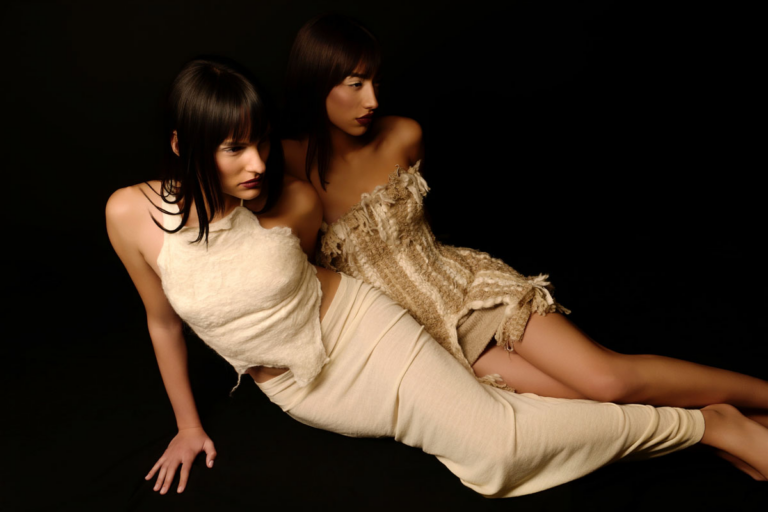
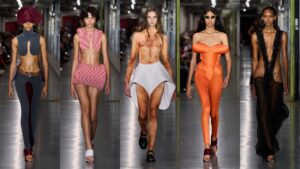
But what made this debut stand out was the restraint. Mugler has long been synonymous with hyper-sexuality and drama , Thierry’s era was all about dominatrix glamour and theatrical exaggeration. Freitas kept some of that spirit alive, but reframed it through a more realistic lens. There were sheer, diaphanous dresses in muted shades of tan and powder blue that revealed the body gently rather than exploiting it. Fringe tops offered a flash of skin, but paired with trousers or modest skirts, they read as powerful rather than performative. Even the nipple ringed, bias cut gown, one of the show’s most headline-grabbing moments managed to feel more than a gimmick.
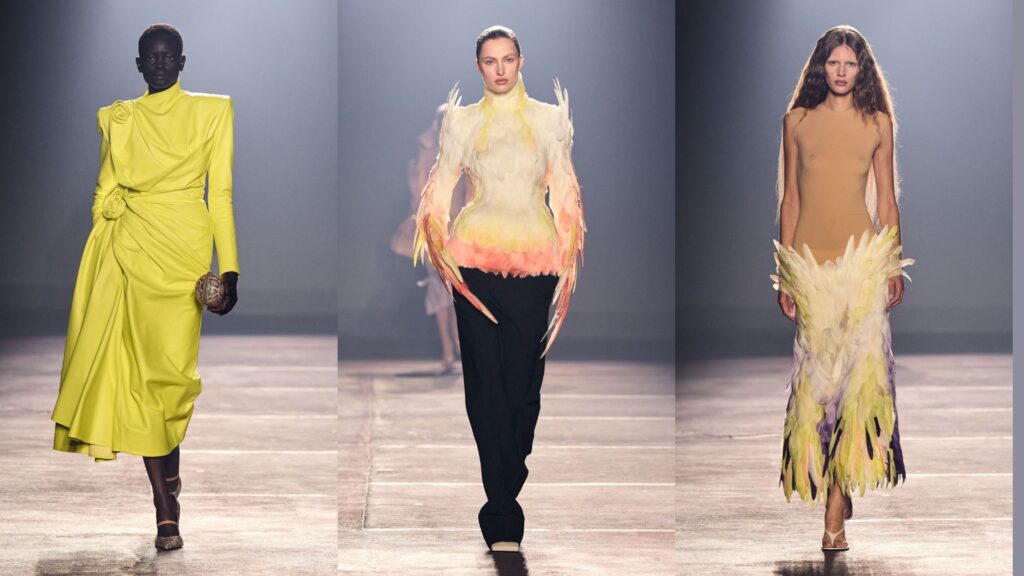
Ostrich feathers made their way into the collection, not as extravagant boas or Vegas-style plumes, but as carefully considered accents: cascading from skirts or forming ombré tops that faded from crisp white to citrus tones.
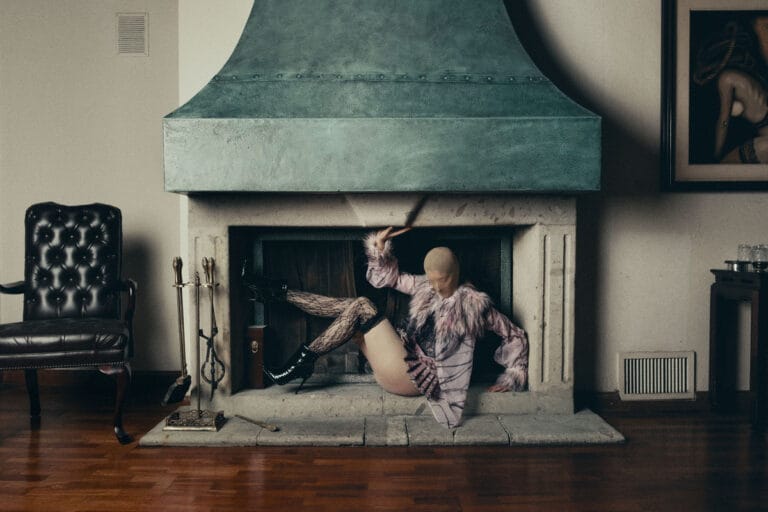
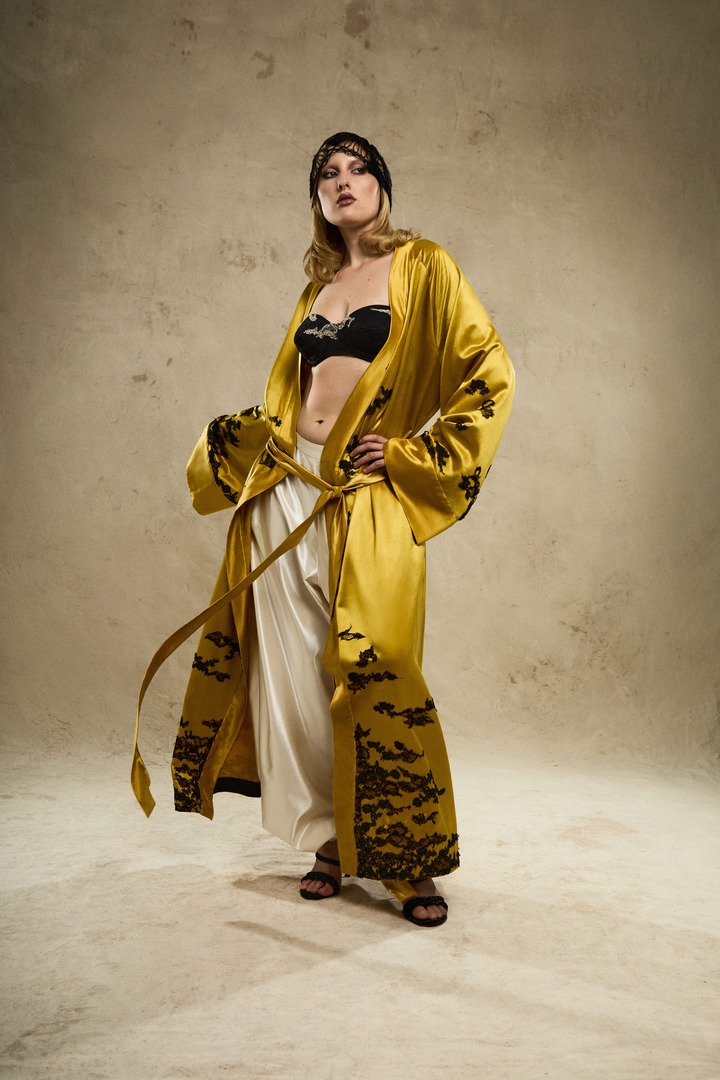
The color palette was muted, with plenty of camel, beige, and black, but when color did appear, it made a statement. There was a stunning seafoam green look, and a flash of lemon and tangerine in the feathered tops that caught the light beautifully. The fabrics were equally considered: vinyl, satin, sheer mesh, and crisp tailoring-weight materials that shaped the body without suffocating it. The interplay of texture gave the collection depth, proving that sensuality can come from construction and craft just as much as from exposure. A few pieces played into fetish references and dark fantasy, reminding us of the house’s roots in performance and power. But even those moments felt intentional, not indulgent.
What Freitas achieved so effectively here was balance. He bridged Mugler’s larger-than-life theatrics with something softer and more human. His models looked strong but not untouchable, sensual but not objectified. You could tell he was thinking about how women actually dress. It’s easy to make something shocking. It’s harder to make something intresting and wearable at the same time.
Photo Credit: Vogue Runway