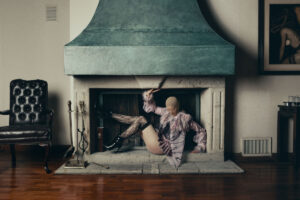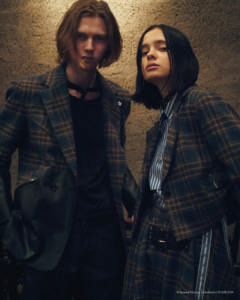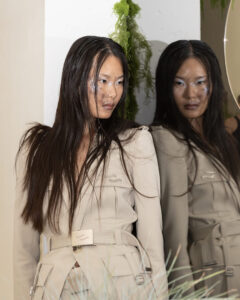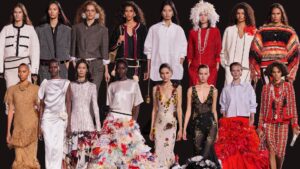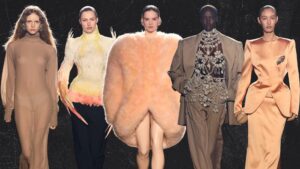
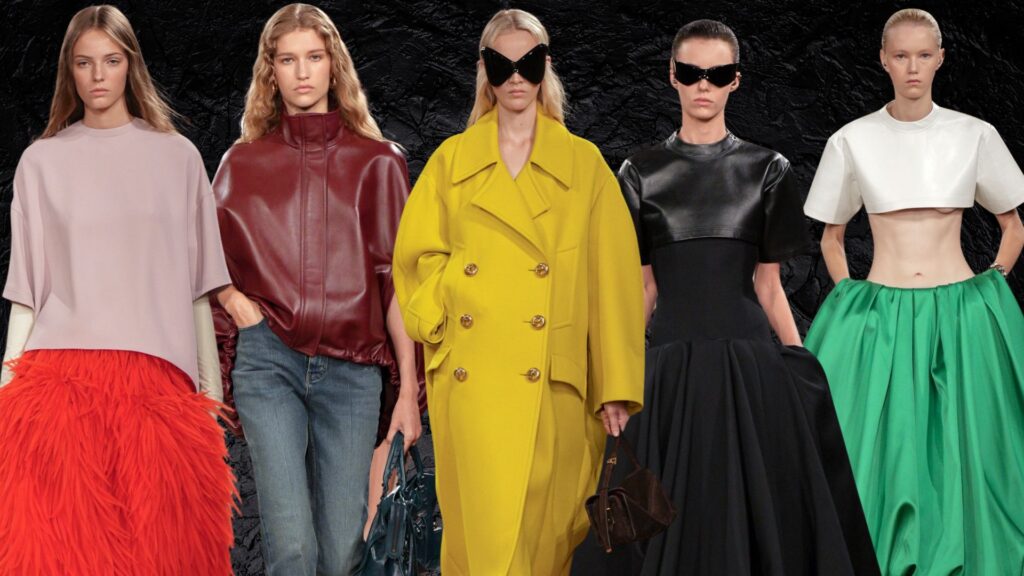

If this debut was any indication, Balenciaga is entering a new era, one that values emotion over irony.
Pierpaolo Piccioli’s debut for Balenciaga was, in a word, stunning. It’s rare to see a collection that feels both completely timeless and so relevant to the moment. But that’s what this was—thoughtful, beautiful, and deeply considered. After years of transforming Valentino into a house defined by color, romance, and emotion, Piccioli brought that same sensitivity to Balenciaga, channeling it through a quieter, more sculptural lens. It was less about spectacle and more about sincerity.
From the first look, a long black sack dress with white opera gloves and oversized, bug-eyed sunglasses, it was clear Piccioli wasn’t here to erase history. He was here to build on it. The silhouette referenced Cristóbal Balenciaga’s revolutionary Sack Dress from 1957. Piccioli took that same sense of liberation and turned it into something modern. He described Balenciaga’s method as “body, fabric, and air,”. You could see that ethos in the way clothes moved, never fighting the body but floating around it.
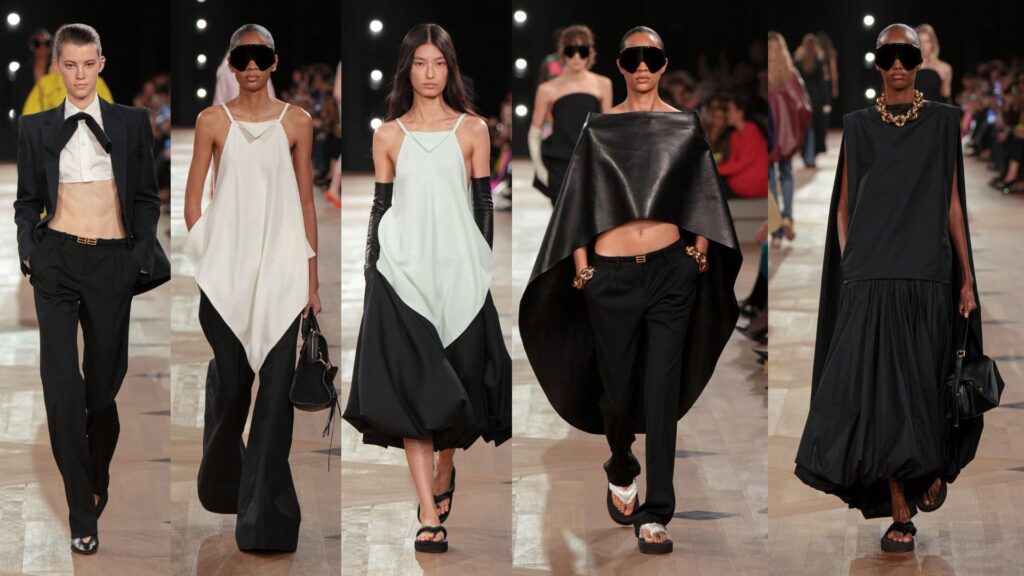
This was also a collection rich with references, not in a cheesy nostalgic way, but in the sense that every look acknowledged those who came before. There were nods to Nicolas Ghesquière’s sharp tailoring and architectural coats, as well as to Demna’s deconstructed streetwear edge. You could spot echoes of both in the riding hats, the exaggerated shapes, and the reimagined City Bag, now blown up or scaled down. But even with all these callbacks, the collection didn’t feel heavy or burdened by the past. Instead, it was a bridge between eras.
His use of shape and volume was masterful. Balloon skirts, cocoon coats, and tunics appeared in fresh, unexpected materials like black leather, silk, and crisp cotton. There was a magenta trapeze dress with a puffed ruffle hem, a vivid red one-shouldered gown trailing a spiraling scarf, and an absinthe-green coat that looked sculpted rather than sewn. It was couture in spirit, even when grounded in the practicalities of ready-to-wear. The tailoring was impeccable, but there was an ease to it. A kind of freedom that comes from knowing exactly when to stop.
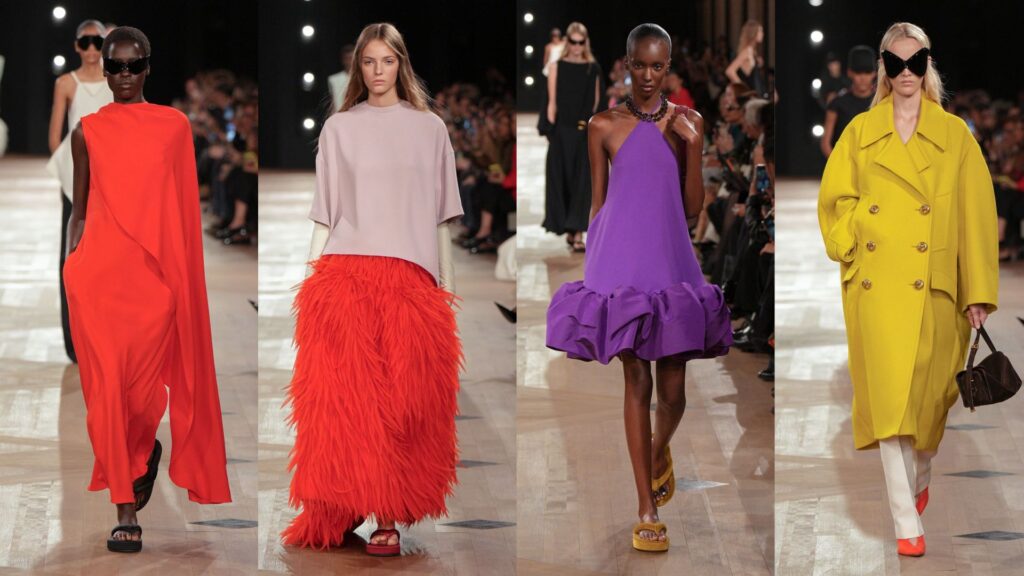
What made this debut even more striking was how wearable it felt. Yes, there were moments of high drama, but much of the collection spoke to real life, elevated but not out of reach. There were reworked chinos with couture-level precision, bubble leather bombers, and crisp white shirts so oversized they grazed the floor.
Piccioli’s Balenciaga woman is sophisticated, curious, and grounded in reality. She might wear a tunic over narrow black pants one day, a cocoon coat the next, or perhaps a sculptural gown when the moment calls for it. There’s something very modern about that—this idea that elegance doesn’t have to mean extravagance. His approach to color supported that balance too: earthy neutrals, inky blacks, bursts of red and pink that recalled his Valentino days.
It was also refreshing to see a designer debut that didn’t rely on gimmicks. Despite the star-studded front row with Meghan Markle, FKA Twigs, Anne Hathaway, and Isabelle Huppert among them—the focus stayed firmly on the clothes. There was no shock value, no viral stunt. Just a clear, confident vision of where Balenciaga can go next.
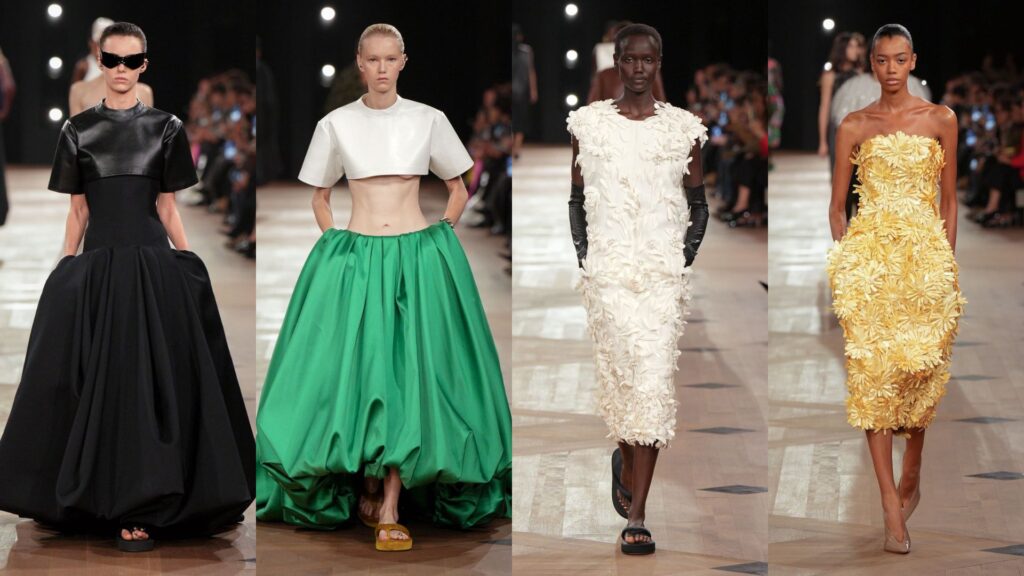
Piccioli called the collection a “recalibration,” and that word feels just right. After years of hyperreality and meme-driven fashion, this felt like a reset. A palate cleanser that reminded everyone of the beauty of craft, cut, and emotion. The result was something powerful yet tender, grounded yet full of fantasy.
Pierpaolo Piccioli has managed to do what only great designers can: take something with decades of history and make it feel completely new again.
Photo Credit: Vogue Runway