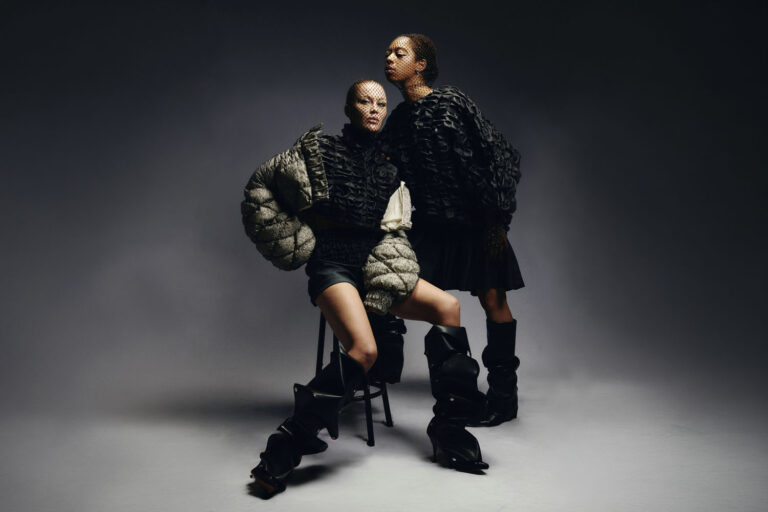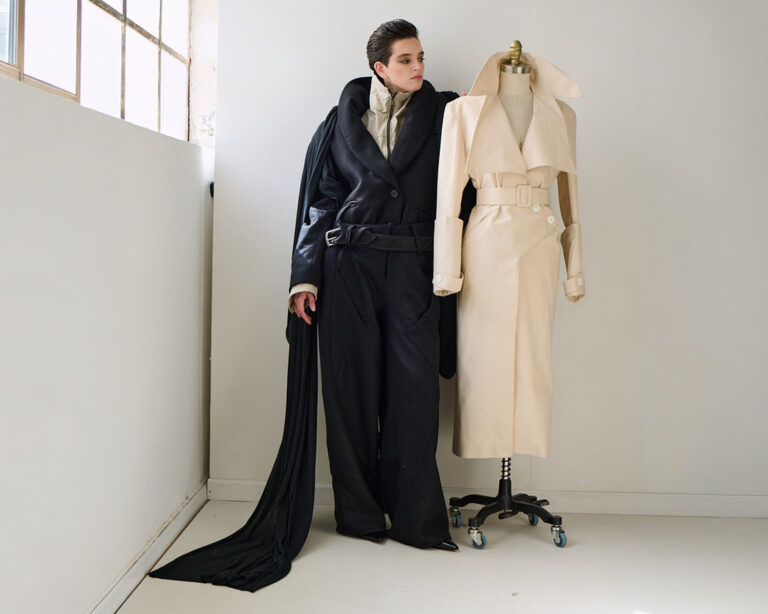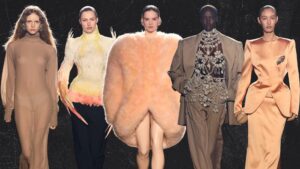
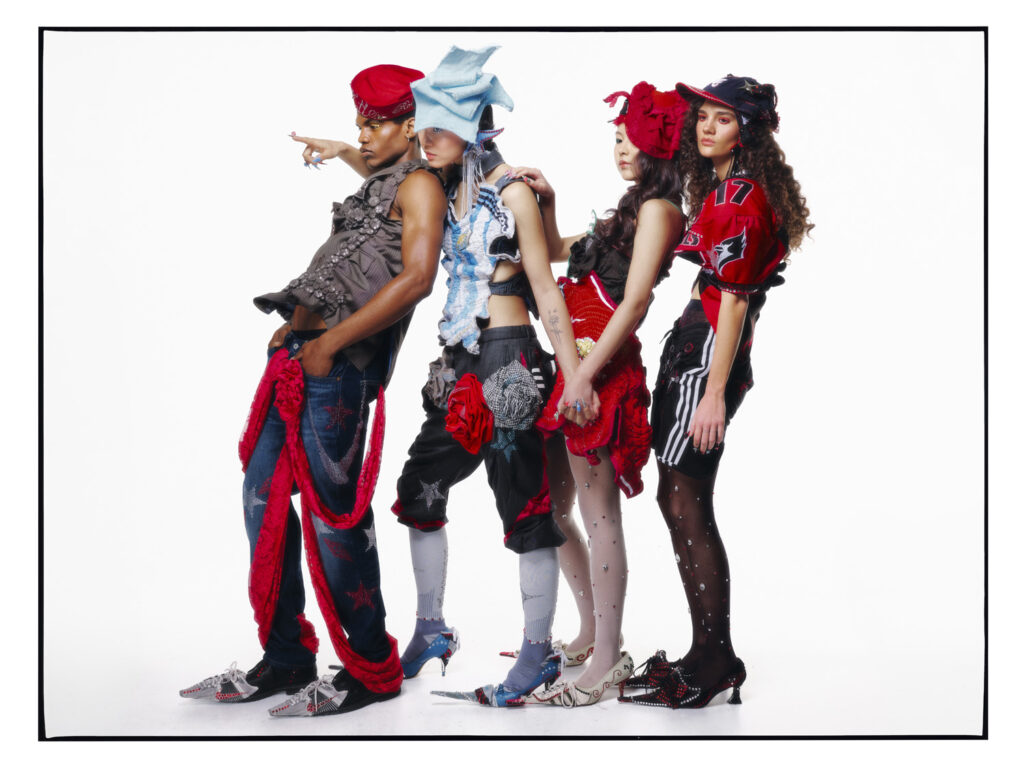

Growing up in China, designer Effe Qi HE spent much of her childhood wearing school uniforms and sports jerseys. Those garments encouraged equality through sameness and rarely invited individual expression. At the time, they felt ordinary. Years later, they became the starting point for a much deeper creative investigation. Today, the New York-based designer behind Effe Waldorf transforms discarded football jerseys into couture-inspired garments that challenge ideas of identity, femininity, and belonging. Her latest collection, 31: Offside Identity, proves that even the most familiar uniform can tell an entirely new story.
The collection began with a question that has shaped both Qi HE’s life and practice: What happens when individuality grows inside a culture built on collective identity? Instead of rejecting the uniforms from her childhood, she chose to reinterpret them. Corsetry, lace, tailoring, embellishment, and sculptural silhouettes reshape sportswear into garments that celebrate freedom, femininity, and self-expression. Each piece reflects a personal journey while inviting wider conversations about identity.
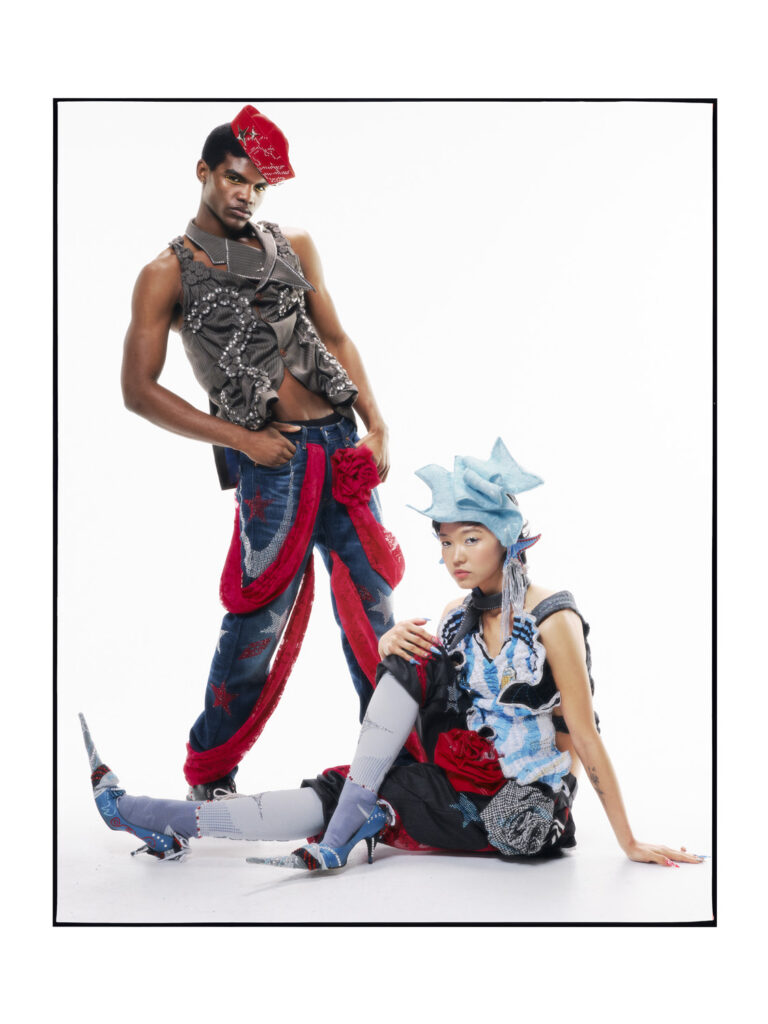
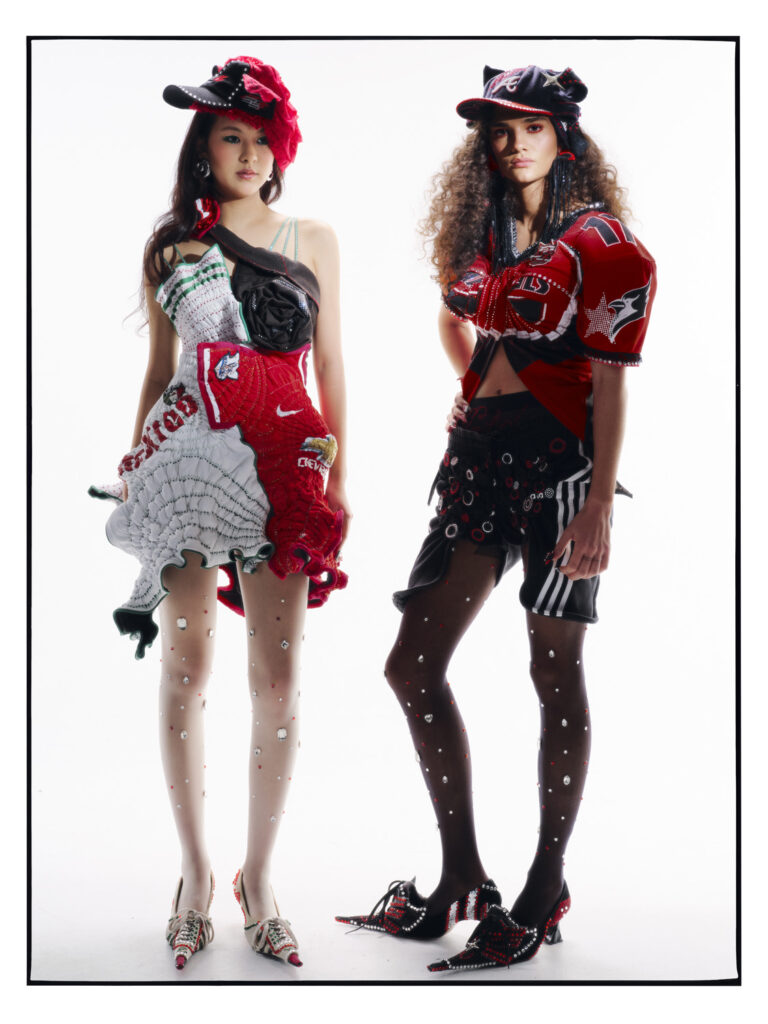
“My latest collection, 31: Offside Identity, began with a simple question: What happens when individuality grows inside a culture built on collective identity?” she says. “Rather than rejecting uniforms, I wanted to transform them. 31: Offside Identity became a way of reclaiming something that once represented conformity and turning it into a celebration of individuality, femininity, and personal freedom.”
Her work does not criticise the culture she grew up in. Instead, it reflects on how those experiences shaped her understanding of identity. School uniforms symbolised discipline, equality, and belonging, but they also limited personal expression. As she encountered new cultures through her studies in the UK and later at Parsons School of Design in New York, her perspective evolved. Today, she explores how individuality and community can exist together instead of standing in opposition.
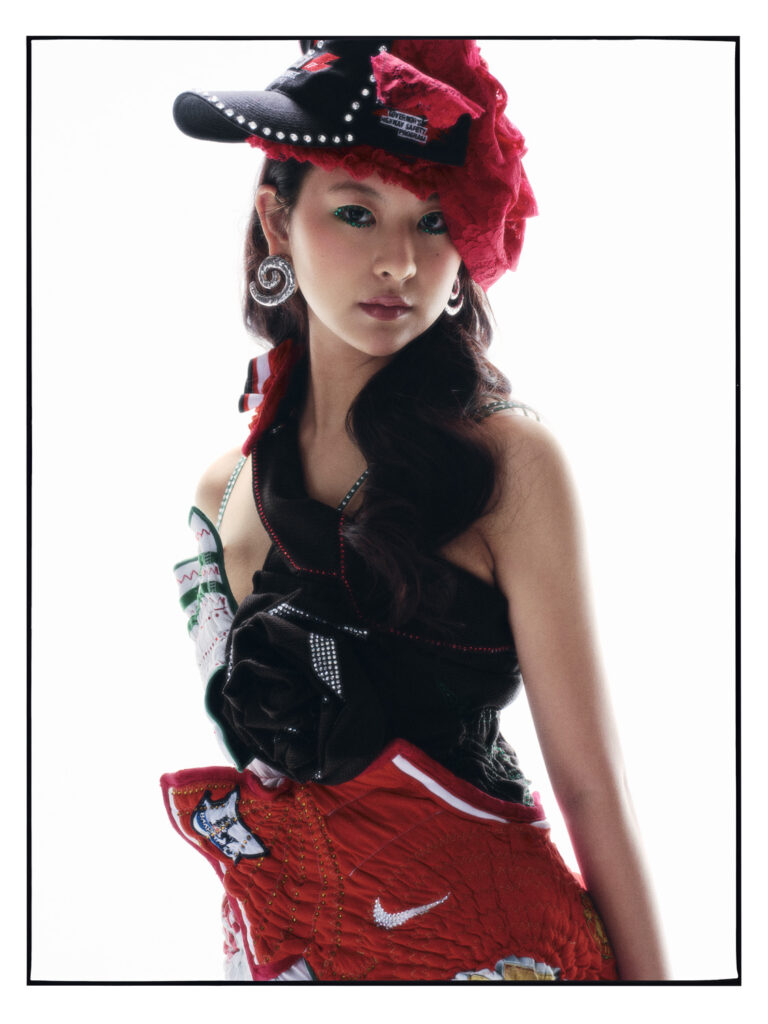
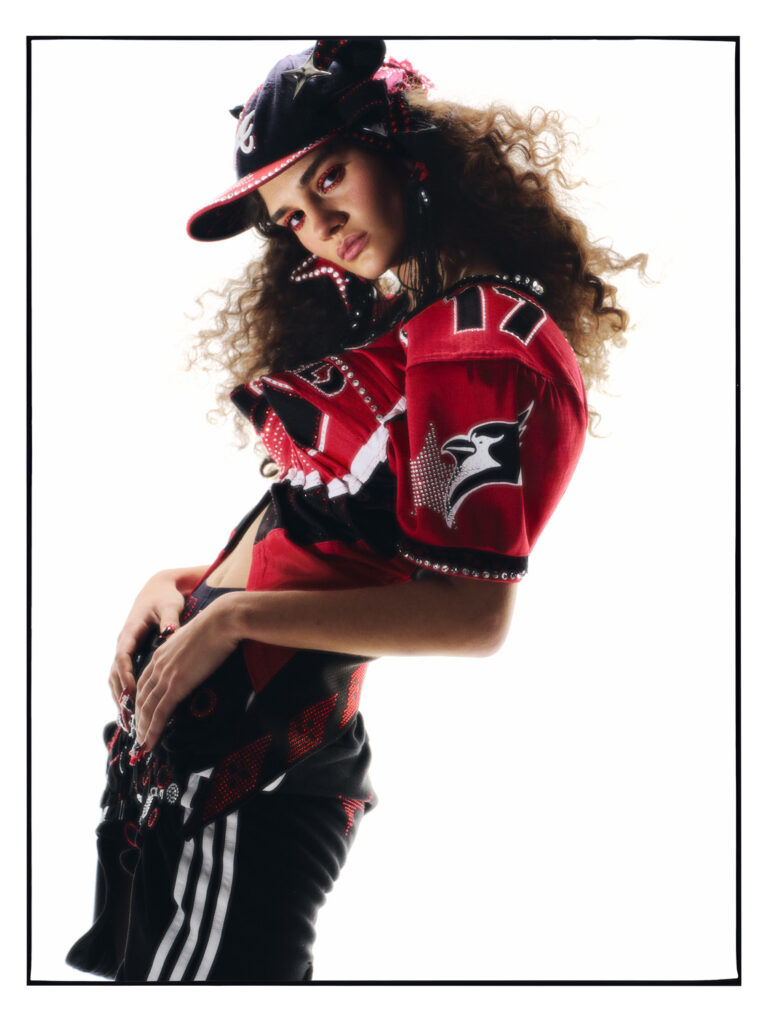
Football became the collection’s visual language because its symbols are recognised around the world. Jerseys, numbers, referees, boundaries, and rules create a universal system that crosses cultures. Among those references, the offside rule became the project’s defining metaphor. Crossing an invisible line on the pitch mirrors the experience of people who exist outside accepted social expectations.
“The concept of ‘offside’ fascinated me because it describes someone crossing an invisible boundary,” Qi HE explains. “People who don’t fit expectations are often seen as being ‘out of position.’ In my collection, being offside becomes something positive. It’s about having the courage to step outside prescribed roles and redefine your own identity.”
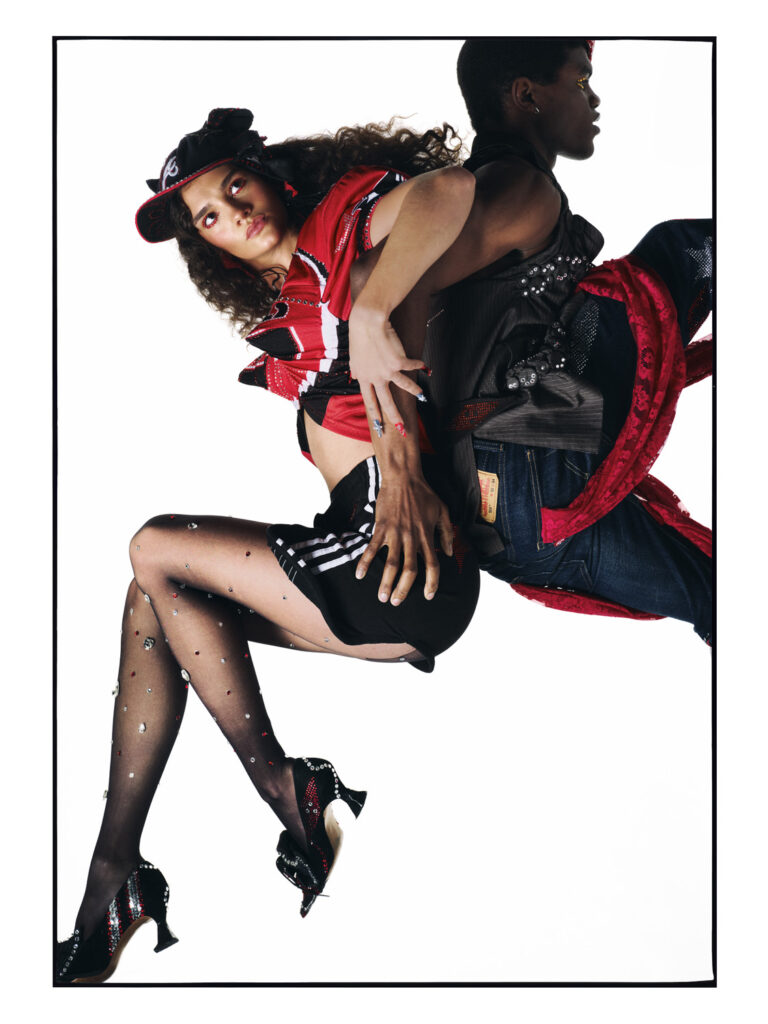
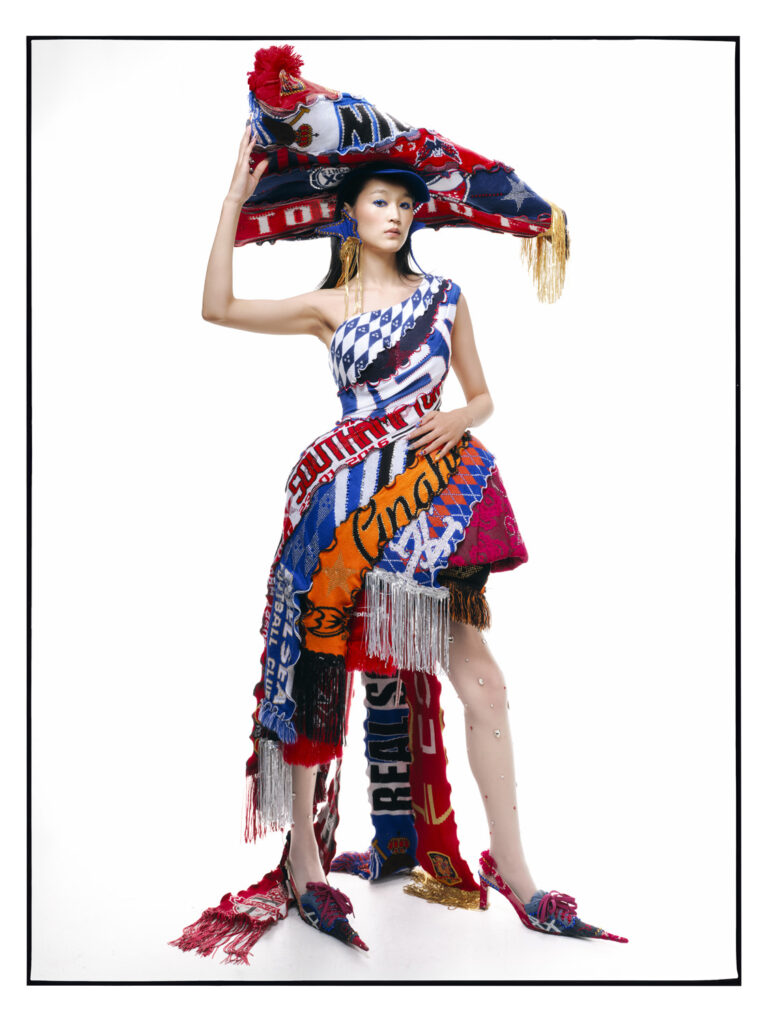
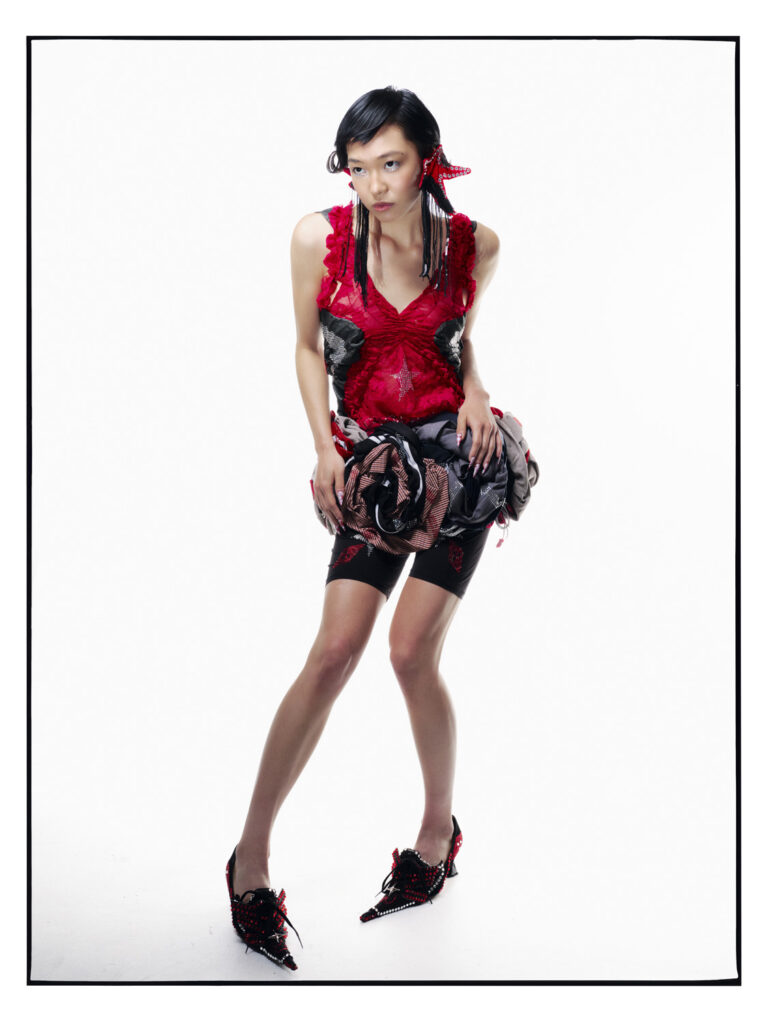
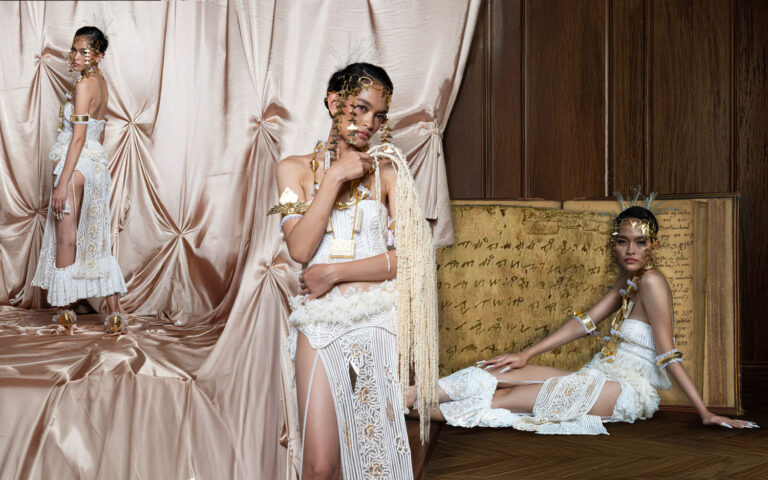
That same tension appears throughout the garments. Sportswear usually represents function, movement, masculinity, and uniformity. Corsetry and lace often symbolise intimacy, glamour, and femininity. Qi HE combines these contrasting languages instead of choosing between them. Football jerseys become sculptural corsets. Performance fabrics meet delicate lace and sequins. Athletic garments evolve into couture-inspired silhouettes that resist simple definitions. Rather than making sportswear more feminine, she questions what femininity itself can become.
-5-1024x575.jpg)
Sustainability also sits at the centre of her practice. Every collection begins with vintage, second-hand, deadstock, and discarded garments sourced throughout New York City. Qi HE values every stain, faded print, seam, and imperfection because they reveal the history of each piece. Those traces remain visible in the finished garments, allowing past and present to exist together.
“Every discarded jersey already carries a history,” she says. “Instead of forcing a design onto the material, I spend time understanding what the fabric wants to become. The original graphics, seams, and construction often guide the final silhouette. In many ways, the material becomes my collaborator.”
-1024x575.jpg)
Her creative process follows that same intuitive approach. She rarely starts with detailed sketches. Instead, she drapes directly on the mannequin, cuts apart existing garments, and experiments until unexpected forms emerge. Years of making have taught her to trust the dialogue between her hands and the material. Since every vintage jersey differs, every finished garment becomes unique. That individuality remains central to her vision of craftsmanship and slow fashion.
Qi HE’s international education also continues to shape her work. China gave her a strong cultural foundation. The UK strengthened her research and critical thinking, while New York encouraged experimentation and confidence. Rather than belonging to a single place, her practice draws from all three experiences. Together, they form a design language that continues to evolve.
Through 31: Offside Identity, Qi HE asks viewers to rethink value in every sense. Upcycling means more than reducing waste. It transforms discarded materials into objects of beauty, emotion, and luxury. More importantly, it reflects the ongoing transformation of identity itself. Clothing, like people, should never remain confined by a single definition.
“I don’t want people to simply think the garments are beautiful,” she says. “I hope they begin questioning the boundaries they’ve accepted throughout their lives.” That ambition gives 31: Offside Identity its lasting impact. The collection shows that fashion can move beyond decoration and become a conversation about culture, identity, and belonging. By stepping beyond the uniform, Effe Qi HE reminds us that individuality often begins where the boundaries end.