
For Chicago-based designer YOYO Zheng, fashion is not simply about making clothes. It is a way of For Chicago-based designer YOYO Zheng, fashion is not simply about making clothes. It is a way of understanding the world and finding meaning within it. Zheng developed Khôra as her thesis collection at the School of the Art Institute of Chicago. The project emerged from a deeply personal search for peace. Through meditation, observation, and a close relationship with nature, she created a body of work that invites stillness into a world that rarely slows down.
Named after the philosophical concept of “Khôra,” a vessel or space that gives place for being, the collection explores transformation, sanctuary, and becoming. Rather than treating clothing as an object, Zheng approached each garment as a space capable of holding memory, movement, and personal experience. The result feels less like a series of garments and more like an environment designed to encourage reflection, softness, and presence.
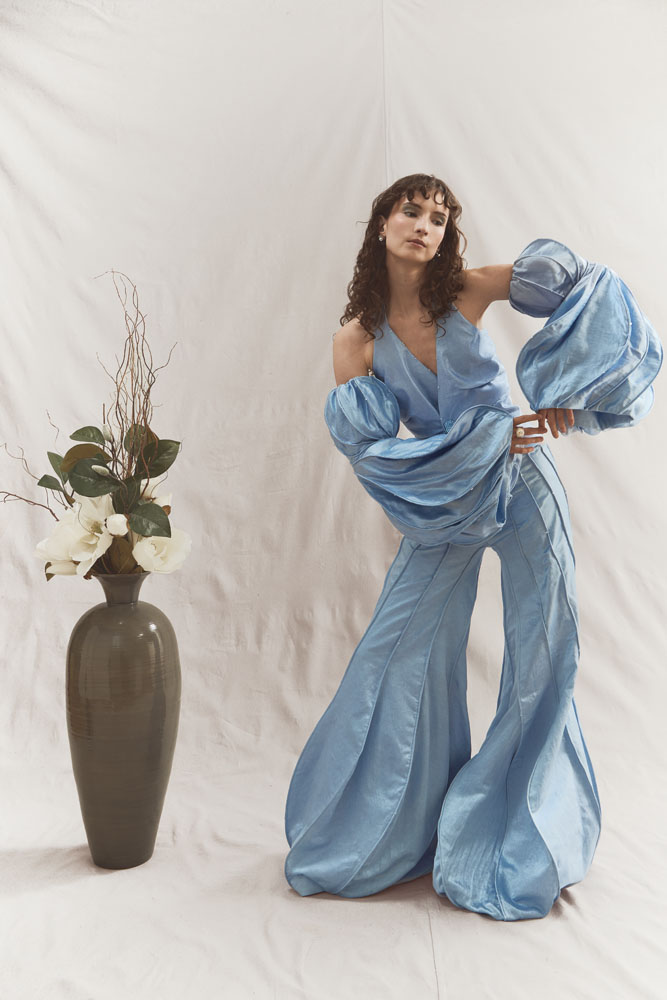
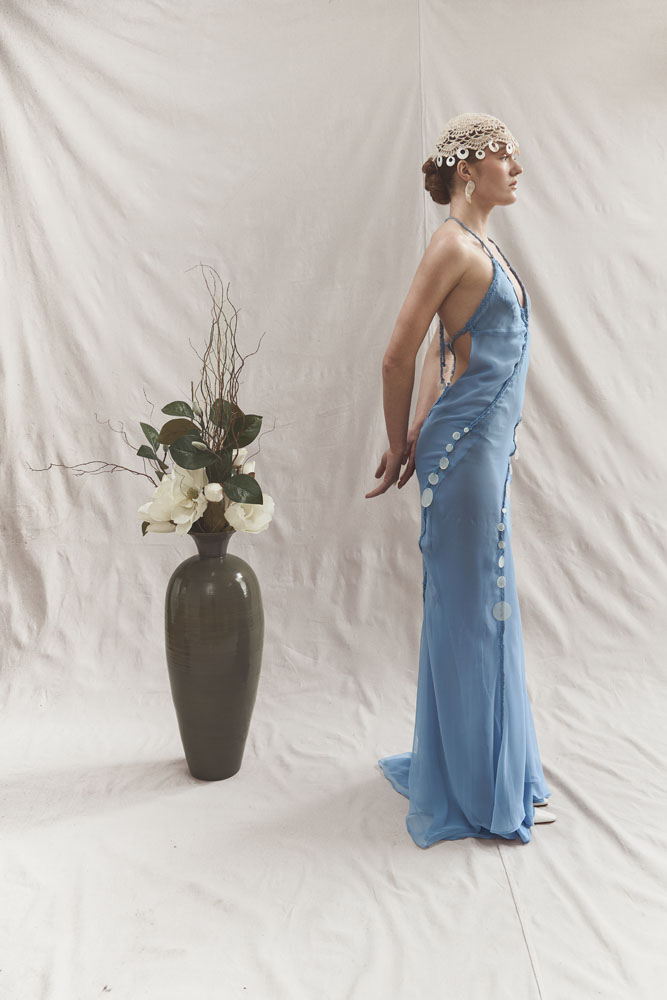
“I was drawn to Khôra through its idea of a space that receives, holds, and allows transformation. It captures a state of being, a place of becoming.”
Meditation became the foundation of that exploration. Zheng first began practicing as a way to find calmness in her own life, but the practice soon evolved into a creative tool. Instead of beginning with trends, references, or commercial considerations, she learned to start with feeling. Her design process became an exercise in observation, paying attention to subtle sensations, silence, and the relationship between stillness and movement.
“I often create the things I don’t yet have but deeply long for,” she explains. “Each collection becomes a way of exploring and building that desire into reality.” Through Khôra, Zheng translated that longing into garments that offer protection, comfort, and emotional space. The collection became not only a reflection of meditation but also a meditation in itself.
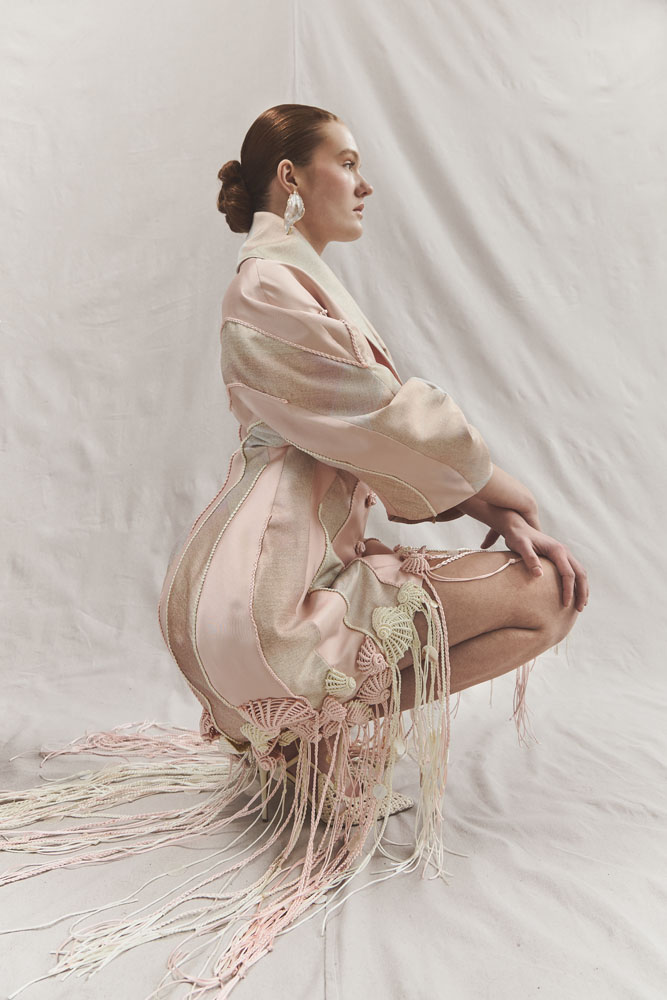
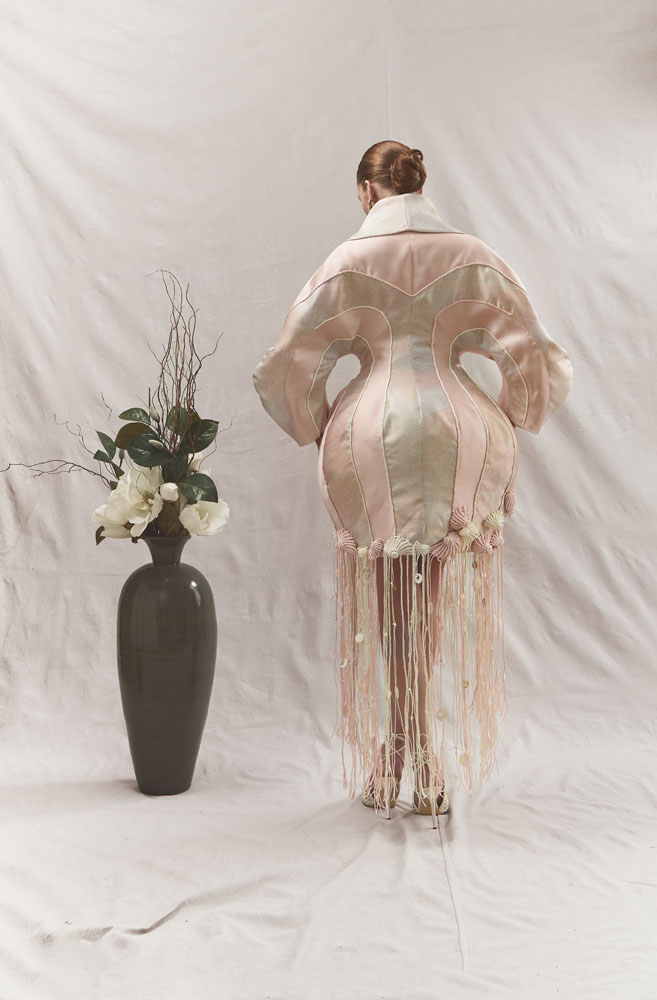
Nature provided the visual and conceptual language for the project. Shells, water, stone, and patterns of natural growth appear throughout the collection. They influenced everything from silhouette development to material choices. Zheng has long been fascinated by the way nature records time through accumulation, erosion, and gradual transformation. These processes became metaphors for the human experience, where identity continues to evolve through both internal and external forces.
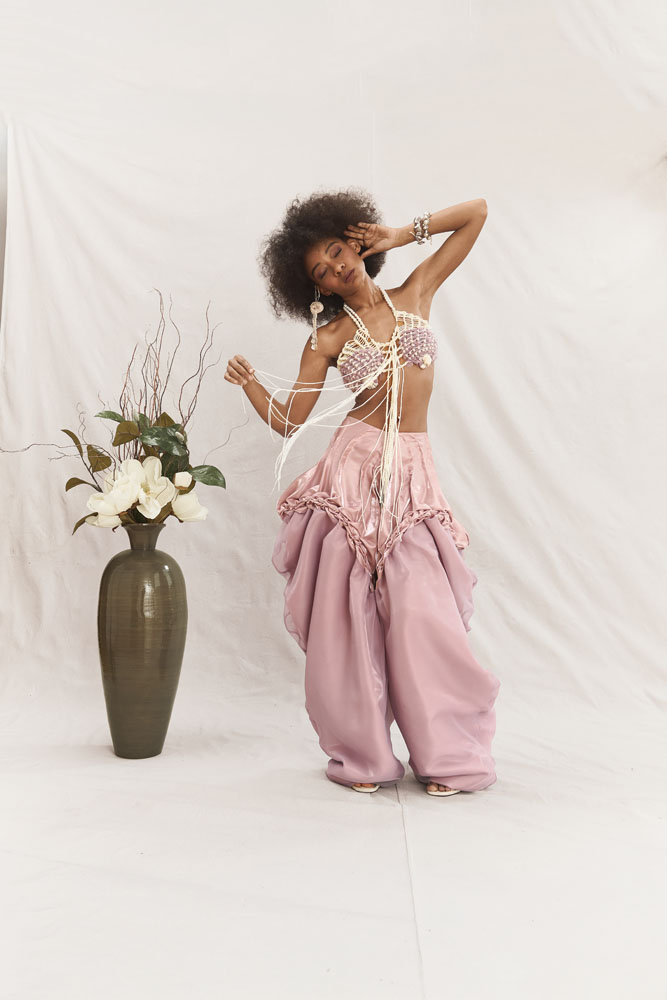
Water held special significance throughout the project. Swimming has always been a source of relaxation for Zheng, and the ocean became an important emotional reference during the design process. She was drawn to the sensation of being held and surrounded by water, as well as the way it shifts between strength and softness. Zheng also used seashells as a key symbol. For her, they represent protection, growth, and the relationship between interior and exterior space.
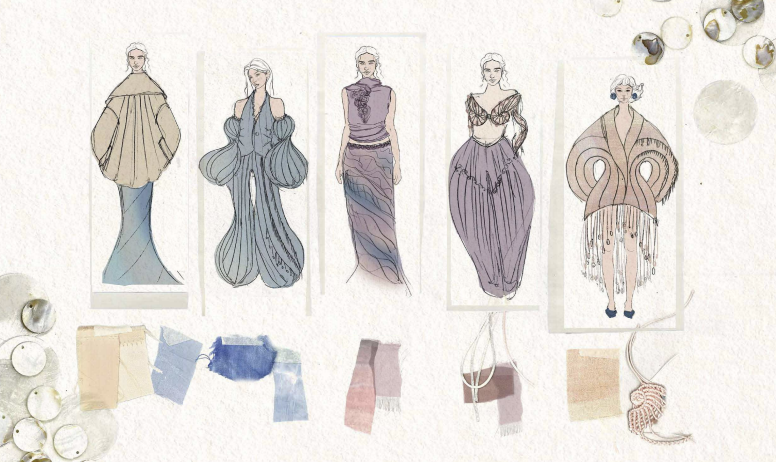
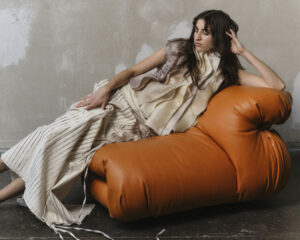
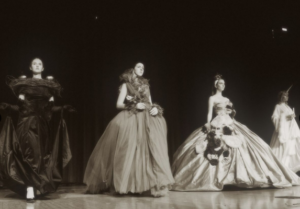
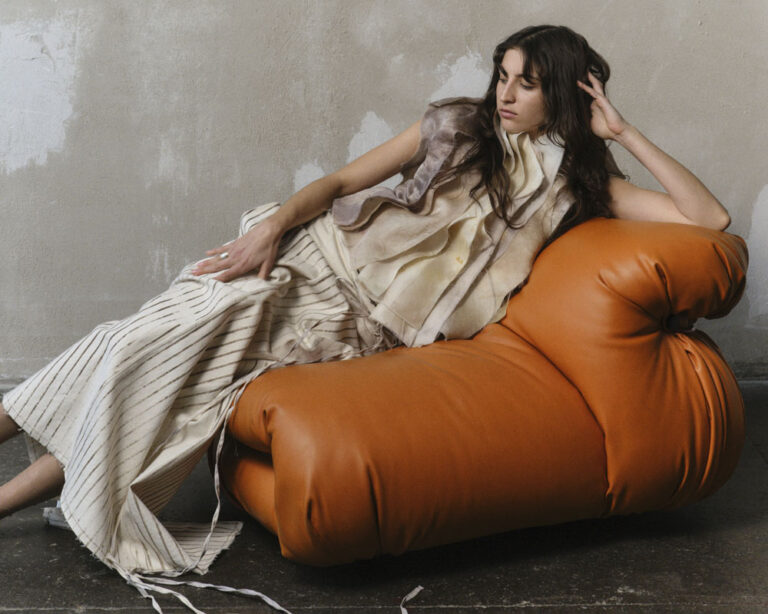
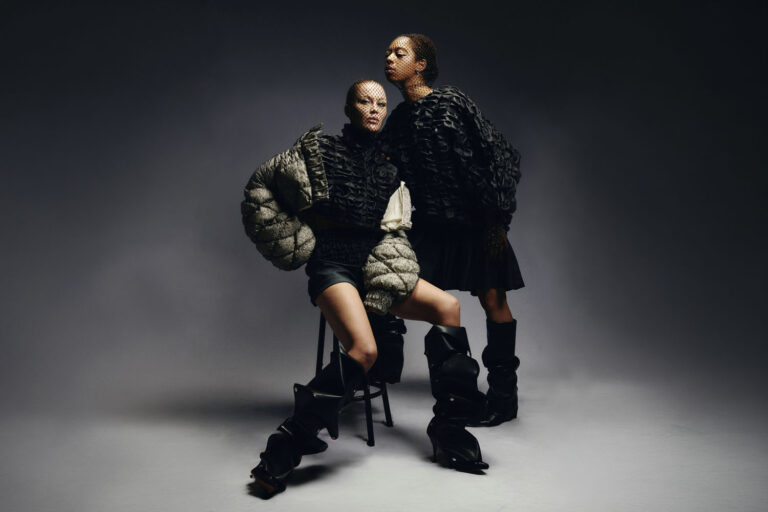
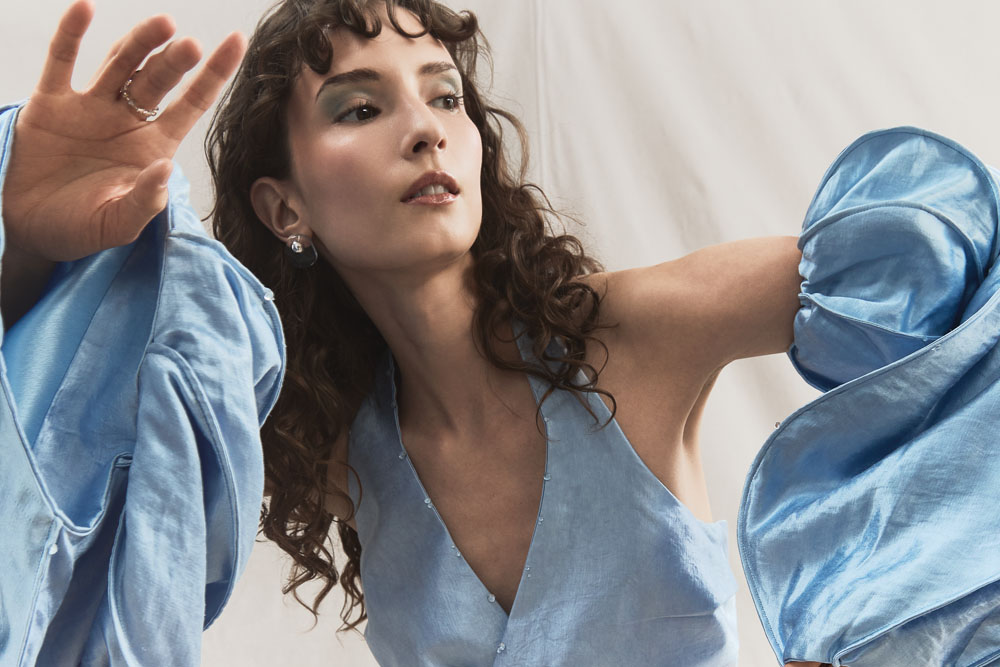
These ideas shaped the garments through volume, negative space, and fluid construction. Curved silhouettes, layered forms, and soft structures create room for movement rather than restricting it. Openings and draped elements introduce moments of pause, allowing the body to exist comfortably within the garment. Instead of controlling the wearer, the pieces respond to movement and encourage a sense of ease.
“I was particularly interested in creating garments that feel like small sanctuaries,” Zheng says. “Through soft volumes and fluid forms, I tried to evoke the sensation of being gently enveloped, similar to the feeling of being surrounded by water or protected by a shell.”
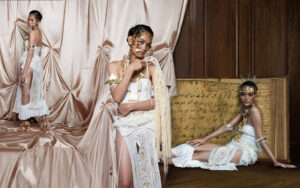
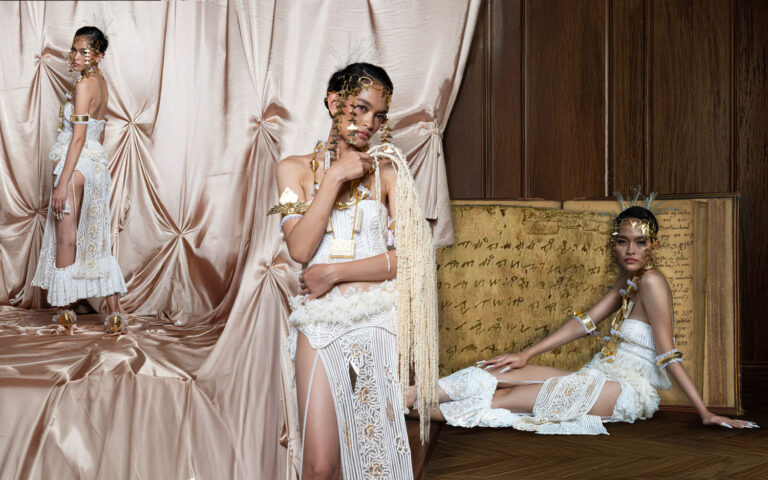
Material selection played an equally important role in expressing the collection’s atmosphere. Zheng worked with hemp silk, organza, chiffon, and satin. She selected fabrics that could maintain structure while remaining fluid and responsive. Transparency, tactility, and softness became essential qualities. Together, these elements communicate vulnerability, transformation, and quiet intimacy while reinforcing the collection’s meditative tone.
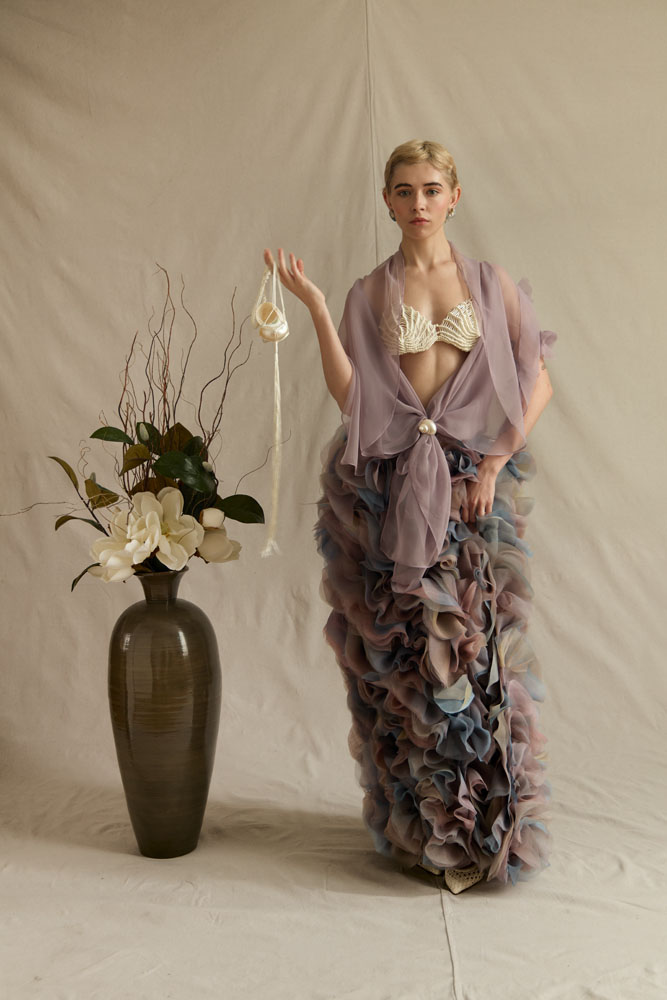
The reflective qualities of water and the pearlescent surfaces of shells also informed the collection’s textile development. Rather than relying entirely on pre-existing fabrics, Zheng created custom prints to achieve the specific colours she envisioned. She drew inspiration from sea foam, weathered stone, mist, shells, and diffused light. The palette balances subtle variation with emotional depth. In Looks 3 and 5, custom printing allowed her to create colours that felt personal to the collection while maintaining its calm and dreamlike atmosphere.
Look 3 became one of the collection’s most ambitious pieces. Zheng combined multiple layers of printed fabric to blur the boundaries of the silhouette. Transparency became a tool for experimentation, allowing colours to blend through depth and overlap rather than direct pigment mixing. The skirt alone required nearly two months of hand sewing. She spent countless hours layering and manipulating fabric to achieve the desired effect. The final garment appears fluid and atmospheric. It dissolves the edges of the body into something less fixed and more experiential.
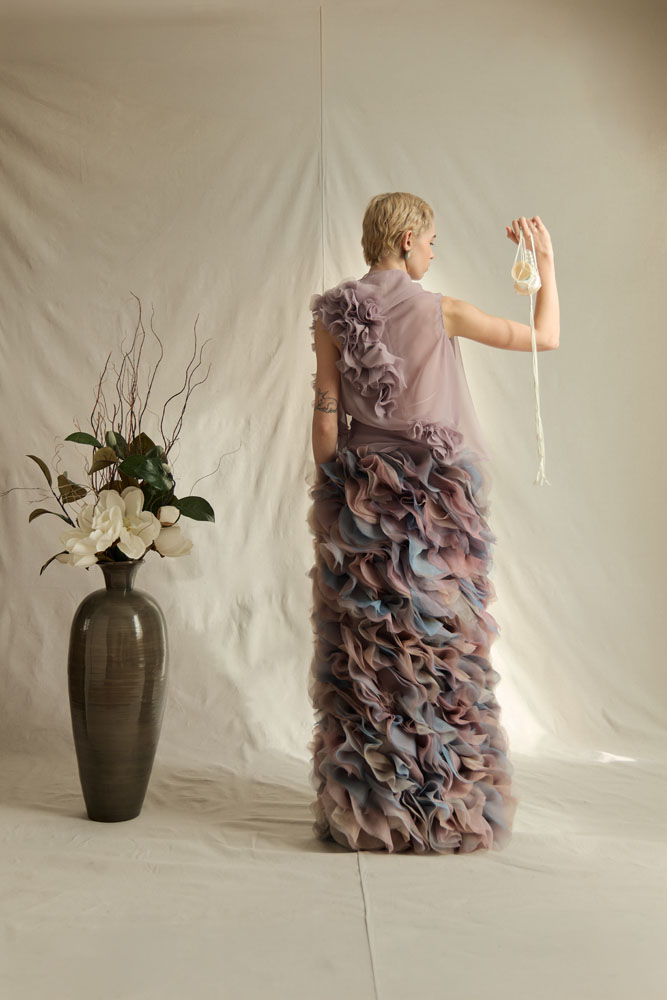
The challenges of the collection extended beyond craftsmanship. Translating an abstract philosophical concept into something tangible required constant experimentation and problem-solving. Zheng spent much of the process refining techniques related to tailoring, contouring, and garment engineering. At the same time, she worked to balance structure with softness. Look 5 presented another challenge through the development of a fully reversible coat that demanded careful attention to construction and finishing.
These experiences gave Zheng a deeper understanding of her own creative practice. The project reinforced the value of patience and taught her to trust intuition rather than rush toward immediate solutions.
“This project taught me to trust slowness, intuition, and surrender. Through both meditation and design, I learned that not everything needs to be controlled. Like water, some things reveal their form only when we allow them to flow naturally.”
Beyond the garments themselves, Khôra expands through a series of shell-inspired accessories developed under Zheng’s brand, Pause on Earth. Zheng created the accessories with artist and fabricator Yijing Yang. Together, they spent months researching, prototyping, testing, and refining the designs. The finished shell bags continue the collection’s exploration of vessels, containment, and transformation. They extend the philosophy of Khôra beyond clothing and into everyday objects.
The collection unfolds through five distinct emotional states. Echo Chamber reflects inner awareness and self-observation. Flow State explores surrender and movement. Dreamy State examines imagination and blurred realities. Within Zen invites stillness and presence. Oneness concludes the journey through connection, renewal, and harmony. Together, the looks create a narrative that mirrors the emotional progression of meditation itself.
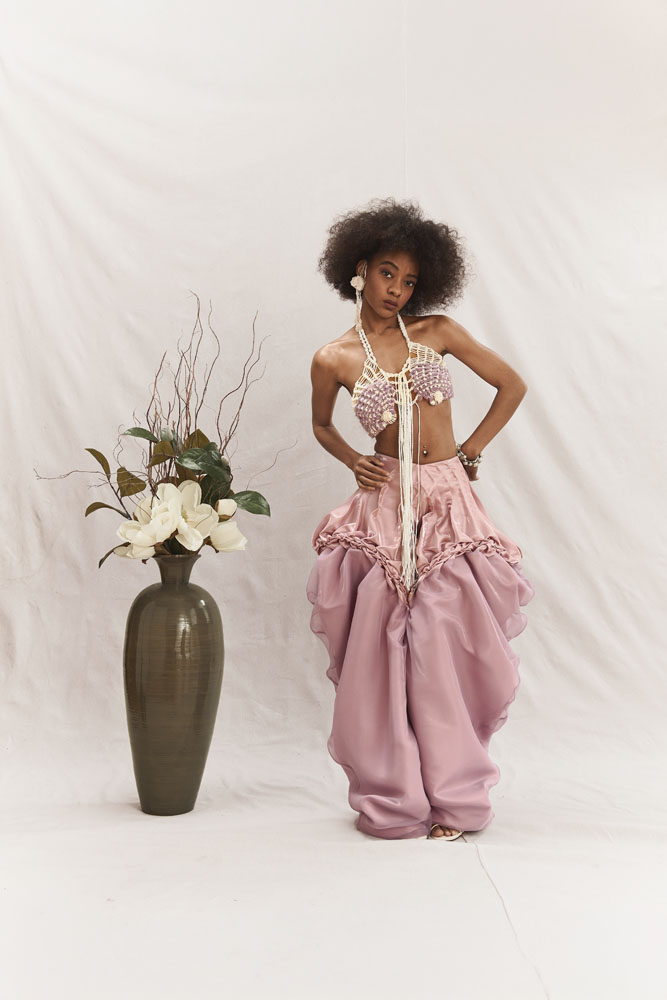
At its core, however, Khôra is not about transforming the wearer into someone new. Zheng hopes the garments offer a space where people can reconnect with who they already are. The pieces feel protective without becoming restrictive. They create moments of calm within everyday life.
“I hope people experience a sense of meditation through the garments—a feeling of peace, calmness, softness, and surrender. Rather than transforming the wearer into someone else, I hope the garments create a space where people can reconnect with themselves.”
As Zheng looks beyond Khôra, she sees the project as the beginning of a much larger investigation. Through Pause on Earth, she hopes to create products, objects, and experiences that encourage mindfulness and deeper connections with the world around us. Fashion remains central to that vision, but it represents only one part of a broader philosophy centred on everyday happiness, presence, and care.
The brand’s guiding belief remains simple: “We create space for living, for the moments we pause on Earth.” In many ways, Khôra embodies that philosophy. The collection grew from patience, reflection, and surrender. More importantly, it reminds us that fashion can be more than something we wear. It can become a space for stillness, transformation, and renewal.