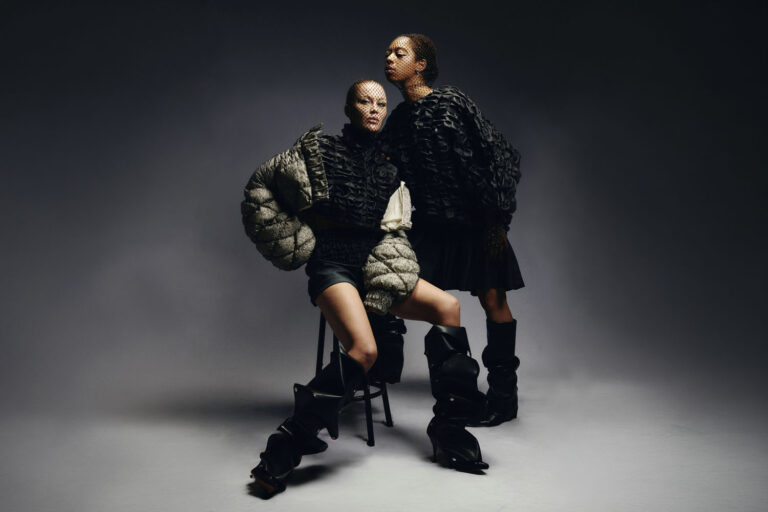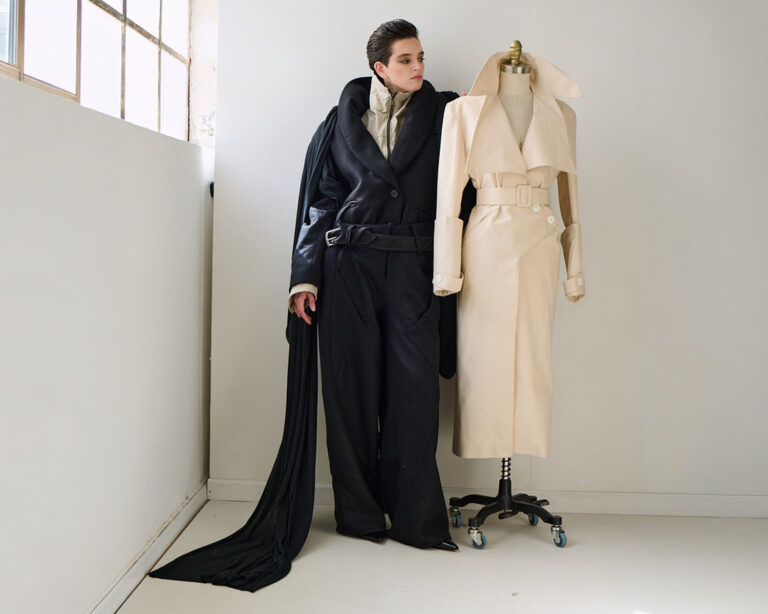


At 21, Astha Garg has already reached a milestone many young designers spend years chasing: showing at London Fashion Week. But she does not speak about the moment as a finish line. For her, it marked a deepening of purpose. Since launching her brand at 18, Garg has wanted it to stand for more than clothing. She has built it around emotion, honesty, and meaning.
That intention runs through everything she makes. Garg does not treat fashion as surface. She sees it as a way to express what words often cannot. “Garments can carry emotion in the same way that a piece of music, a room, or a memory can,” she says. In her work, clothing holds feeling, memory, and presence.
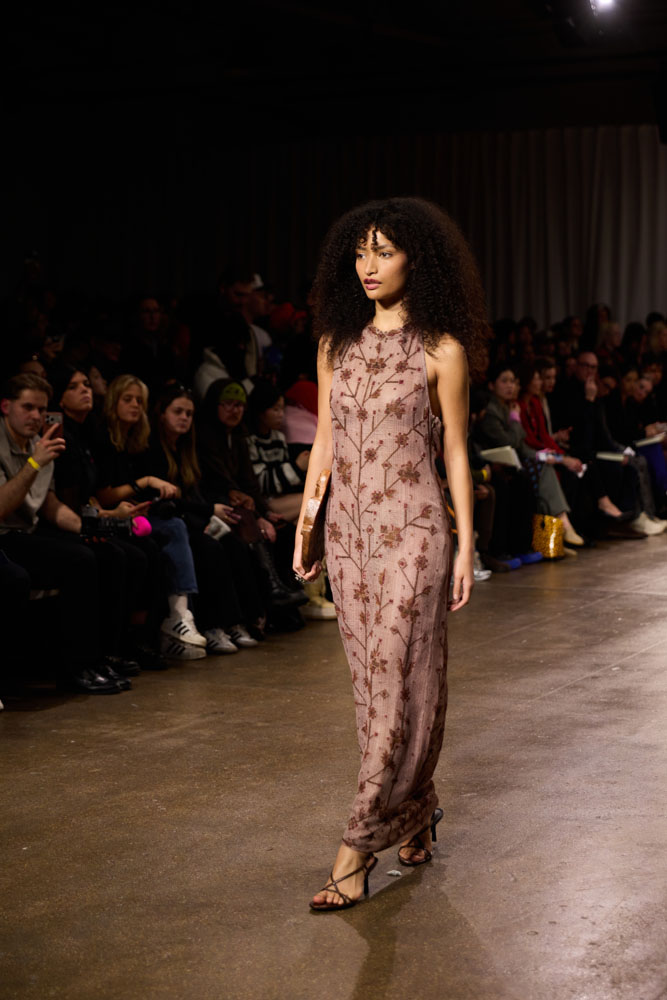
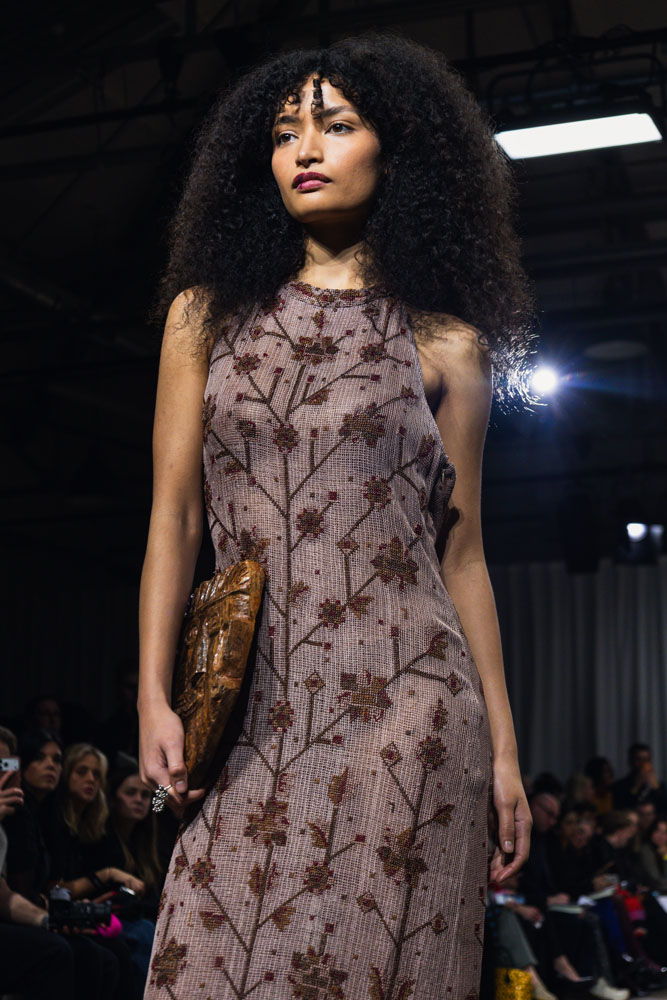
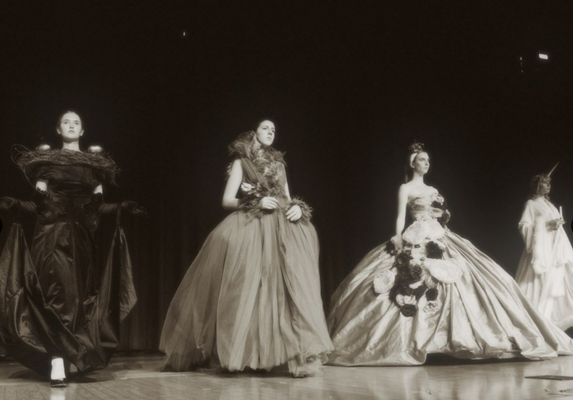
Her London Fashion Week debut came before she had even presented her university graduation collection, which made the moment feel even more charged. Garg describes it not just as exciting, but as a responsibility. She wanted to give herself completely to the collection. “By the end of the show, I wanted to feel completely empty,” she says, “as though I had left every part of myself inside the collection.”
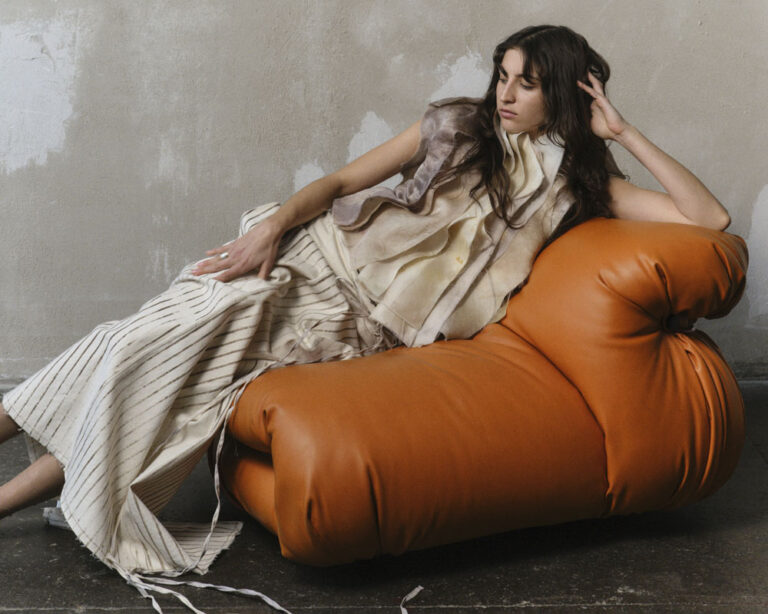
That emotional intensity sits at the heart of Lingering, the collection and concept she describes in deeply sensory terms. For Garg, lingering is the quiet persistence of presence. It is the warmth left on a surface, the scent that stays in a room, or the shape a body leaves behind in an old sofa. She is less interested in loss itself than in what remains. “Lingering isn’t about resisting loss,” she says, “but about honouring presence.”
She has been exploring that idea for years. Garg first began thinking about memory through the senses while preparing her portfolio for the London College of Fashion. Sound became one of her earliest starting points. Growing up, she could tell which family member had entered the house simply by the sound of their movement or jewellery. That awareness led her to think about how identity can be felt before it is seen. Later, she expanded that thinking into touch, hidden construction, and responsive garments. One piece even featured flowers that opened and closed to the sound of Indian ringing bells.
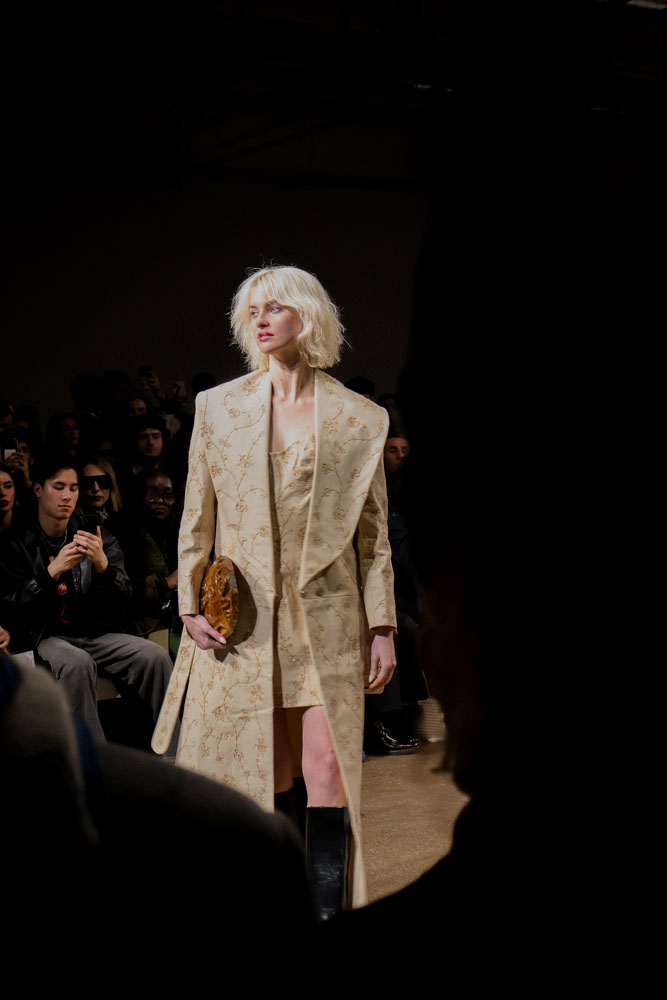
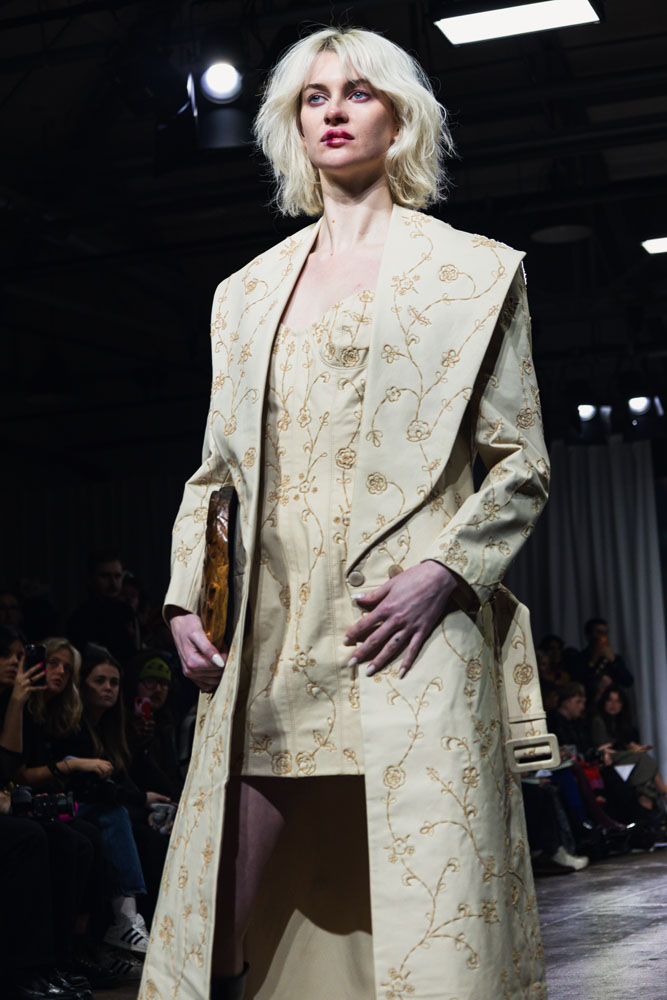
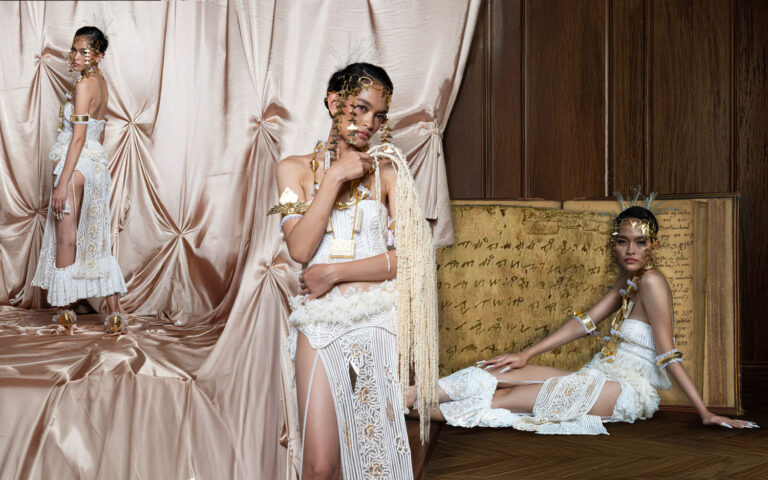
In her latest collection, that sensory language took on a new form through woodcarving. Garg felt drawn to the craft because it carried the same ideas she had already been exploring: memory, touch, presence, and trace. She took classes to understand the material more deeply and found herself moved by its intimacy. Wood, she says, may seem hard and rigid, but it is also fragile, responsive, and alive. “In many ways, it reminded me of bespoke tailoring,” she says. “Both require patience, precision, and a sensitivity to the material.”
That connection between wood and cloth says a great deal about her practice. Garg does not use craftsmanship as decoration or shorthand for heritage. She treats it as a way of listening to the material, the process, and the histories inside making. She grew up in a home that valued handmade objects and careful attention to detail. Her mother, designer Sonal Garg, taught her that slowness matters, and that meaning often lives in the smallest details.
That same slowness shapes her view of sustainability. In an industry driven by speed and excess, Garg speaks about sustainability as something instinctive rather than performative. She grew up in a family of horticulturists and farmers, and those values continue to shape her choices. For her, sustainability means making thoughtfully, choosing materials with care, and creating garments that offer more than novelty in an already crowded industry.


A quiet duality also defines Label Astha Garg. Garg moves between London and Dehradun, and each place plays a different role in her process. In London, she develops the emotional and conceptual side of a collection. In Dehradun, those ideas take physical shape through collaboration, travel, workshops, and making. She describes the two places as complementary forces. London gives her space to think and imagine. Dehradun brings her back to family, memory, craft, and the physical act of creating.
She speaks about identity with that same nuance. As a young Indian designer, Garg understands the narrow expectations people often place on Indian fashion. Many still expect it to announce itself through familiar colours, embroideries, or silhouettes. Her work moves differently. “My clothes may not look stereotypically Indian,” she says, “but being Indian shapes such a large part of how I see the world.” Rather than presenting a fixed image of India, she brings its emotional texture into the work: intimacy, contradiction, ritual, memory, and all the things left unsaid.
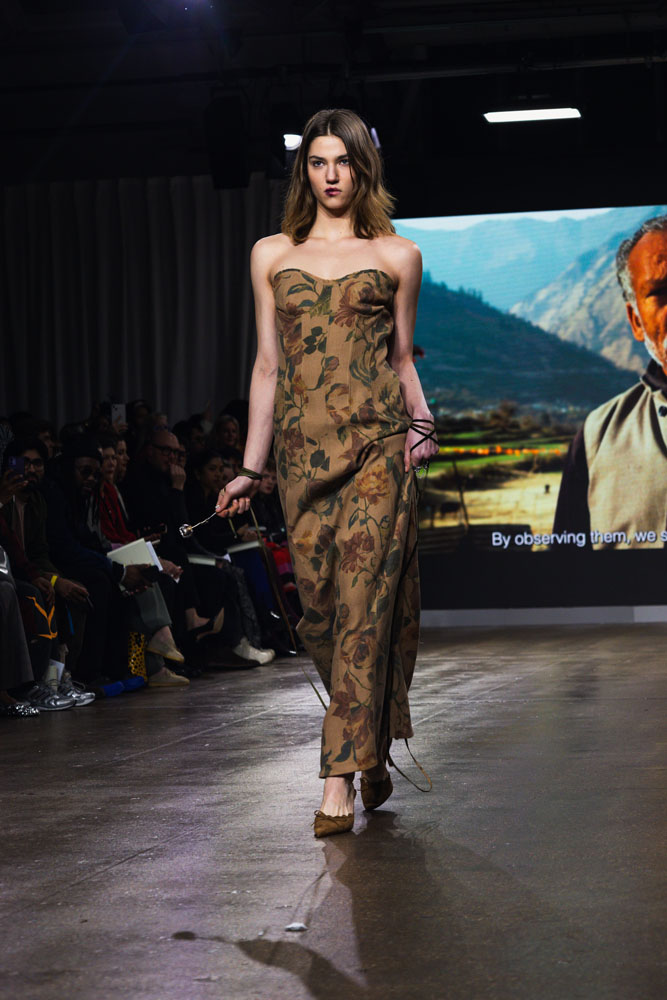
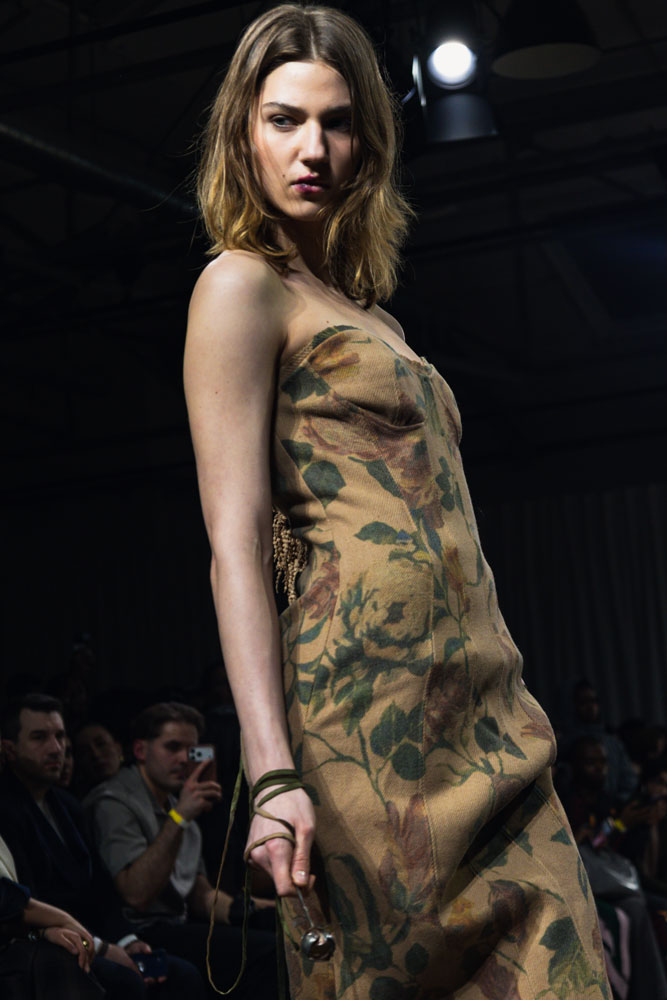
That may also explain her interest in what stays hidden. Garg often returns to the idea that a garment should offer something to the wearer, not only to the viewer. In an earlier collection, that meant fully pleated linings and embroidery placed inside garments, where only the wearer could discover them. She describes one such dress as feeling “almost like a second skin or a protective shell.” It is a subtle gesture, but it reveals her larger belief: fashion should do more than be seen. It should be felt.
Even after the momentum of Fashion Scout’s Ones to Watch, Garg remains grounded in the values that shaped her brand. She says the experience taught her the importance of humility, collaboration, and the quieter conversations that happen away from the runway. When she speaks about the future of Label Astha Garg, she does not begin with growth or scale. She begins with ethics, responsibility, emotional honesty, and the desire to build something that stays human.
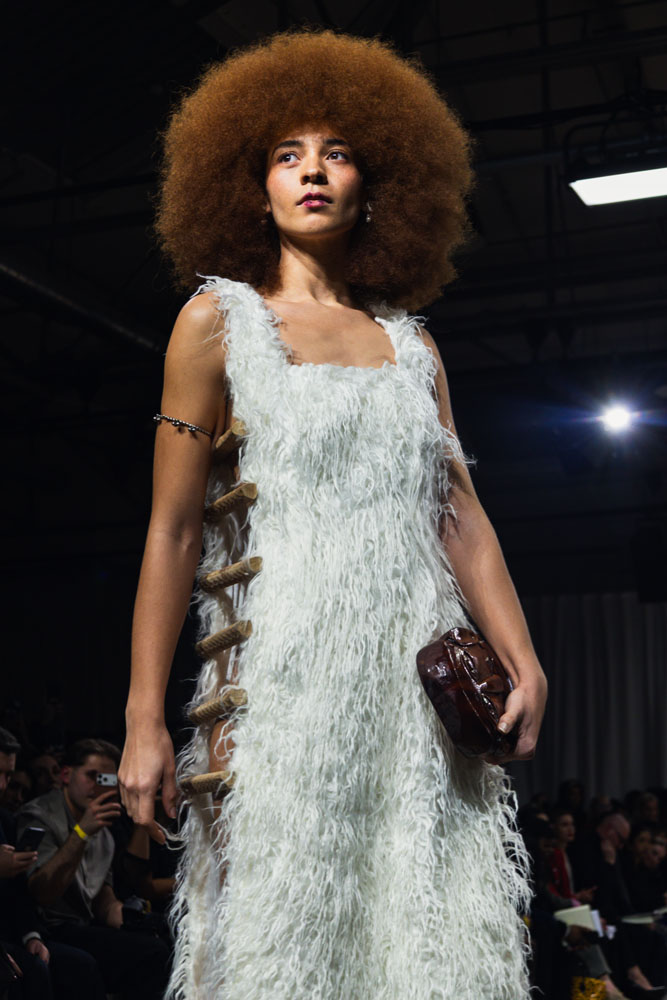
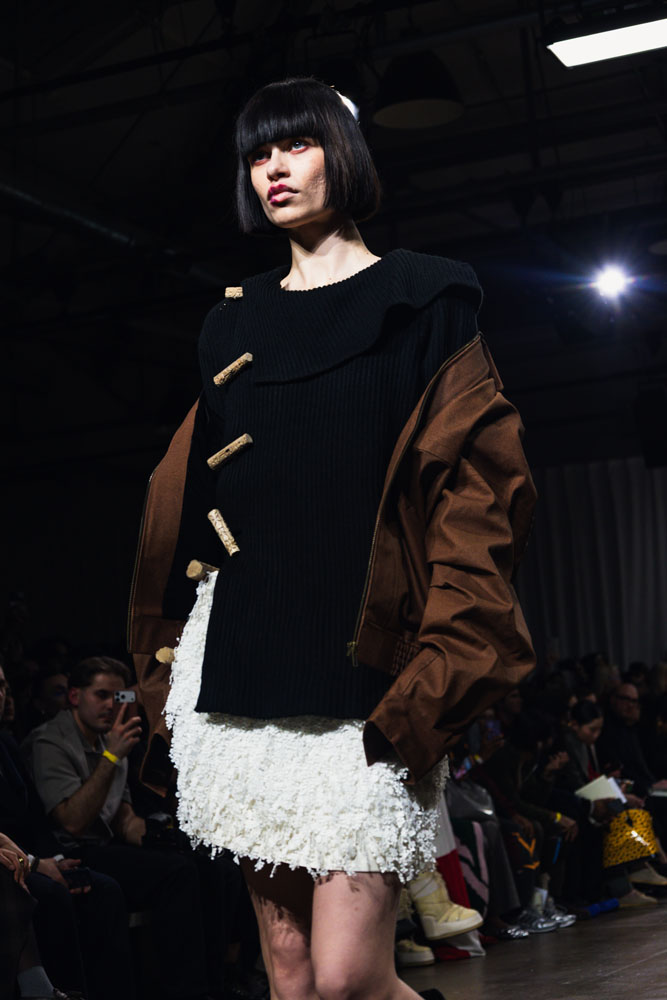
That is what makes her work feel so compelling. At a time when emerging fashion often seems driven by visibility, Astha Garg is designing for something slower and more lasting. She is not only thinking about impact, but about afterimage. Not only about presence, but about what remains once presence begins to fade.
In that sense, Lingering feels like more than the title of a collection. It feels like the beginning of a design language that is distinctly her own.