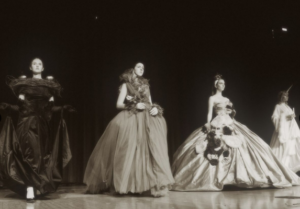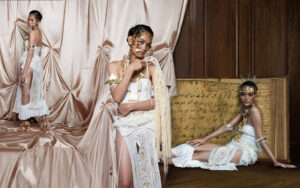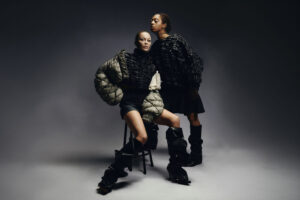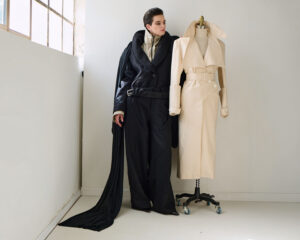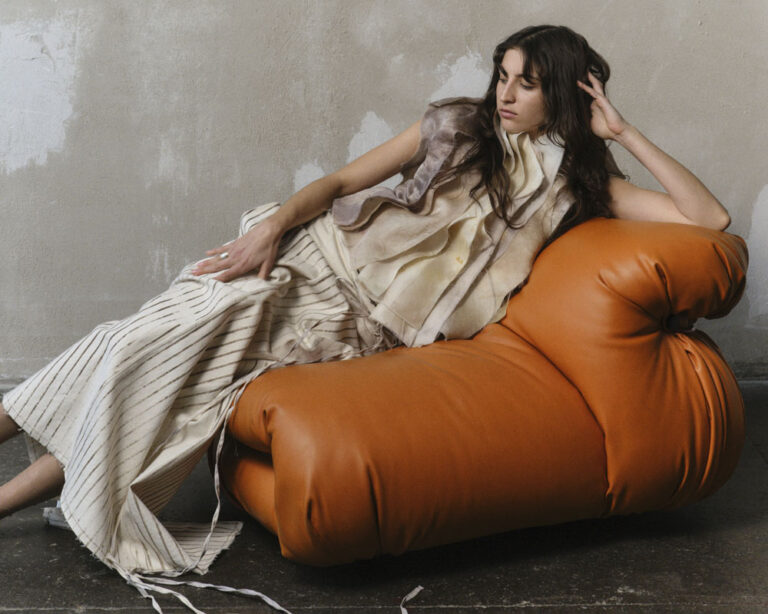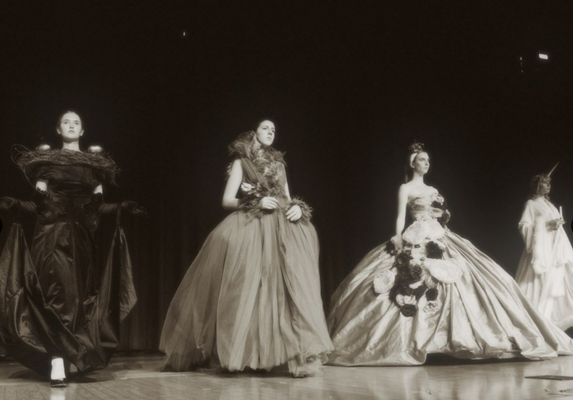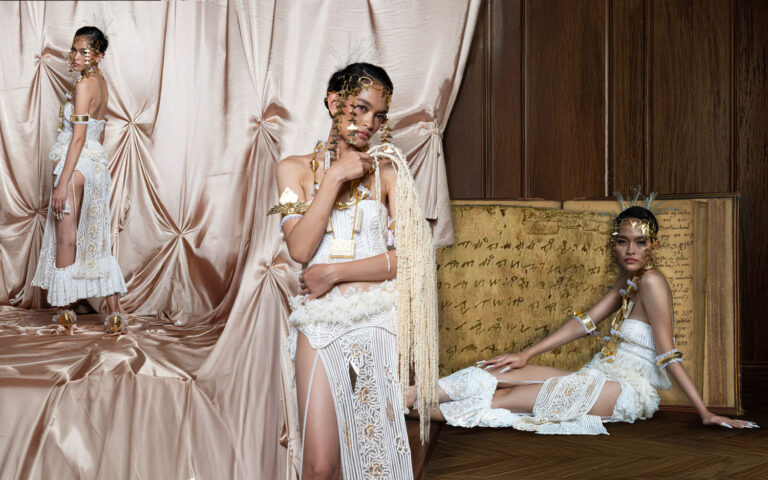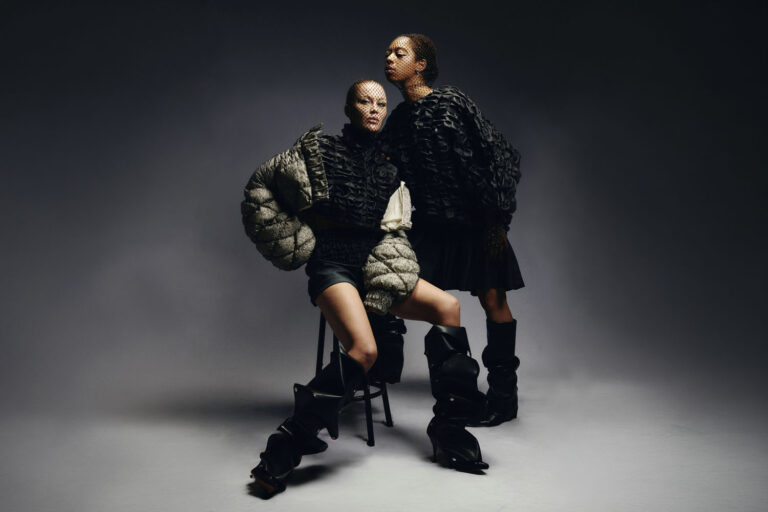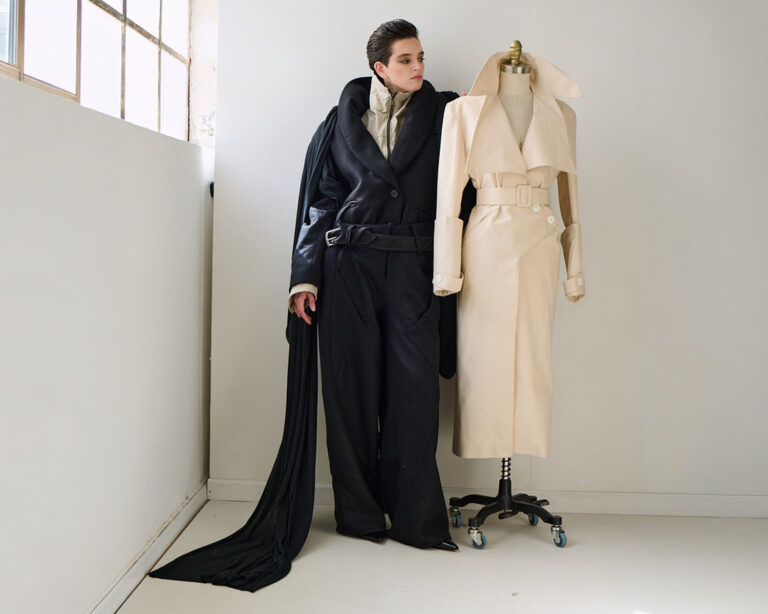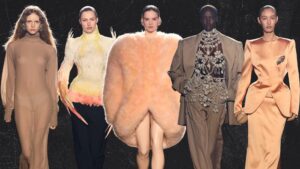
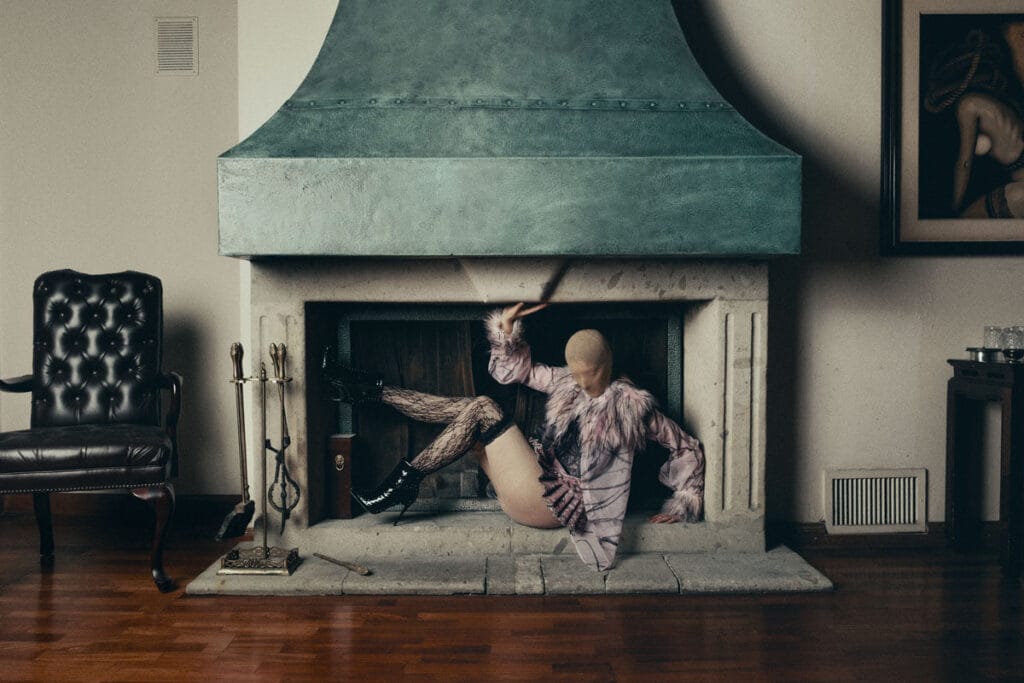

In Monstress, Amanda Pérez looks at femininity without trying to clean it up or explain it away. Instead of treating it as something fragile or symbolic, she approaches it as something physical, something that can be pushed, reshaped, and tested. The collection took form while she was studying at CENTRO, during a time when anger and disappointment felt hard to ignore. Rather than smoothing those feelings over, she let them sit inside the work.
Horror plays an important role here, but not in an obvious way. Pérez gravitates toward coming-of-age films like Jennifer’s Body, Suspiria, Carrie, and Ginger Snaps because of how uneasy they feel. These stories are less about monsters and more about internal tension. As she puts it, “I wasn’t interested in creating something openly terrifying. I wanted to create unease.” Because of that, discomfort shows up slowly, through small shifts in texture, shape, and proportion.
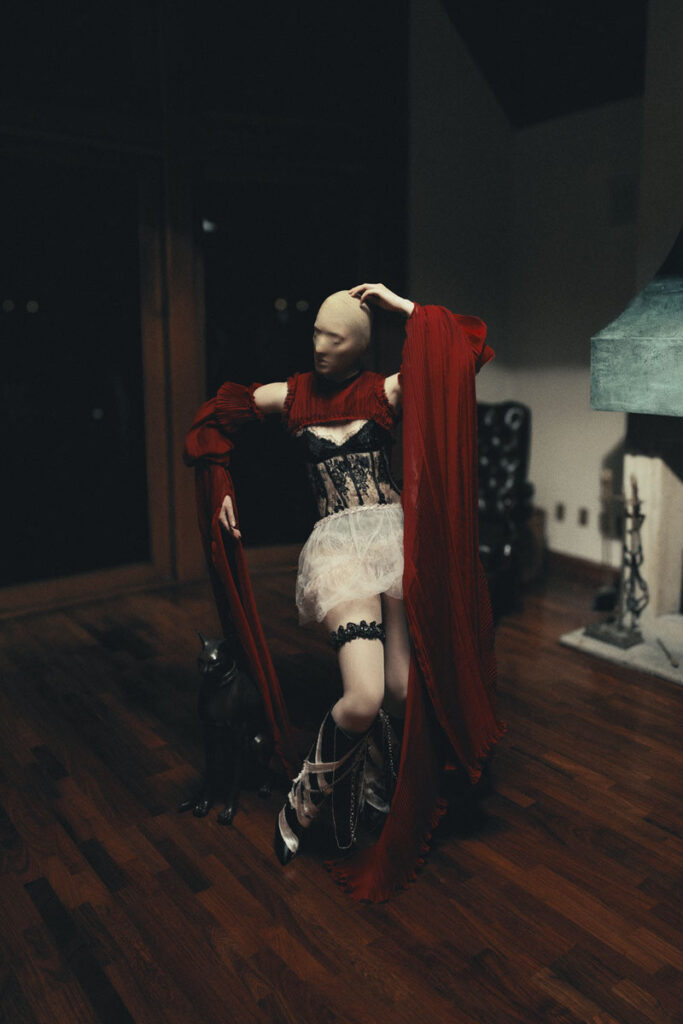
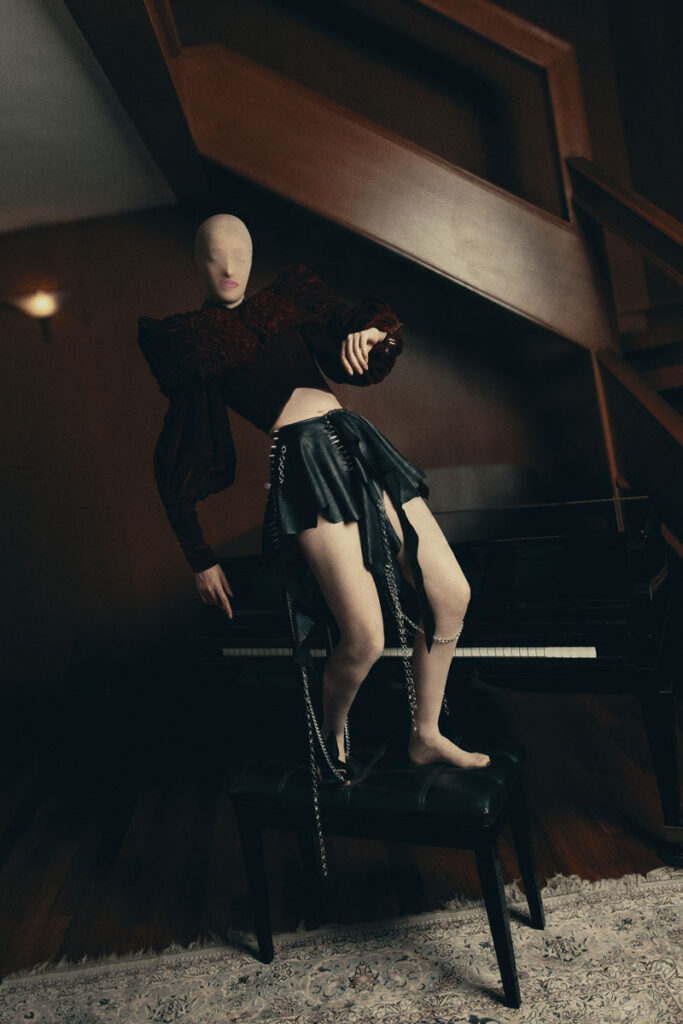
Instead of turning away from hyperfeminine materials, Pérez works straight through them. Pink lace and chiffon sit at the center of the collection. However, they don’t behave the way you expect. Lace is treated with latex until it feels closer to damaged skin than decoration. Leather steps in not to overpower the softness, but to interrupt it. Growing up, Pérez loved traditionally feminine things. Later, she pulled away from them after linking them to weakness and superficiality. Monstress circles back to that moment. The collection doesn’t try to justify femininity, it questions how it’s used. “Some people might see this as reinforcing stereotypes,” she says, “but for me the difference lies in intention.”
A major point of reference is Tomie by Junji Ito. The story resonated with Pérez because of how it shifts blame onto its female protagonist. Beauty becomes the excuse for violence. That logic feels familiar. Pérez connects it to the way women are often held responsible for being looked at, followed, or sexualized. Rather than showing violence directly, she keeps it offstage. As a result, tension builds through restraint, and beauty itself starts to feel uncomfortable.
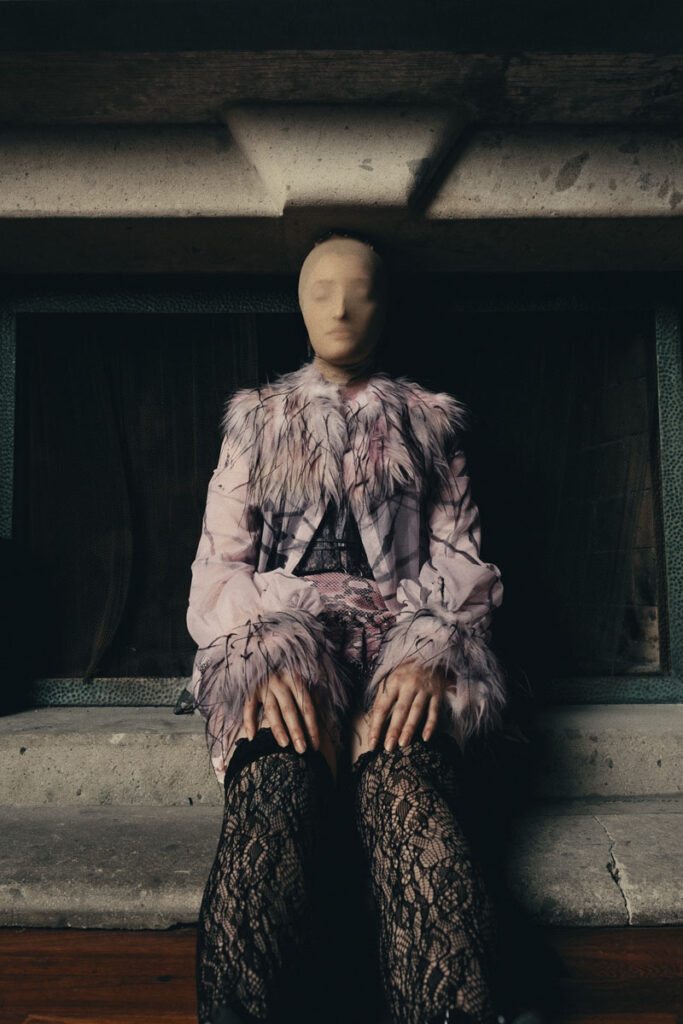
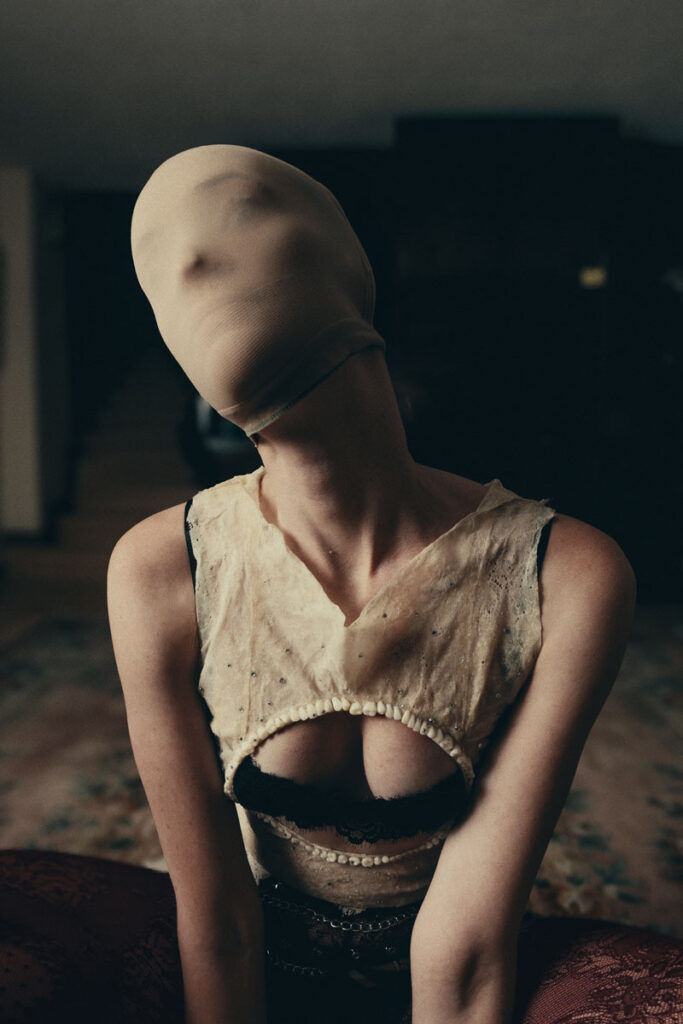
Each look captures a moment in the character’s transformation. At first, she faces another version of herself that exists only in reflection. Gradually, she takes up more space. Her body changes, and so does her presence. Pérez starts every look by writing. She creates short, diary-like poems about what the character feels at that point in the story. From there, those emotions shape the garments. Clothing becomes a trace of experience, not a performance.
The story also carries traces of Pérez’s mother and grandmother. They represent two very different relationships to femininity. One pushed against traditional roles. The other lived within narrow limits. Rather than choosing between them, Pérez lets both perspectives exist at once. Together, they point to femininity as something layered, conflicted, and shaped by circumstance.
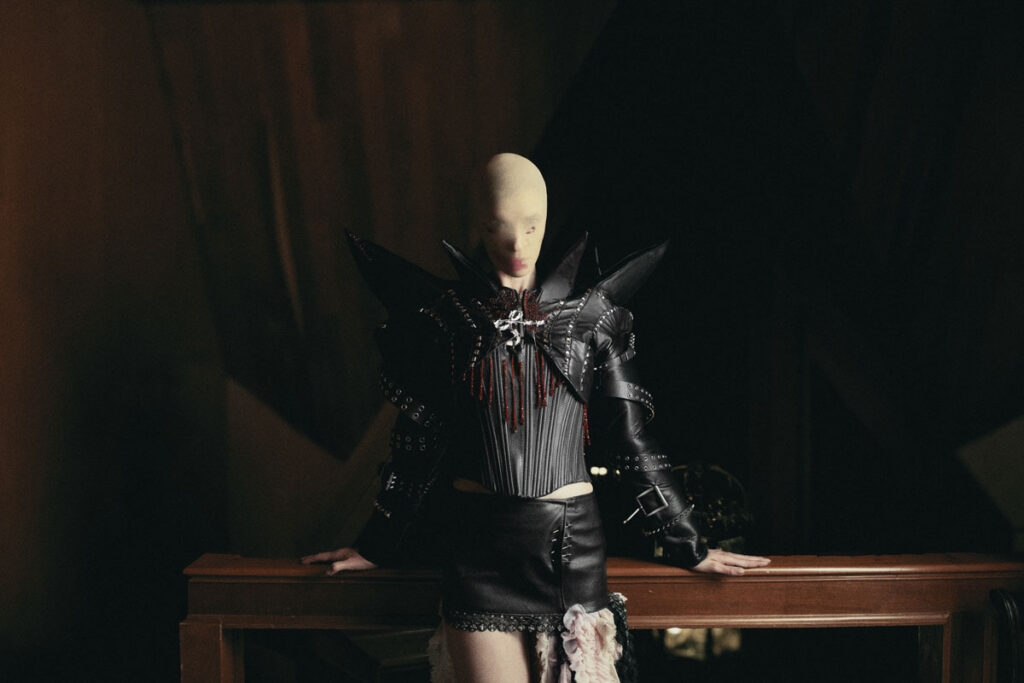
Now, Pérez thinks of femininity less as a definition and more as something lived. She finds it in rituals, repetition, and shared moments with other women. That mindset runs through Monstress. The collection doesn’t offer a clear conclusion or a single message. Instead, it stays open. The pieces feel controlled but slightly off, familiar but unsettled. In the end, Monstress lets femininity stay complicated, and unresolved.