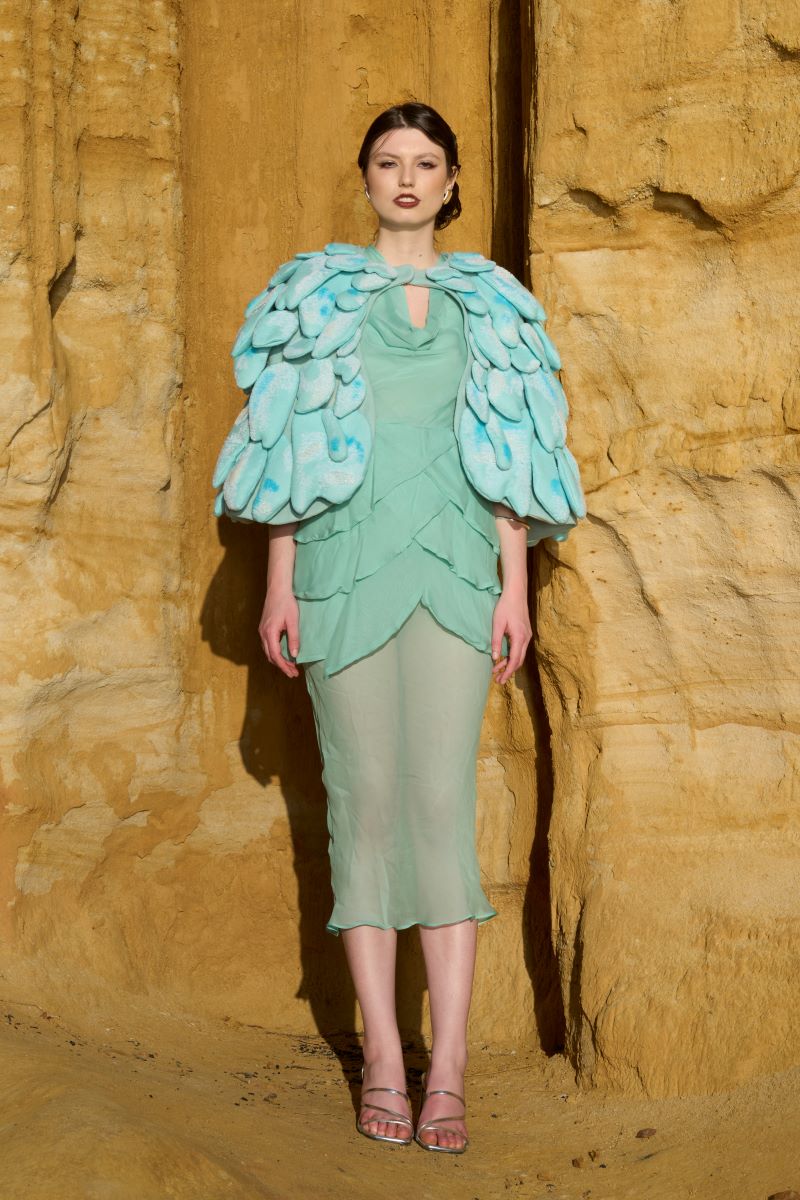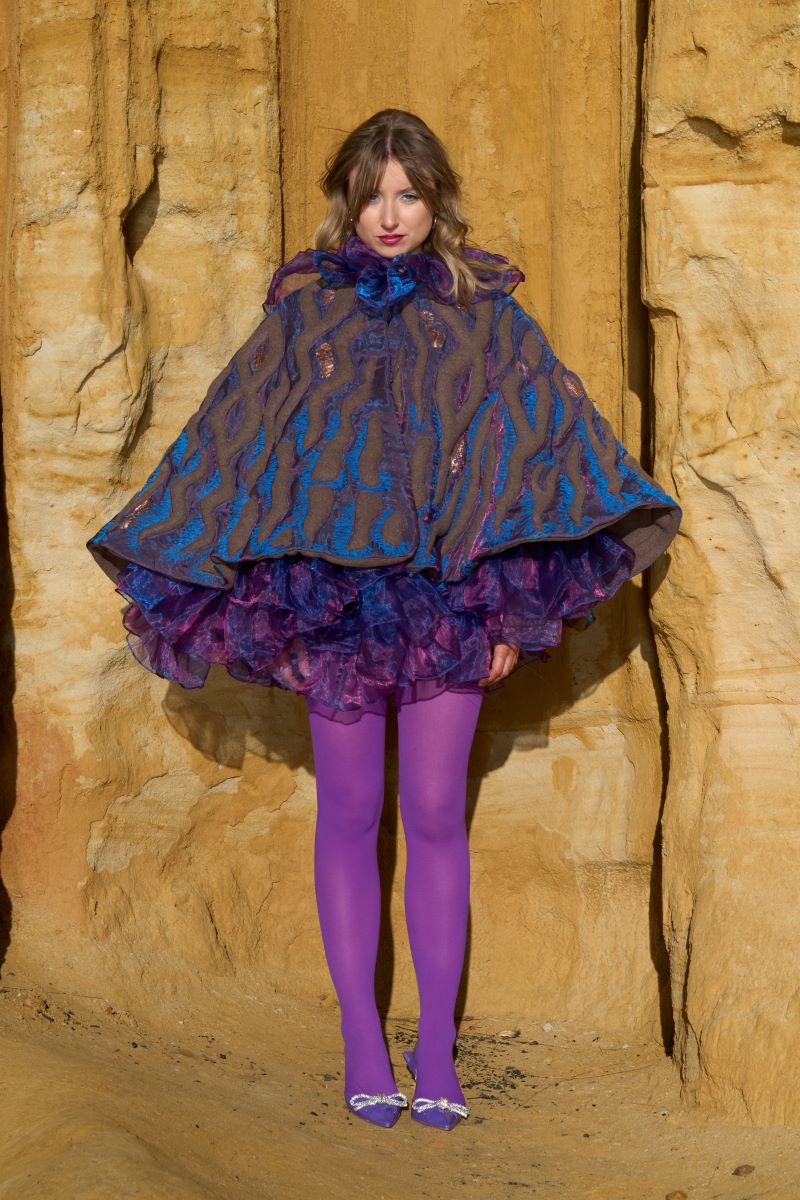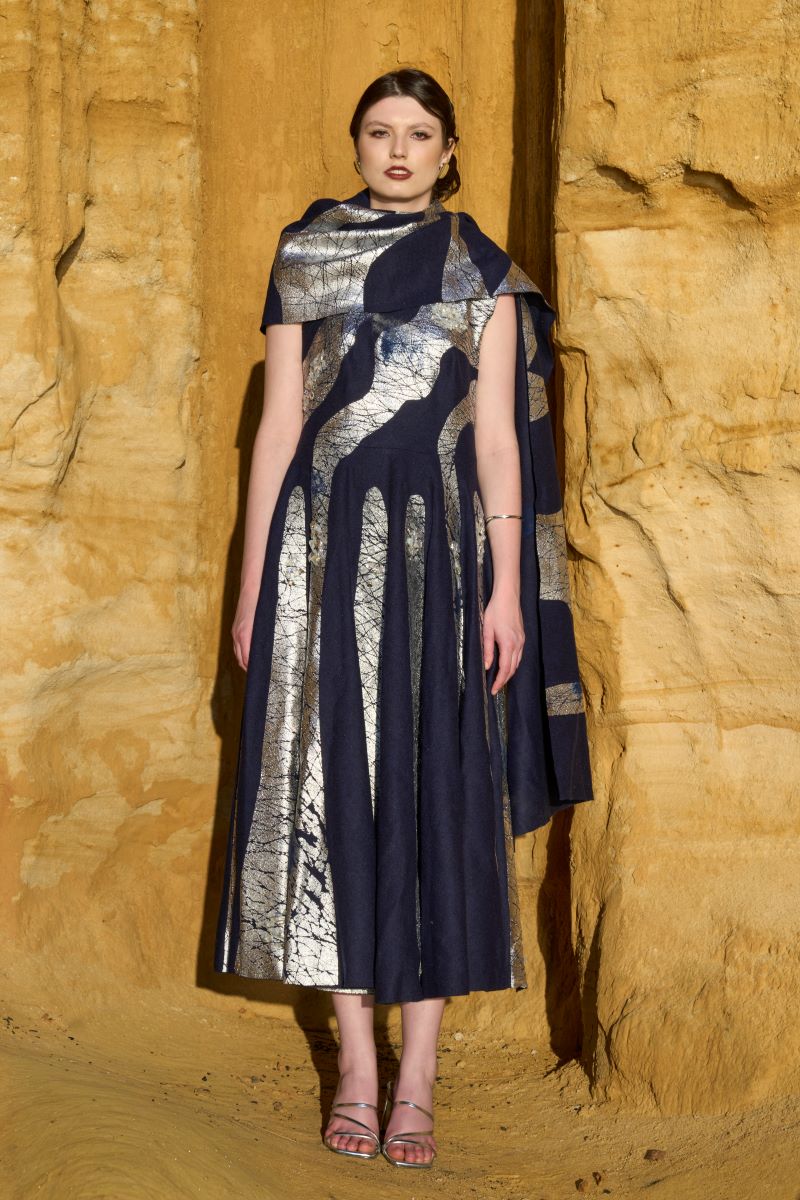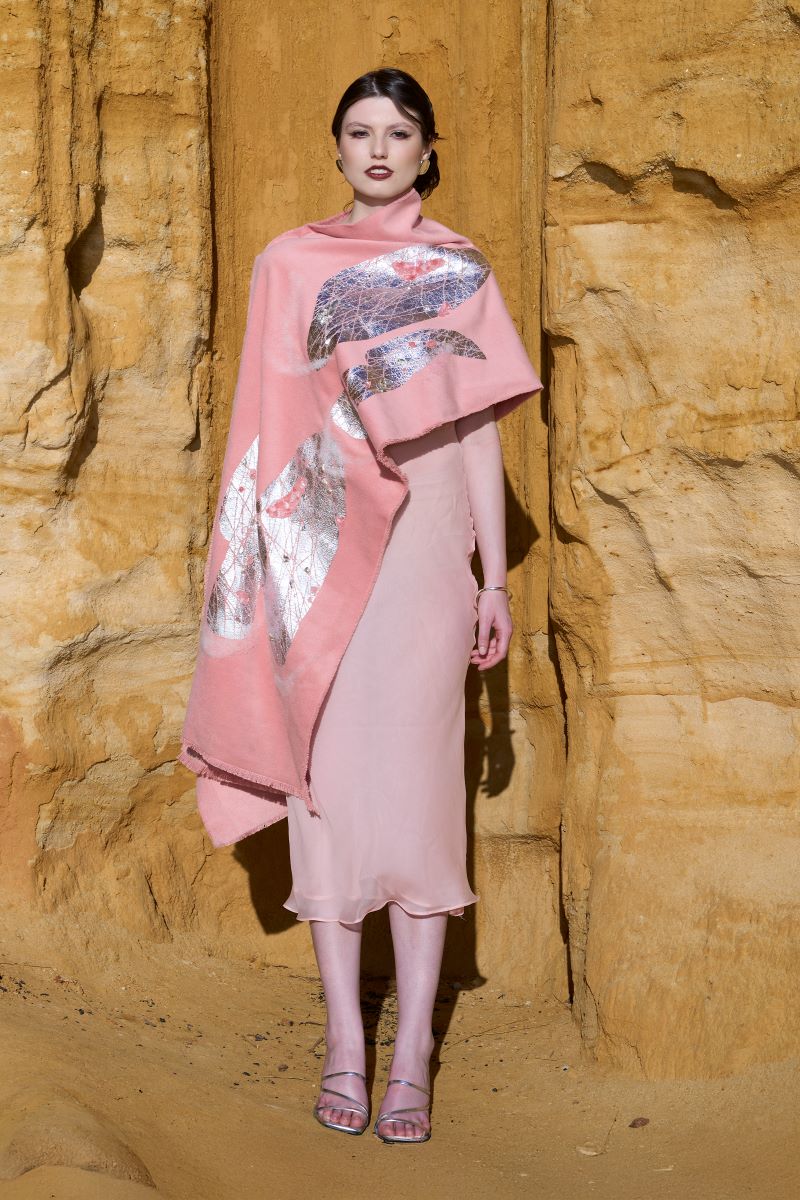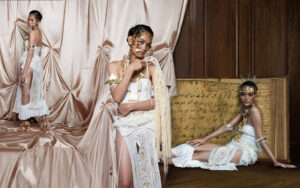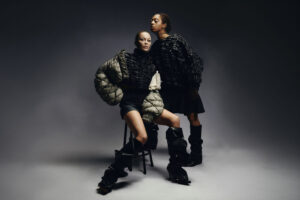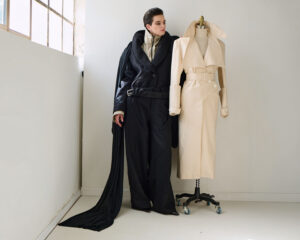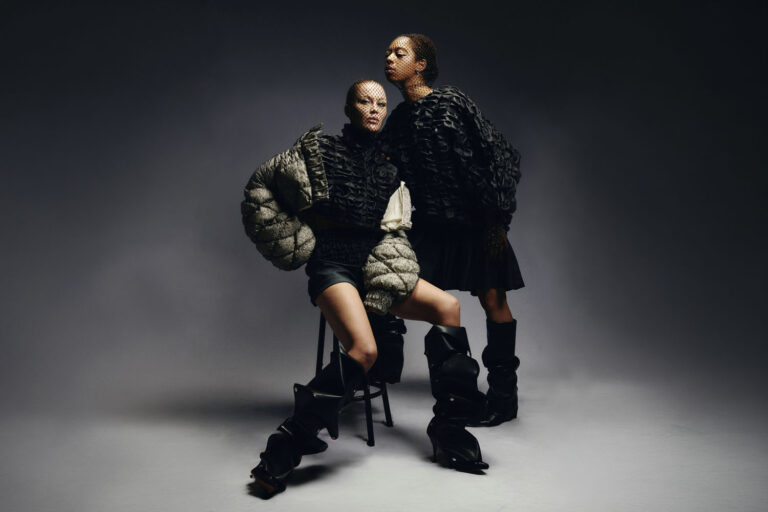


Before fashion turns inward, Terraformé looks without – outward to science, and on to planetary history. In her STEM-influenced graduate collection, Jennifer Ong reframes fashion as an interdisciplinary language, one that sits right at a beating heart powered by art, technology, and environmental reflection. Drawing from Martian satellite imagery and guided by a deep commitment to detailed craftsmanship, Terraformé translates distant terrains into tactile, body-bound forms, asking and exploring what it means to preserve organic beauty in an age defined by extreme acceleration and excess.
In the collection, fashion operates as a speculative archive – one that looks to distant planets as mirrors through which we can better understand the relationship we maintain with our home planet. In Terraformé, Jennifer Ong presents a six-look collection that fuses STEM-informed research, surface-led craftsmanship, and philosophical inquiry, translating Martian landscapes into garments that feel both otherworldly and deeply human.
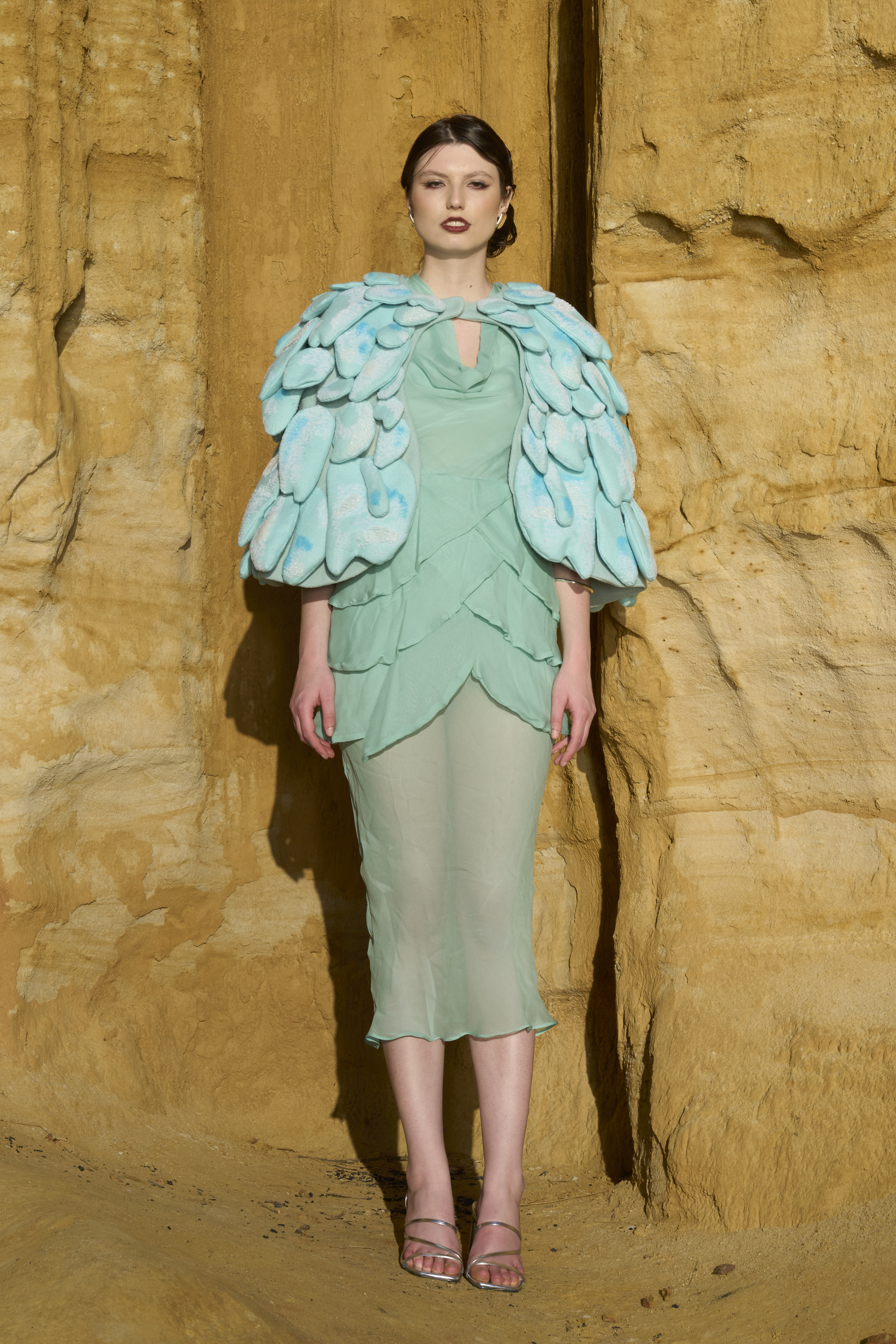
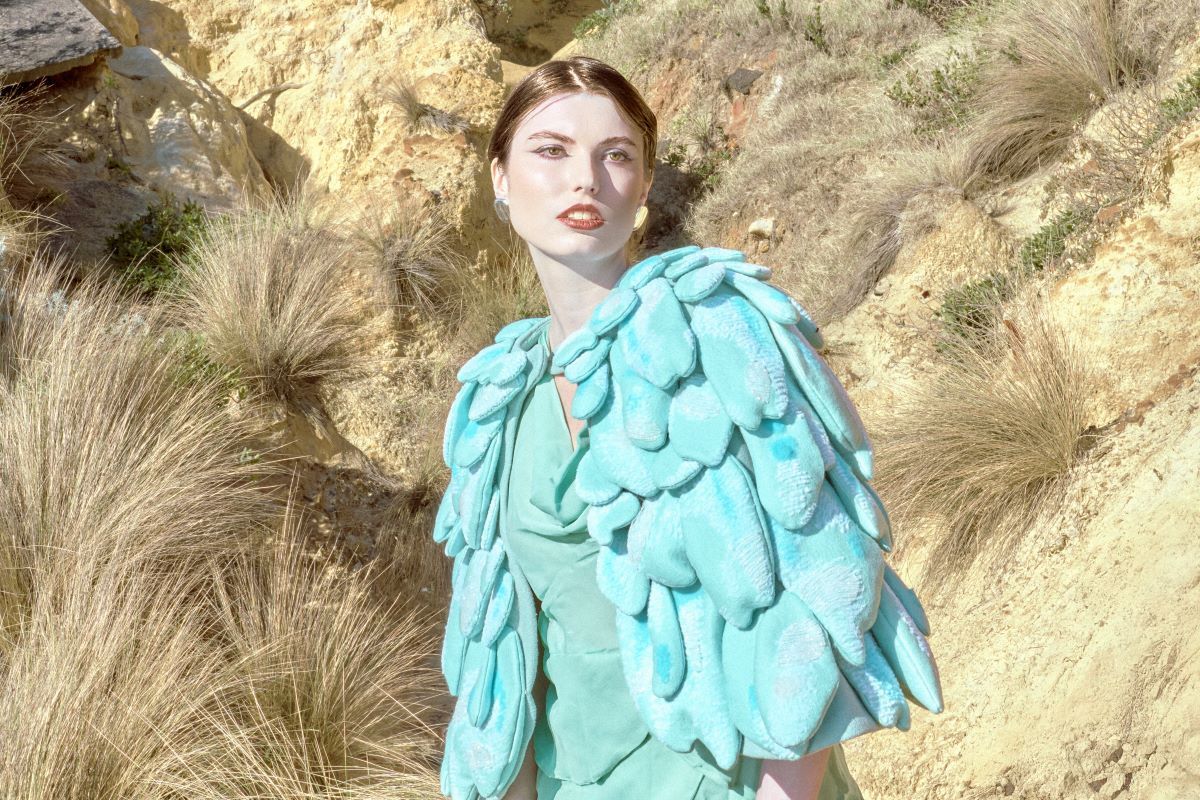
Ong’s practice is defined by an intentional resistance to sourcing inspiration solely from within fashion itself. Instead, she consistently looks outside of those disciplinary boundaries, drawing from architecture, planetary science, and broader STEM disciplines. “I don’t believe fashion is a silo,” she explains. “Whether we realise it or not, it is extremely interconnected with STEM, humanities, and other arts-based fields.”
For Ong, inspiration drawn exclusively from fashion itself runs the risk of becoming too introspective, resulting in regurgitated aesthetics stripped of meaning. By contrast, her collection is rooted firmly in systems, sciences, and environments that remain far removed from the runway in every environmental sense. It is precisely this distance that gives the collection its incredible conceptual clarity.
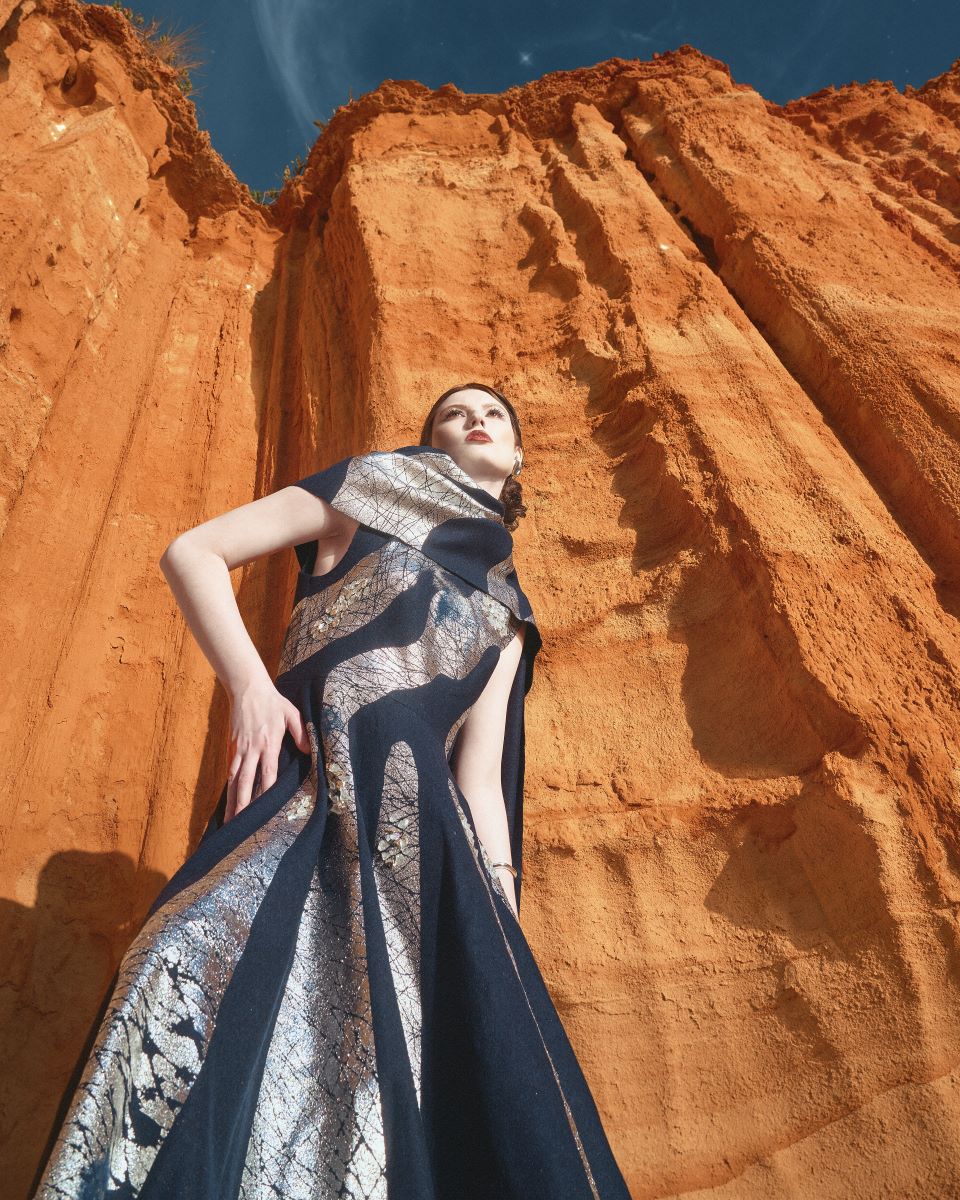
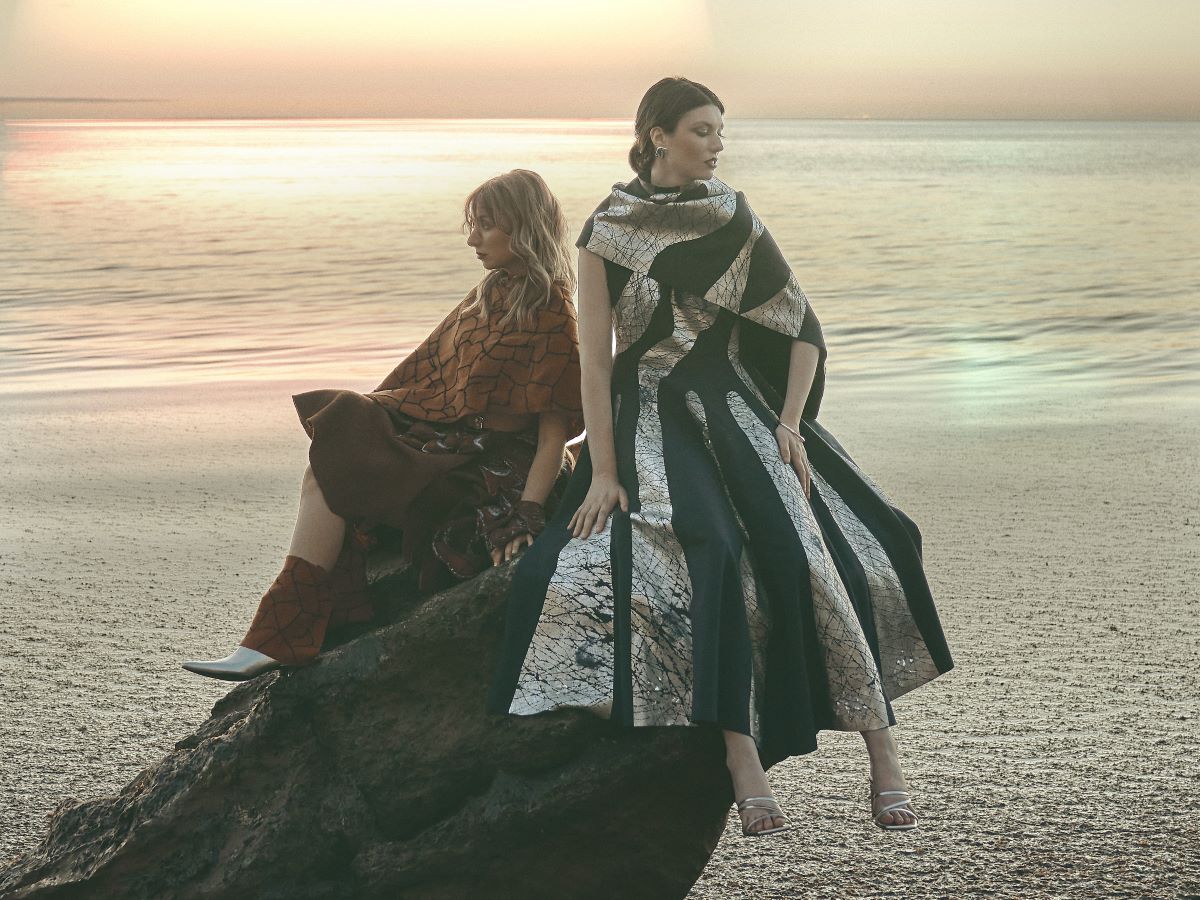
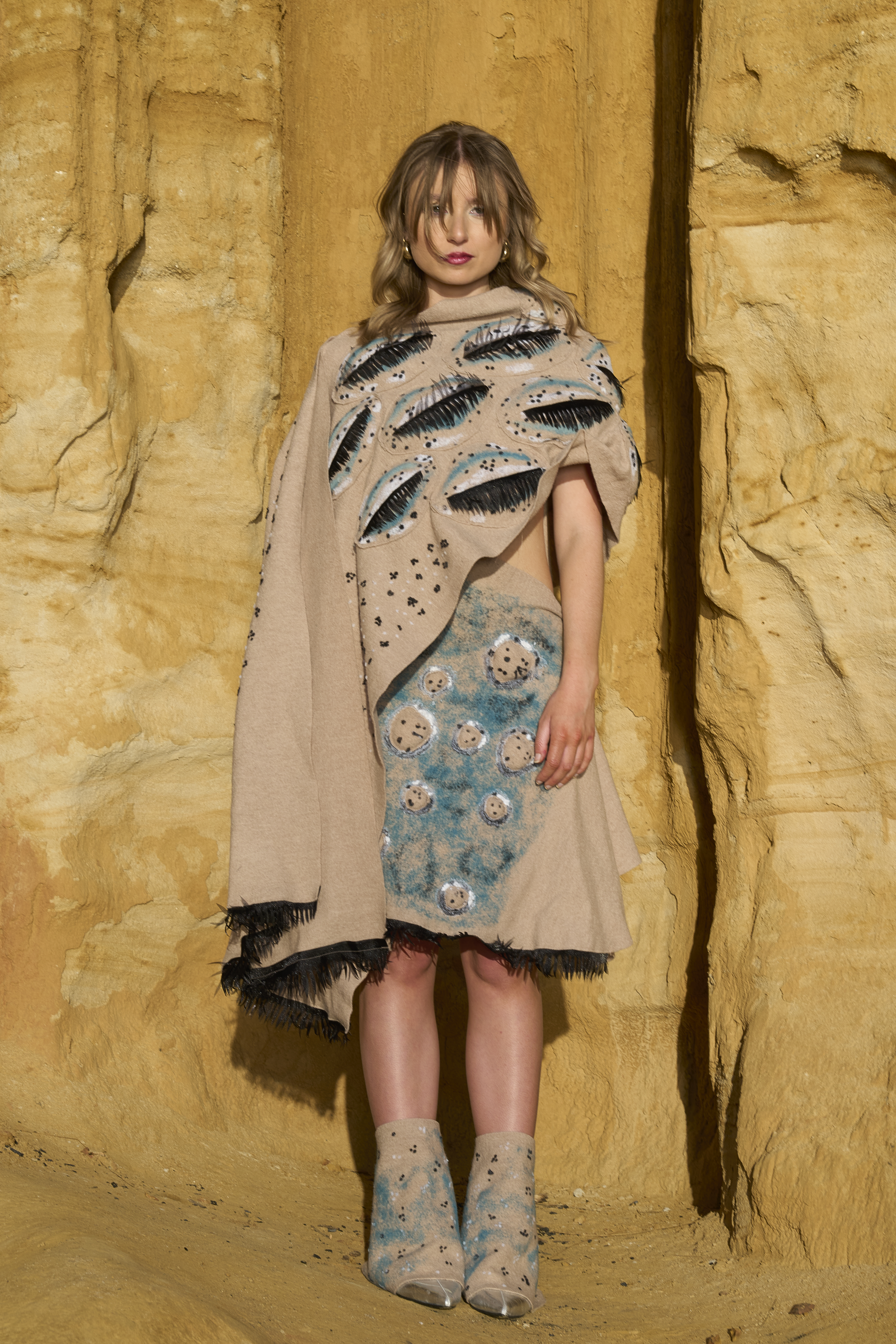
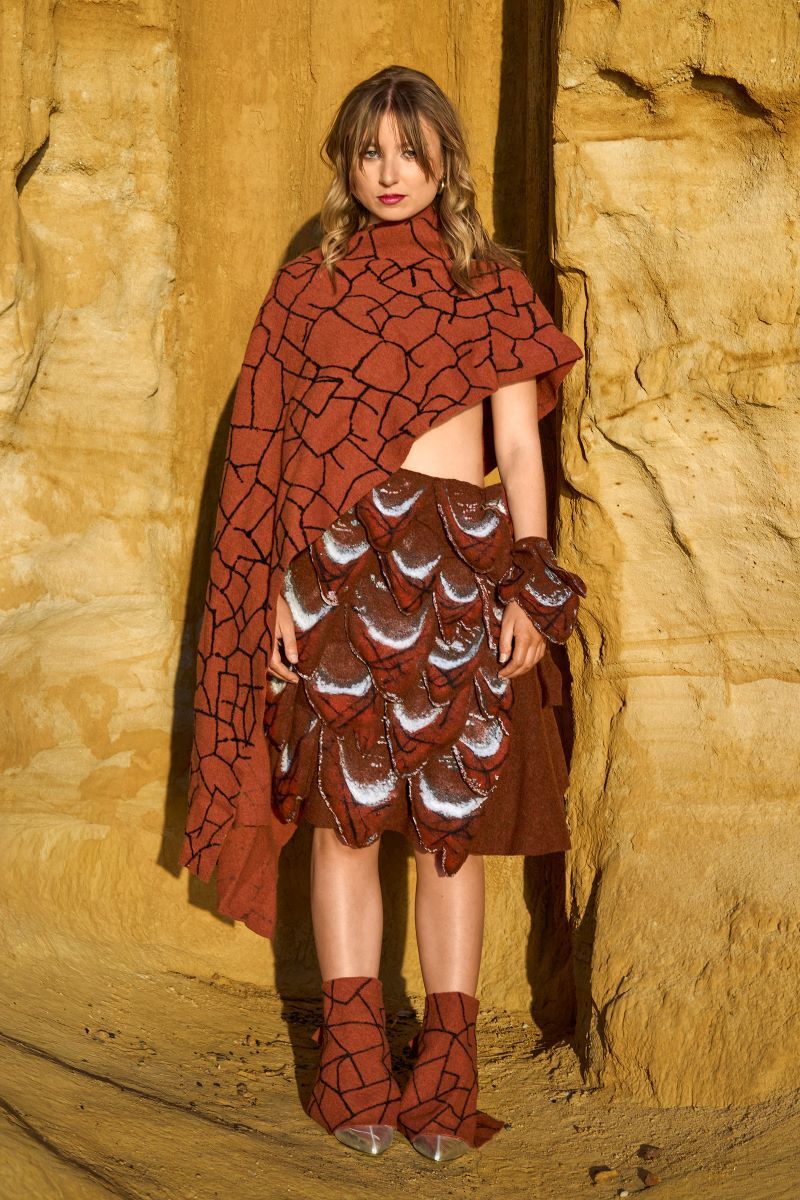
The collection takes its visual language from colour-enhanced satellite imagery of Mars, sourced from NASA’s Jet Propulsion Laboratory and the Lunar and Planetary Laboratory at the University of Arizona. Captured by the HiRISE camera aboard NASA’s Mars Reconnaissance Orbiter, these images document formations including the Polar Dunes, Game Board Dunes, Lyot Crater, Gamboa Crater, Meridiani Planum, Nili Patera, and frost-covered “Dust Devil” dunes. Each look translates these sites into textile form through meticulous surface manipulation, preserving the aesthetic qualities of the original imagery while giving them physical depth.
The undercurrent of assiduous research runs strong beneath this collection, and it shows – Ong’s thesis, Geomorphic Fashion Design: A Method for Aesthetic Preservation, which investigates how humans have historically recorded landscapes from traditional artistic methods to the modern such as landscape photography, holds ideas of the aesthetically elevated central to its deep enquiry. Epistemic emotions such as awe, wonder, and curiosity, Ong argues, are what drive people to create when confronted with natural environments. In Terraformé, fashion becomes a continuation of this lineage: a form of sculptural landscape painting that adds immersive and somatic dimensions through the body.
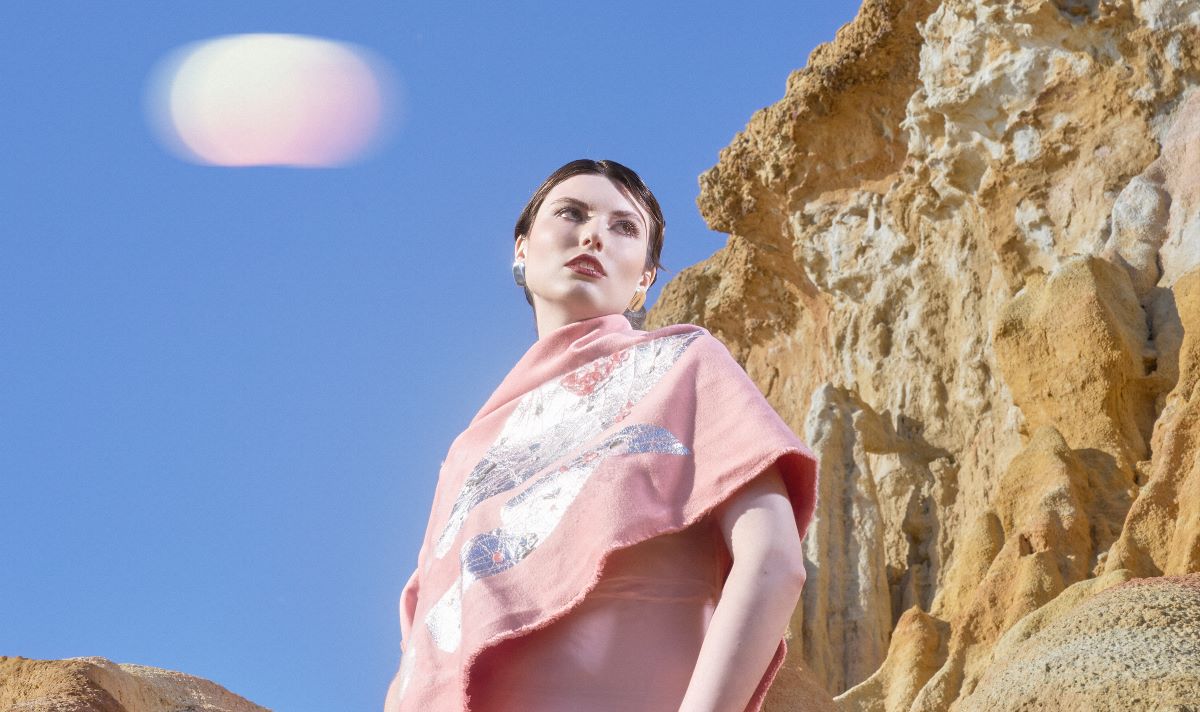
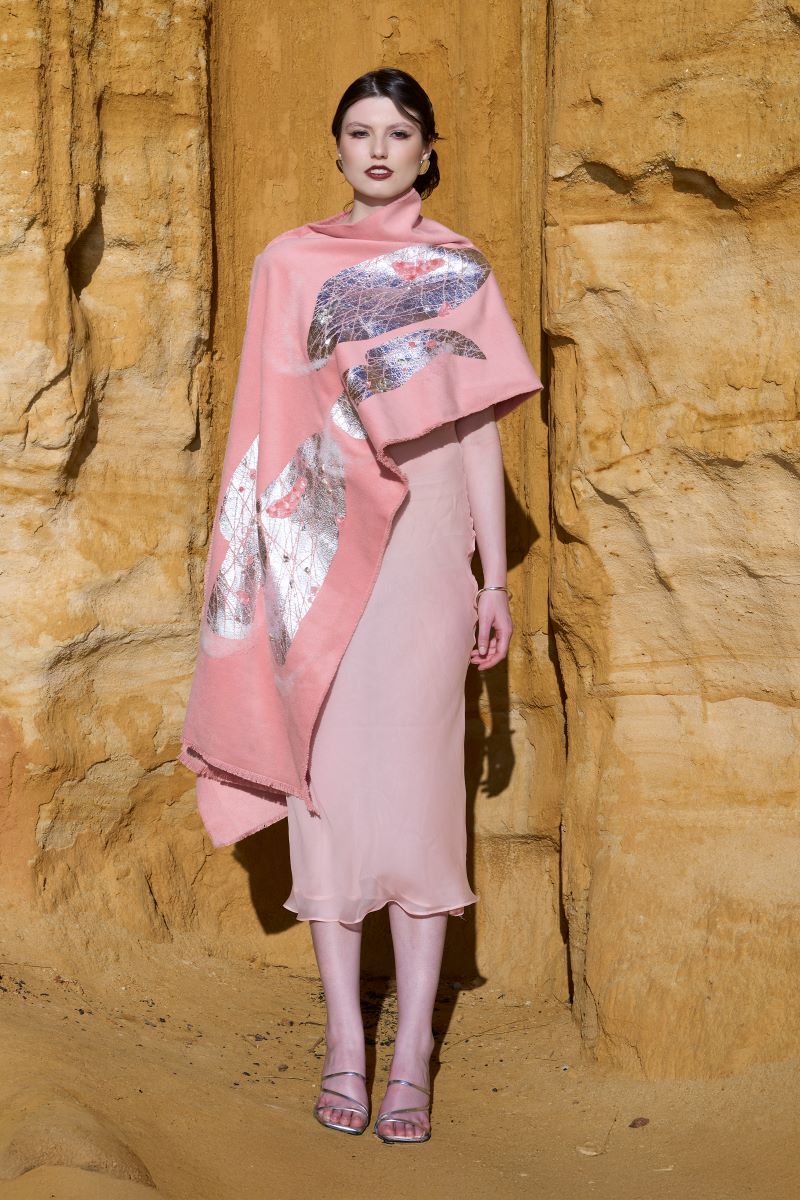
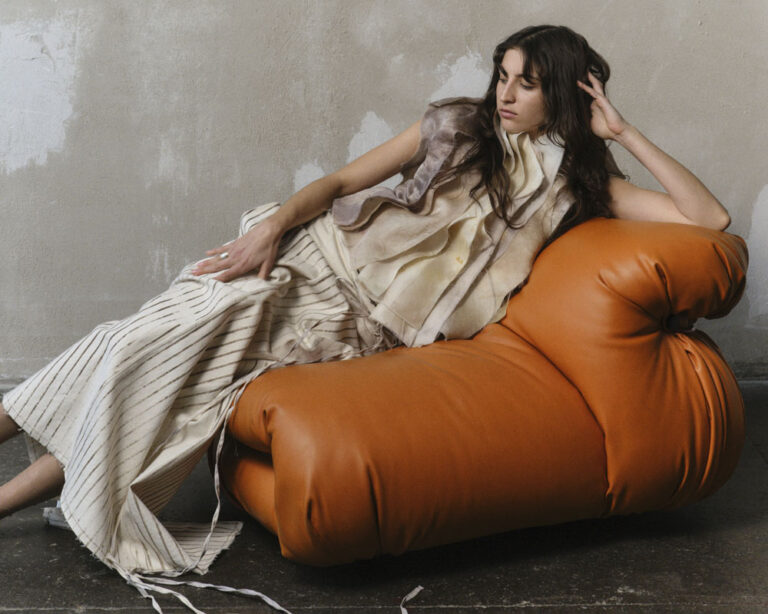
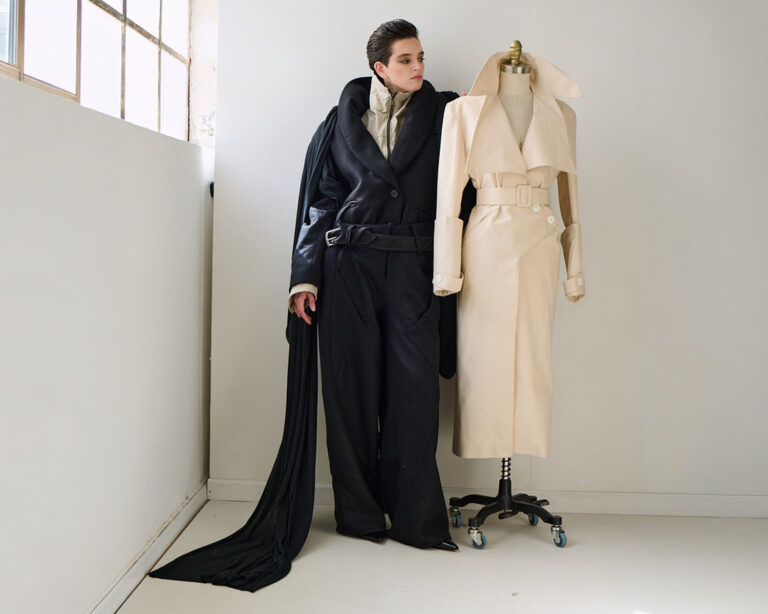
Material choice is critical to the philosophy of the collection. Staying true to the environmental core of the project, Terraformé is constructed predominantly from fabrics and fibres that are wool-based – wool cashmere, merino boiled wool, merino wool felt, and boiled felted wool. Wool’s natural, breathable qualities align with Ong’s vision of garments as landscapes that wrap around the body. Capes, shawls, wraps, and ponchos dominate the silhouettes, reinforcing the idea of clothing as terrain – both protective and expansive, and shaped by elemental forces. Backed by a $2,500 AUD grant from the Australian Wool Education Trust, the project benefited from more than funding alone; the support underscored a shared dedication to natural materials and environmentally responsible design on both parts.
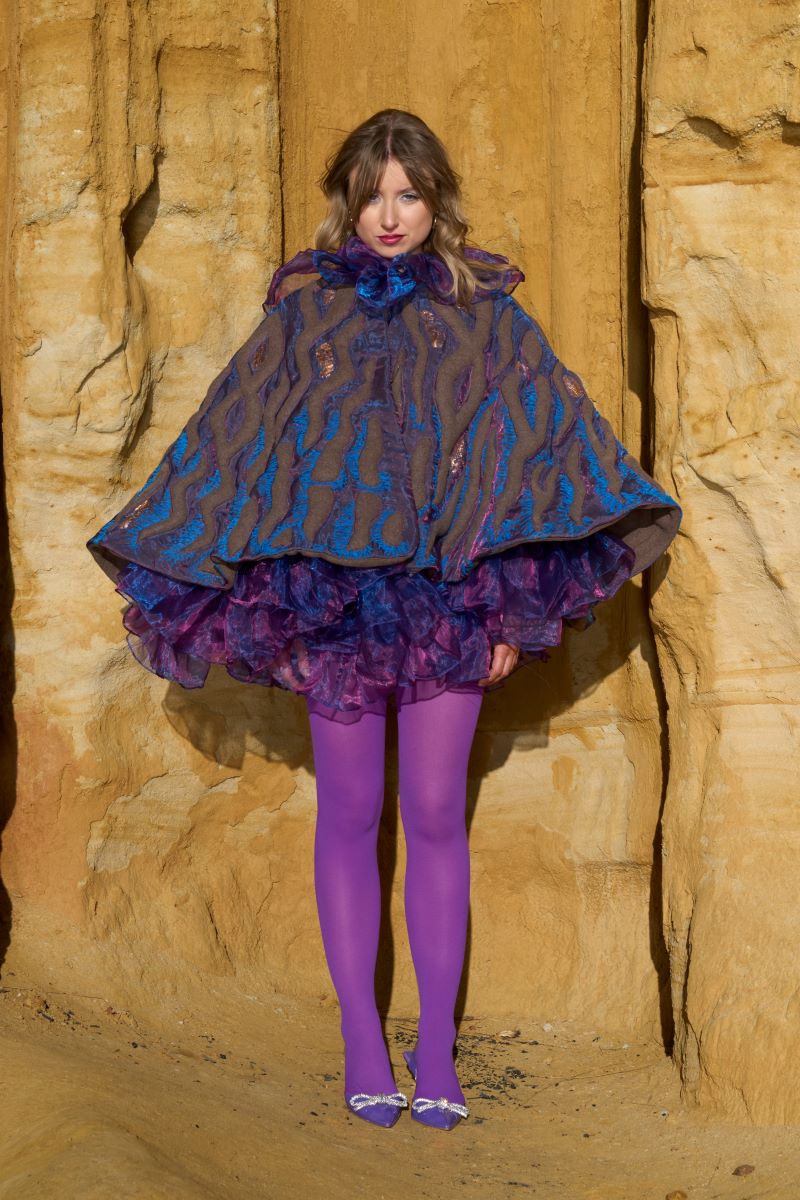
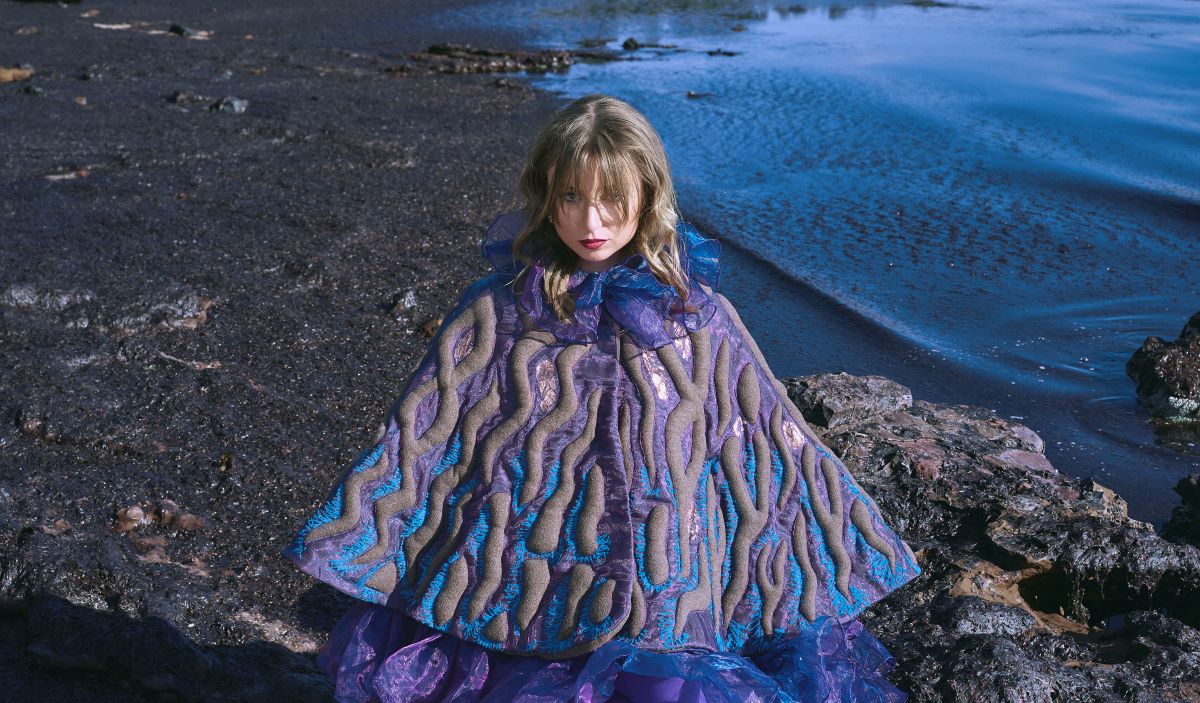
The collection is distinguished by its surface work. Informed by Ong’s expertise in surface and print design, fine craftsmanship, and hand-finishing, the pieces utilise slower, labour-intensive techniques including dry needle felting, foiling, stone embellishment, quilting, flocking, and selective laser-cut synthetic detailing. This commitment to slow craft is also a quiet act of resistance. Ong speaks candidly about the difficulty of reconciling high-quality handwork with the rigid timelines of fashion education, and about how fast fashion and late-stage capitalism have distorted consumer expectations around labour and value.
“Sadly the commodification of time and late-stage capitalism make these levels of finish and quality increasingly rare to find by consumers,” says Ong. “I also found that I struggled as a fashion student: it is extremely difficult to reconcile a strong commitment to quality handwork with tight, unforgiving coursework deadlines.”
The Gamboa Crater cape, for one, features mola-style quilting, creating a tactile reading of stratified planetary landscapes. The layered techniques reference textures found in satellite imagery – impact craters, mineral formations, and dunes moulded by the wind – while emphasising the significance of time, craftsmanship, and the human hand.
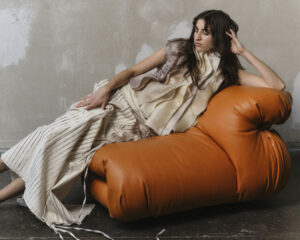
Layered beneath the woollen outer garments, silk slip dresses bring fluidity and motion to the collection. Both functional and symbolic, they evoke that aforementioned wind – the elemental force that sculpts dune systems across planetary landscapes. Ong’s approach is further informed by science-fiction costume design, particularly Denis Villeneuve’s Dune, where draped, lightweight textiles are integral to life in arid, Mars-like environments. These slips sustain an elegant, feminine sensibility, offering a counterbalance to the density and geological presence of the outer forms. At its core, Terraformé is an intimate and reflective project. Ong frames the collection as a coming-full-circle experience, reconnecting with her early curiosity about outer space and planetary science. Although her path eventually led her away from STEM and toward artistic practice, this body of work becomes a space where those parallel interests intersect. Importantly, Ong’s work does not romanticise the idea of colonising new worlds. Instead, Ong takes a clear stance against escapism, arguing that the pursuit of other planets is misguided when the most urgent challenges remain here on Earth.
“Using Martian landscapes as a subject for creative work really made me think about how the Earth’s dunes and waterways were once pristine,” she says. “There may be no known records of Earth in a pristine state like in NASA’s HiRISE photographs of Mars (at least from humans!), and our pristine landscapes have been lost to human activity and natural disasters over millions of years. As such, Terraformé is just one
way to archive landscape aesthetics.”
Ultimately, Terraformé frames fashion as both an archive and a cautionary signal. Positioned in such a sense, the collection invites audiences to reflect on how landscapes are observed, interpreted, and safeguarded, be it on Earth or elsewhere. Through precise craftsmanship and a deeply researched conceptual foundation, Jennifer Ong presents a model of fashion that is wonderfully deliberate and subtly subversive, affirming that clothing can carry with it ecology memory and accountability as profoundly as it carries its fabric, its structure, and its shape.
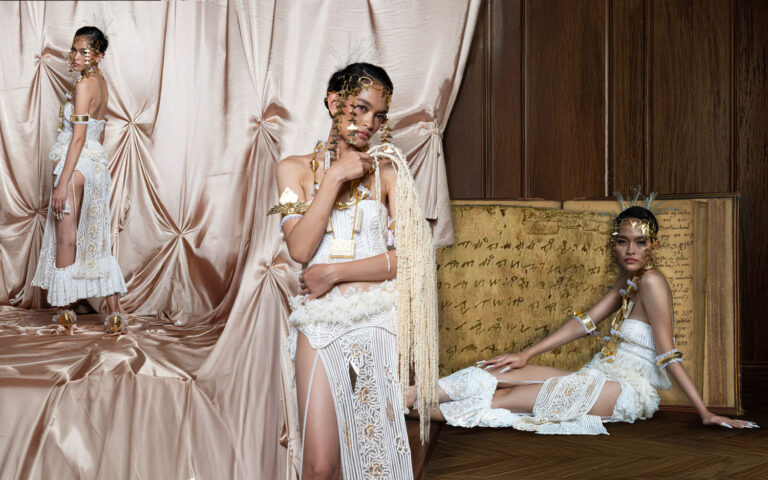
You can view the Terraformé look book below and follow Jennifer Ong on Instagram (@jenniferongstudio).