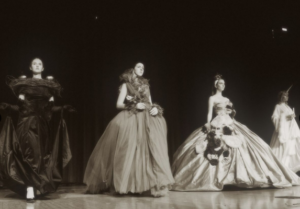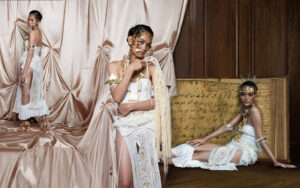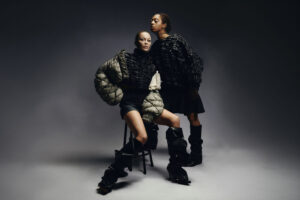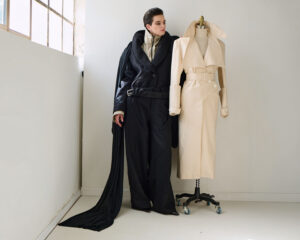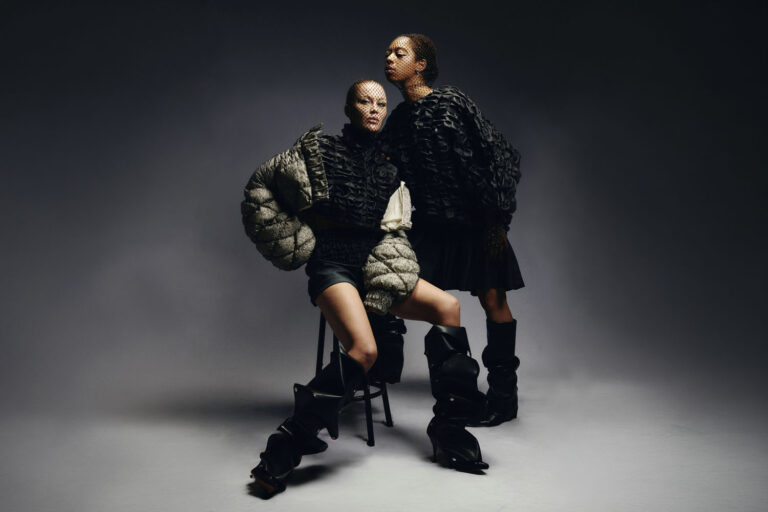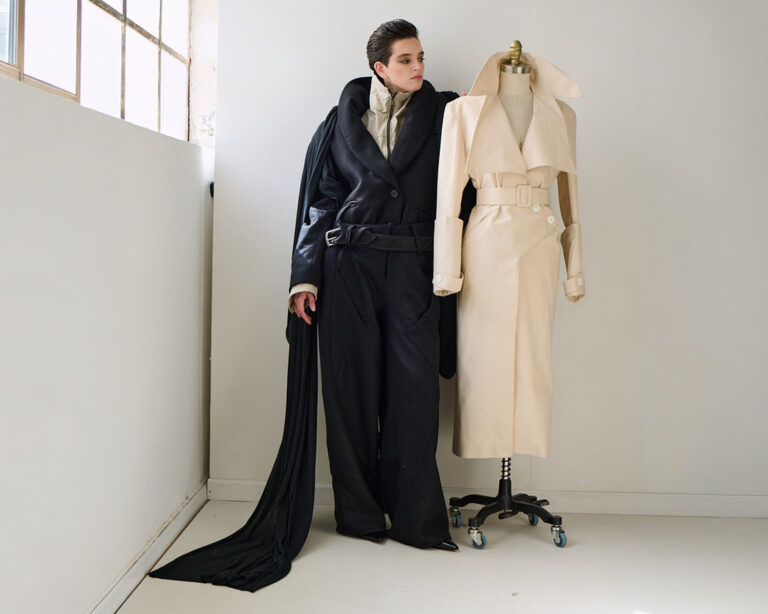
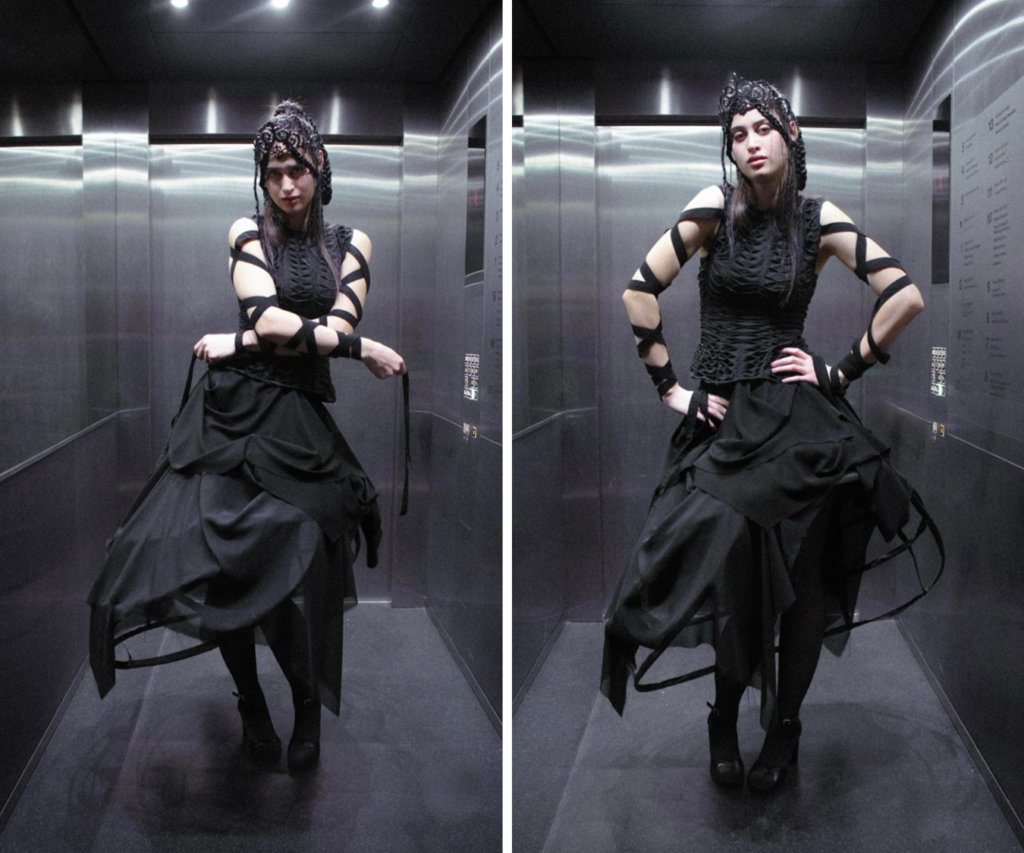

In the shifting space between light and shadow, London-based designer Nigar Isayeva tells a quiet but powerful story. Her latest work, an all-black ensemble created for the Noir Show during her time at the London College of Fashion, goes beyond surface aesthetics. Instead, it becomes a meditation on modesty, mythology, and cultural identity, grounded in heritage yet fully rooted in the present.
At the heart of the piece lies a thoughtful decision: to bring together Kazakh and Azerbaijani traditions. This choice, while personal, also carries conceptual weight. “My Azerbaijani background naturally informs the work,” Isayeva explains. “But researching Kazakh visual culture introduced new ways of thinking about ornament, protection, and craft.” Rather than fusing the two into a singular identity, she chose to let them coexist, each with its own symbolic language, in quiet harmony.
This layered relationship reveals itself most clearly in the headpiece, developed in collaboration with a Kazakh artisan. Drawing from sun symbolism rooted in Kazakh design and the moonlit elegance of Azerbaijani culture, the headpiece balances opposing forces. “At the crown, radiance meets reflection,” she writes in her concept. “Between them lies an ancient dialogue, light folding into darkness, brilliance tempered by quiet depth.” As a result, the eclipse becomes more than a theme, it transforms into a metaphor for cultural coexistence.
Throughout the design process, Isayeva treats heritage as a living reference, not a static archive. “I approach tradition as a framework,” she says. “Rather than replicating historical forms, I extract their values, symbolism, restraint, and purpose, and translate those into contemporary silhouettes.” In doing so, she allows tradition to guide her, while still innovating for a modern audience.
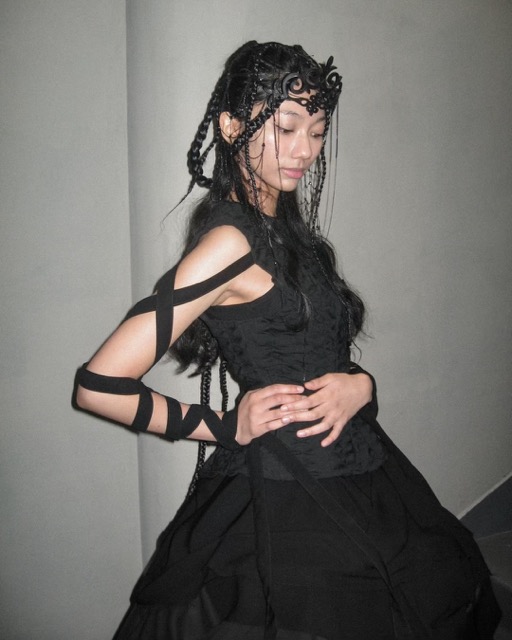
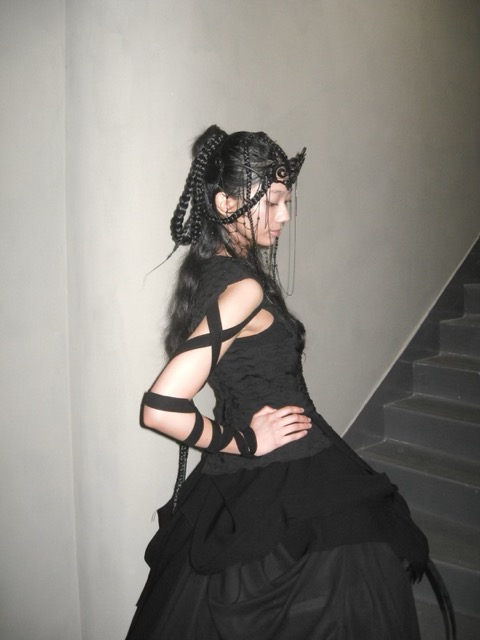
The garment’s physical structure reflects this duality. The upper body features sculpted, armor-like construction that suggests strength and protection. In contrast, the skirt is layered and fluid, moving with a sense of softness and ease. “I wanted the piece to feel protective, not restrictive,” she explains. “This tension mirrors how modest fashion can be both gentle and strong at the same time”.
Modesty, in particular, is not just a stylistic choice but a personal philosophy for Isayeva. Through her label, ISAYA, she explores modest fashion as a space of quiet confidence and personal power. “Modesty in my work is something I experience before I design,” she says. “I want to create garments that feel composed and grounded, allowing the wearer to exist within their own space. It’s a way of dressing that reflects inner values without needing to announce them”.
Although the Noir Show required an all-black look, the limitation aligned naturally with her design instincts. “Black feels grounding and protective,” she reflects. “Without relying on color, I had to let shape, structure, and texture carry the emotion.” As a result, she focused more intently on form and detail, allowing subtle contrasts to create depth. In her words, “Shadow became the language”.
Moreover, the personal nature of the project made the experience even more meaningful. “The most personal part was translating internal values into a physical form,” she says. “This wasn’t just about aesthetics. I was working through ideas tied to faith, heritage, and self-discipline. That process, turning reflection into design, felt honest and important to me”.
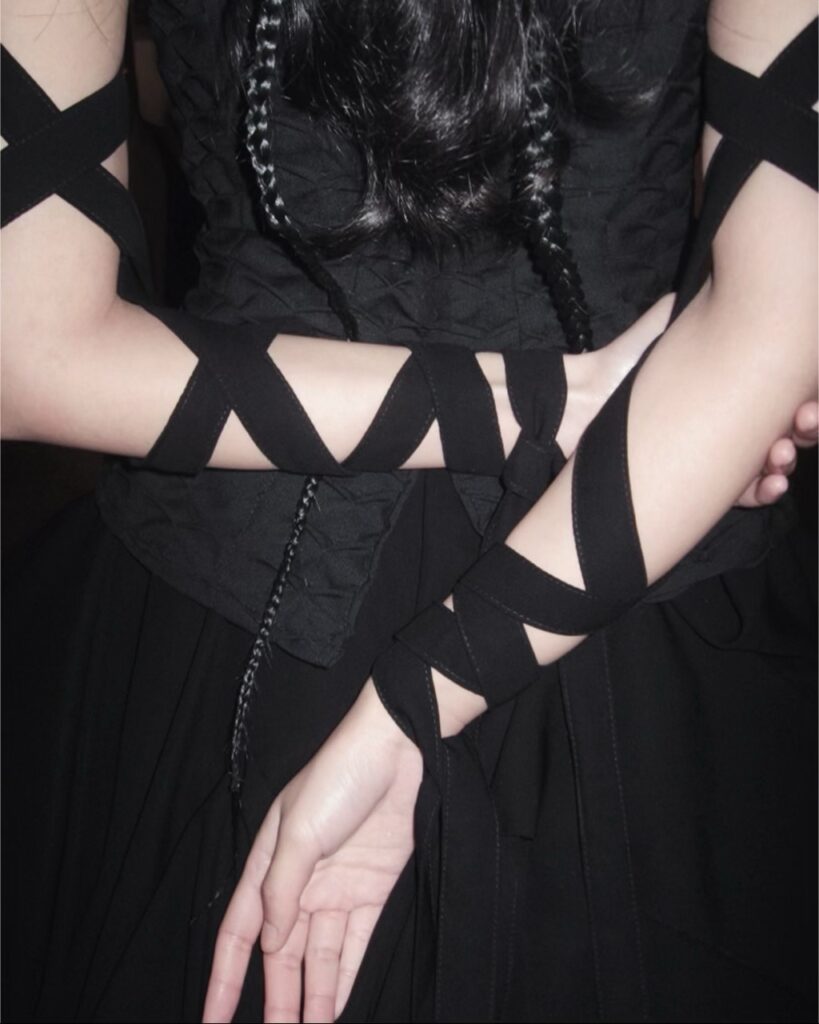
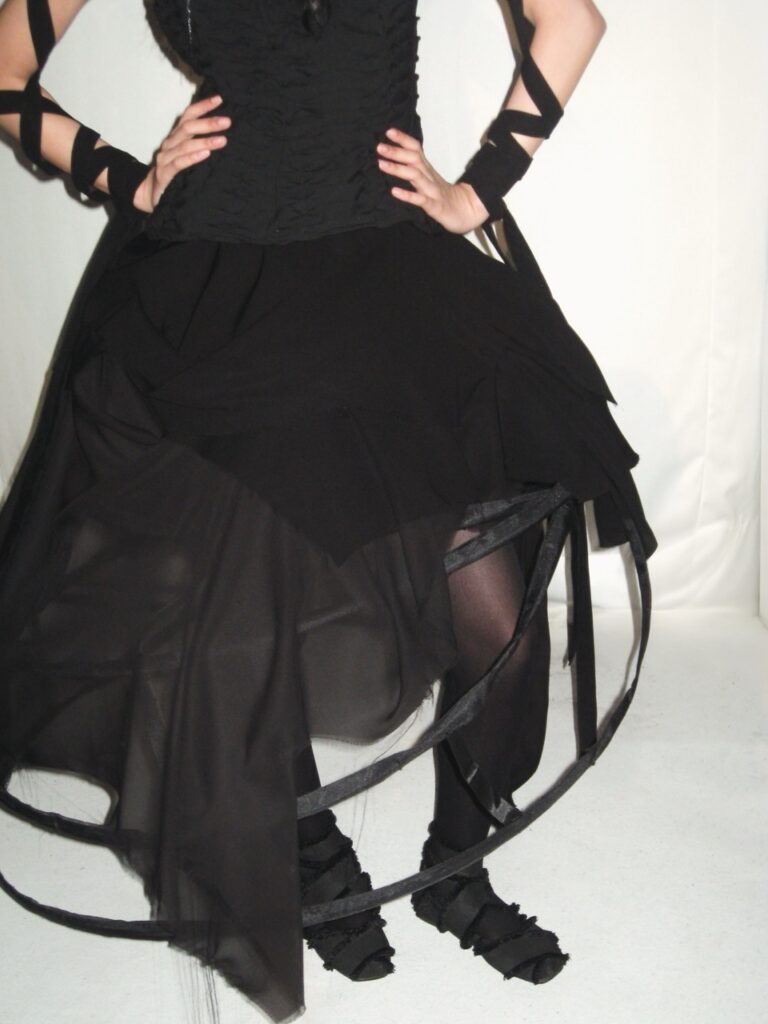
The eclipse, which temporarily alters perception, became the perfect symbol for this approach. “It changes what we see, but only for a moment,” Isayeva explains. “That aligned with how I think about modesty and identity, where presence doesn’t rely on visibility alone”.
Being based in London has also shaped her creative outlook. The city’s openness and diversity gave her room to explore her ideas without restriction. “London has allowed me to express my values through design and feel supported in doing so,” she shares. This freedom helped her shape ISAYA into something deeply personal yet globally resonant.
Looking ahead, Isayeva envisions ISAYA continuing to evolve. “I want to keep refining structure and craft,” she says. “But more importantly, I want the brand to grow into something thoughtful and lasting, creating garments that feel meaningful beyond a single season”.
In blending Kazakh and Azerbaijani influences, and in approaching modest fashion as both personal and powerful, Nigar Isayeva reimagines cultural identity as something layered, intentional, and beautifully unresolved. Her work invites us to think of heritage not as something we inherit passively, but as something we can reshape, through care, through craft, and through presence.