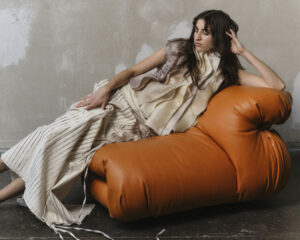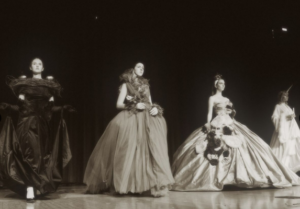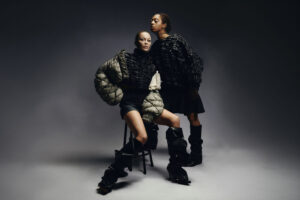
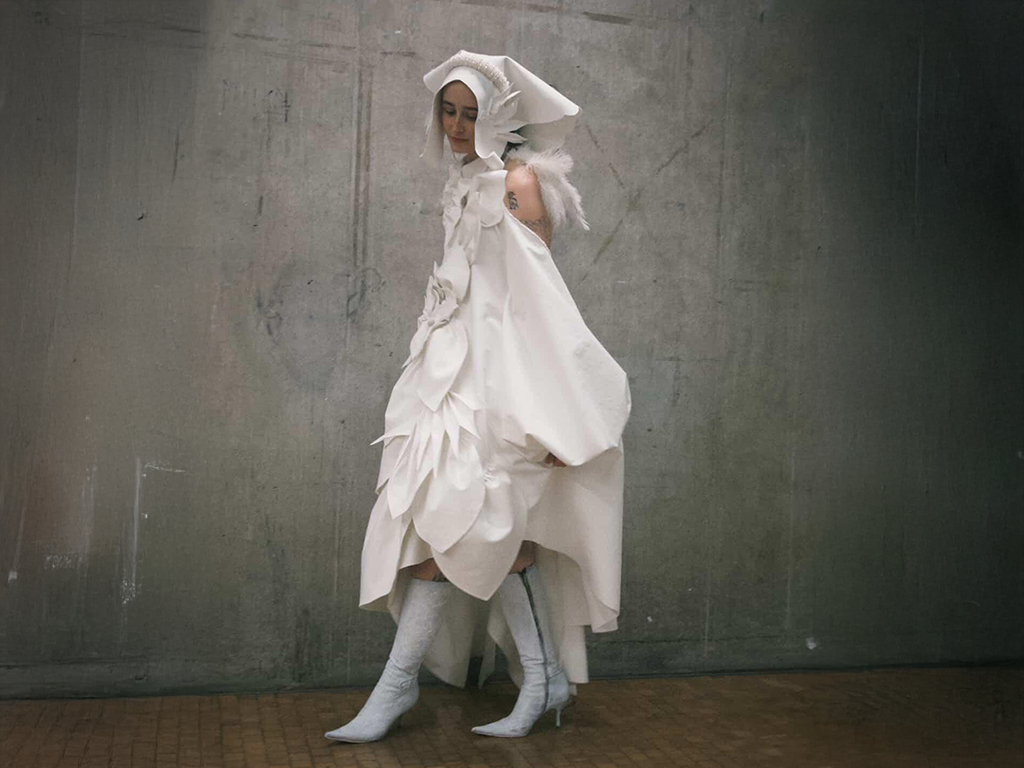

Closing the Central Saint Martins 2025 Reset show, Ukrainian designer Polishchuk carves scripture into white couture to redefine purity.
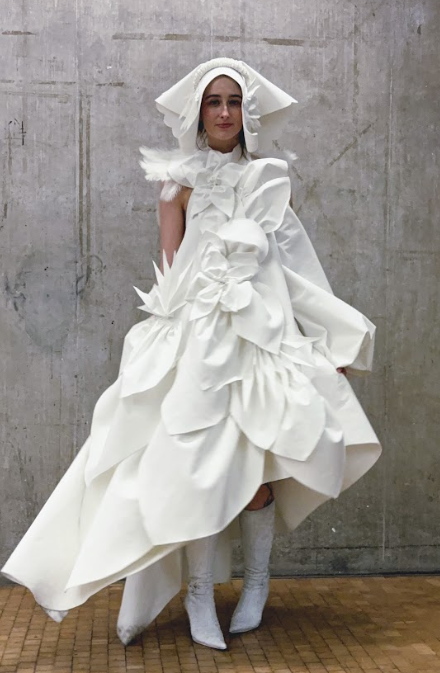
“Let thy garments be white.” Ecclesiastes 9:8 -a timeless symbol of purity- is elevated into the highest form of sartorial expression in Anastasia Polishchuk’s hands, where white becomes provocation. Polishchuk confronts the tension between sacred and profane in the Ukrainian Orthodox Church, challenging: Do you practice what you preach?
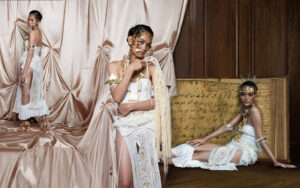
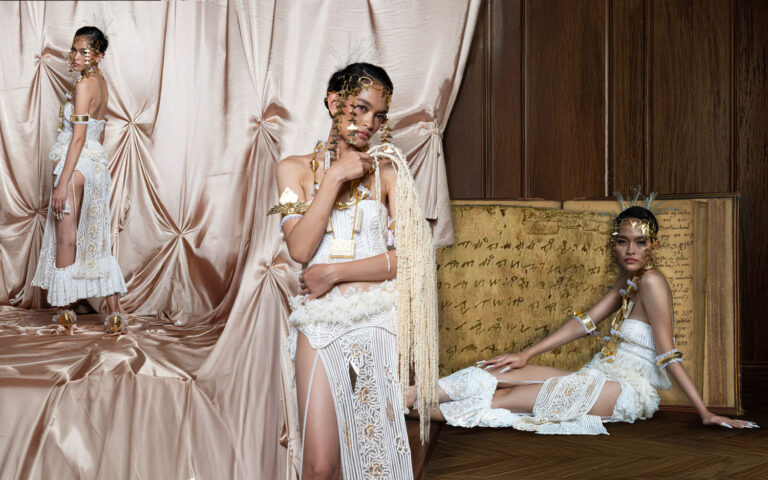
The brief called for a fully white Ultrasuede garment to emphasize form and definition, and the 21-year old Ukrainian designer delivered with austere elegance. From day one, she framed the piece as an intimate dialogue with the Church-her chosen artefact-casting 27-year-old Marie Braune, whose face, she said, “held the wonder of a child,” bridging youthful innocence and timeless truth.
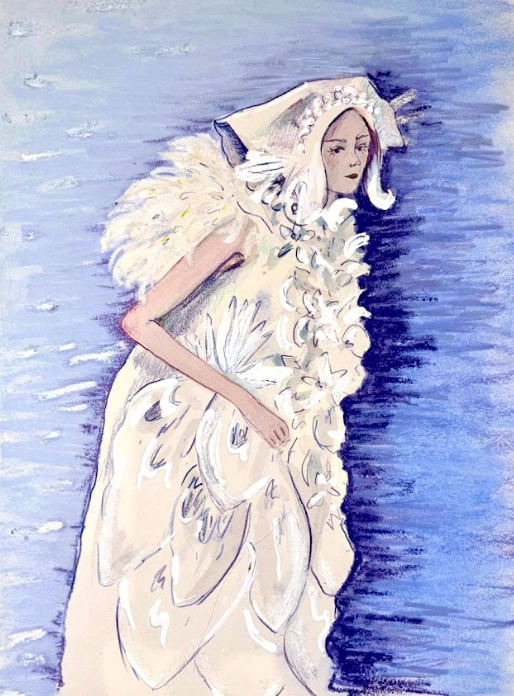
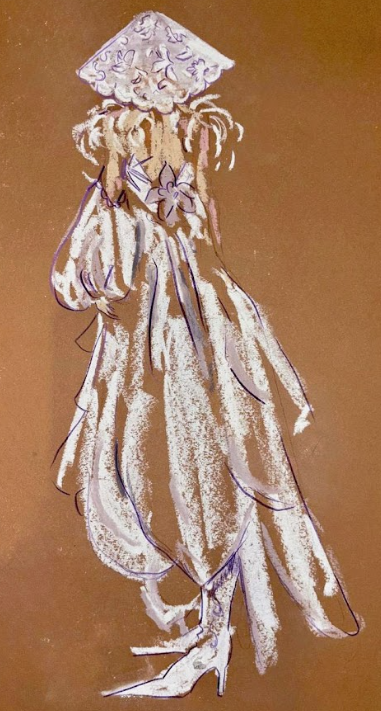
The silhouette sweeps in a soft, left-flowing S-curve, fashioned in a one-size-fits-all construction that gathers into a V-shaped overlapping back. A single asymmetric raglan sleeve drapes naturally from the left shoulder, while the open back introduces negative space. The skirt, shaped with release tucks, sewn-down pleats, and hidden godets, adds controlled flare and movement. The piece echoes the austerity of a traditional nun’s clothing with ceremonial opulence.
Polishchuk entered the Orthodox Church pure of heart, yet long liturgies felt theatrical- prayers lip-synced, skirts smoothed as if their creases alone could contain such splendor. “I was terrified a nun would yell at me for having my nails done,” she laughs. Priests paraded down the aisles in gilded robes, each alive with intricate iconography. Gold thread traced delicate patterns, pearls glimmered along collars, and embroidery depicted saints, crosses, and floral motifs, tactile language of devotion and hierarchy. “I actually dreamed of being a nun,” Polishchuk admits. “Their robes were practically sacred couture. Who wouldn’t be tempted?”
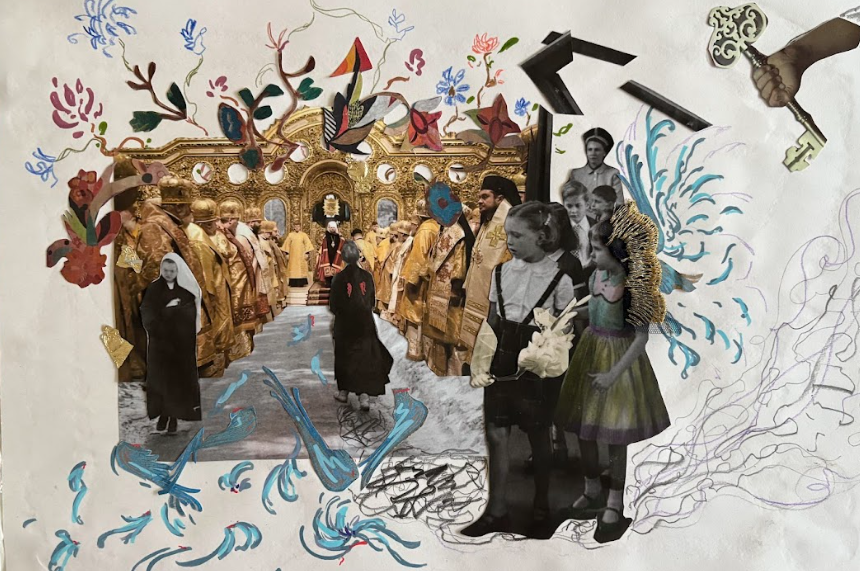
Curious about these comical contradictions, she recalled her teachings: Revelation 19:14 – heaven’s armies ‘clothed in fine linen, white and clean’-a reminder that only those clothed in purity may enter heaven. Using meticulous adhesive techniques, she embeds biblical motifs that define the design, creating a wearable sermon drowning in ornate discrepancy.
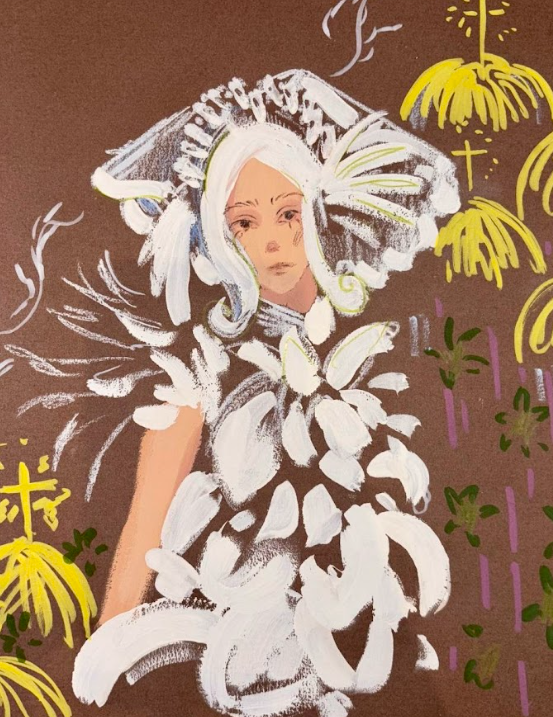
Lightweight ostrich feathers spill from the shoulders, the Psalmic promise: “He shall cover thee with His feathers, and under His wings shalt thou trust,” offering protection and forgiveness.
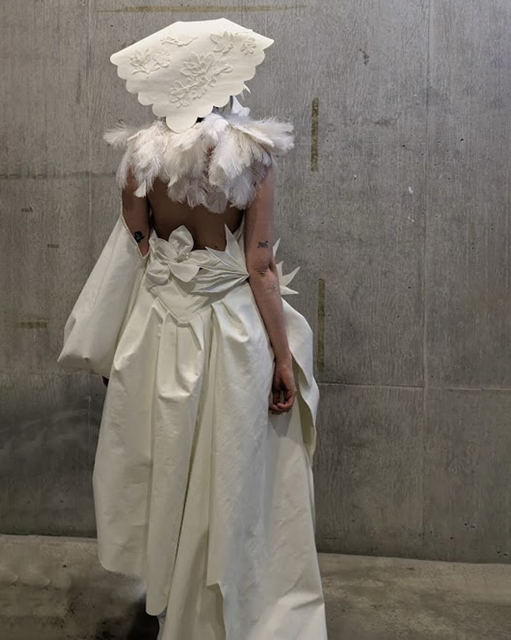
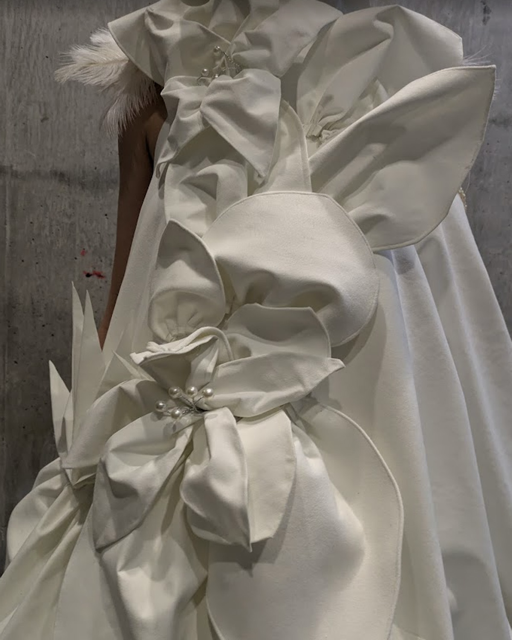
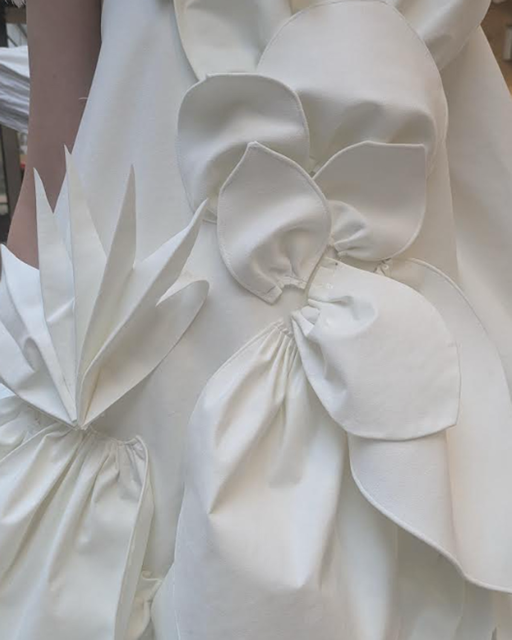
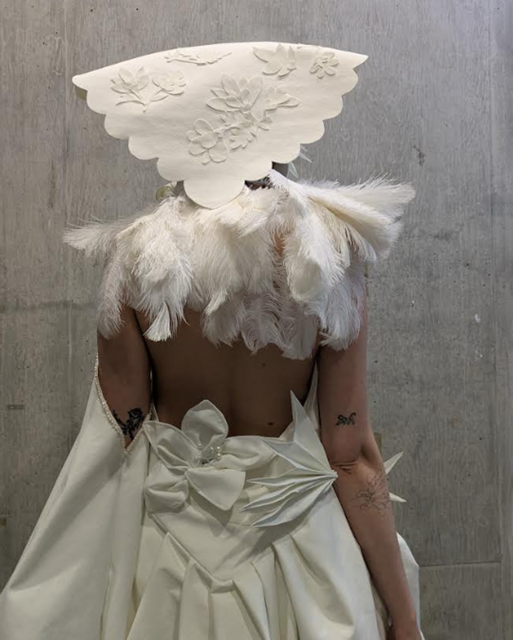
Across the Ultrasuede, sculpted petal appliqué, folded dimensional manipulations, and trapunto-inspired relief carve lilies and domes into the fabric. Ivory pearls, embedded as the lilies’ “seeds,” reflect the Church’s hidden materialism and the lure of trading virtue for worldly gain (Matthew 13:45–46).
The lower structure blooms in dome-like petals, gathered like miniature cupolas, evoking St. Sophia of Kyiv- Eastern Europe’s oldest surviving stone Christian temple, a symbol of hope and charity. Formed through rolled-edge gathering, these domes echo the techniques of the lilies: emblems of resilience, ritual, and restrained rebellion. Painted on homes and garments during the Soviet occupation, lilies became subtle acts of religious resistance.
The lilies purify, but the pearls betray; they glimmer like secrets tucked into the folds of faith.
Gliding down the runway, Marie unveils her nape; the lilies unfurl down her open back, tracing her movement as it becomes a wound, a window, a warning: who may enter heaven when purity is staged?
Yet Polishchuk struggled to reconcile such splendour with scripture- 1 Timothy 2:9 urges women to dress modestly, “not with elaborate hairstyles or gold or pearls or expensive clothes.” Growing up between Kyiv and Paris, she internalized this teaching, believing beauty was sinful, while the Church shimmered with extravagant excess.
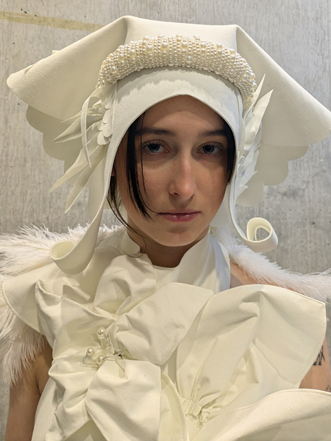
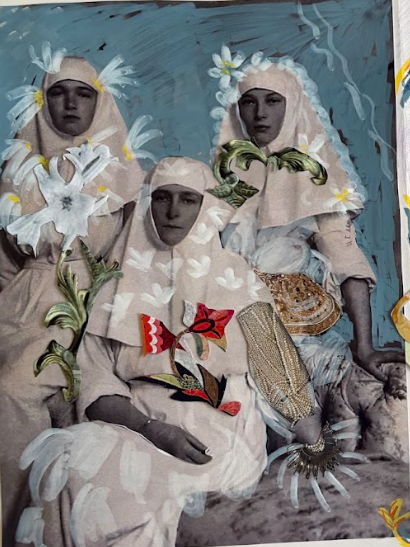
Her design echoes this paradox. An inspired khustka (traditional Ukrainian kerchief) frames loose hair with childhood innocence and Eastern ritual, as a sculpted hood traces Orthodox floral silhouettes and a pearl-beaded headband forms a halo of inherited devotion.
Kilted boots – pleated and engraved with acanthus scrollwork drawn from Ukrainian Baroque and Rococo churches- ground the ensemble in ornate reverence, recalling interiors that once inspired fear and admiration.
Polishchuk often felt closer to God outside ecclesiastical walls, where worship could be personal rather than imposed. That dissonance sharpened when she met Margherita, a nun who fell into kleptomania- pilfering treasures while praying for forgiveness. “She had the largest collection of Birkin bags I’ve ever seen,” Polishchuk recalls. Hypocrisy made flesh, consumed by desire, a stark reflection of what happens when purity is demanded rather than lived.
Exploring the acceptance of God’s invitation to return- at any age- and the search for a belief that truly belongs to oneself she says “Anyone will interpret it through the lens of their own experience”, emphasizing that the garment is not prescriptive but perspectival. As Jeremiah 3:22 urges, “Return, O faithless children, and I will heal your faithlessness”, this piece speaks to all: children, disillusioned teenagers, and adults grappling with fractured memories of religion. Its symbolic structures offer not a doctrinal solution but gentle guidance.
As Anastasia reflects, “I’m not judging her, just trying to understand. There’s the pure child, the teenager, and then something shifts. I wanted to explore this- because I was her, and someone out there is too.” Her vision in white embodies this journey- culminating in an unholy, unforgettable truth: the best dressed gets to heaven.