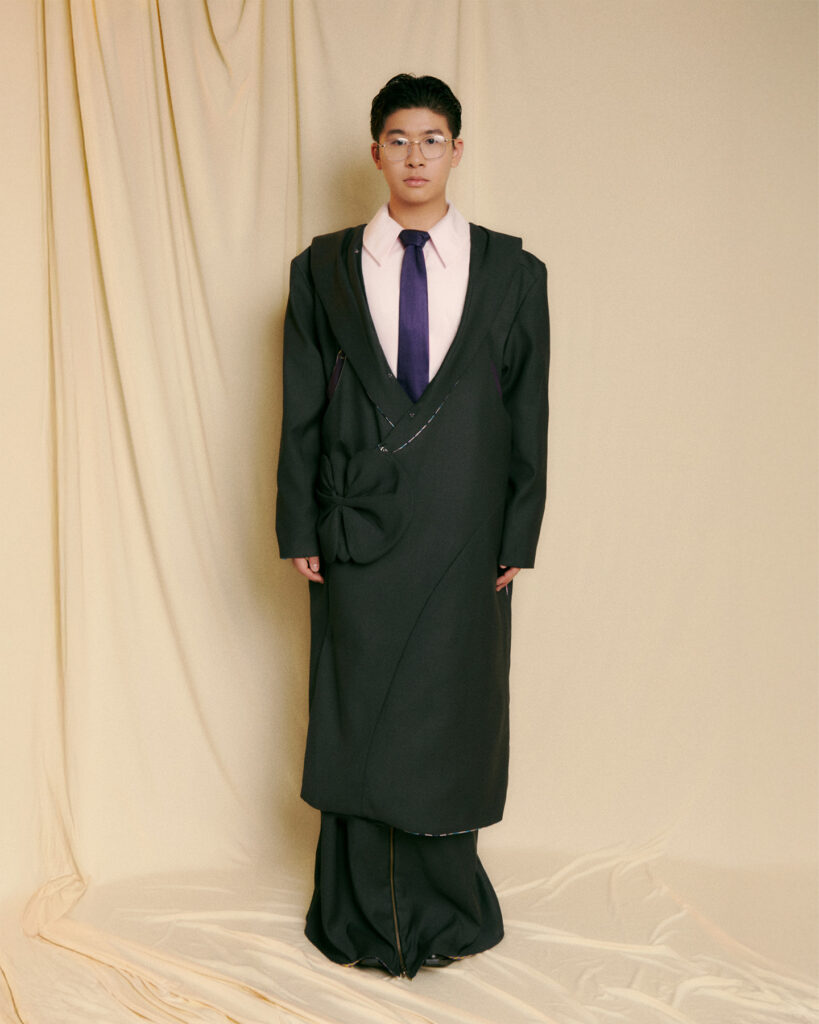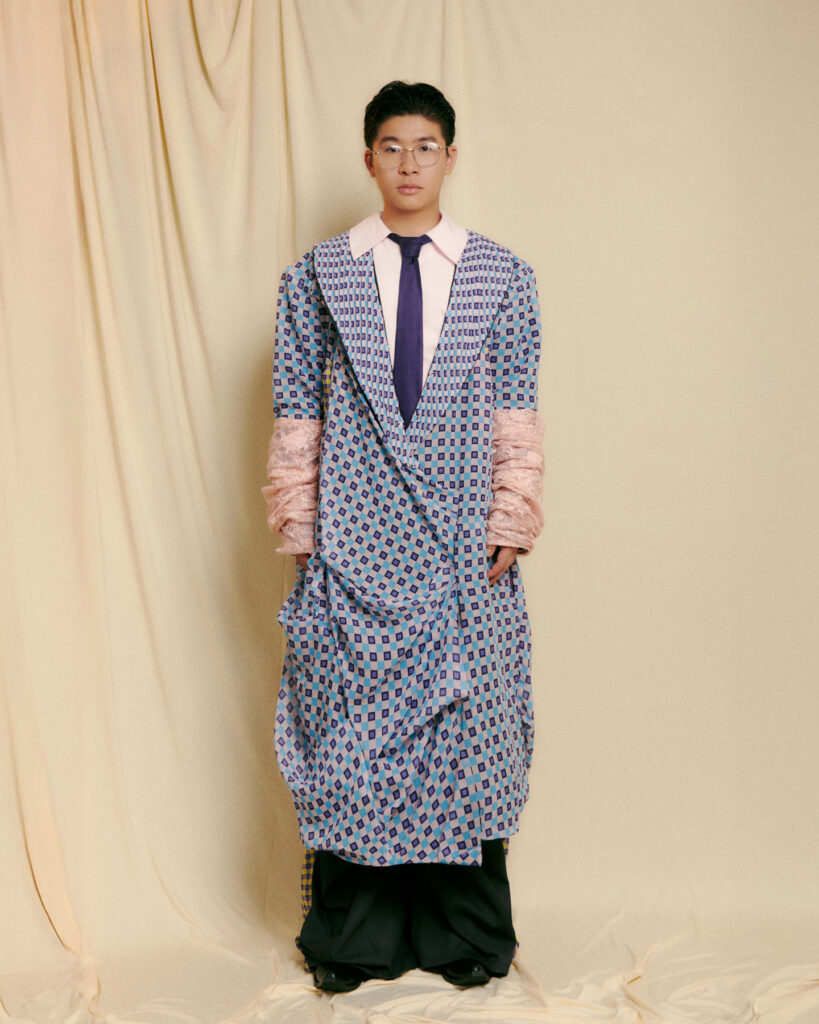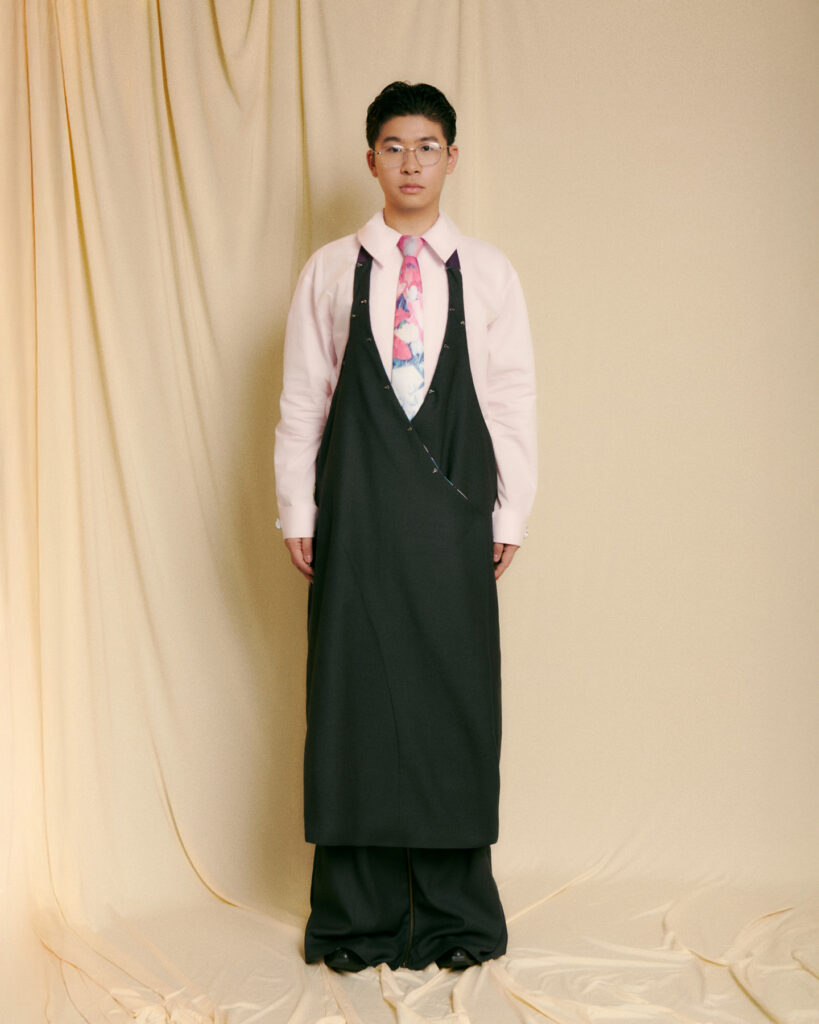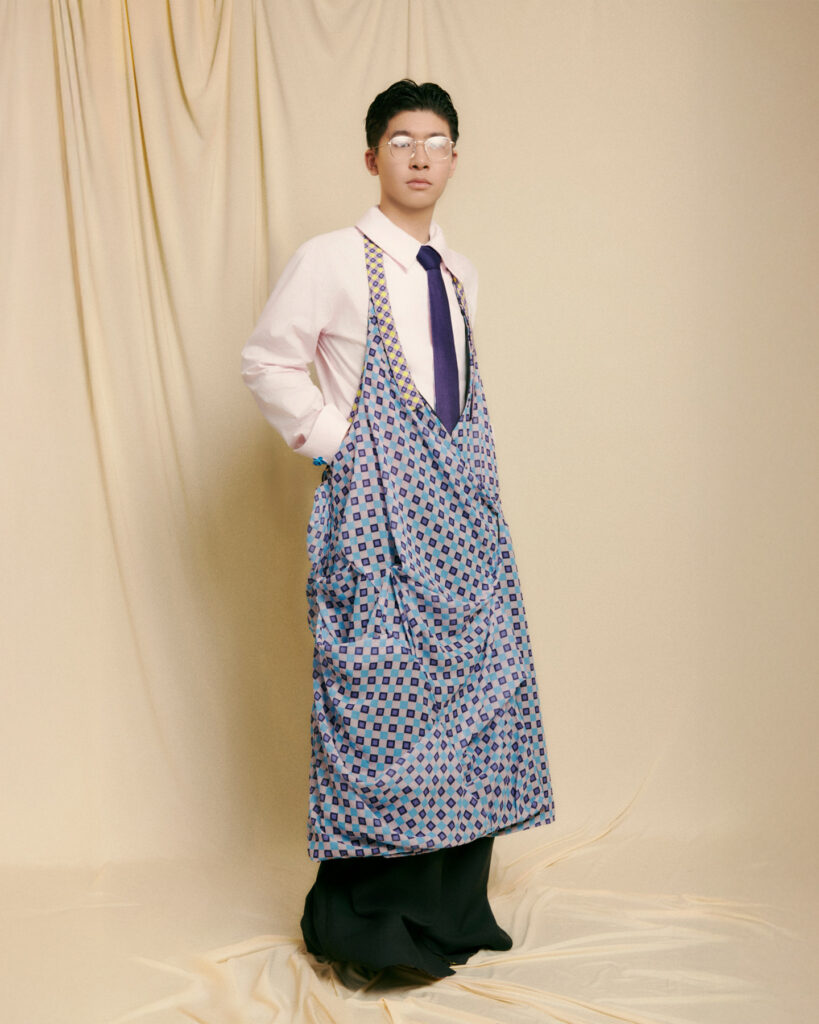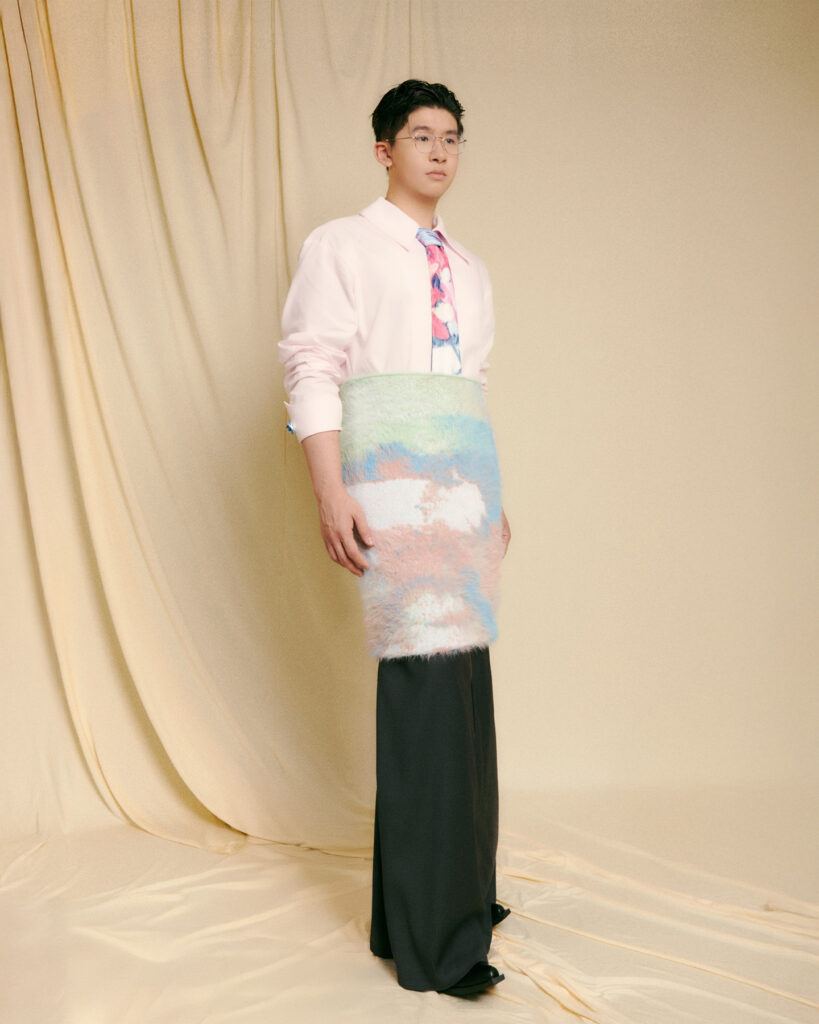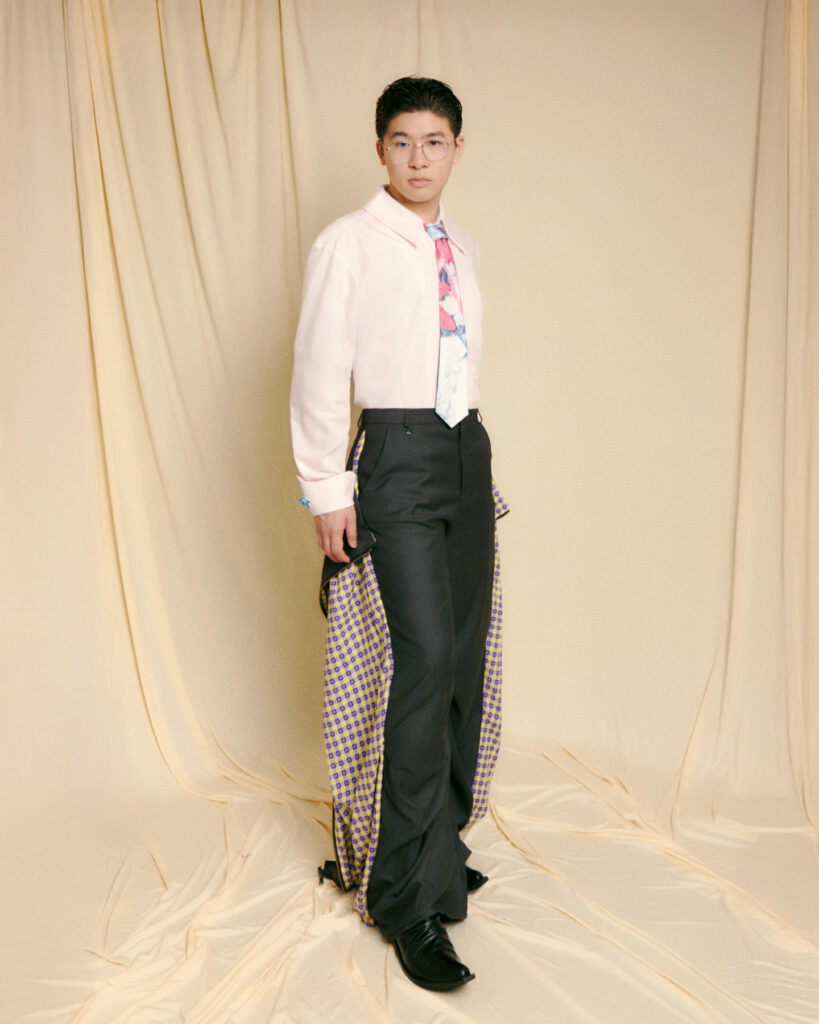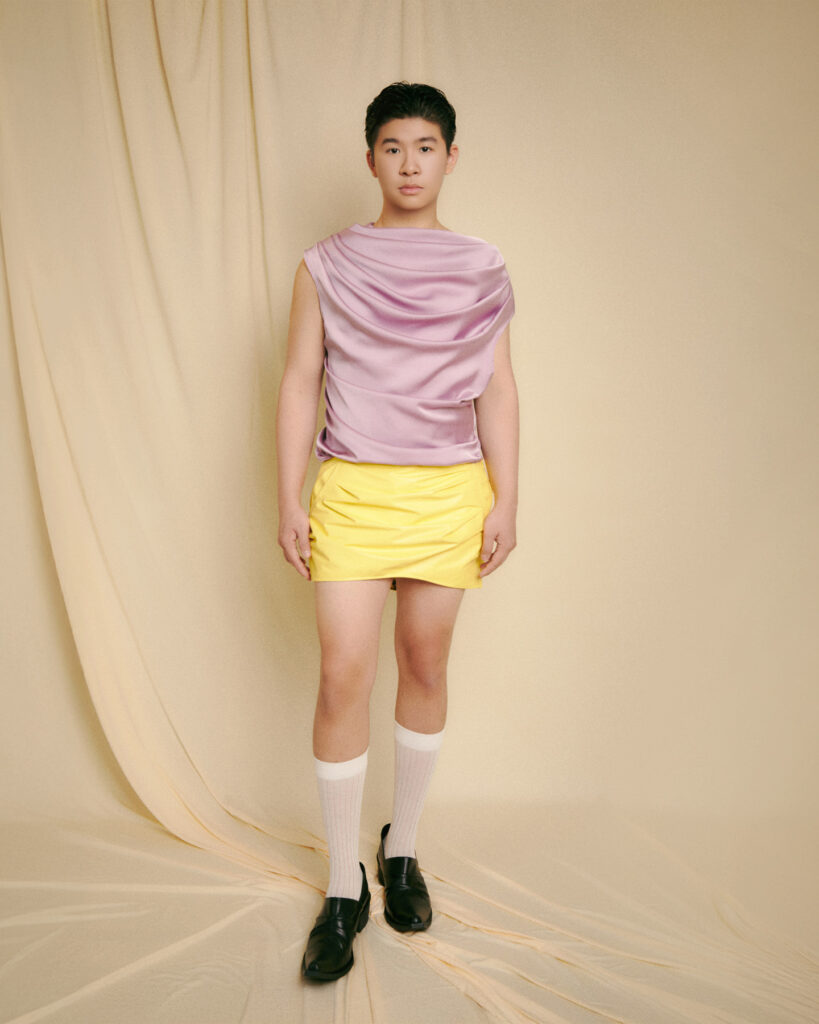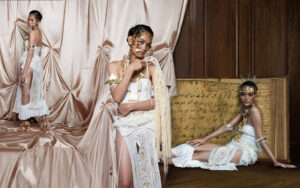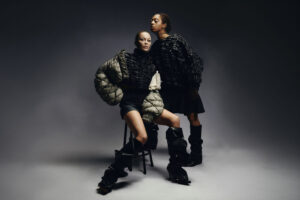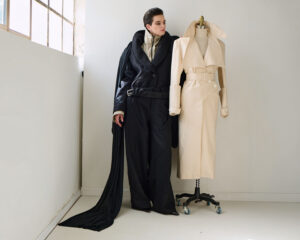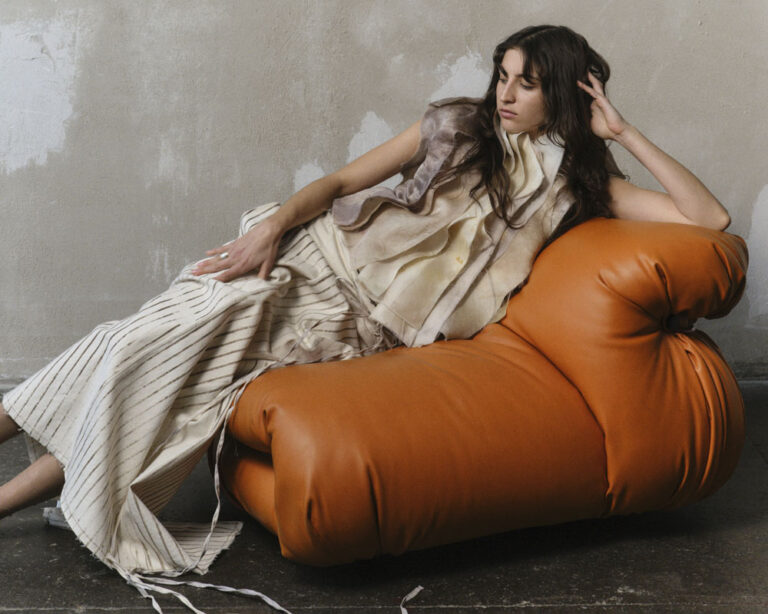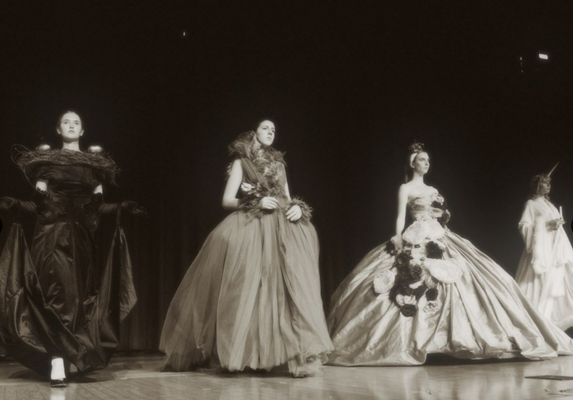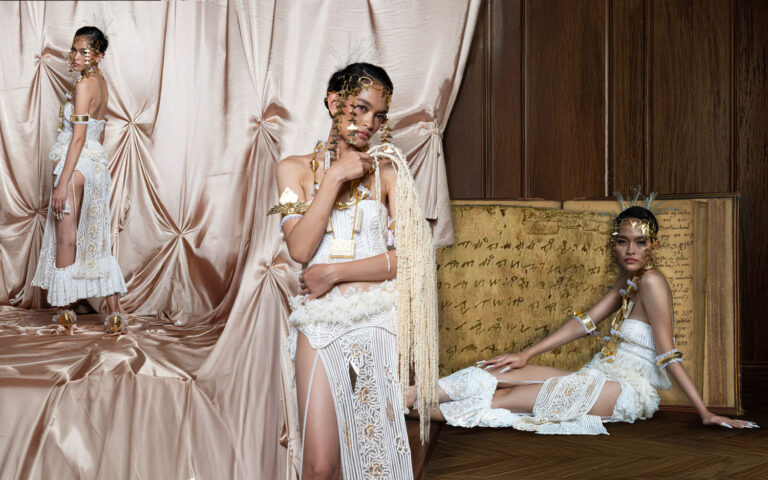
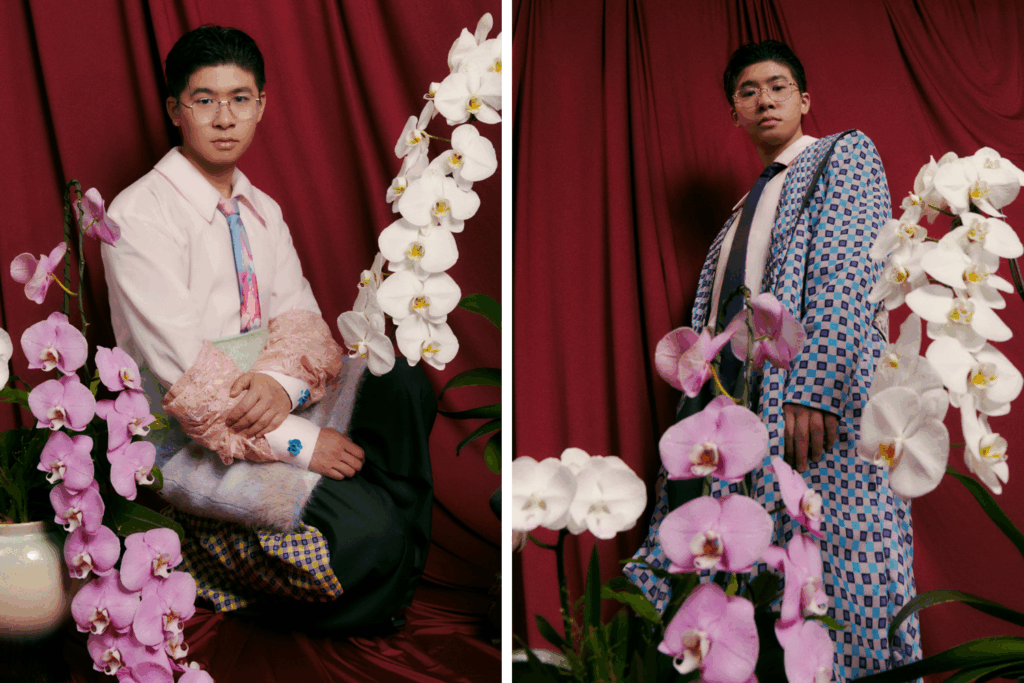

For London-based designer Ping Chen, the classic suit is more than a symbol of tradition. It’s a starting point for rethinking masculinity, and rebuilding it with care.
His graduate collection, Thing in Itself, grew from a personal question: Can masculinity come from tenderness, not control? Inspired by memories of his great-grandfather and grounded in cultural references, the project reshapes menswear to reflect emotion, adaptability, and softness.
“My earliest perception of masculinity was formed through images of my great-grandfather, always dressed in a Chinese tunic suit—disciplined, symmetrical, and precise,” Ping says. “But over time, that image was quietly disrupted by lived experience.”
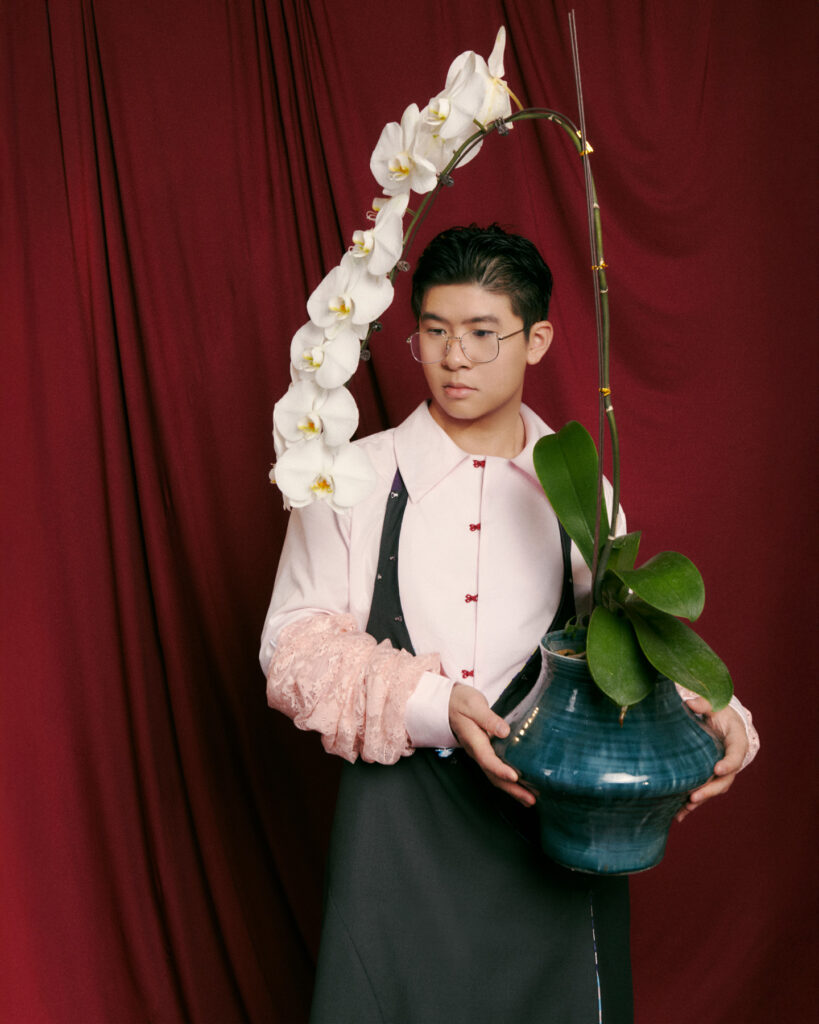
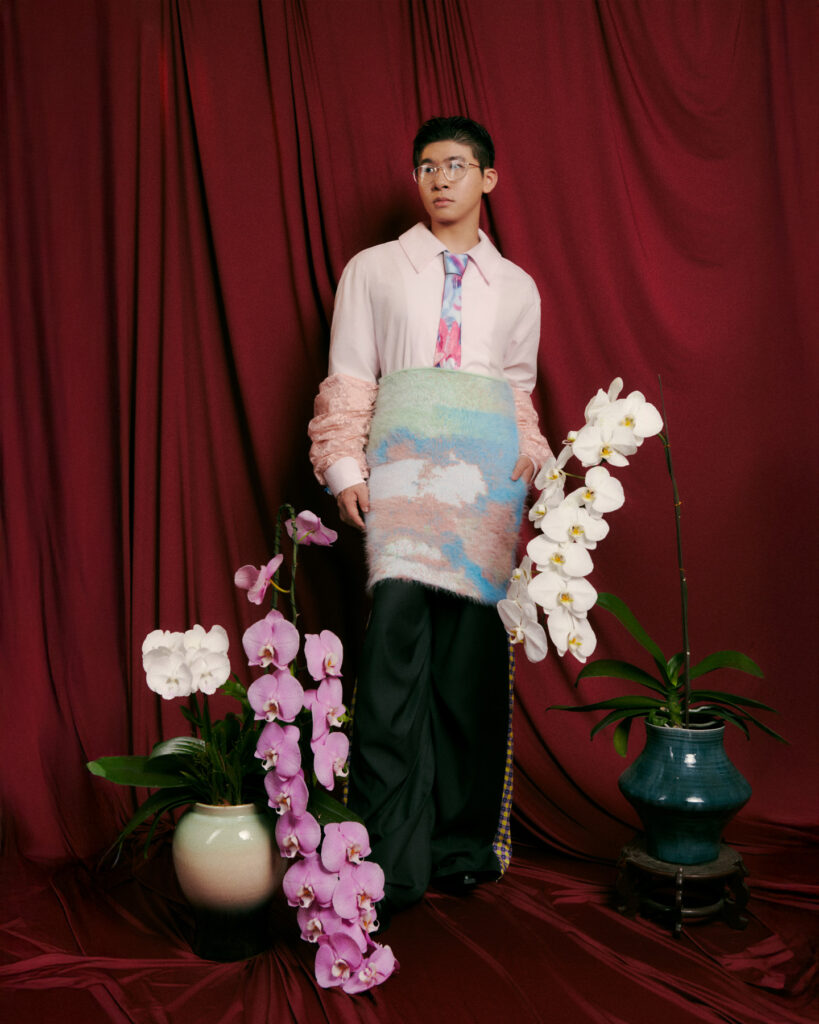
He recalls moments that told a different story: being carried in a sling, watching his great-grandfather do housework, and feeling held during family photos. Those quiet gestures became the blueprint for Thing in Itself, where care becomes structure.
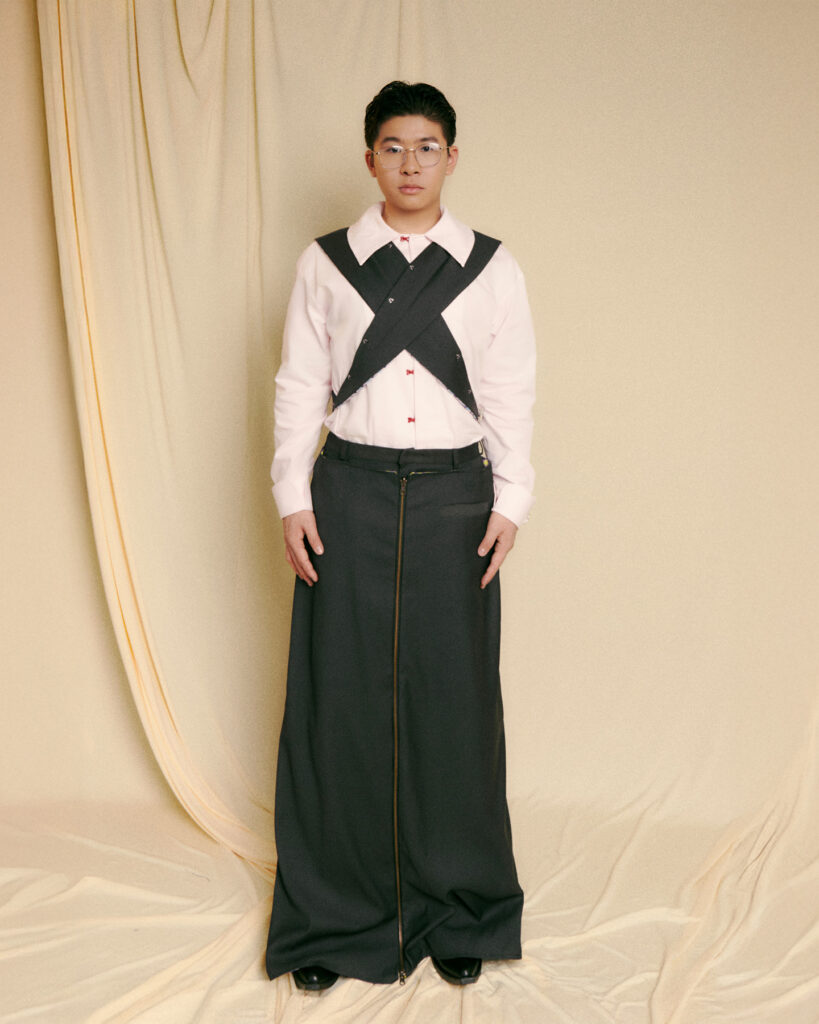
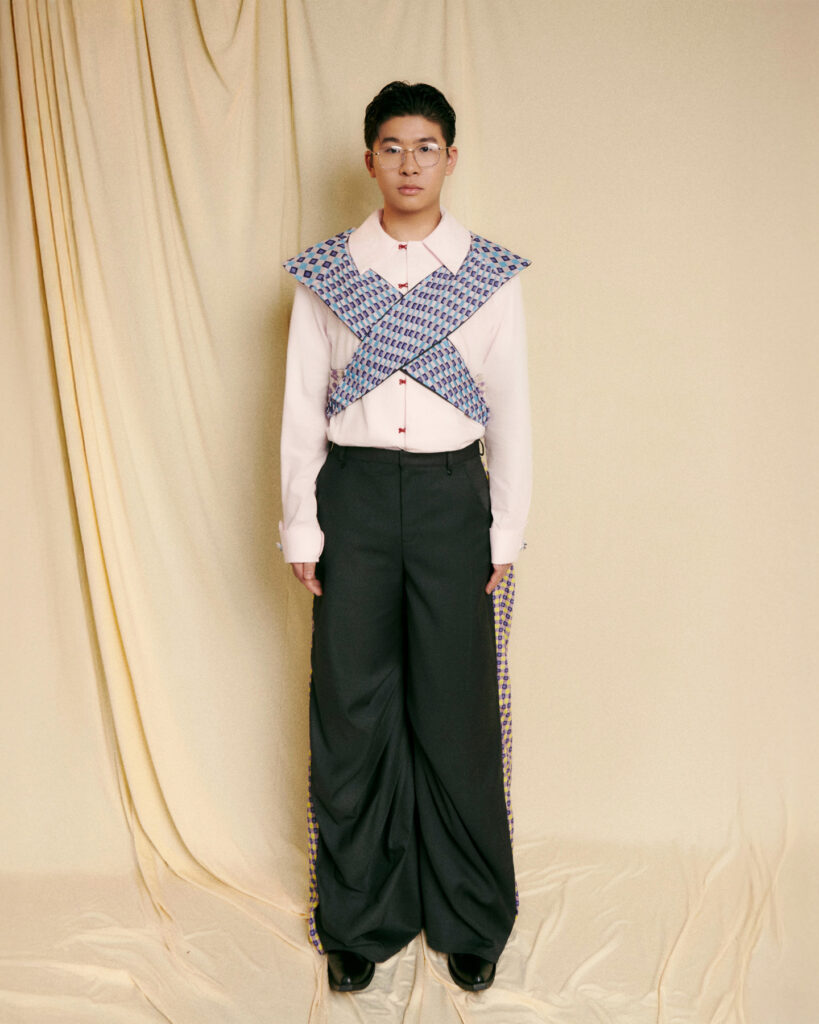
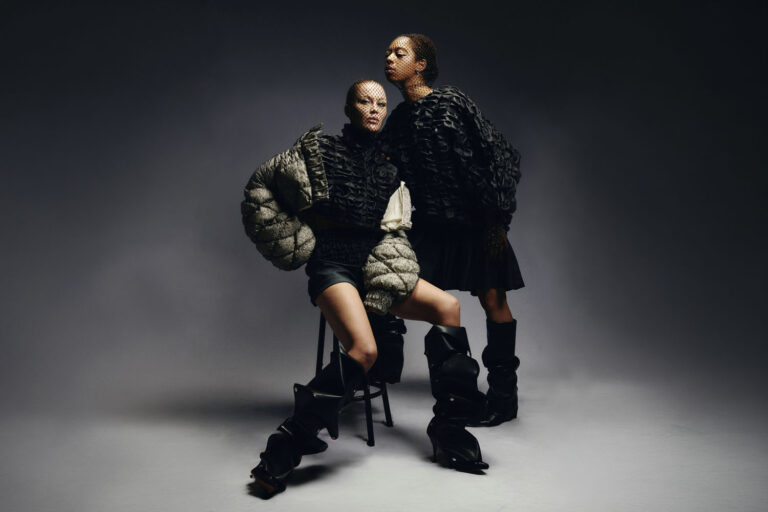
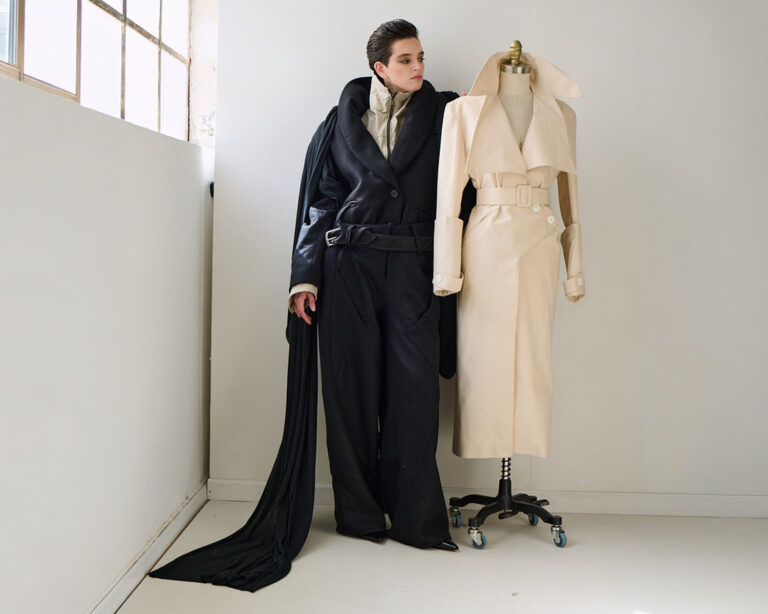
To bring this vision to life, Ping used the Reenactment Bodily Experiences Design Method. He translated memories like bending, lifting, and holding into garment features. Sleeves detach, trousers convert into a skirt, and a back panel mimics the support of a baby sling.
“Rather than dismantling traditional masculinity, I sought to expand it,” he explains. “Thing in Itself constructs a hybrid system—part armour, part embrace—through which a ‘caring masculinity’ is not only represented but spatially and physically built into the garment.”
Symbolic and functional elements work together throughout the collection. Aprons, engageante-style sleeves, and bra hooks aren’t just added details, they serve real structural purposes.
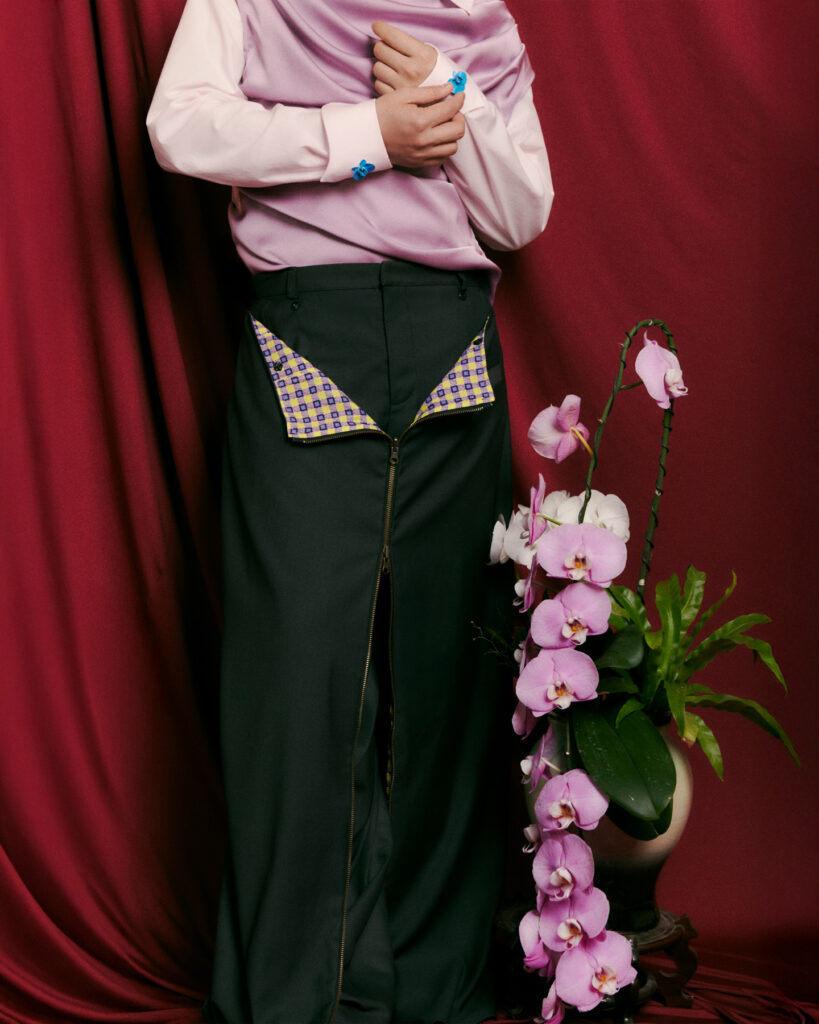
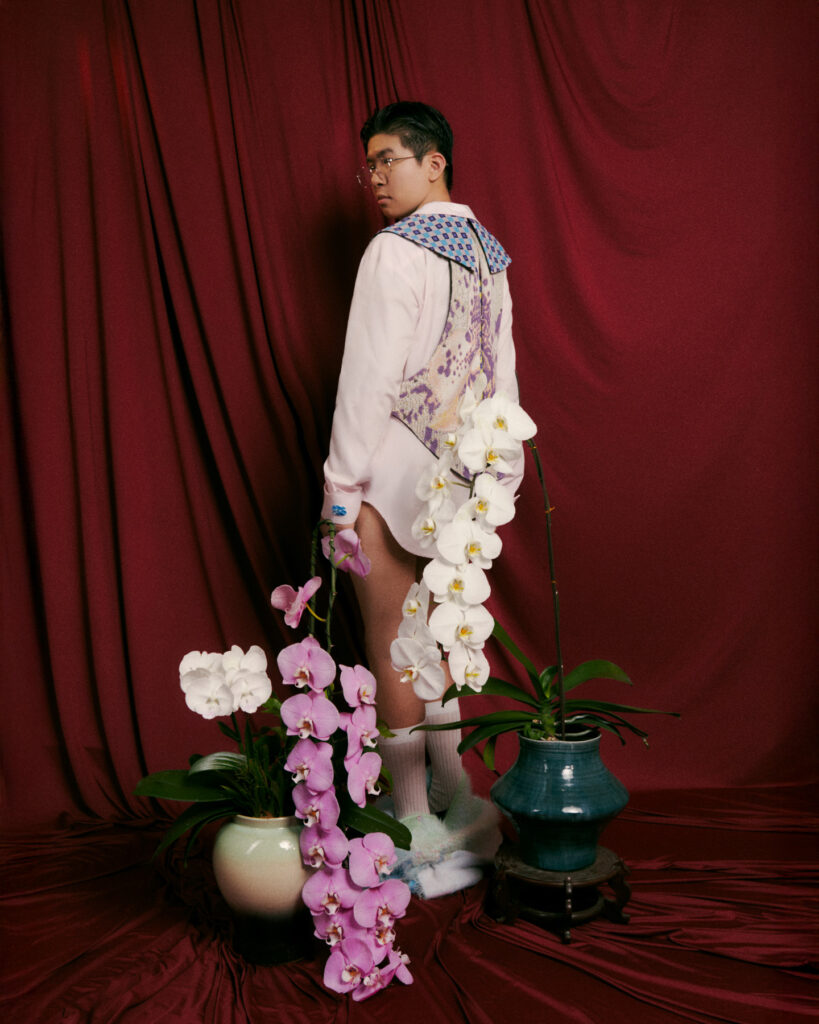
“I reassign [the bra hook’s] function and meaning by repositioning it on the visible exterior of tailored garments,” he says. “It now serves as a modular connector… while simultaneously questioning which materials or fastenings are appropriate for which bodies.”
This kind of thoughtful design challenges traditional gender rules. Instead of flipping masculine and feminine codes, Ping aims to dissolve them.
“To meaningfully question gender norms, I had to go beyond symbol-swapping,” he reflects. “Now I think less about flipping codes, and more about dissolving them.”
Each garment invites interaction. The wearer helps shape how the piece looks, moves, and feels.
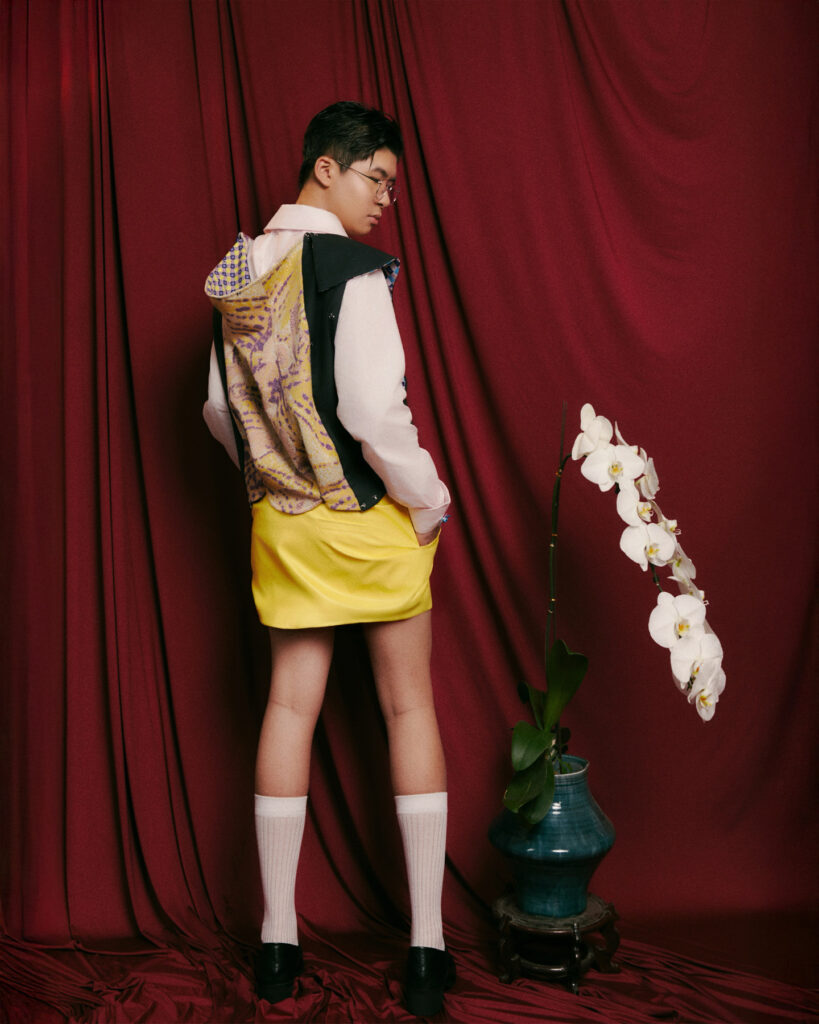
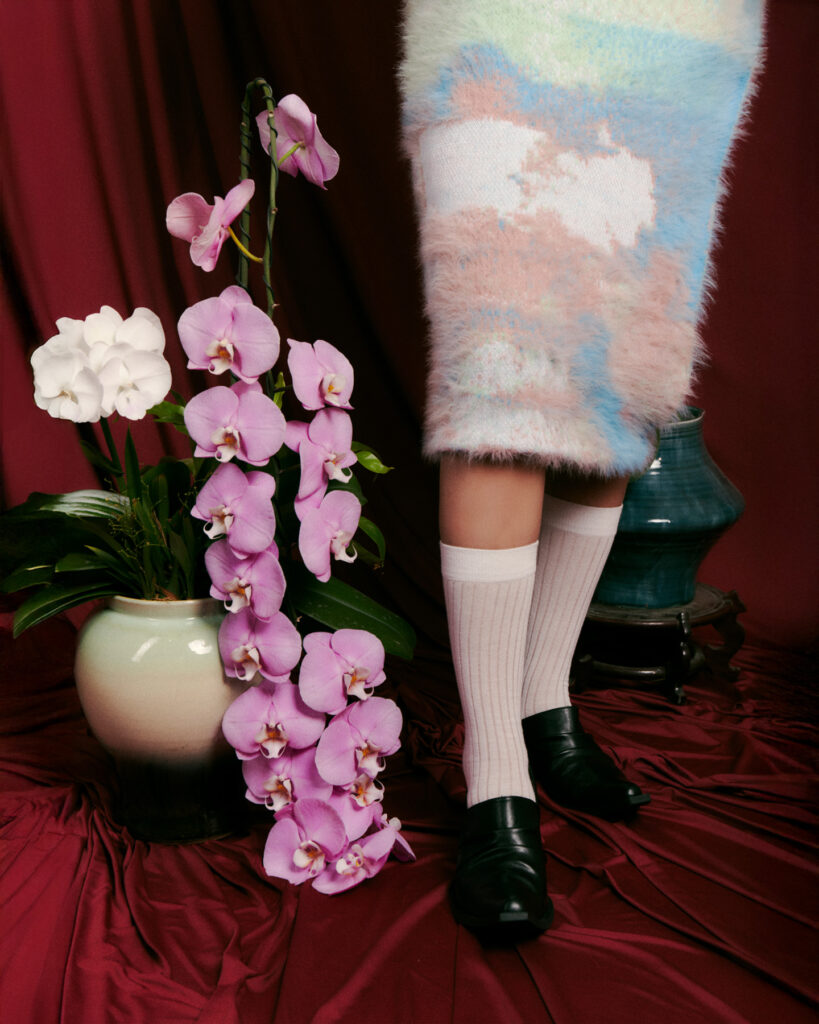
“These garments don’t aim to flip gender codes, but to dissolve them,” he adds. “I want someone to look at a piece and think: ‘I could wear this—not because of what I am, but because it resonates with how I feel.’”
Building Thing in Itself wasn’t easy. Ping hand-sewed over 300 bra hooks and revised patterns constantly to make sure the garments worked on the body. Every change, though, made the design more personal and adaptable.
“Garments carry weight: emotional, cultural, and structural,” he says. “By embedding caregiving gestures into a tailored design, I could articulate a form of masculinity that is neither oppositional nor binary, but layered, responsive, and relational.”
If given the choice, Ping wouldn’t place the collection in a gallery or on a runway. He’d put it on Savile Row, the home of traditional British tailoring.
“Not as an act of rebellion,” he says, “but as a form of critical intimacy… I’m not seeking to reject tailoring’s tradition, but to ask what else it might carry—emotionally, culturally, and structurally.”
In Thing in Itself, masculinity doesn’t need to dominate to feel strong. It can shift, soften, and respond. It can care. And that, Ping believes, is strength too.