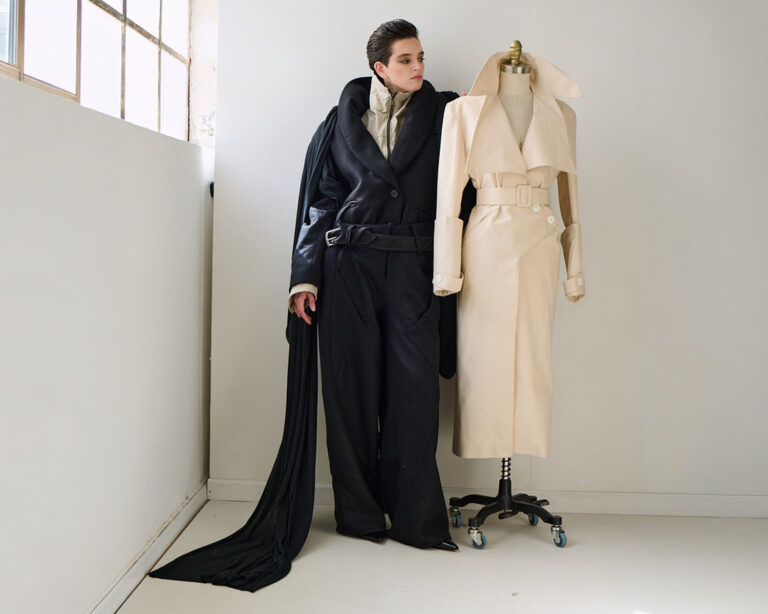
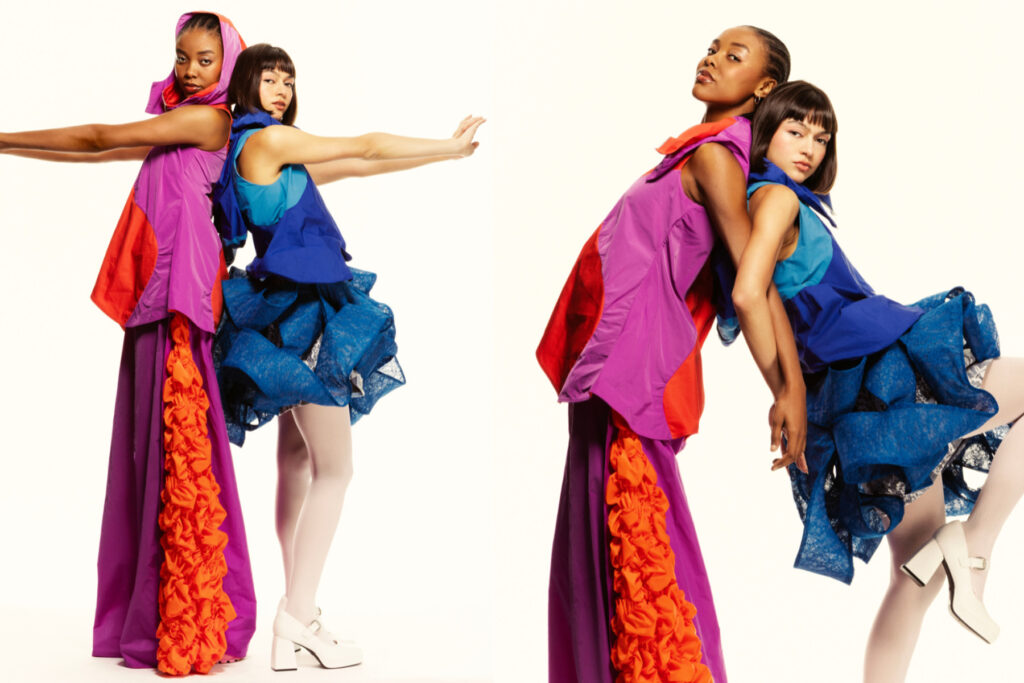

Sustainable Indonesian fashion designer Karina Nasywa Bakri brings memory, culture, and innovation together in her thesis collection at Parsons School of Design. Rooted in her Jakarta upbringing and family history, yet shaped by her current life in New York, her work blends deadstock fabrics, traditional Indonesian garments, and vibrant colors into a story of identity and sustainability.
“I wouldn’t be where I am now without my father,” she says. “He passed away 15 years ago. I made this collection for him. This is our collection.”

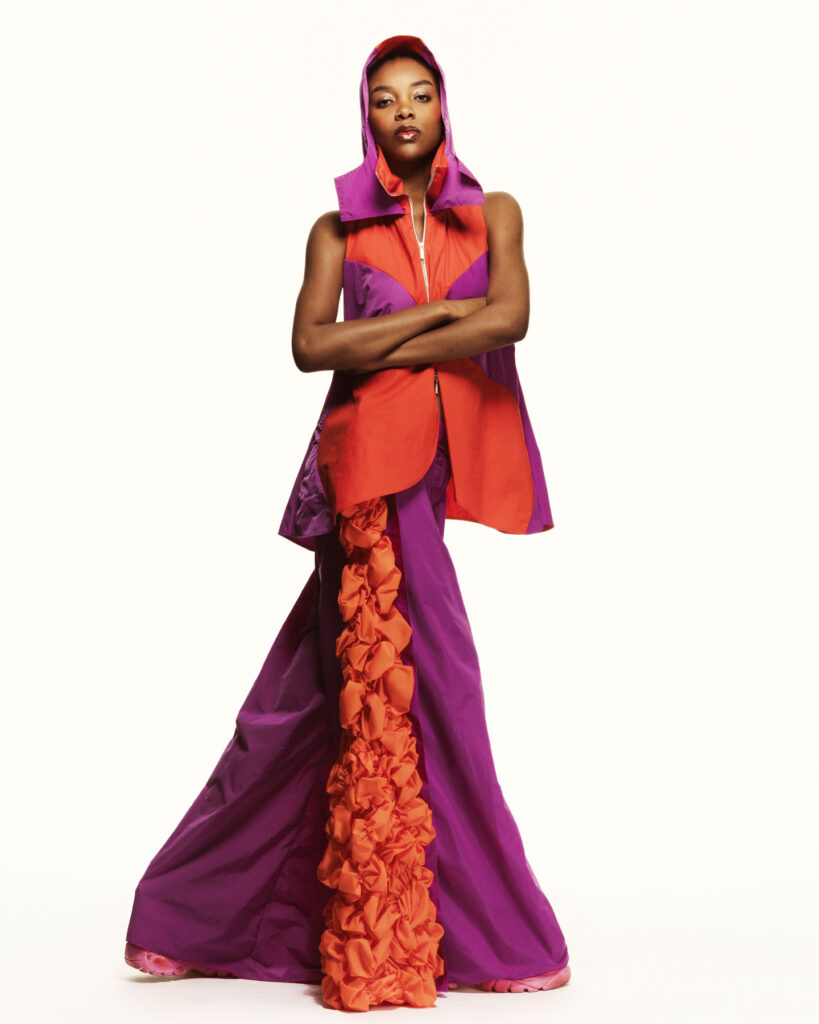
Her earliest creative memories are of drawing with her father, an architect. Unlike the rigid precision expected of his profession, his sketches were wobbly and imperfect. “He said as long as you clearly communicate that it’s still a line, it does not have to be perfect. That resonated with me strongly.” That idea of “controlled chaos” still guides her work, bringing whimsy and movement into silhouettes that might otherwise feel strict.
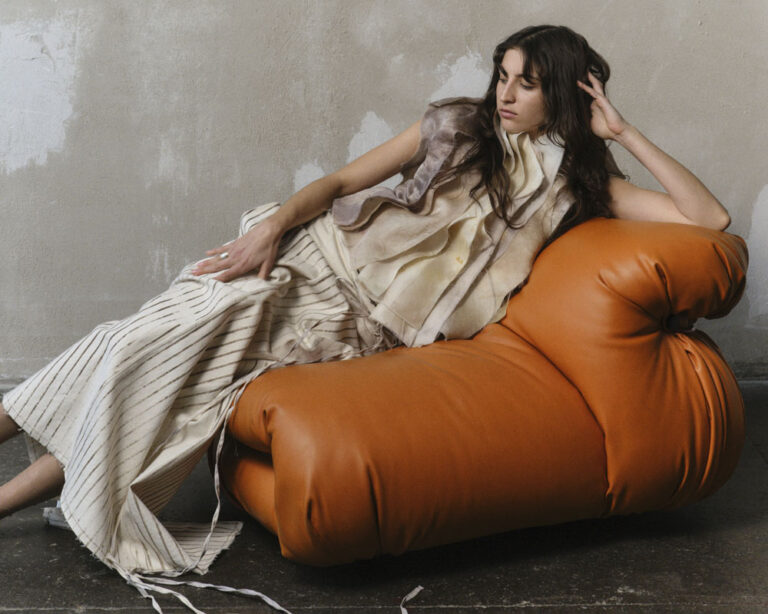
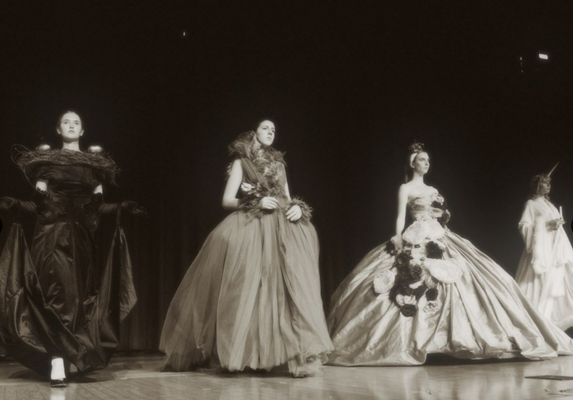
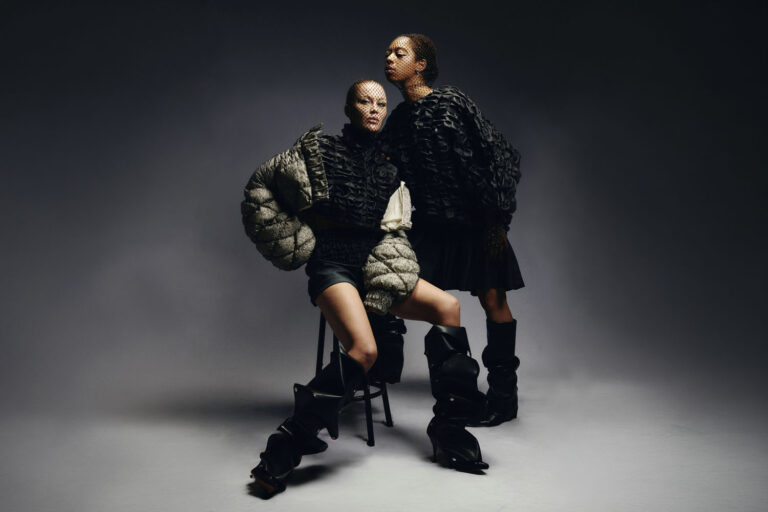
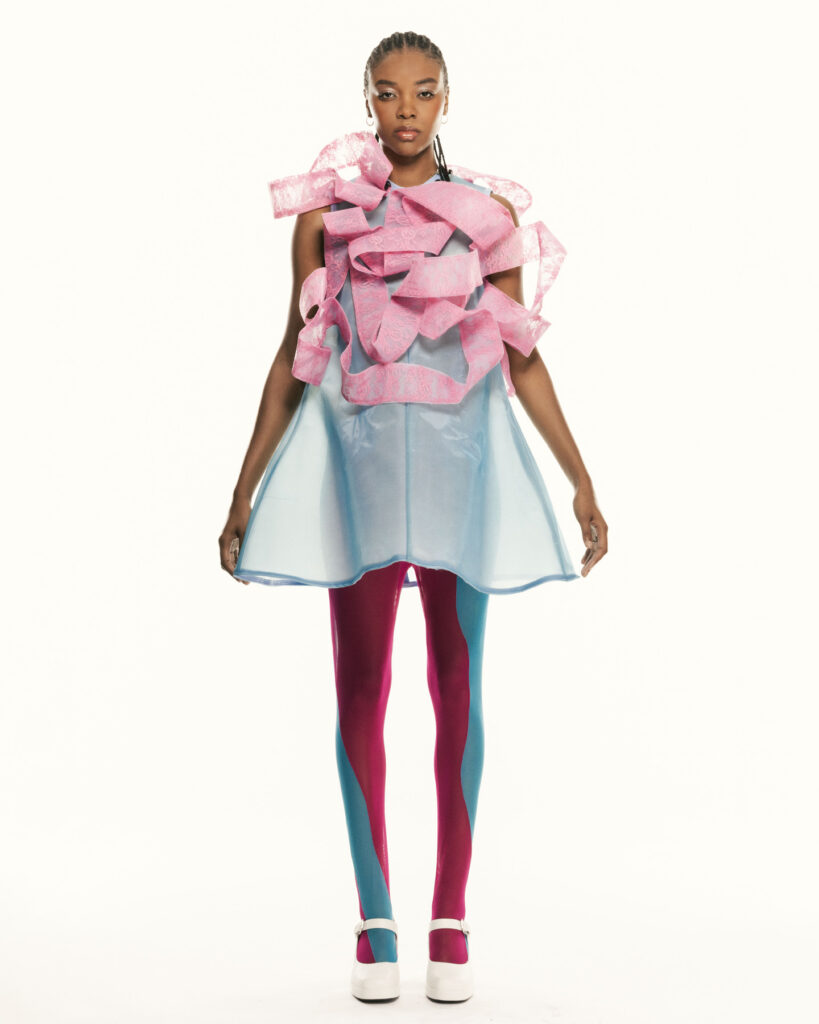
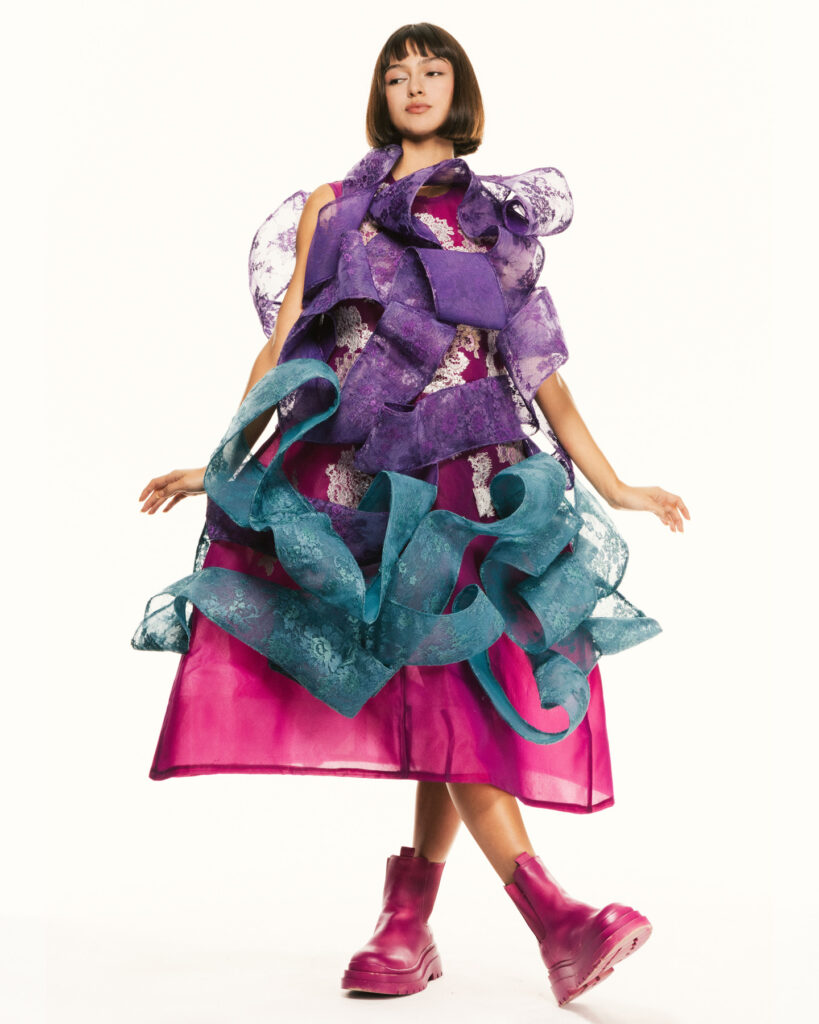
The collection, her MFA thesis, is deeply tied to family history and Indonesian heritage. She reimagines the kebaya, a traditional garment, by exaggerating its delicate lace into sculptural forms. Religious headwear from her family’s wedding photographs becomes floating lace hats. Even her father’s dream of mountaineering and her childhood dream of being a pop star appear in the garments. Hiking details mix with the bright hues of early 2000s Indonesian pop magazines.


Color plays a vital role in her storytelling. “I’d like to think of Indonesian culture being very vibrant… my family alone came from five different ethnic groups. Colors are always around us in garments, textiles, food, art. It’s exciting to me.” What might feel chaotic to some is, for Karina, a natural palette of memory and belonging.
Sustainability has also become central to her design identity. During the lockdown in Jakarta, while finishing her undergraduate thesis, she began working with deadstock fabrics donated by friends in the garment industry. “I resonated with the idea of making use of what people are so close to discarding and manipulating it to become something of another value.” That practice followed her to New York, where she sources from places like FabScrap and Material for the Arts. For this collection, she crafted 75% of the garments with reclaimed outdoor-gear fabrics, thanks to Takihyo Co.’s support.

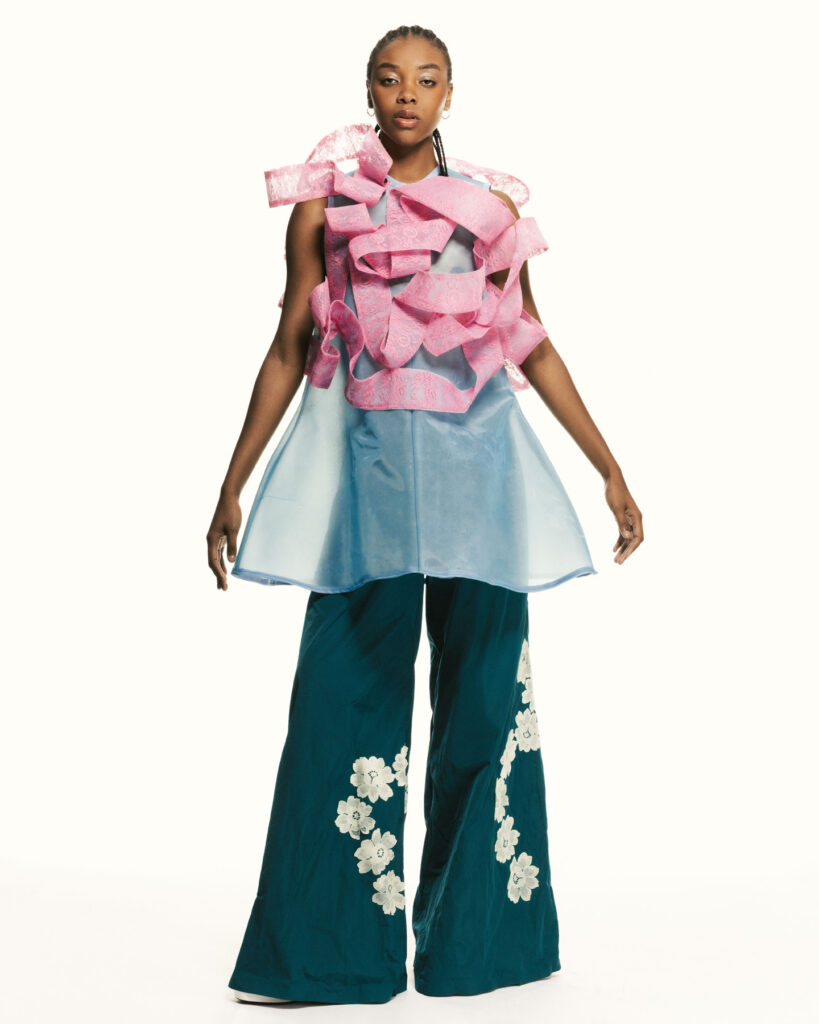
Living in New York while rooted in Jakarta sharpened her sense of identity. “I became more fearless in referencing my experiences and memories,” she explains. “After undergrad, I had moments where I thought I should just blend in with whatever mainstream media is directing fashion. But I came here to rediscover my identity and represent where I came from.”
The result is a body of work that blends intimacy and universality, memory and innovation, tradition and reinvention. Each garment is a vessel of story, a way of keeping her father close, of celebrating her culture, and of showing sustainability as a personal commitment rather than a trend.
Though this is her thesis collection, it feels like a beginning. As Karina looks ahead, she hopes to keep weaving memory, sustainability, and Indonesian identity into her work. “It’s always a fun challenge… each collection feels both rooted and ever-evolving.”
To see more of her work, visit her instagram here.