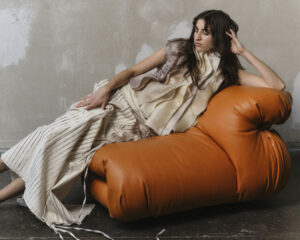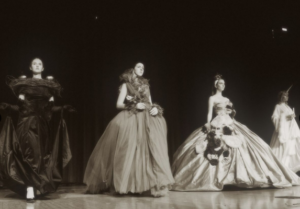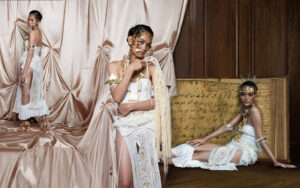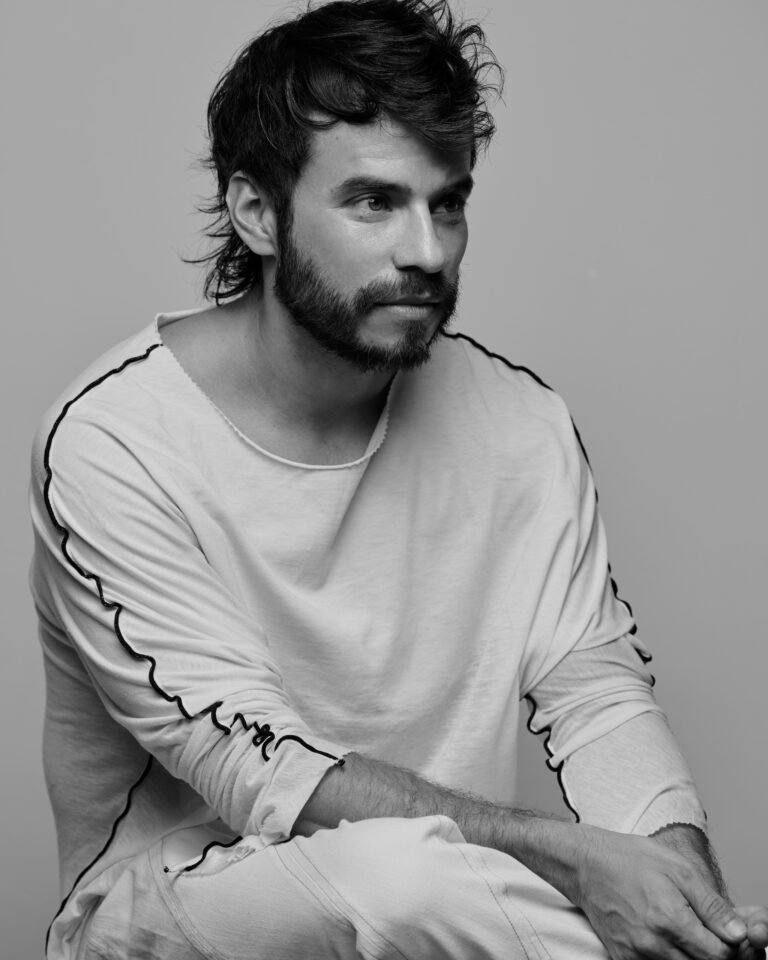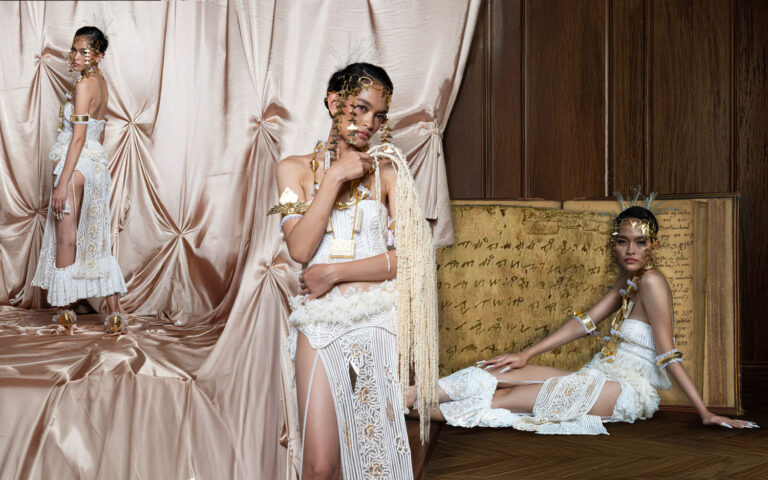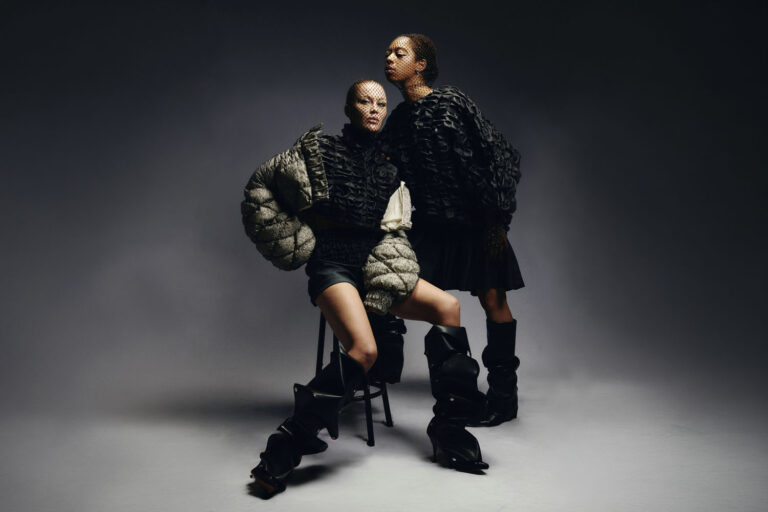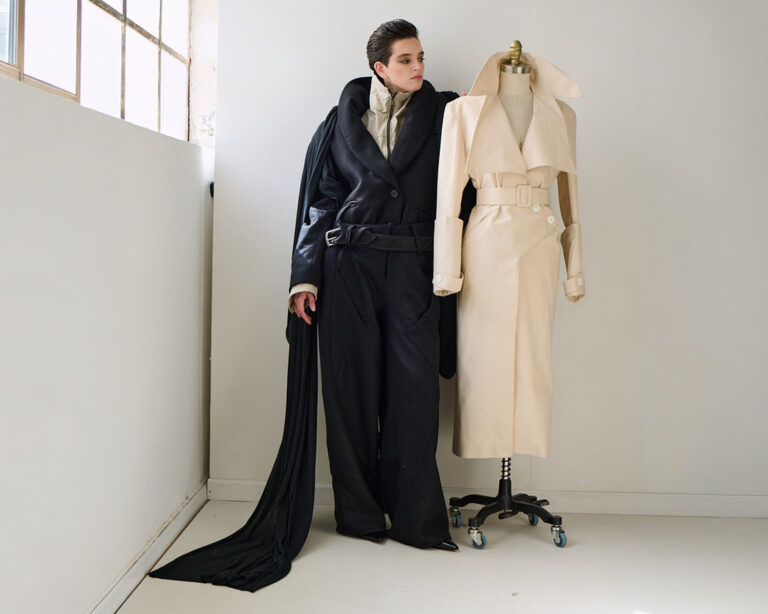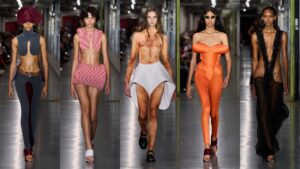
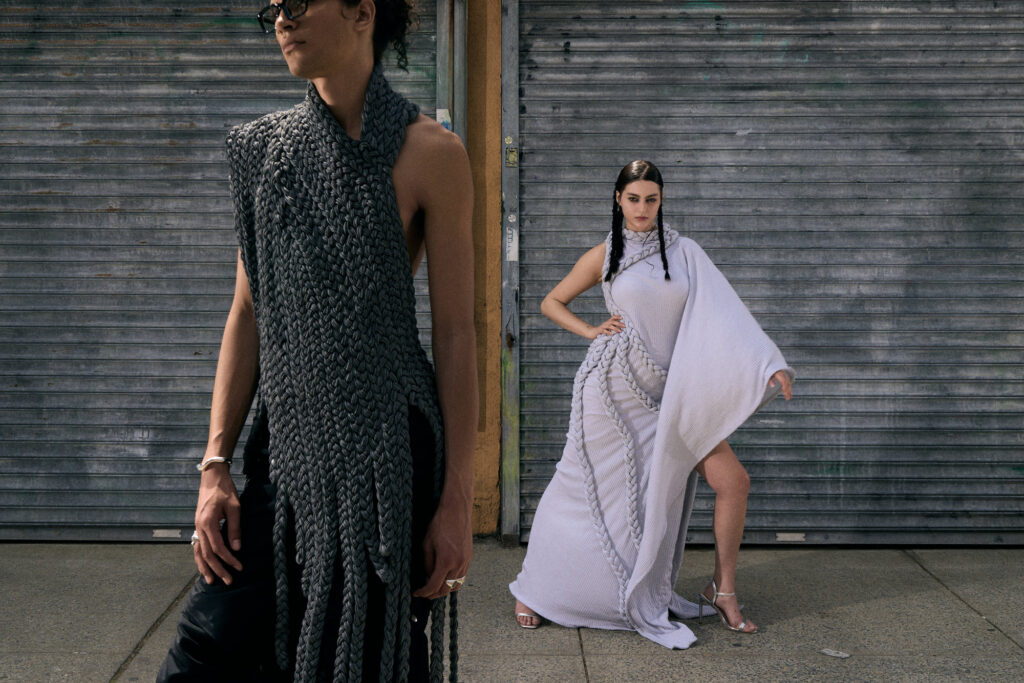

When Evelina Epp talks about Destiny Lock, her MFA thesis collection at the Fashion Institute of Technology, she doesn’t describe it as just clothing. It’s a way of making sense of heartbreak, chance encounters, and the idea that there’s really no such thing as “bad timing.”
Born in Kazakhstan to a family rooted in business, Evelina says she never imagined a creative career for herself. “I never saw a creative path as something real or attainable,” she reflects. “I was born in Kazakhstan, where success was defined by structure, security, and practicality. A career in fashion, or any creative field, felt distant, almost like it belonged to a different world.”
But during her second year studying business, the world she knew started to feel unstable. A close friendship that had grounded her began to quietly fade. At the same time, she was working through a breakup that, in hindsight, she knew was for the best, but still left her feeling like she had wasted time. “It left me feeling like I had wasted time, energy, and a part of myself on something that was never meant to last,” she says. “Emotionally, I reached a breaking point, and all I knew was that I needed a way out, something to break the cycle, even if it’s for just a moment.”
Without really planning to, she signed up for a short styling course in Milan. “It didn’t make logical sense, especially since I had never seen fashion or creativity as part of my future. But something pulled me toward it, almost instinctively.”
In Milan, Evelina met Gwen, a design student who “barely knew me but saw a potential I hadn’t yet recognized in myself. She not only encouraged me to explore design, she advocated for me relentlessly. She believed in me with a kind of clarity and confidence I had never felt directed toward me before. That moment stayed with me and it shifted something within me.”
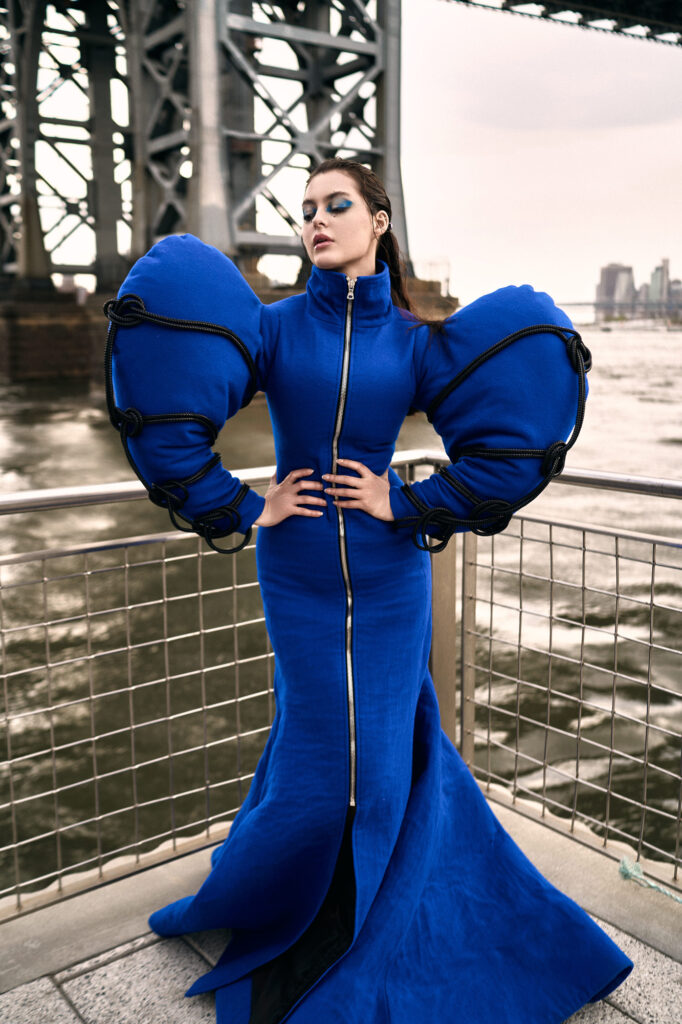
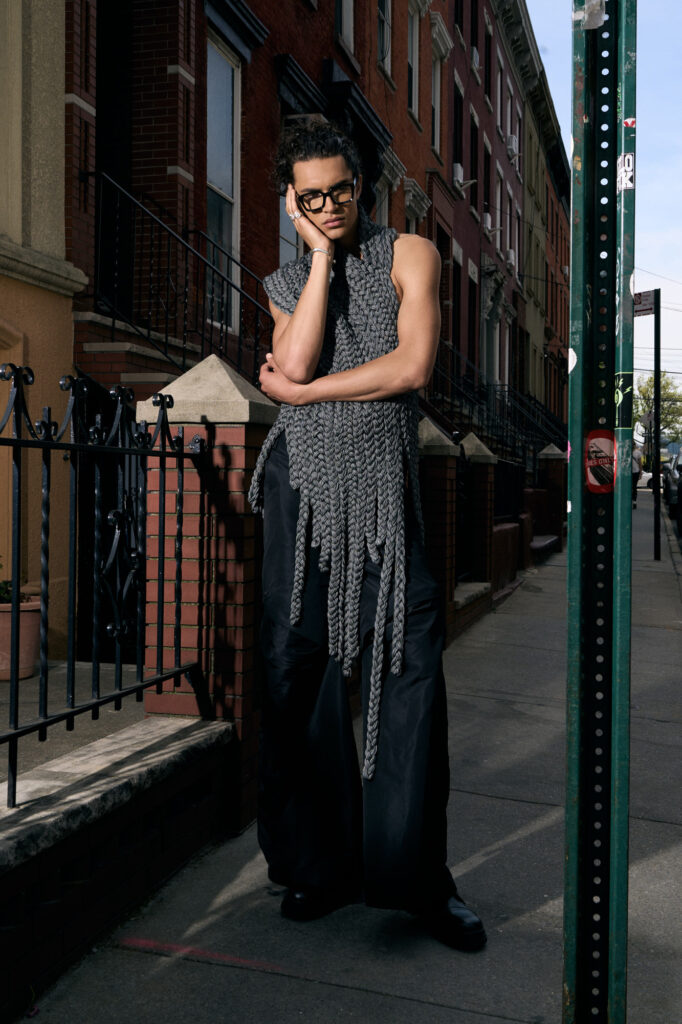
Over time, other people entered her life in a similar way: unexpected, yet perfectly timed. “More people entered my life like that, showing up at exactly the right moments, helping guide me in ways I only later understood,” she explains. “When I was accepted into the Master’s program at FIT in 2023, I immediately knew what my thesis would be: Destiny Lock. It became a way to make sense of it all, the heartbreaks, the chance encounters, the moments that felt meaningless at the time but turned out to be pivotal.”
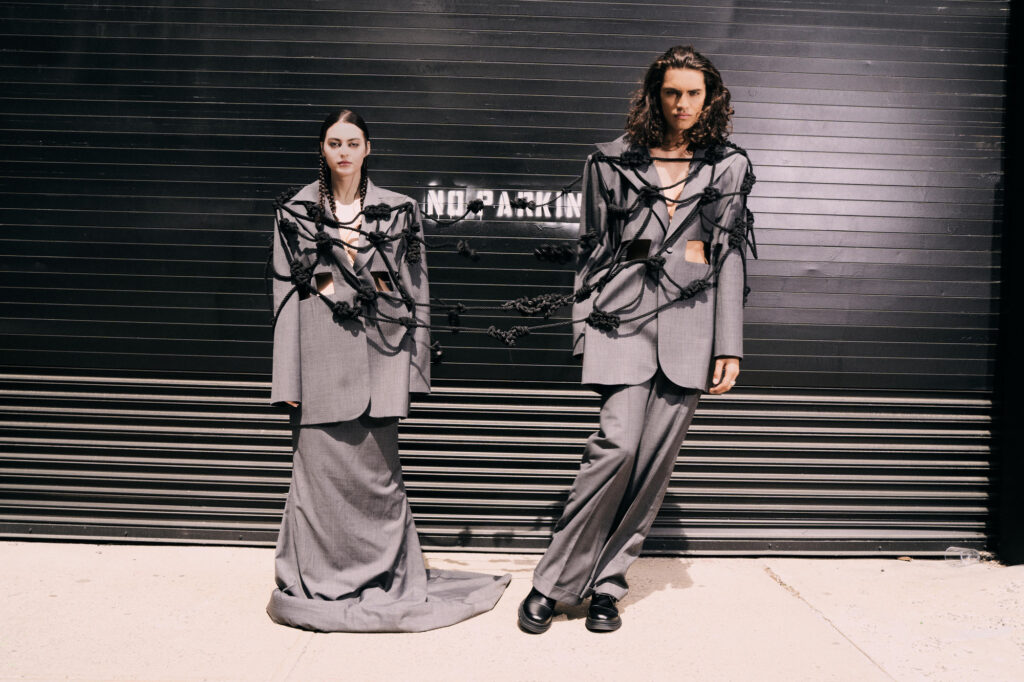
The collection’s symbolic details, braiding, knotting, shibari, echo the invisible connections we carry. Evelina’s exploration of knots didn’t begin with shibari but evolved from experimenting with different crafts, including needle felting and rattan weaving. The turning point came when she came across Marina Abramović and Ulay’s 1977 performance Relation in Time. “Their story struck me: how they had the same birthday, were both artists, and had this intense, almost destined bond,” she says. The image of their hair entangled inspired her to experiment with knots as a visual metaphor for powerful but fragile connections.
“Marina and Ulay could choose to untangle their hair and go separate ways, or they could choose to sit by each other’s side with their hair tangled,” Evelina explains. That duality of fate and choice became central to Destiny Lock.
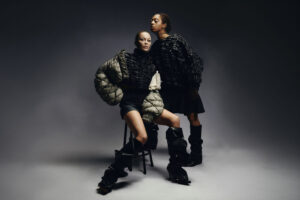
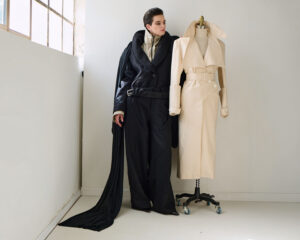
This symbolism appears most clearly in the collection’s opening and closing looks: two blazers connected by knotted cords embedded with magnets. “A major part of my concept revolves around the idea of meeting the right person at the right place at the right time,” she says. “While I do believe in fate, I also believe in choice. The knots represent the bond between them, while hidden magnets within the knots offer a choice: if both people continue walking in sync, the connection remains intact. But if one stays behind while the other moves forward, the knots separate naturally and unevenly, symbolizing the memories and the baggage each one walks away with.”
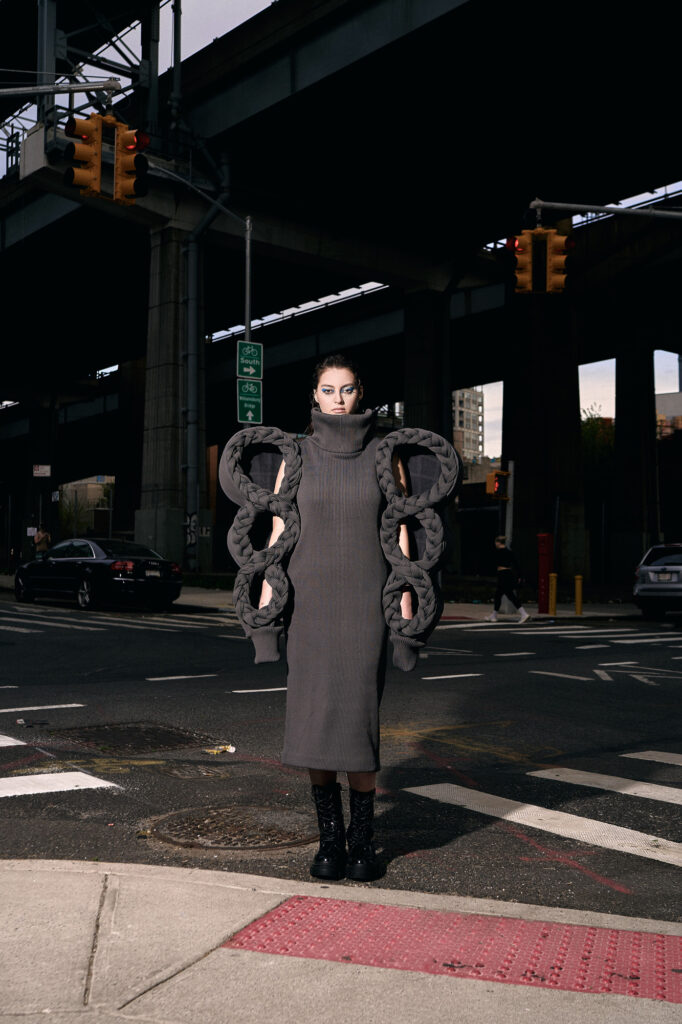
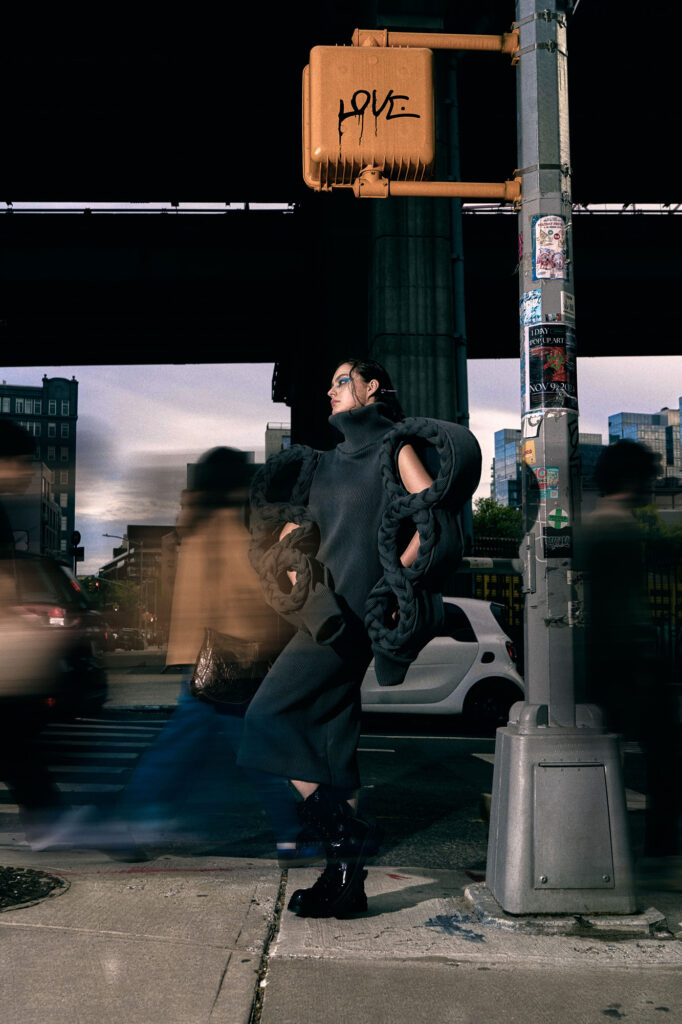
Growing up across five countries and attending eight schools shaped how Evelina thinks about connection, closeness, and distance. “This constant movement became a defining part of my life, engraving the understanding that everything is temporary: connections, places, people, and even feelings,” she says. “Some connections were so powerful that resisting them was impossible. So, I would fully immerse myself, taking in every moment while it lasted.”
This sense of closeness and distance plays out through the space around the body in her garments. “The physical space around the body is much more than an aesthetic choice, it is a deeply emotional dialogue about human connection,” she says. “Sometimes, I create garments with volume or structural elements that surround the wearer like a protective barrier. At the same time, I also design pieces that trace the natural contours of the body, embracing vulnerability and openness.”
At FIT, the process of refining this balance became more intentional. “Having the chance to engage in hands-on, real-time adjustments and conversations with the models gave me crucial insight into how the body responds to different garments. Talking with them about how they felt in the clothes, where it was comfortable or needed more support, was essential in understanding the relationship between design and body.”
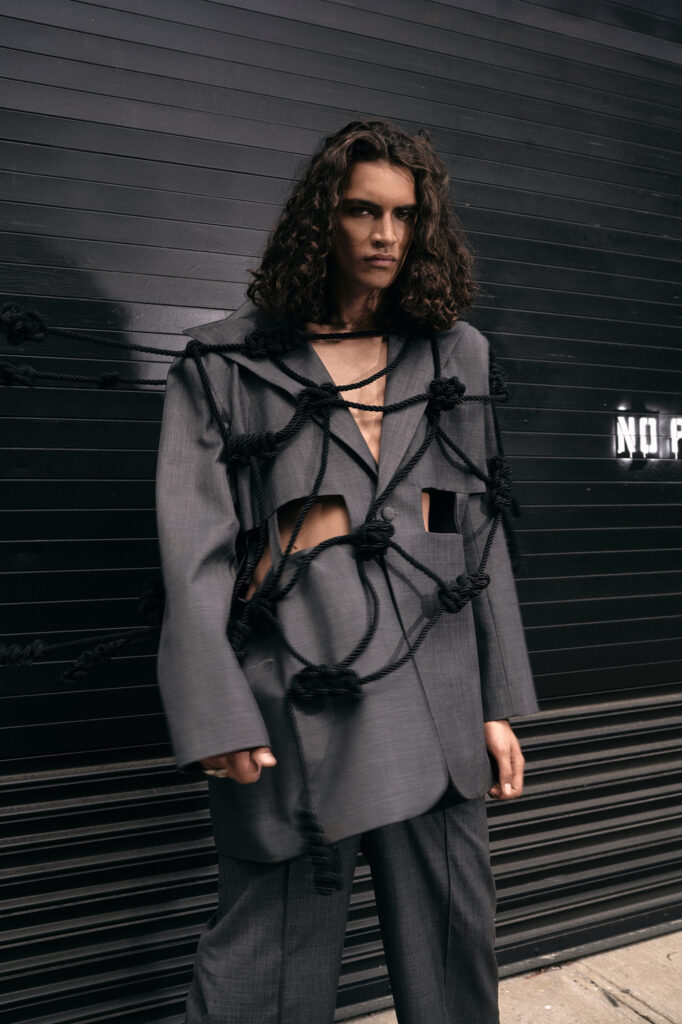
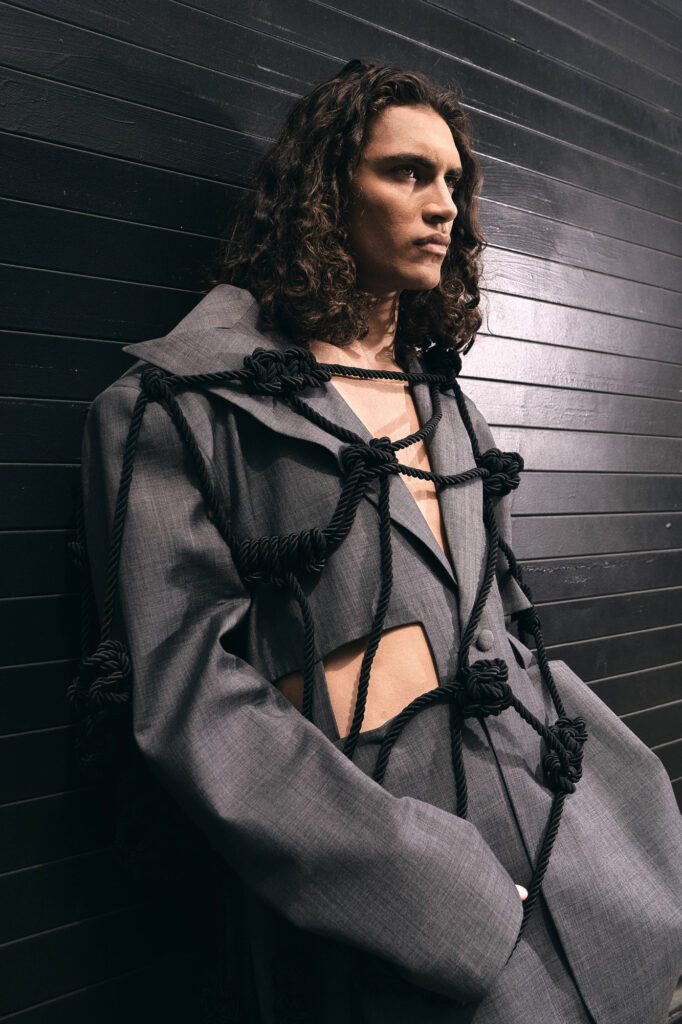
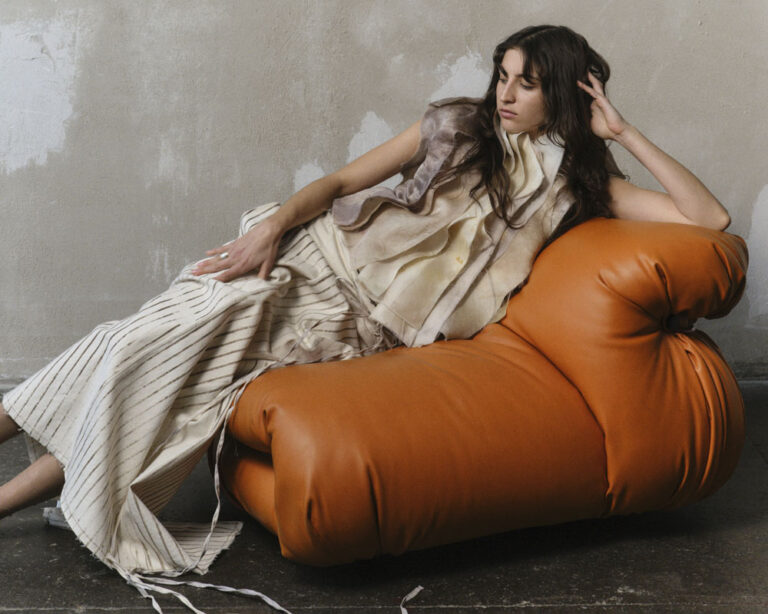
Even her choice of materials carries layered meaning. Evelina gravitates toward natural fibers because of what she’s learned about their energetic properties. “Natural materials have always held a special significance for me, they’re not just a preference but a fundamental part of how I approach design and self-care,” she explains. “During my master’s, I came across research about the energetic frequencies of different materials. Synthetic fabrics can disturb our natural balance, while natural fibers like wool and linen are believed to enhance energy and emotional stability. It reinforced why natural materials are so important, they truly support the wearer’s well-being at a deeper level.”
Asked what she hopes people feel when they see or wear her work, Evelina says, “I hope it sparks a moment of reflection. To feel gratitude for the people who’ve shaped them, the love they’ve known or lost, and for the quiet resilience they’ve built within themselves.”
In her own words: “Connections are complex and layered, shaped by both fate and choice. There’s a raw beauty in that truth: that our deepest connections can be meaningful and intense but still temporary. The meaning behind them often only makes sense years later when we look back and see how each one shaped who we are today.”