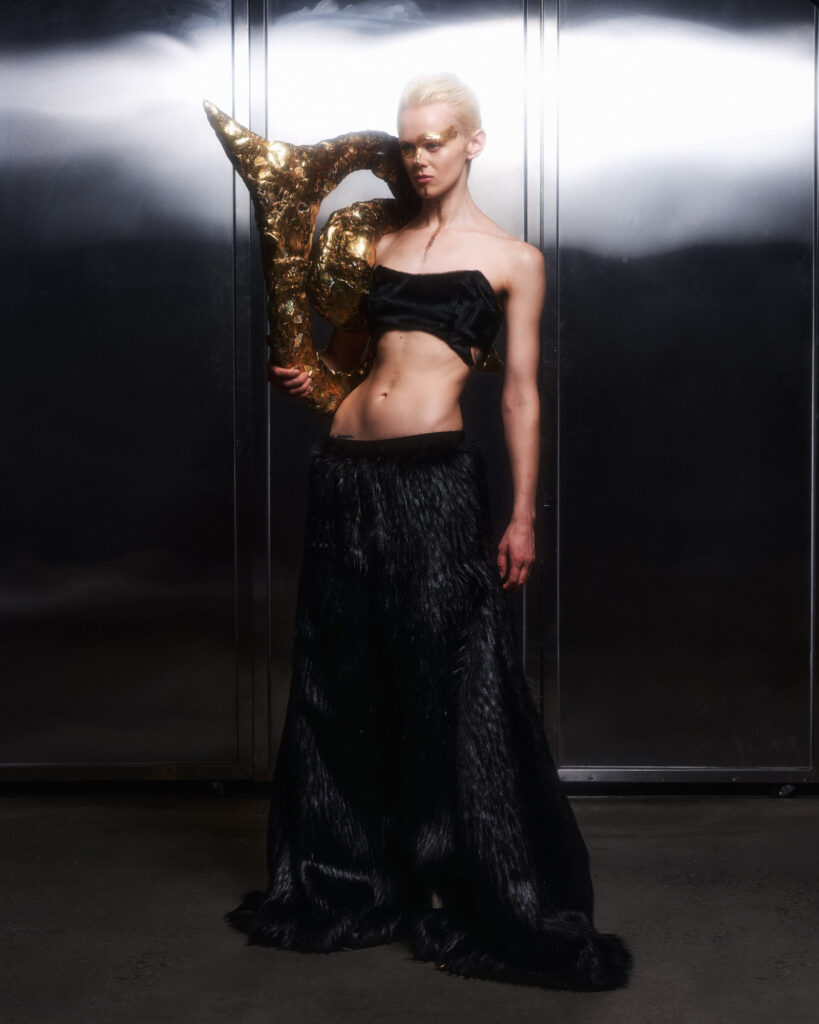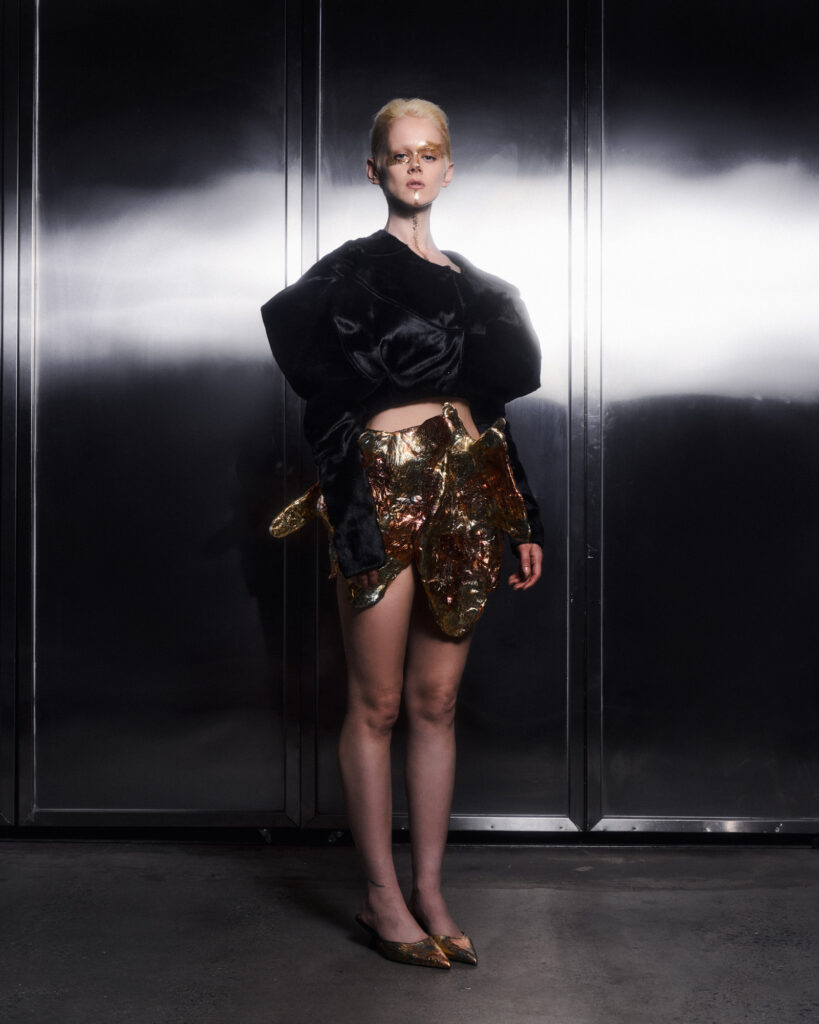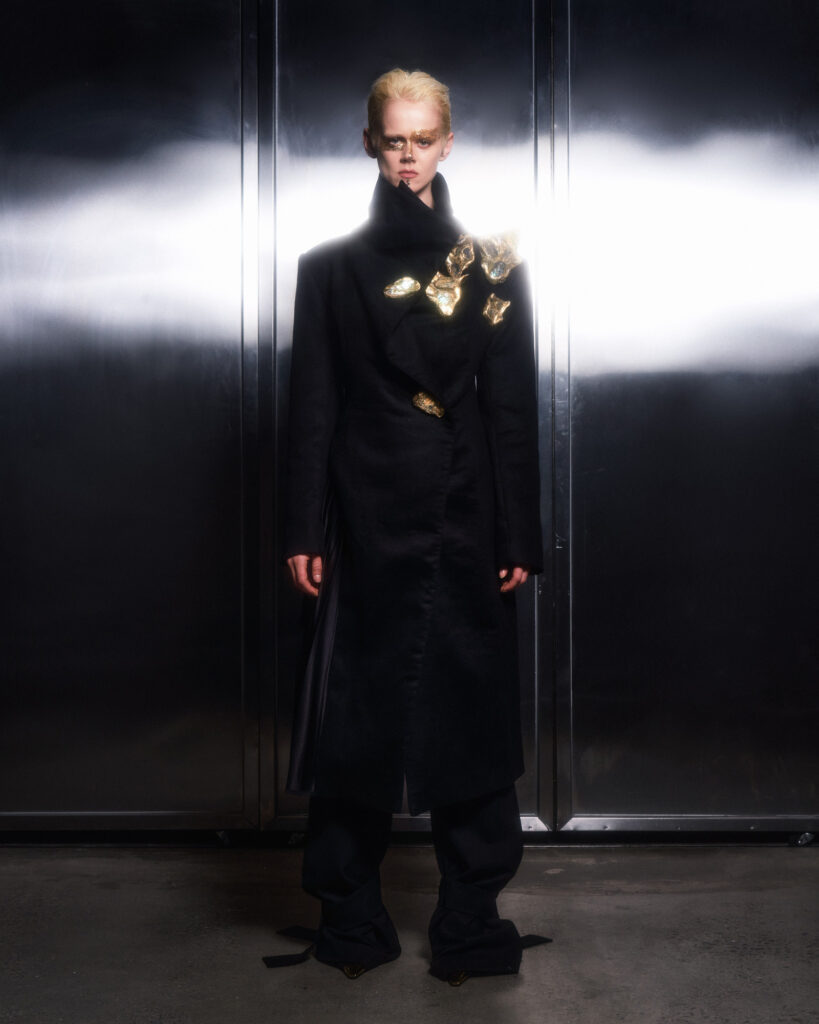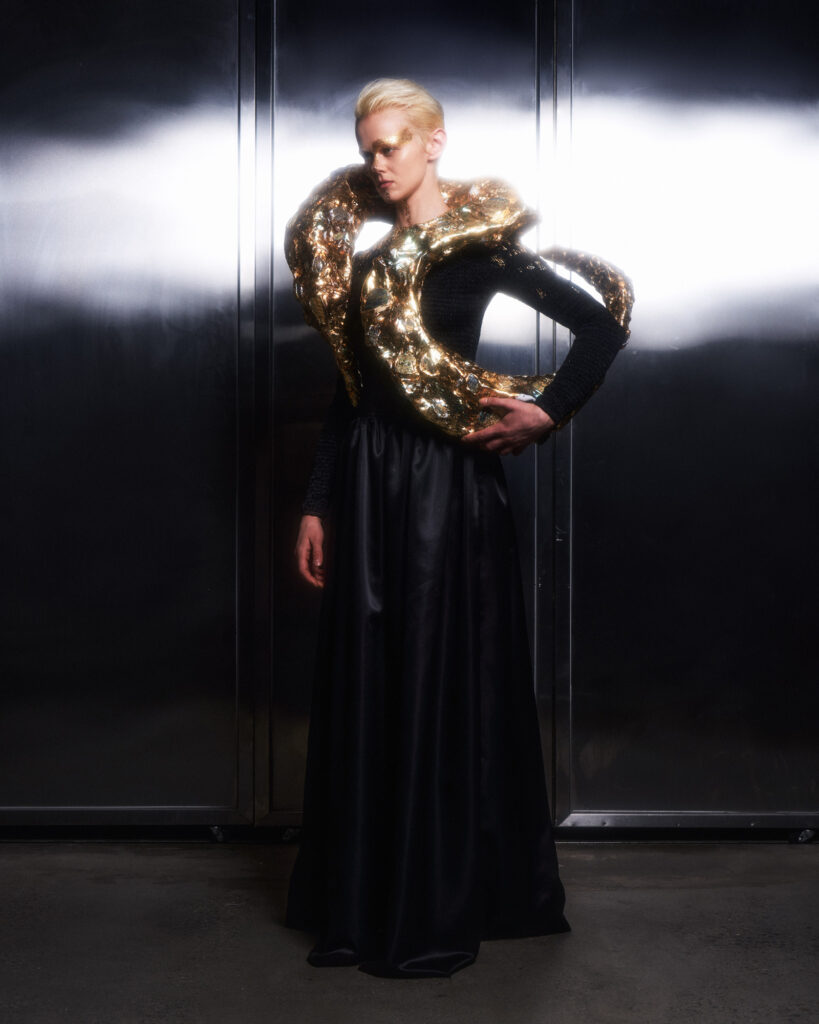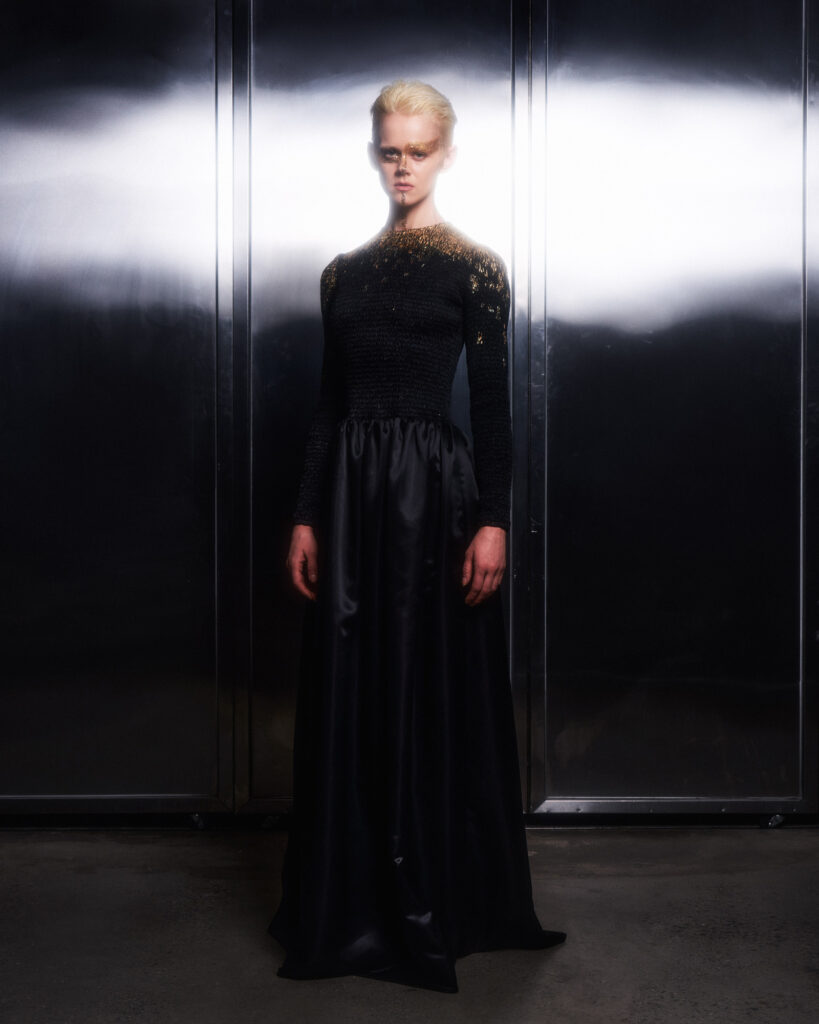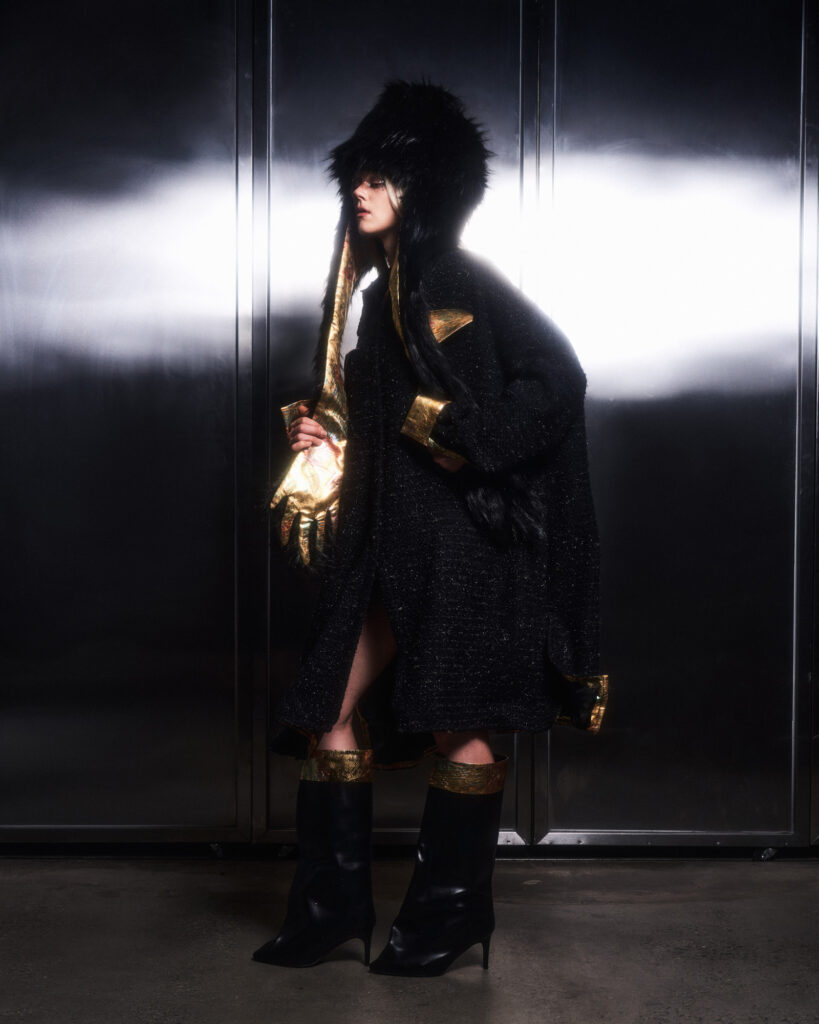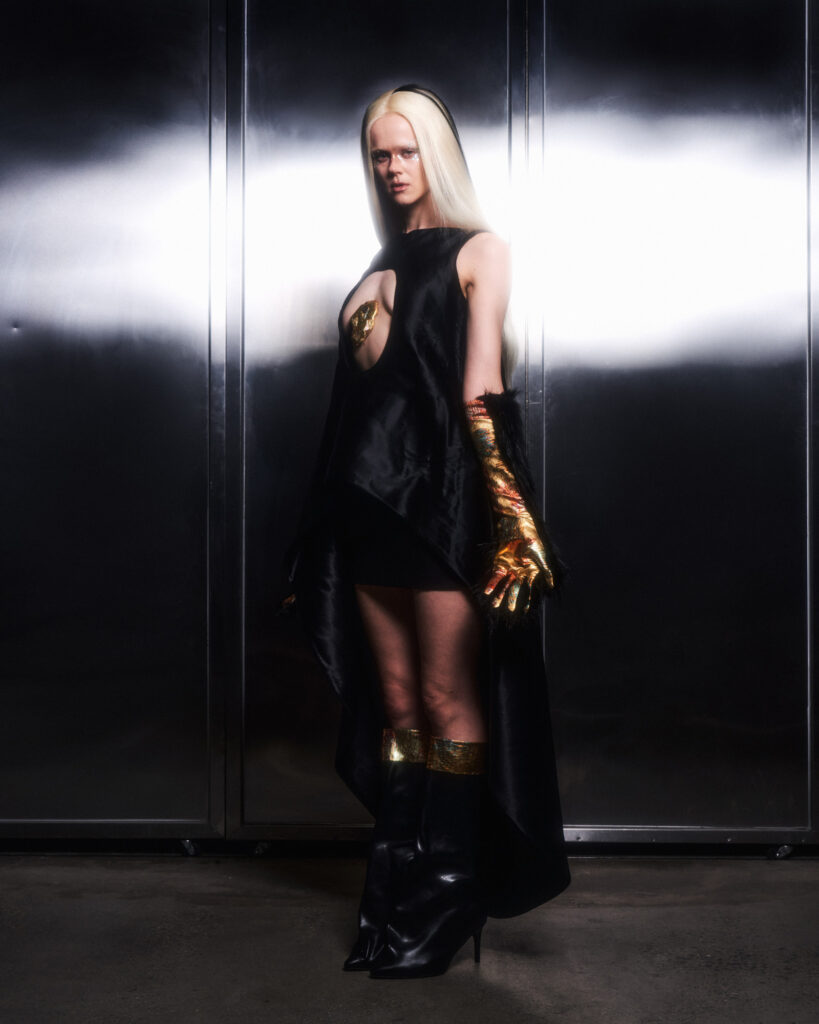

At the Fashion Institute of Technology (FIT), emerging designer Dian Jin has unveiled a graduate collection titled Pale Blue Dot. This is an exploration of cosmic wonder, environmental fragility, and wearable sculpture. Inspired by NASA’s photograph taken at the request of astronomer Carl Sagan in 1990, the image shows Earth as a tiny pixel floating in a sunbeam. It evoked in Jin a profound awareness of humanity’s smallness and our planet’s vulnerability. This emotional starting point evolved into a complex design narrative encompassing primal beginnings, technological residue, and a hopeful vision for a united, conscious civilization.
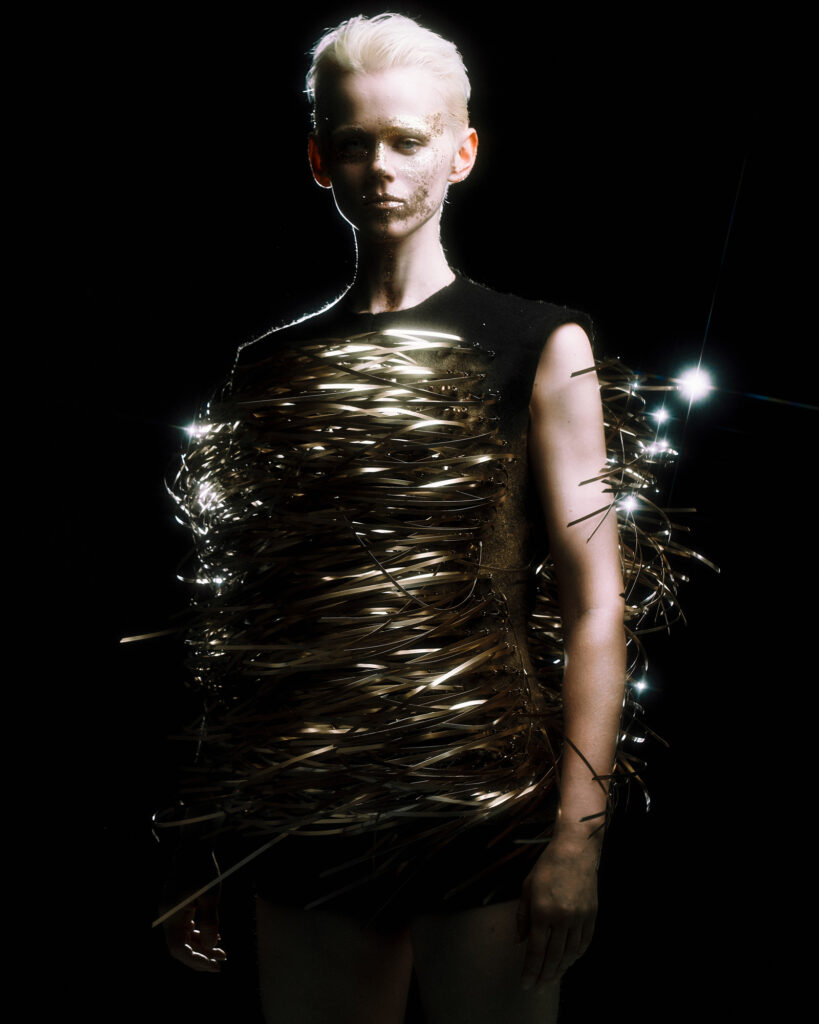
Jin’s collection imagines fashion not as static adornment but as a medium of interconnection and reflection. Drawing initial visual references from Stanley Kubrick’s 2001: A Space Odyssey, she began by exploring human evolution and its visual symbols, incorporating fur-like textures to signify primal roots. This led to the creation of her own “fur-knotting” technique, where mohair fibers are grouped, cut, and manually knotted into a knit base. The result simulates animal fur from afar, yet on closer inspection reveals intentional craftsmanship and textile innovation. The same hand-intensive approach was expanded to metallic materials in a vest designed to look like flowing metal strands. Despite its rigidity, the piece echoes the intimate, repetitive process of her earlier knotted textures, forming a dialogue between softness and hardness, primitive and futuristic.
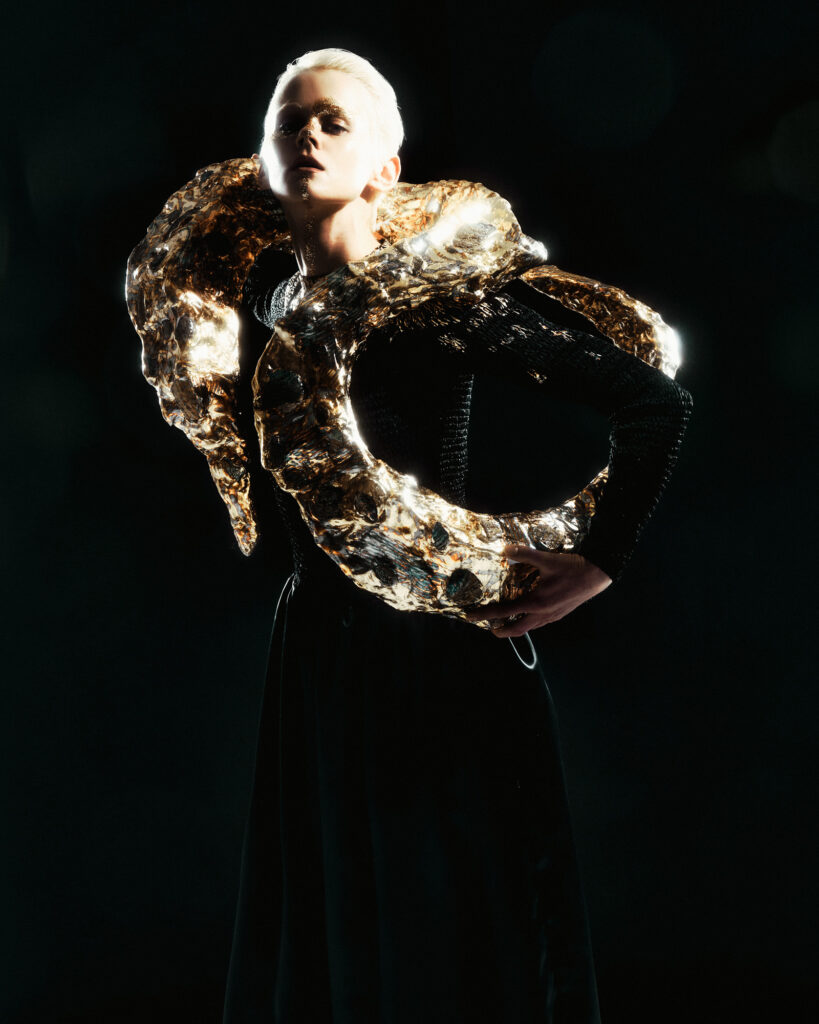
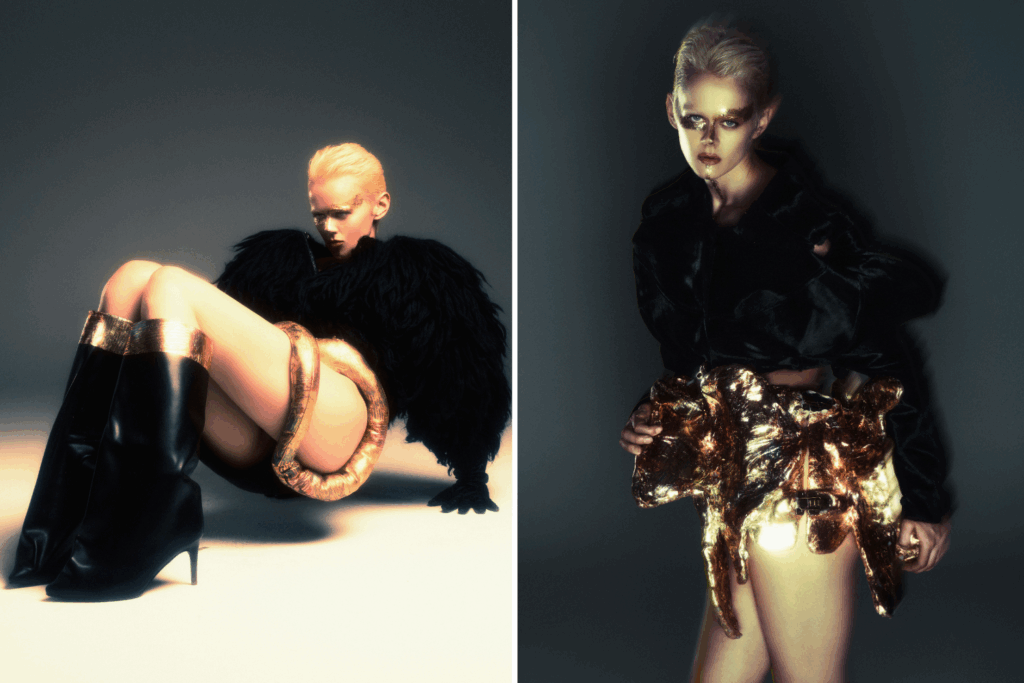
Jin also drew from the structure and symbolism of black holes, which represent collapse, gravity, and mystery. To reflect these qualities in form, she began draping directly onto the body, letting fabric respond naturally to the curves and contours of the silhouette. One of the most sculptural looks includes a smocked black dress enveloped by a sculptural gold-toned piece inspired by space debris. The process began with wire, bent intuitively on a mannequin, then layered with hand-shaped plastic and embedded organic forms such as seashells. She completed the surface using heat-treated gold foil, applied in layers to evoke the iridescence of a nebula. Through this process, Jin captures not only the energy of the cosmos but the intimacy of craft, where each decision is grounded in tactile manipulation.
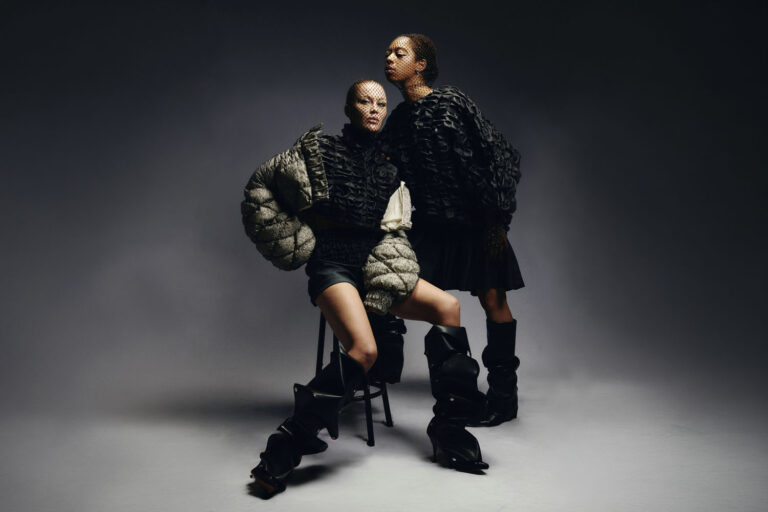
This sculptural language is complemented by subtler techniques that continue the cosmic narrative. In a black silk dress, Jin employed smocking to gather the fabric tightly around the shoulders, then hand-applied gold foil using a custom gel. The result is a quiet shimmer of gold across black silk, like scattered stars on a night sky. For Jin, these elements form a concept she calls cosmic romance, an interplay of the celestial and the human, the immense and the intimate.


A defining feature of the Pale Blue Dot collection is its use of modular and detachable components, allowing wearers to rearrange and personalize their garments. Jin describes these as romantic cosmic debris, a poetic reimagination of discarded space fragments. This modularity is both practical and philosophical, suggesting a shift from fashion as fixed expression to a participatory, dynamic dialogue. It reflects her call for sustainable design, where garments are not only reconfigurable but symbolic of our responsibility to shape the world we live in with care.
While Jin’s visual cues are anchored in the astronomical, the deeper ideas behind her work probe environmental and societal issues. The concept of space debris resonates as a metaphor for discarded human pursuits, technological remnants that once had purpose but now drift silently. Black holes symbolize both endings and potential beginnings, and Jin explores this duality through her collection, asking whether civilization too may be nearing a threshold. Can something beautiful still emerge from that darkness? In grappling with this question, she finds a quiet tension between wonder and anxiety, progress and decay.


Her design process is firmly rooted in the education she received at FIT. She credits the institution for nurturing her dual identity as both a visionary and a maker. The curriculum’s emphasis on technical foundations alongside encouragement for conceptual exploration enabled her to bridge abstract ideas with grounded, wearable forms. Professors offered guidance without prescribing aesthetic limits, fostering an environment where she could test materials, challenge convention, and evolve her creative voice.
The journey does not end with Pale Blue Dot. Jin intends to further investigate the intersections between the body and ecological, temporal, and technological systems. She is interested in lighter, kinetic forms that communicate weightlessness and movement. She plans to experiment with installation, sound, and motion to create garments as full sensory systems. Her ambition is not to define a signature look, but to keep asking questions about how we inhabit this pale blue dot and what kind of future we can imagine through design.
In a time of planetary uncertainty, Dian Jin’s work stands as a reminder that fashion can do more than reflect culture. It can challenge it, question it, and even reimagine it. With Pale Blue Dot, she offers not just clothing but an invitation to consider our place in the cosmos and our responsibility within it.