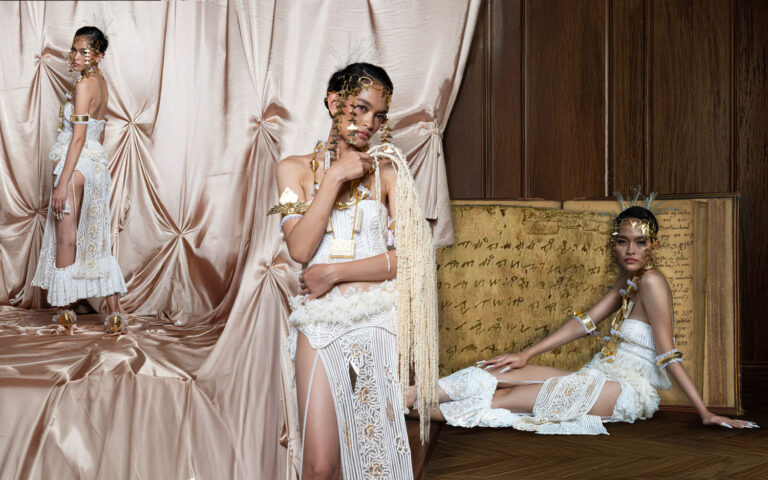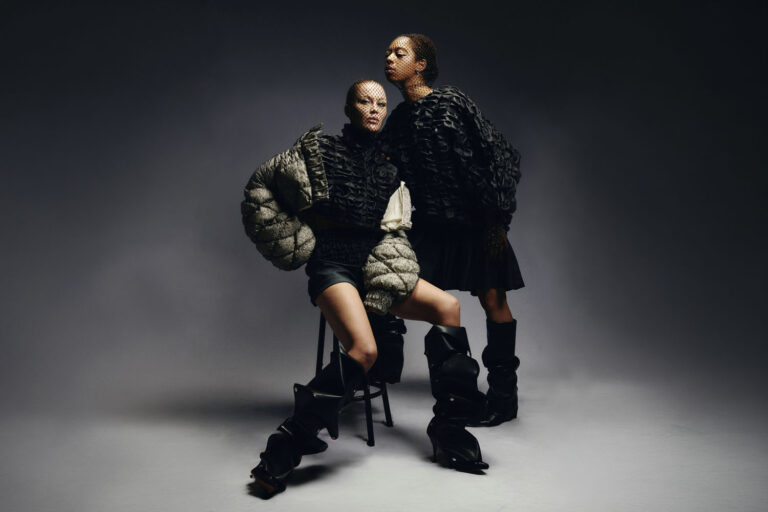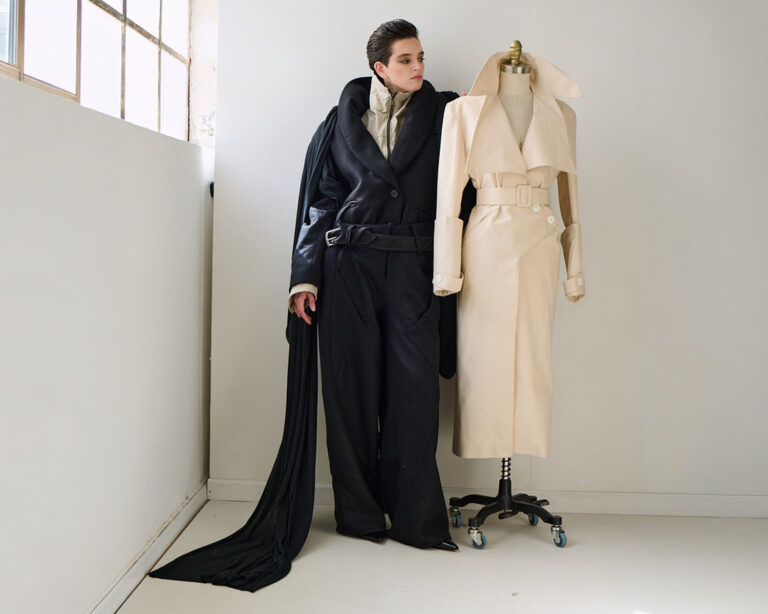
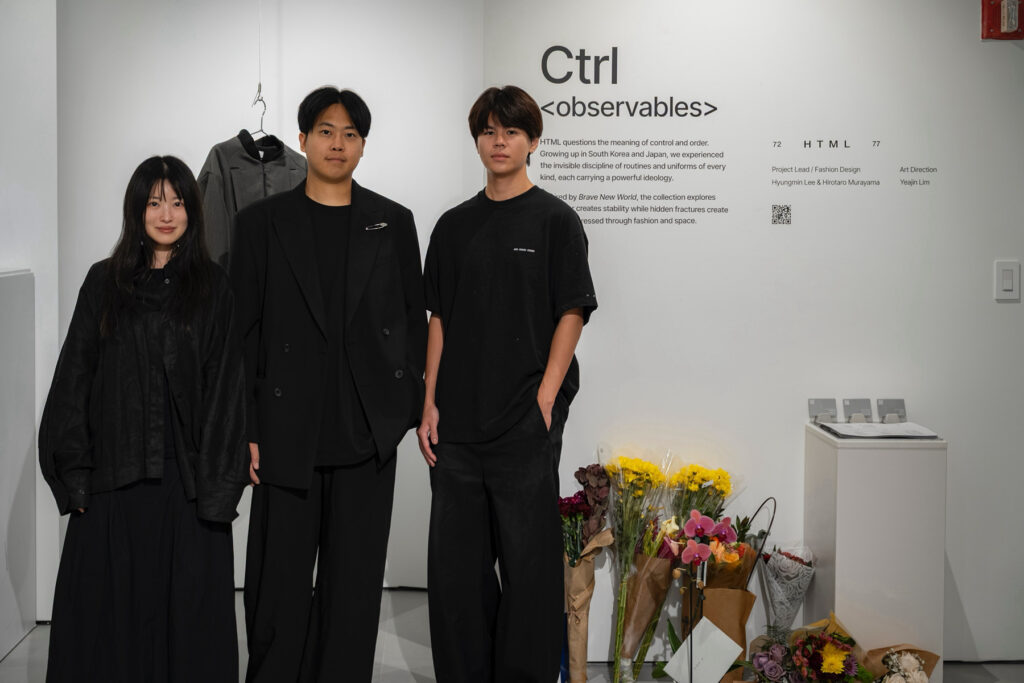

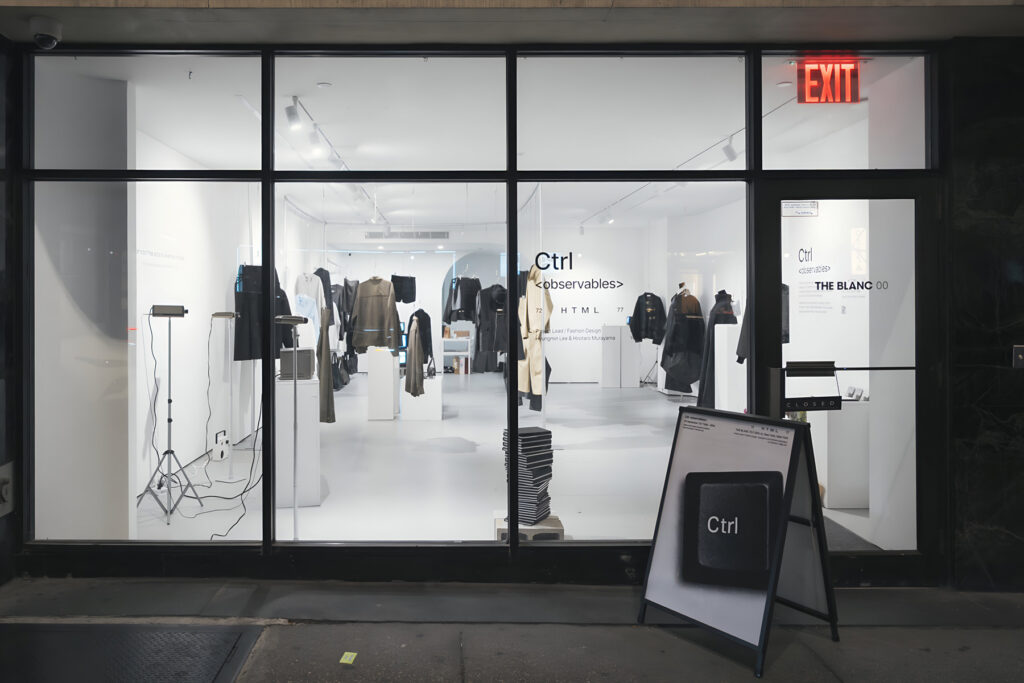
When we first featured HTML 7277 in The Vanilla Issue, the duo was preparing for their debut New York exhibition. That show, CTRL <observables>, has since taken place at The Blanc, a curatorial space in Midtown Manhattan known for advancing experimental visual and performance art within a leading commercial gallery context.
Hosted at The Blanc (15 East 40th St., Midtown Manhattan), an independent curatorial space focused on experimental fashion and interdisciplinary installations.
The results were remarkable: over 200 visitors in a single day, with an average dwell time of more than 20 minutes, and an online reach exceeding 15,000 views with over 1,000 social interactions. This measurable engagement underscored how deeply audiences responded to the project’s immersive structure.
“Despite being a new brand, HTML 7277 stands out for its ability to convey a message beyond mere clothing,” said Me Hee Han, Adjunct Professor at the Fashion Institute of Technology and former Senior Design Director at The Limited. “Their design sense, which connects with the customer and allows them to express themselves, is truly impressive.”
Rather than a traditional runway, the exhibition unfolded as an interactive environment, where garments, monitors, cameras, and audience behavior formed a responsive network. It was fashion, yes, but also something closer to architecture, performance, and critique.
Building on the ideas explored in their first feature on uniforms and control, HTML 7277 used this second chapter to explore surveillance, recognition, and the subtle power structures embedded in design.
“We wanted the space to feel neutral, almost administrative,” said Hyungmin Lee. “But underneath that neutrality, we wanted people to become more aware, of themselves, of the space, of how everything was connected.”
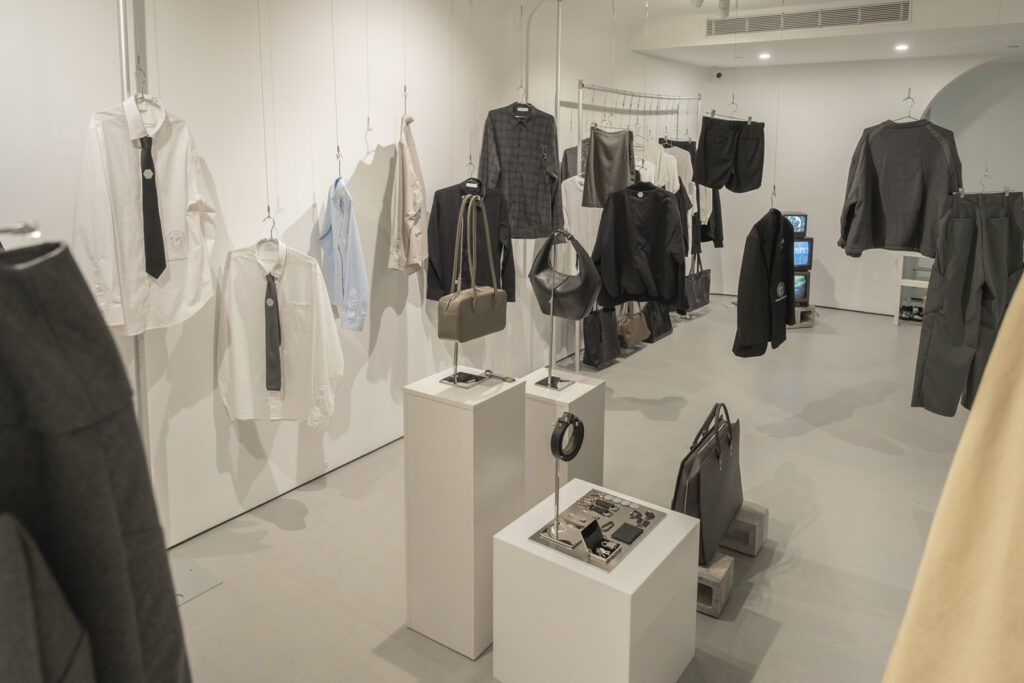
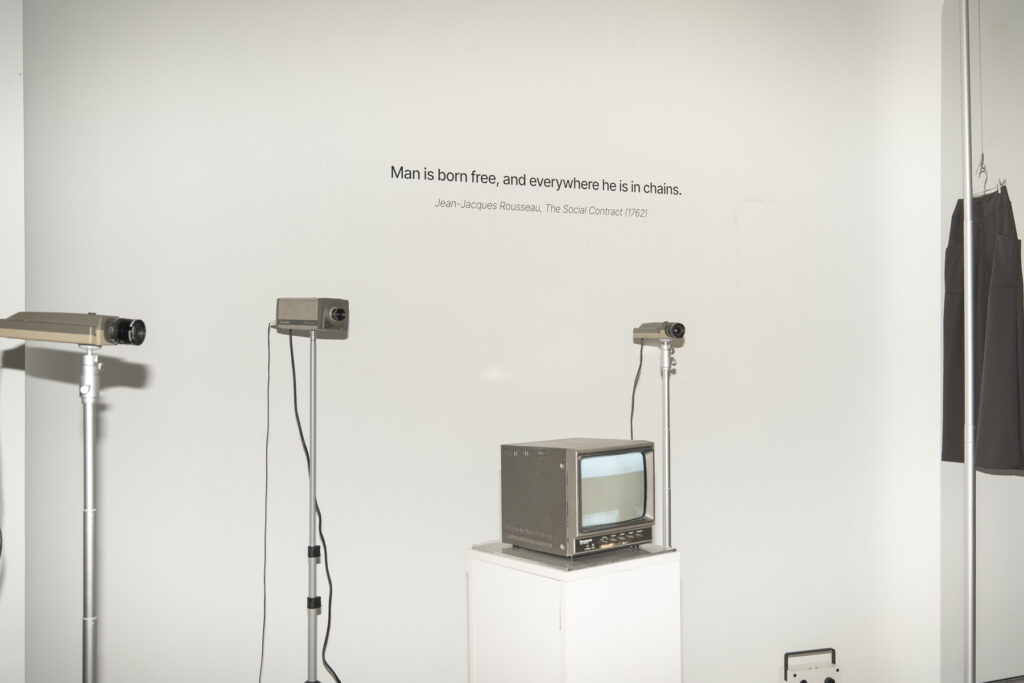
The layout of CTRL <observables> was deliberate and restrained. Garments were suspended at even intervals. Bags sat on white pedestals. In one area, a live CRT monitor fed from overhead surveillance cameras. In another, a stack of vintage televisions looped the words ideology, order, control. The tone was quiet, but the message was clear: you are being watched.
One of the most memorable interactions came through a device labeled “CTRL.” When pressed, a live feed appeared on screen, pixelating the visitor’s face while the words YOU ARE BRAINWASHED flashed across the display. The rest of the image remained intact.
“We weren’t trying to shock anyone,” explained Hirotaro Murayama. “But we wanted to make the control visible, how even something that feels like a personal decision is often already part of a script.”
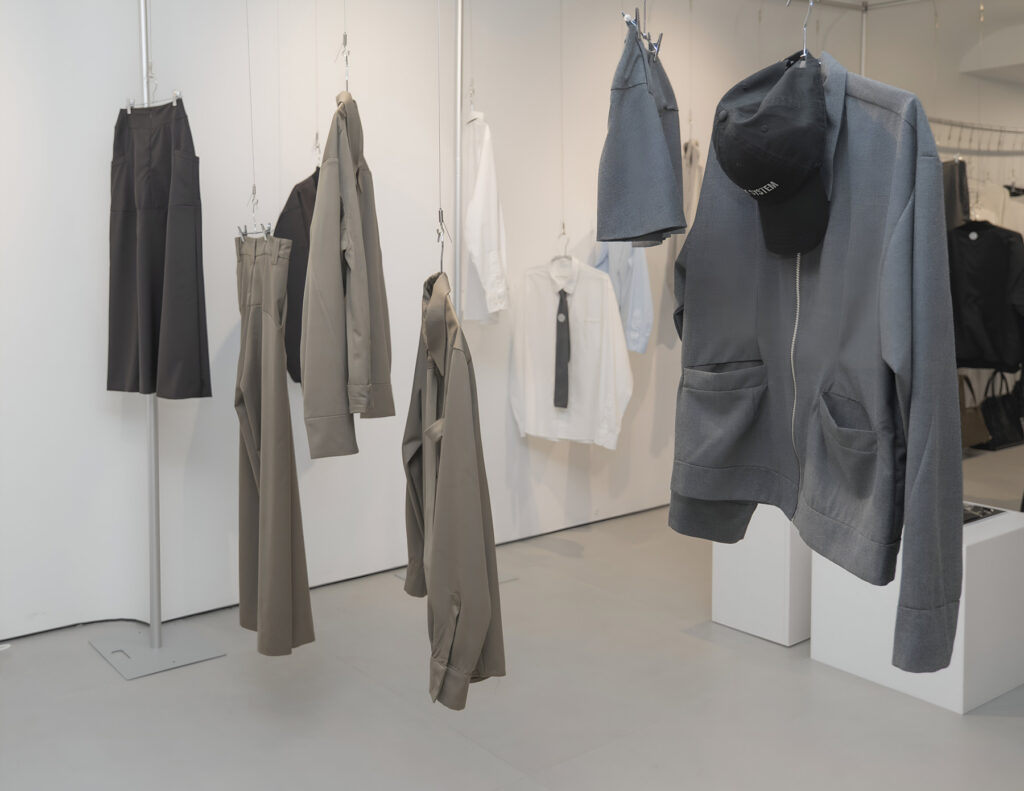
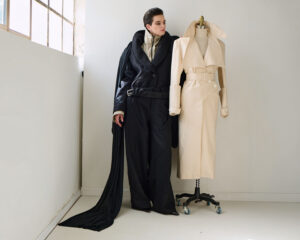
As with their first collection, HTML 7277 continued their exploration of uniforms, but this time, they allowed the garments to do more than symbolize order. In the context of the installation, the pieces became participants.
Two items in particular, the Sect Cape 001 and Oversized Box Bag, were positioned near the live feed. Visitors often paused silently in front of them, observing their own distorted reflection, with the garments positioned almost like still observers.
“That contrast, between the reactive feed and the passive loop, became a key moment,” noted Hyungmin Lee. “It showed the difference between being watched and watching yourself.”
Throughout the exhibition, movement slowed. People adjusted their pace, observed more closely, spoke less. The space didn’t demand attention, but it invited it.
The exhibition also marked a shift in how the designers think about systems and clothing. In their early work, uniforms were treated as fixed codes, symbols of structure. But watching visitors interact with CTRL <observables> changed that perspective.
“When hundreds of people walk through the same controlled environment, the path itself becomes irregular,” said Hirotaro Murayama. “We realized that systems aren’t absolute, they’re shaped by the people inside them.”
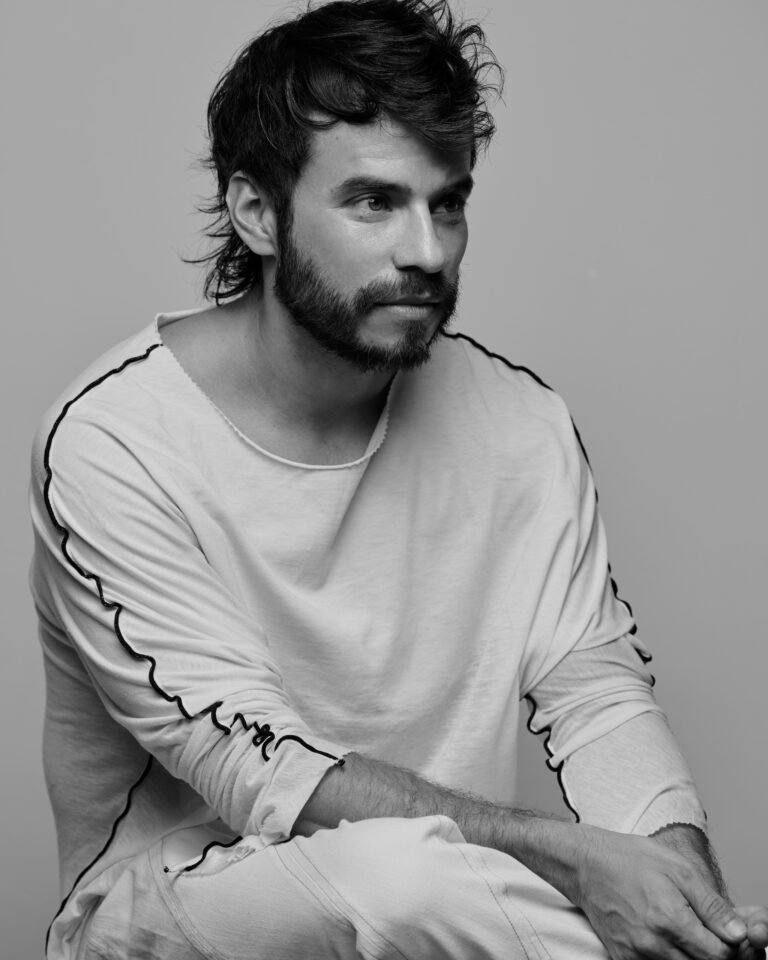
At the core of HTML 7277 lies a shared authorship between Hyungmin Lee and Hirotaro Murayama. Hyungmin Lee begins with worlds, he imagines environments and societal structures first, then situates clothing within them. For him, garments are not surfaces but architectures, miniature ideologies made tangible.
Hirotaro Murayama, by contrast, begins with restraint. He seeks minimal means for maximal impact, erasing every unnecessary line to trace how each dart changes rhythm and proportion. His clothes are systems, constructed with clarity and precision.
Both co-founders are graduates of FIT’s Fashion Design program in New York, Class of May 2025.
Together, they merge Hyungmin Lee’s expansive vision with Hirotaro Murayama’s structural rigor. Their process is entirely in-house, from research and conceptual writing to hand-sewing and installation, ensuring complete authorship and coherence. Leadership, in their hands, becomes continuity: a seamless dialogue between idea and execution.
Alongside the process, Yeajin Lim led the art direction for the exhibition <CTRL>: observables. Drawing from the line “Man is born free, and everywhere he is in chains,” the exhibition places visitors inside a controlled environment with cameras, monitoring cues, and administrative touchpoints before they encounter the garments. This setting establishes the tension between freedom and oversight that informs the collection.
Lim played a central role in building this framework, creating the institutional poster campaign and the protocol-style RSVP platform that issued personalized ID cards, establishing the show’s administrative tone from the outset. She also directed the pamphlet and envelope in an internal-document format and produced three video works on order, control, and ideology, which played on monitors to mirror the feeling of being observed.
“The collection come from a controlled world,” Lim said. “Every element needed to introduce that world so the garments could be read as part of its language.
Her direction connected these components into a coherent system, helping audiences understand the structure and intention behind the collection.
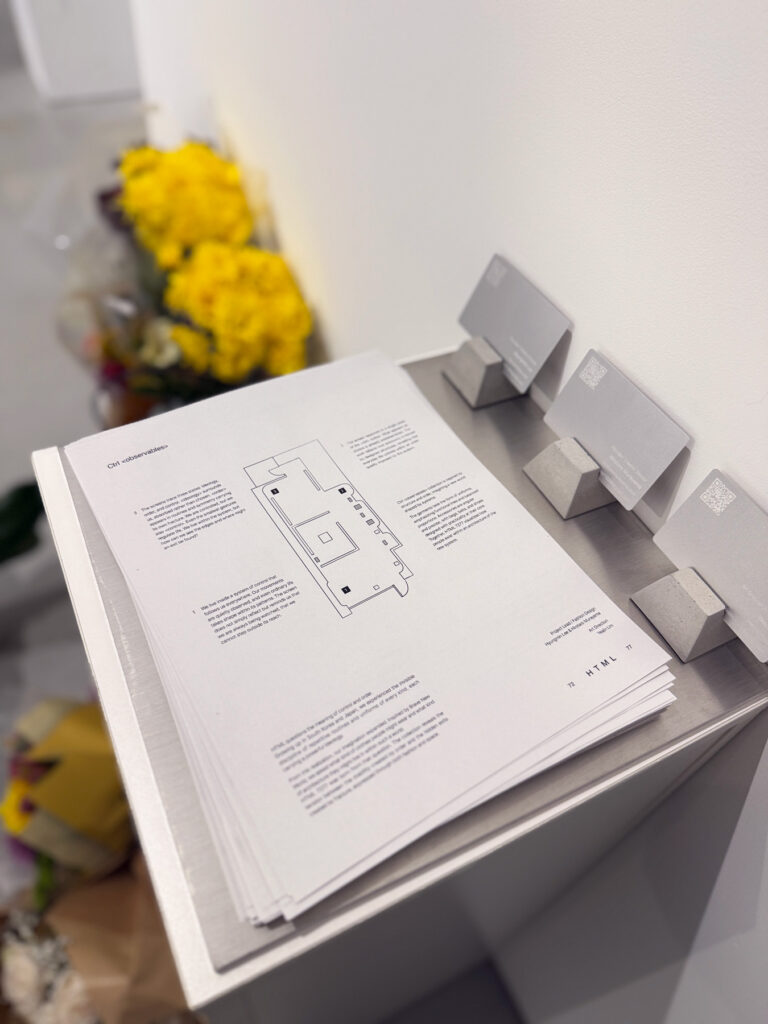
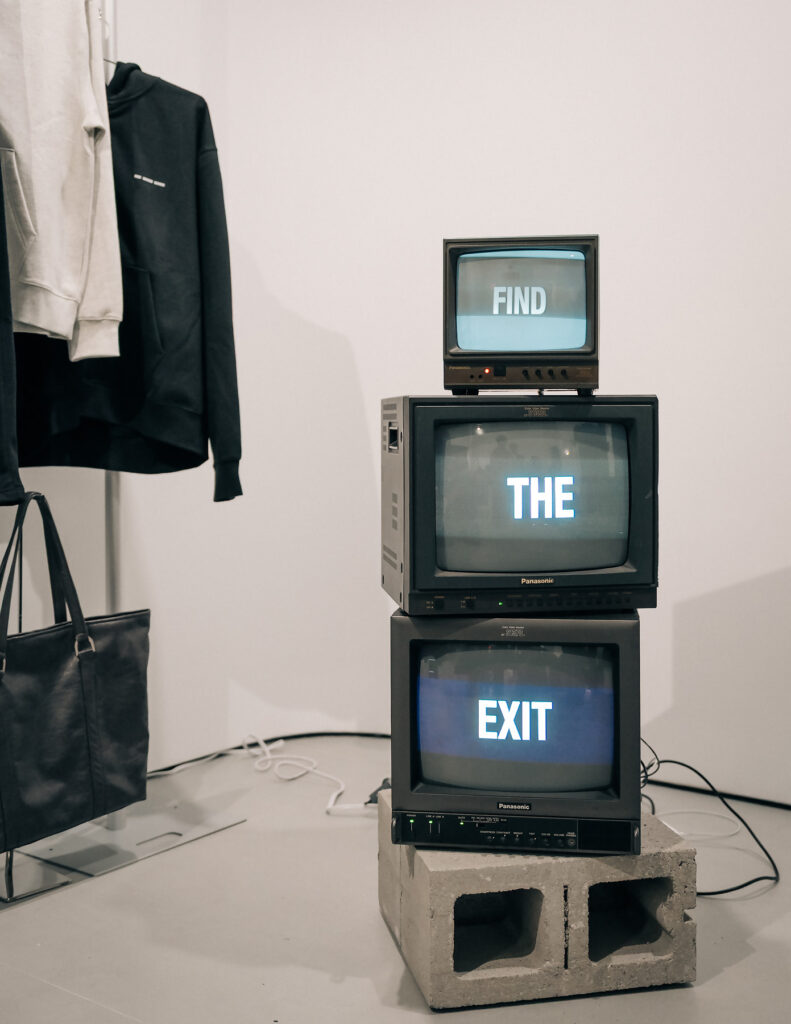
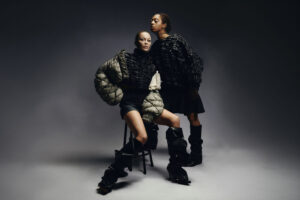
Photographers Solomon Lee and the Blanc team documented the installation’s stillness and movement, the live system rendered into image. “I wanted the space to feel still, so the tension would speak louder than the objects,” Solomon Lee notes, an insight that echoes through every frame. Their lens captured both the mechanical precision of the setup and the subtle human hesitation that filled its silence.
CTRL <observables> may have been temporary, but it left a lasting impression. Visitors didn’t scroll past the work, they moved with it, inside it. In a city where fashion often demands spectacle, HTML 7277 asked for something different: quiet attention.
As the team looks ahead, follow-up invitations have already been received for Paris, Seoul, Tokyo, and New York pop-up exhibitions in 2026.
“We’re not trying to overwhelm,” said Hyungmin Lee. “We’re just trying to make people notice what’s already there.”
Cheif editor John Tan of Visual Tales added, “You enter for the clothes and leave with a sharpened sense of how systems shape behavior. HTML 7277 demonstrates measurable engagement and real artistic intent, it marks Hyungmin Lee and Hirotaro Murayama as essential voices to watch.”
Fashion, for HTML 7277, remains not a product or trend but a lens through which to examine the systems we live inside, a medium that both reflects and questions the mechanisms of discipline and order.
Their work continues to evolve, but the question endures: what happens when structure begins to see us back?
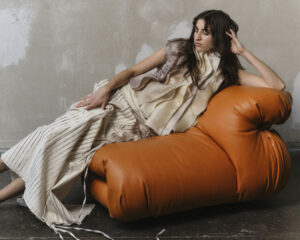
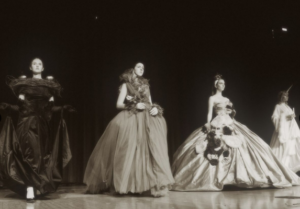
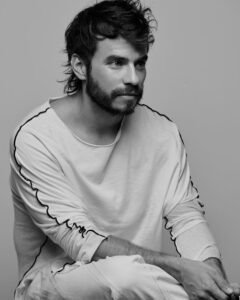
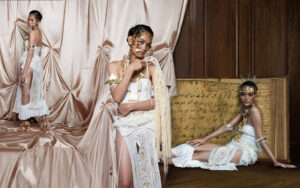
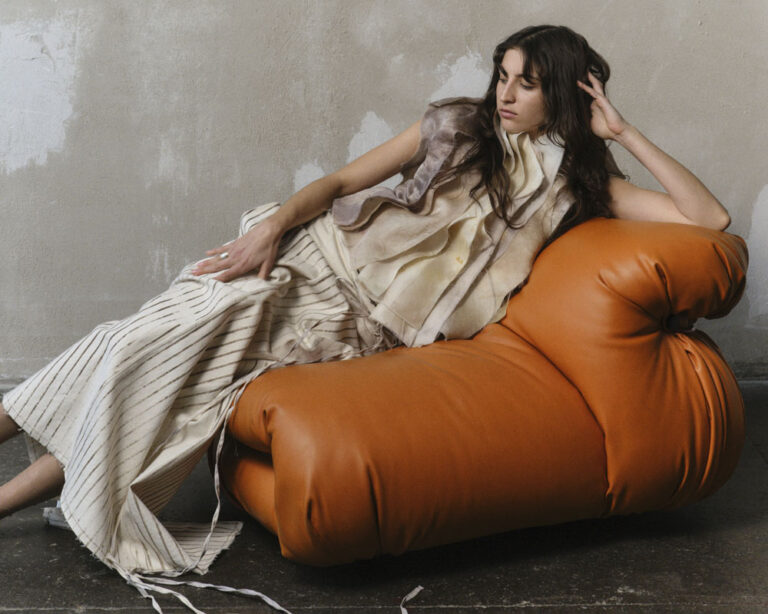
All photos by Solomon Lee © HTML 7277, 2025
Photographer Solomon Lee spent the entire day documenting CTRL, following the installation from its first quiet moments to its final waves of visitors. His photographs captured not only the physical arrangement, the garments, the monitors, the suspended structures, but also the psychological atmosphere that formed around them. Through Lee’s lens, the installation’s controlled stillness, its rare moments of movement, and the subtle tension in how visitors behaved became part of the exhibition’s visual vocabulary.