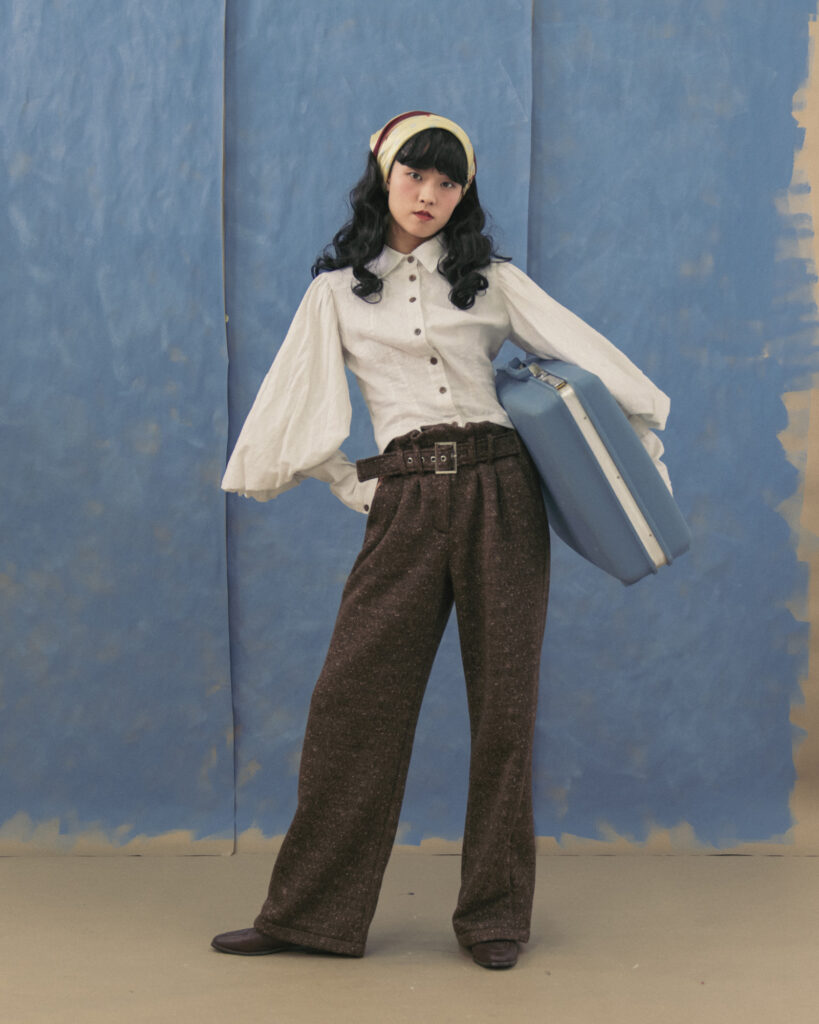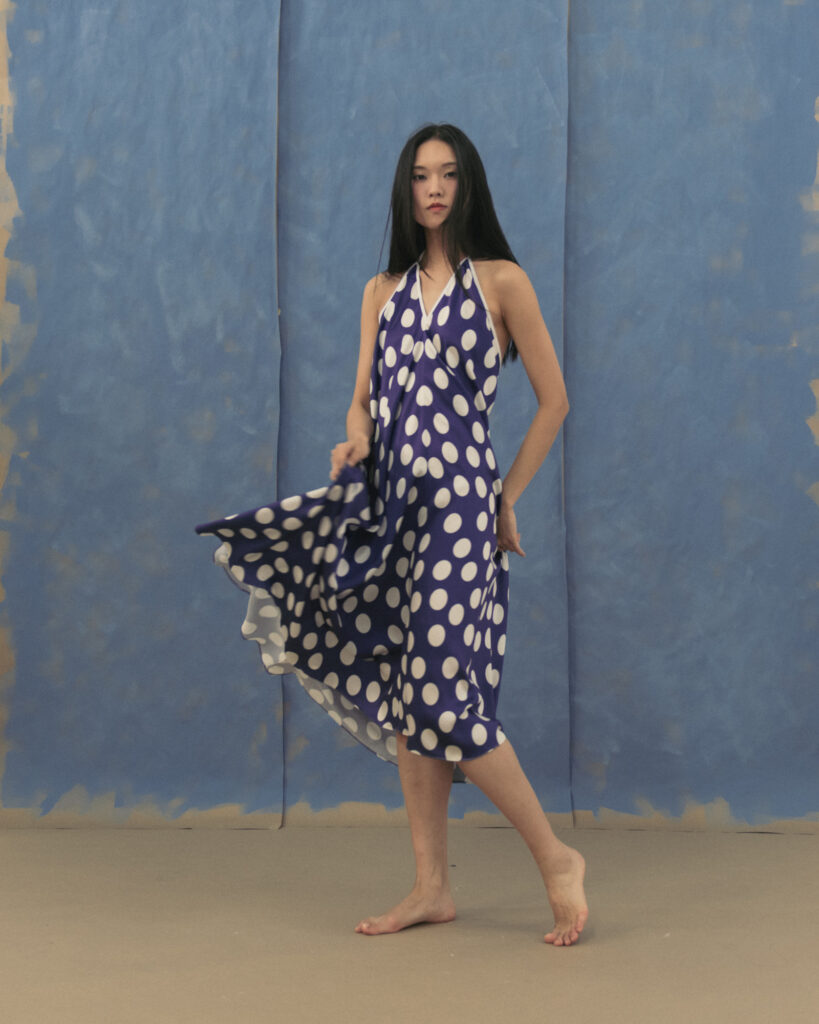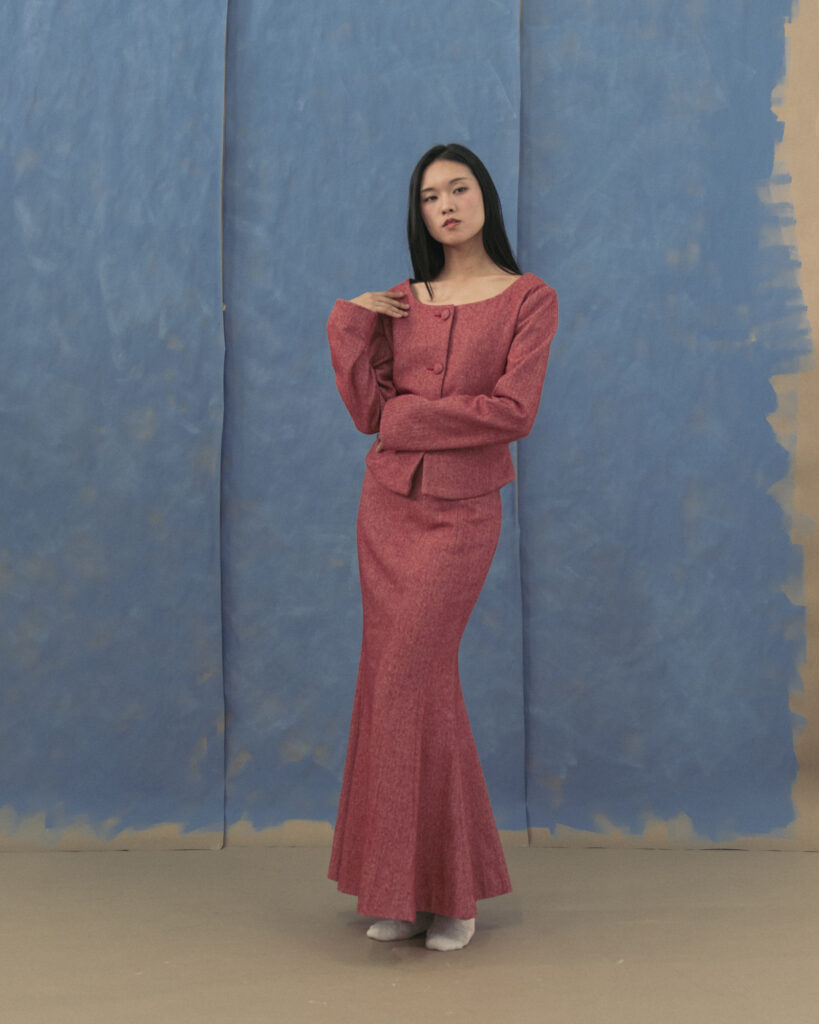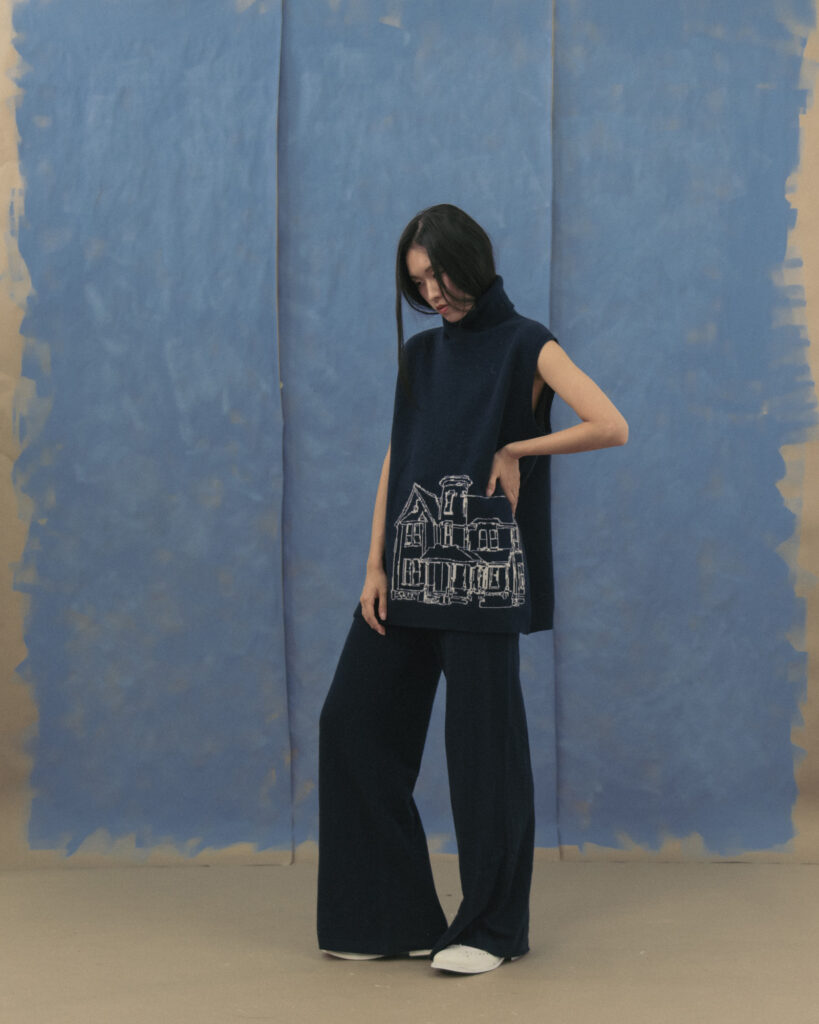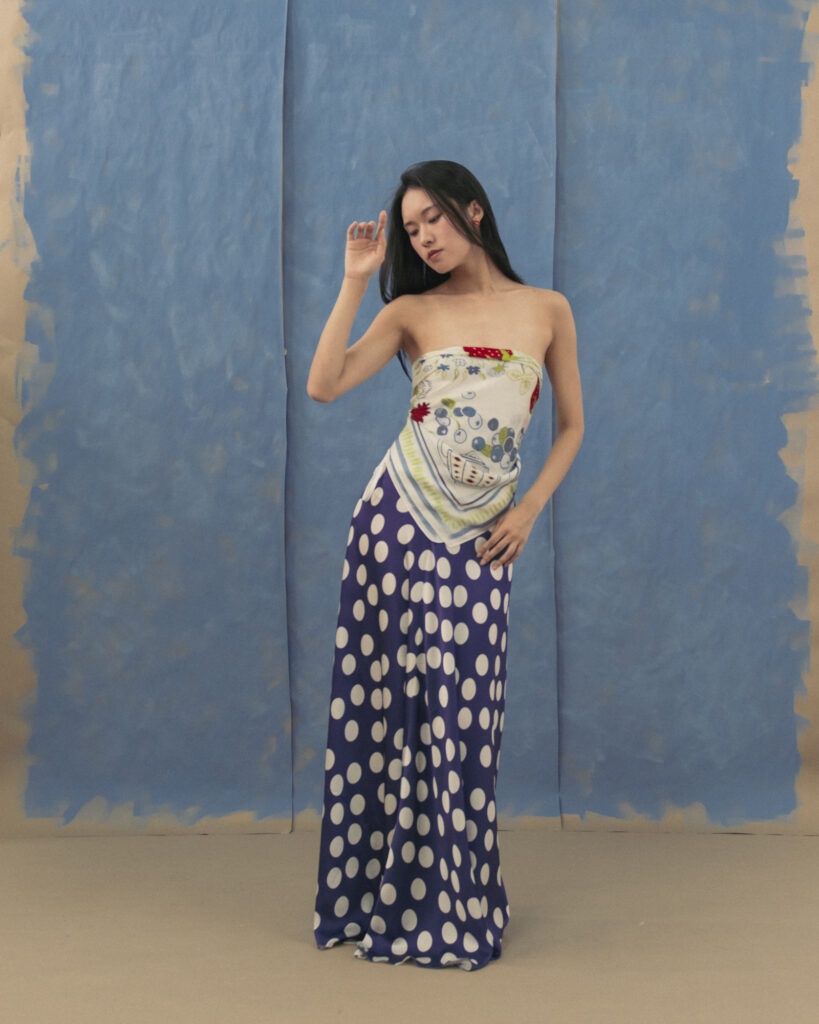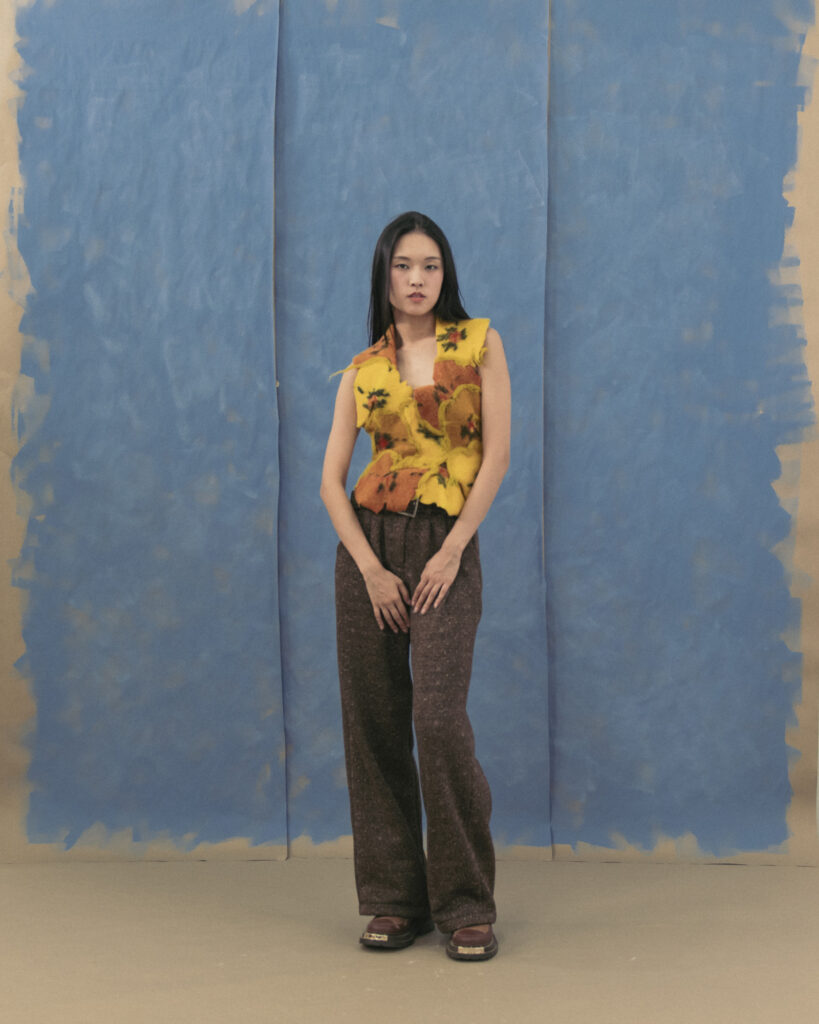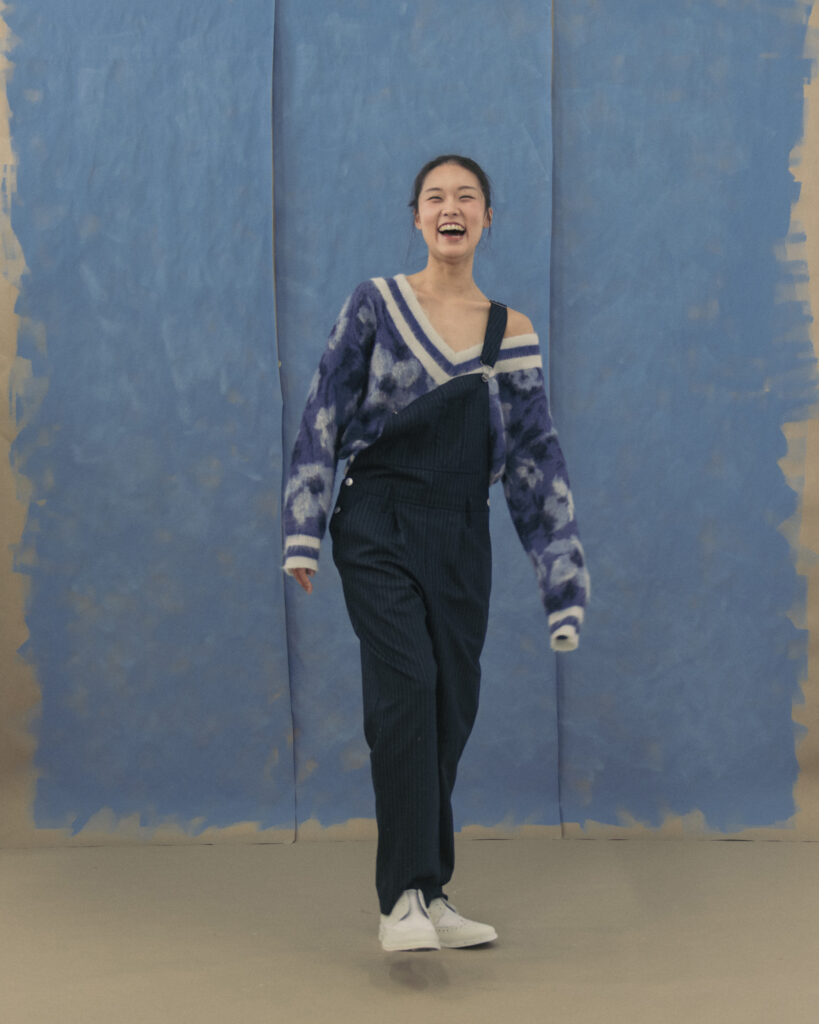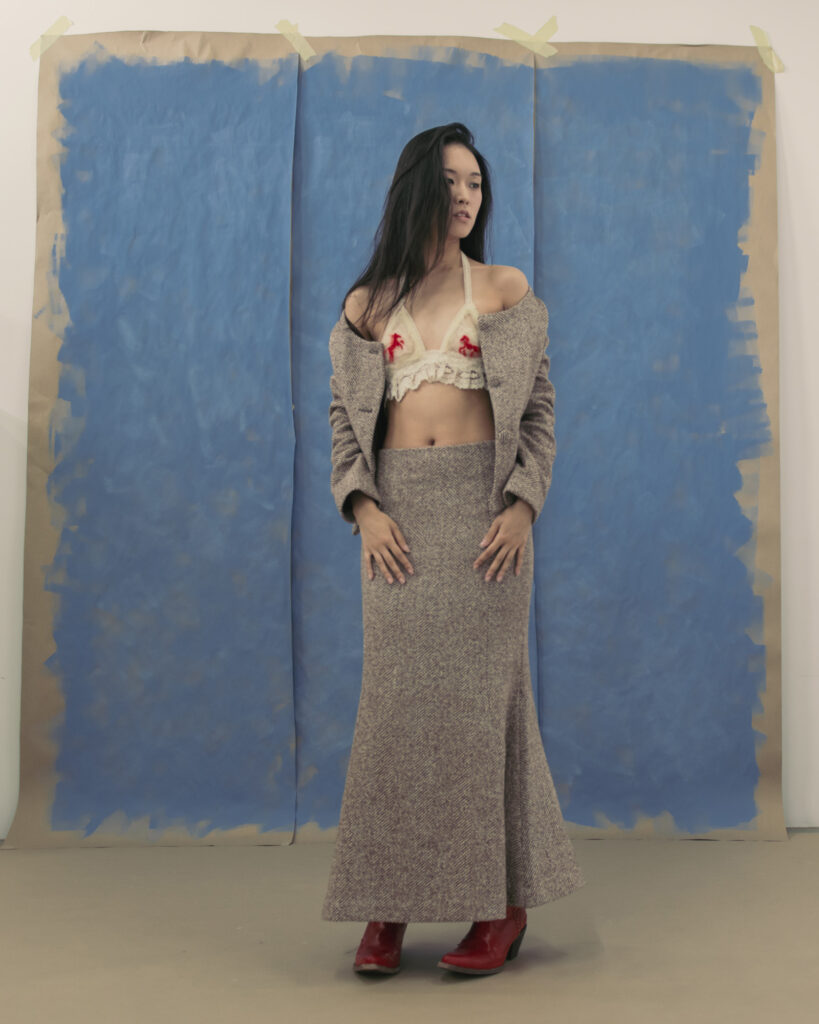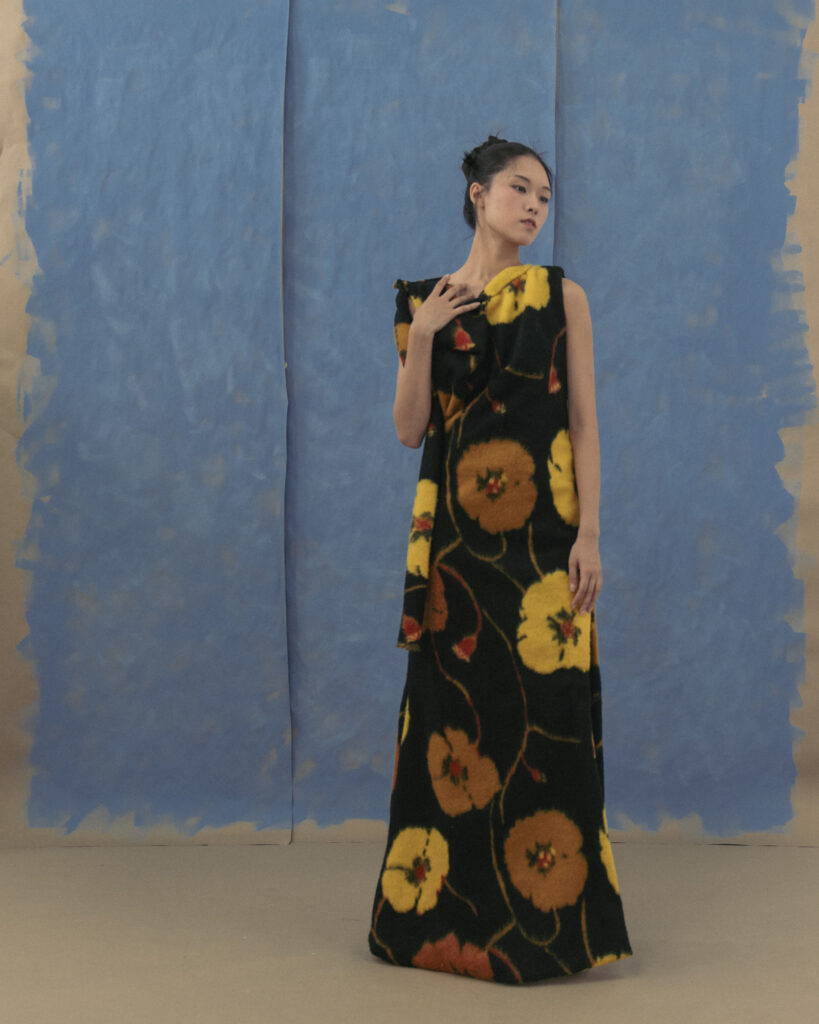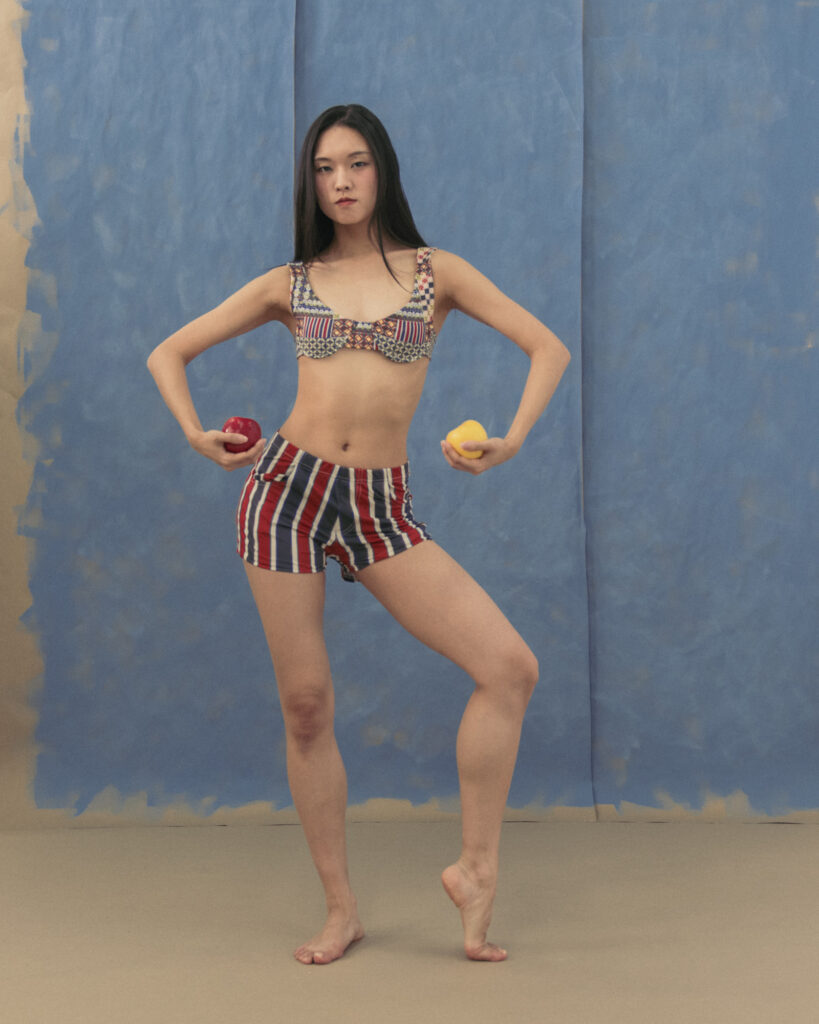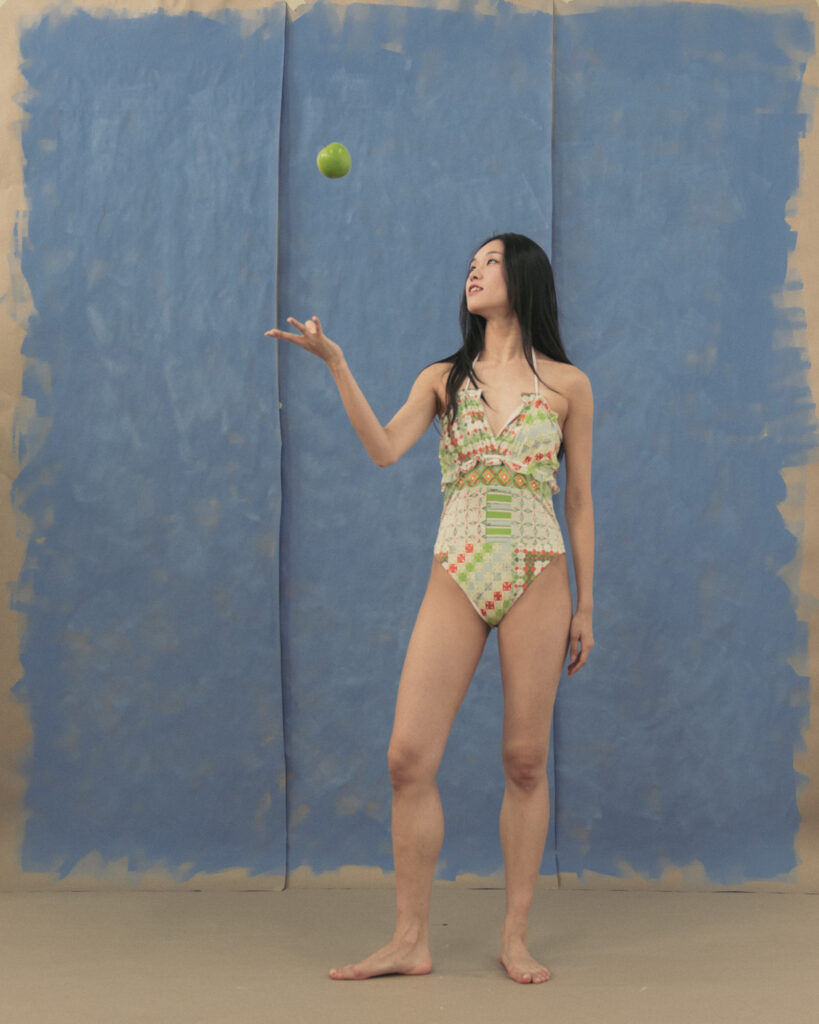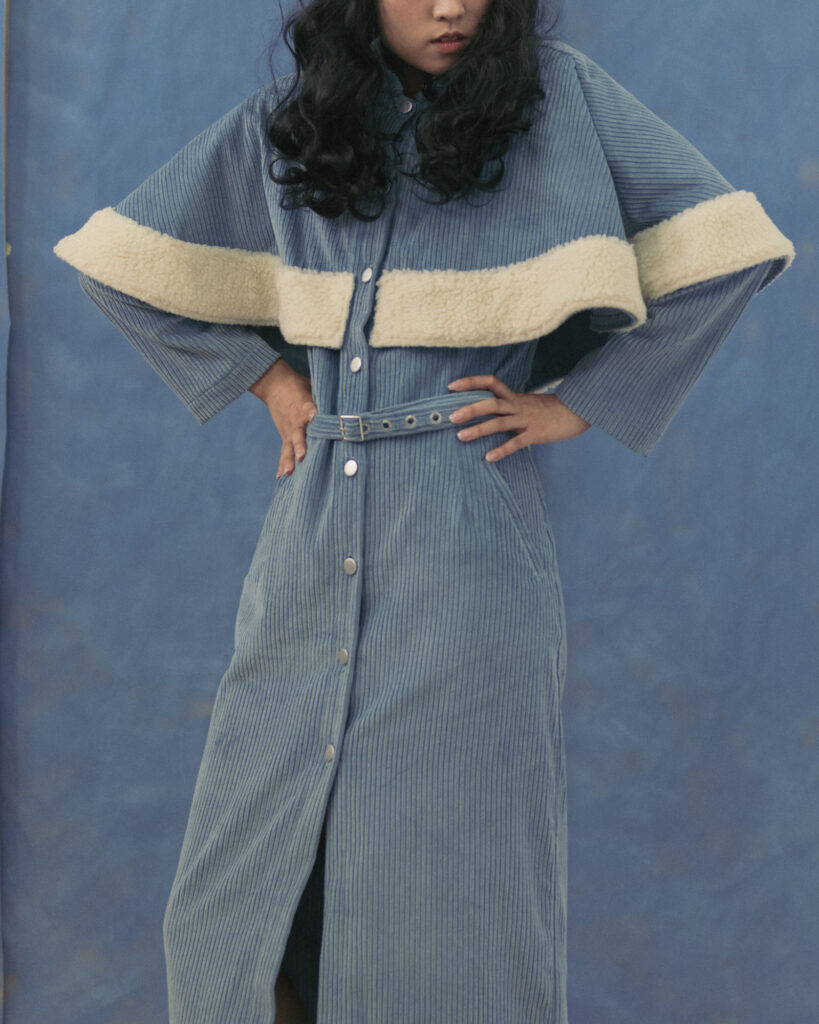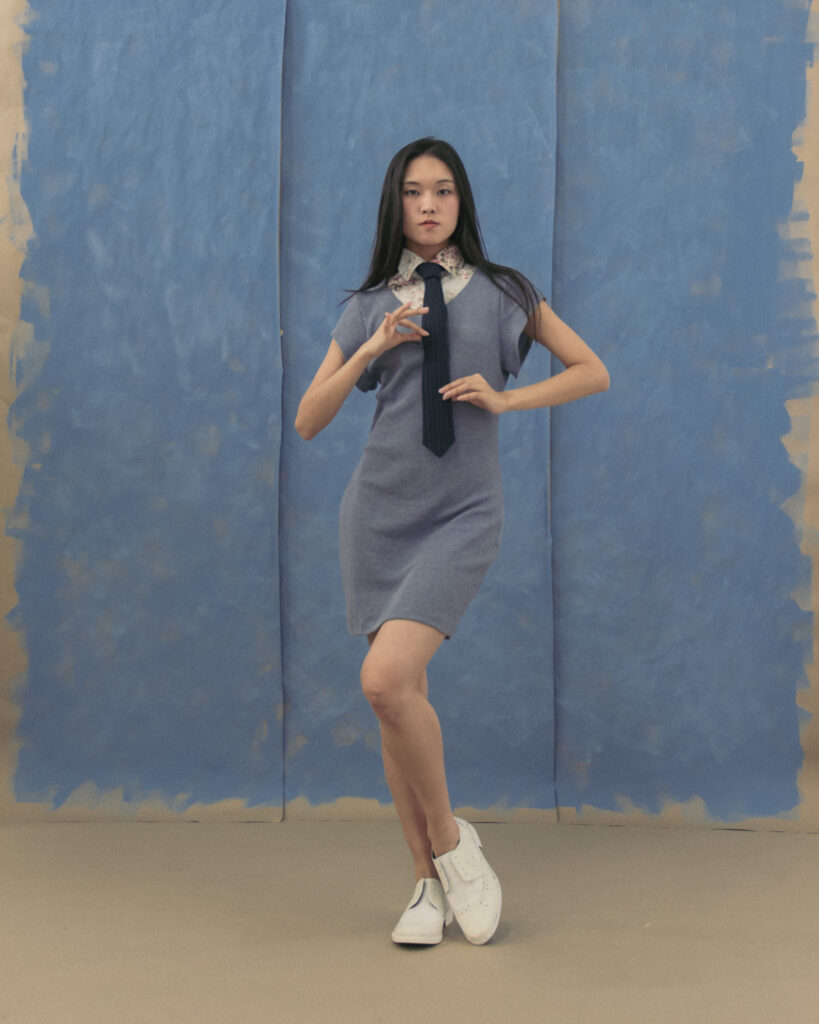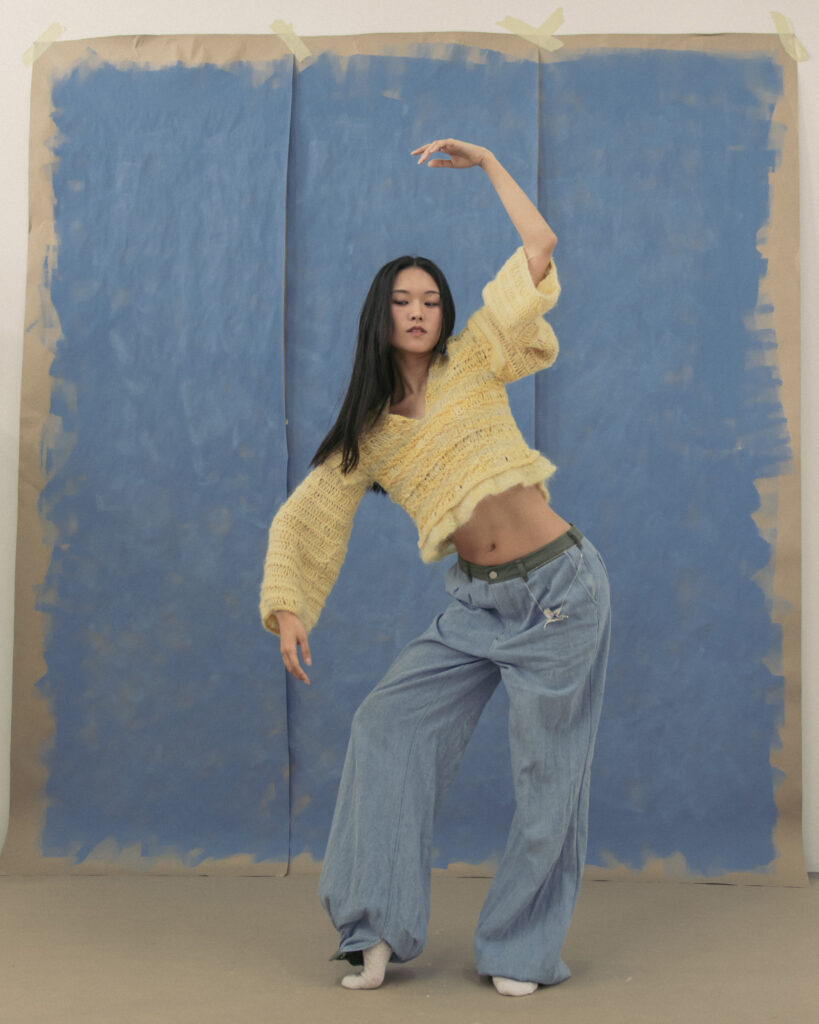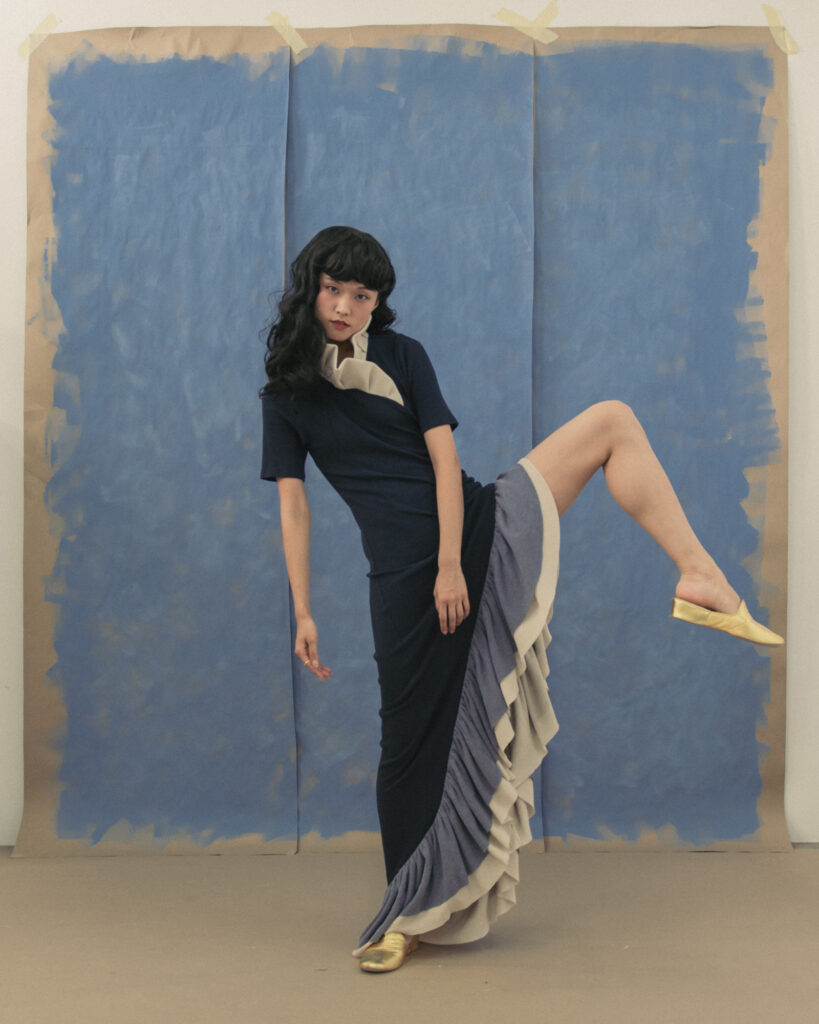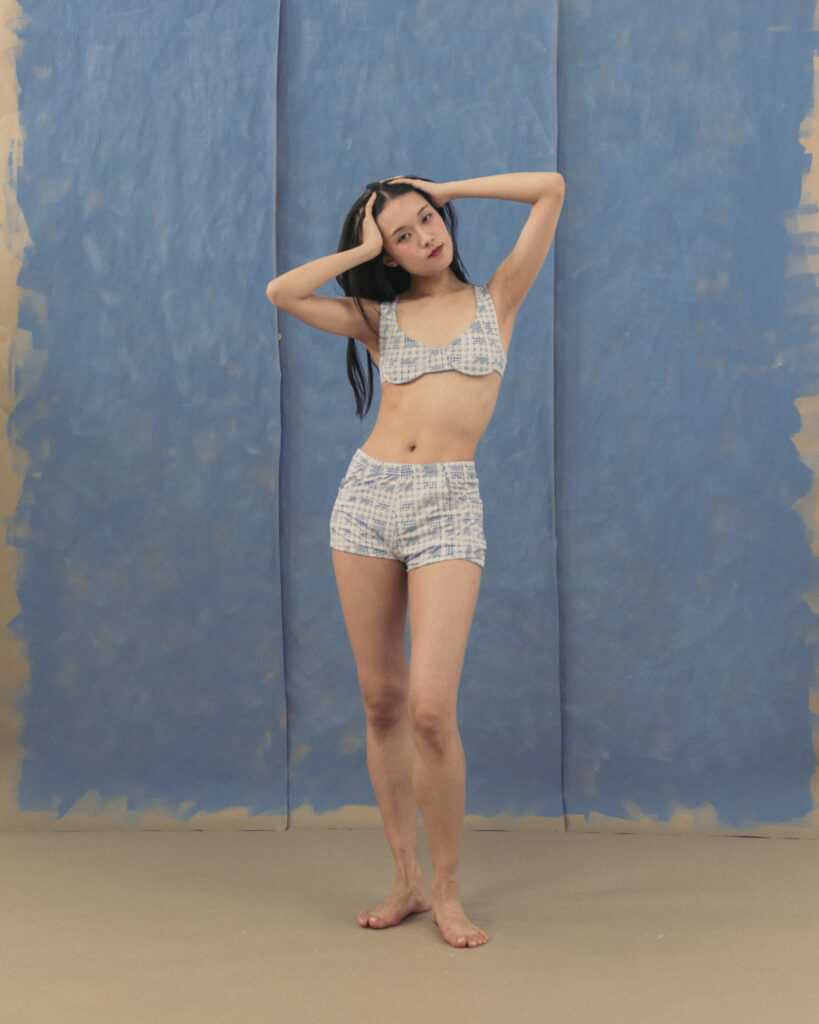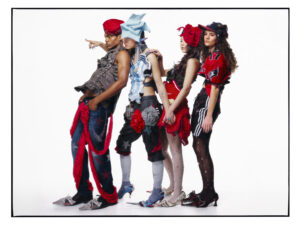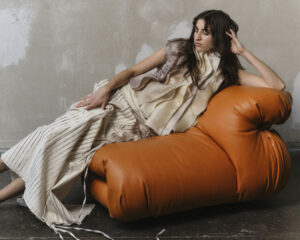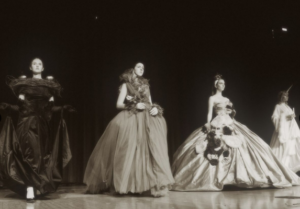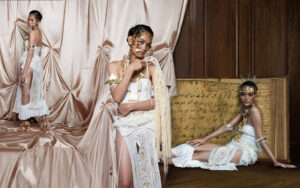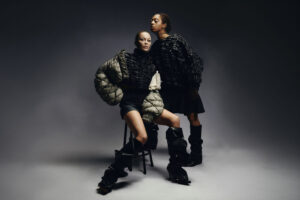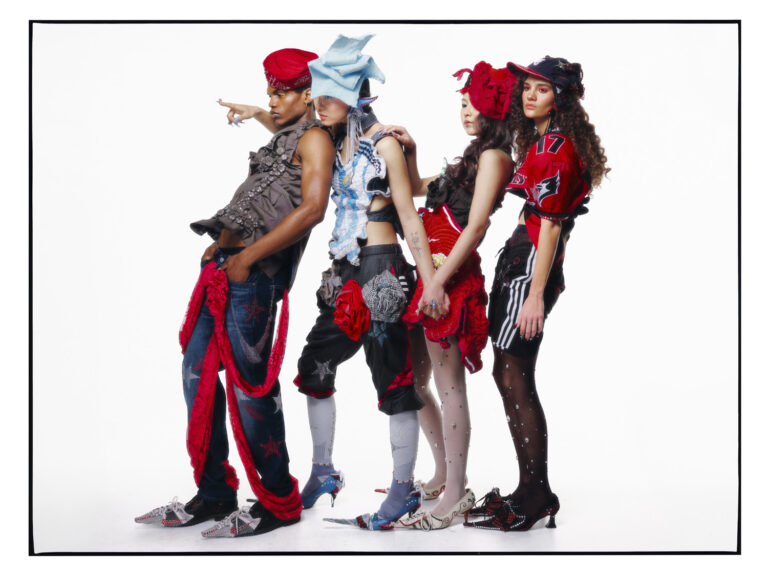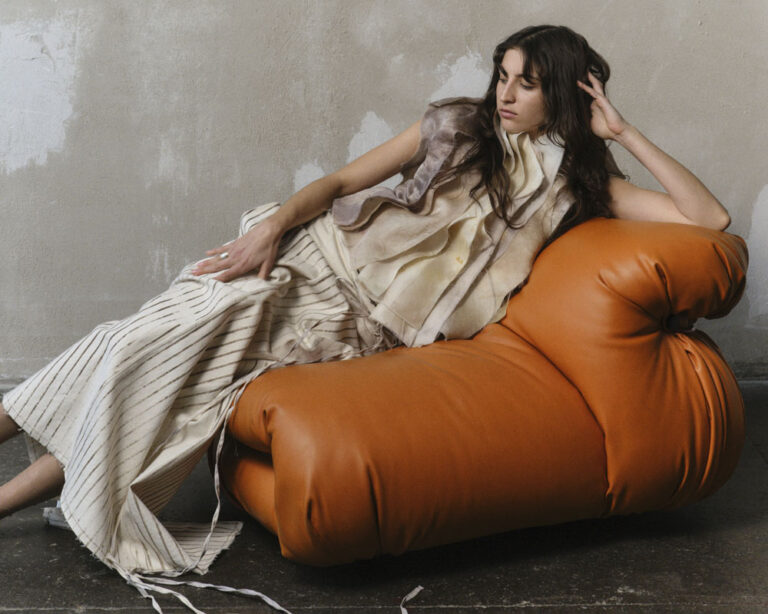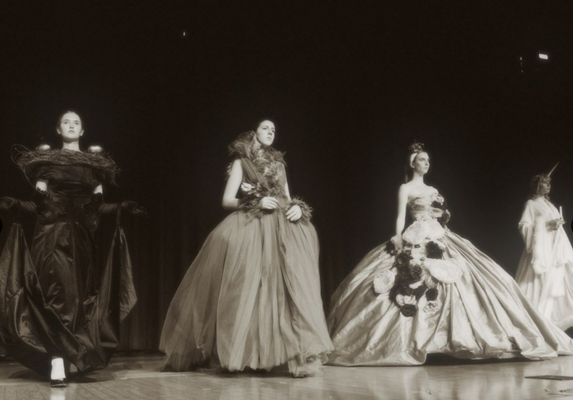
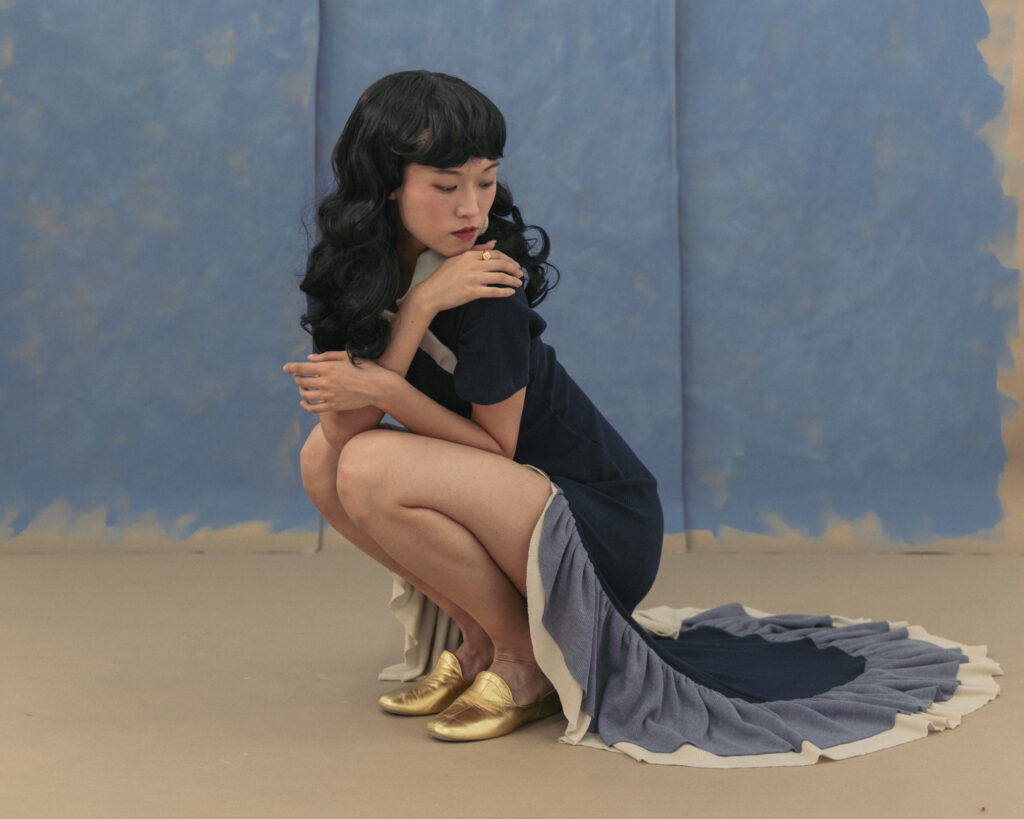

Becca Flood approaches fashion through a reflective and narrative-driven lens. Her latest collection, Poseur ou Pionnier, is rooted in inquiry rather than resolution: what does it mean to be authentic in an industry shaped by performance and visibility? “I realized I didn’t want to design answers,” she says. “I wanted to design the question.”
This idea of designing as inquiry underpins much of Flood’s creative process. She sees collections not just as visual output but as opportunities to engage in dialogue, with herself, with culture, and with the structures that define taste and originality. Her academic background, which includes degrees in both fashion design and literary studies, allows her to treat clothing not only as form and function, but as language. “I think about clothes like I think about writing,” she explains. “They’re how I make sense of things.”
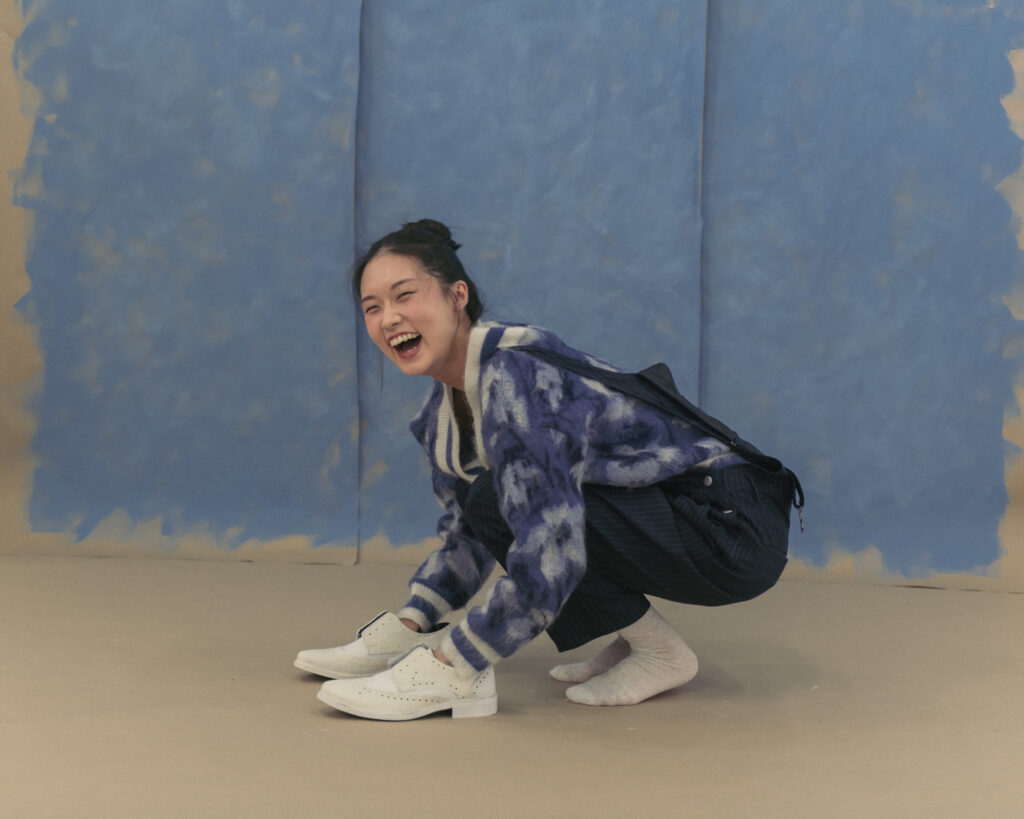
Poseur ou Pionnier emerged during a period of introspection, a response to the fashion world’s emphasis on surface-level image and fleeting attention. In 2024, Flood found herself questioning the pace and values of the industry. “I kept asking myself: am I actually making something original, or just styling it well enough to seem like I am?” she says. That question became the collection’s anchor. Rather than chase spectacle, she allowed doubt and nuance to lead the way.
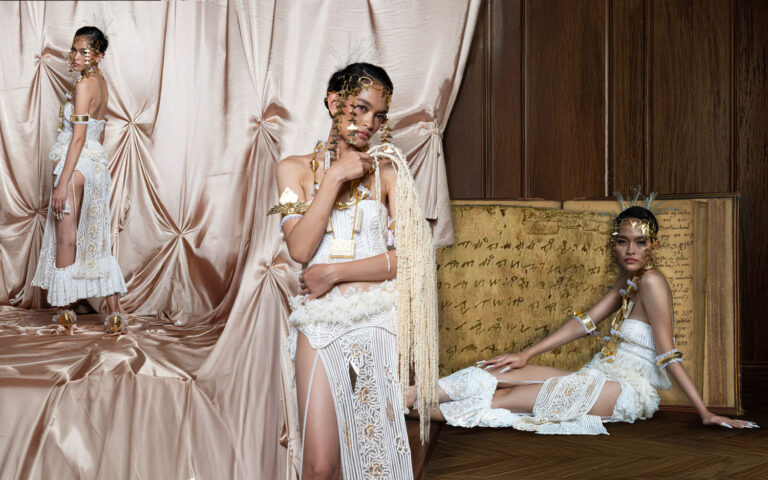
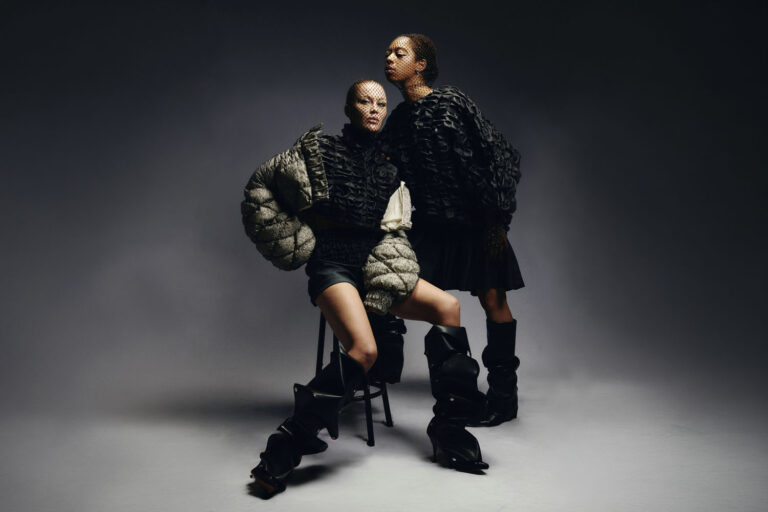
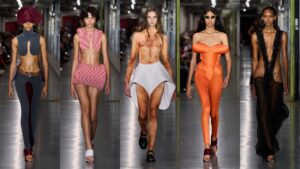
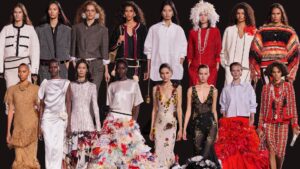
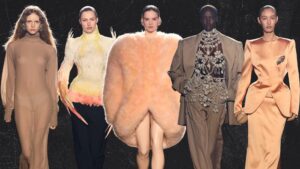
Flood describes the collection as a form of self-examination, a way to explore the discomfort of uncertainty while still producing tangible work. The garments embody that contradiction: traditional materials like cottons and wools paired in unexpected combinations, silhouettes that feel slightly off-balance, like they’re resisting the instinct to resolve into trend. “There’s friction in every piece,” she says. “That tension is the point.”
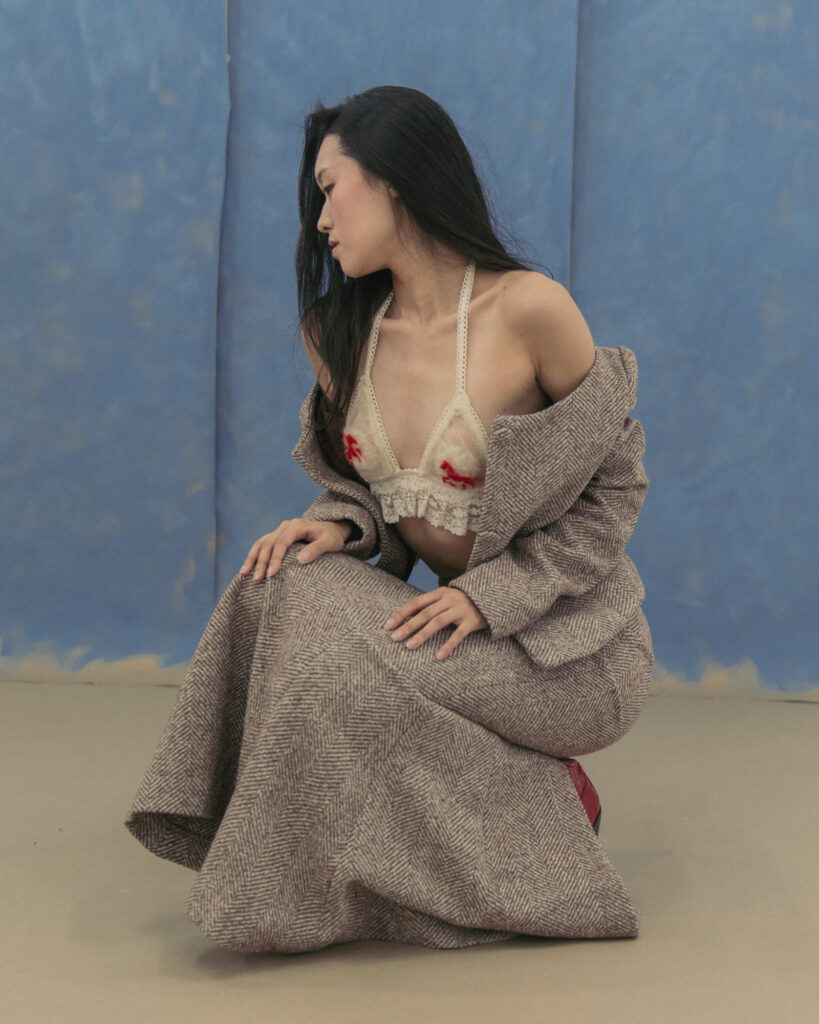
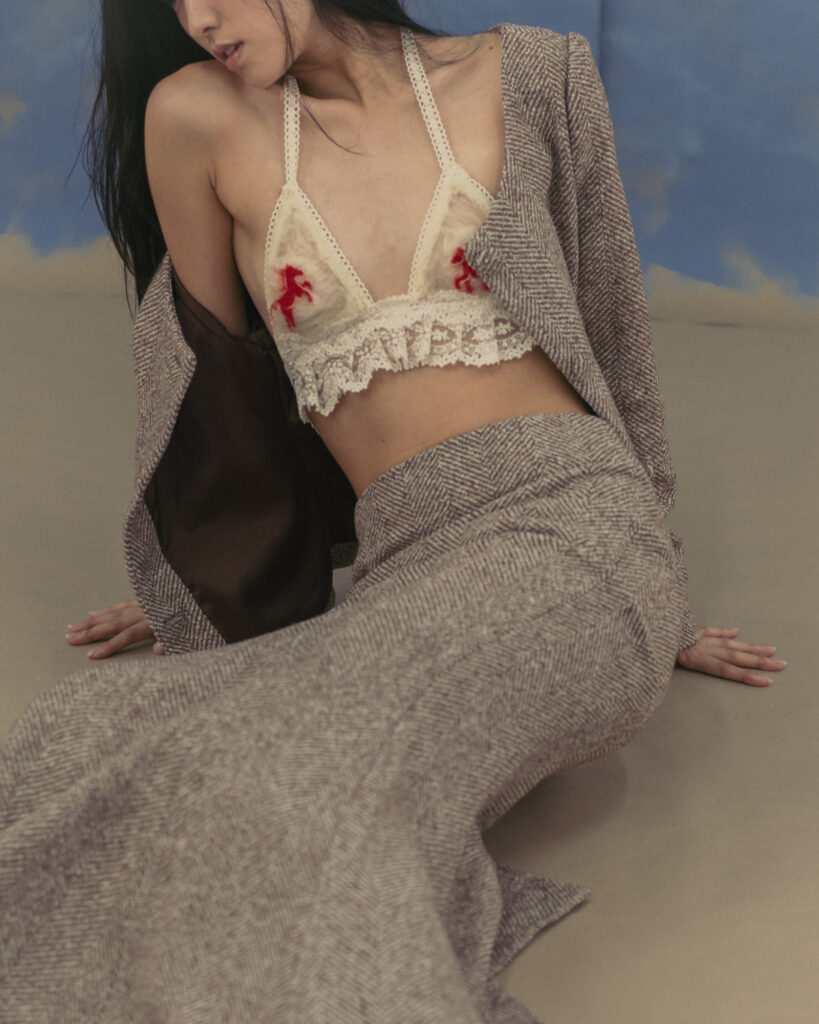
Raised in the rural Hudson Valley, Flood often reflects on how her upbringing shaped her design language. Her collections frequently engage with the emotional memory of being a creative, questioning person in a place that didn’t always recognize or accommodate that. Rather than distance herself from those origins, Flood incorporates them directly into her aesthetic. Her work challenges the notion that thoughtful or conceptual fashion must originate from urban spaces.
“I think rural life gets flattened into cliché,” she says. “But it’s full of texture, contradictions, and stories worth telling.” In Poseur ou Pionnier, this tension between rootedness and ambition plays out quietly, garments that look like they carry memory, like they’ve lived a life before arriving on the runway.
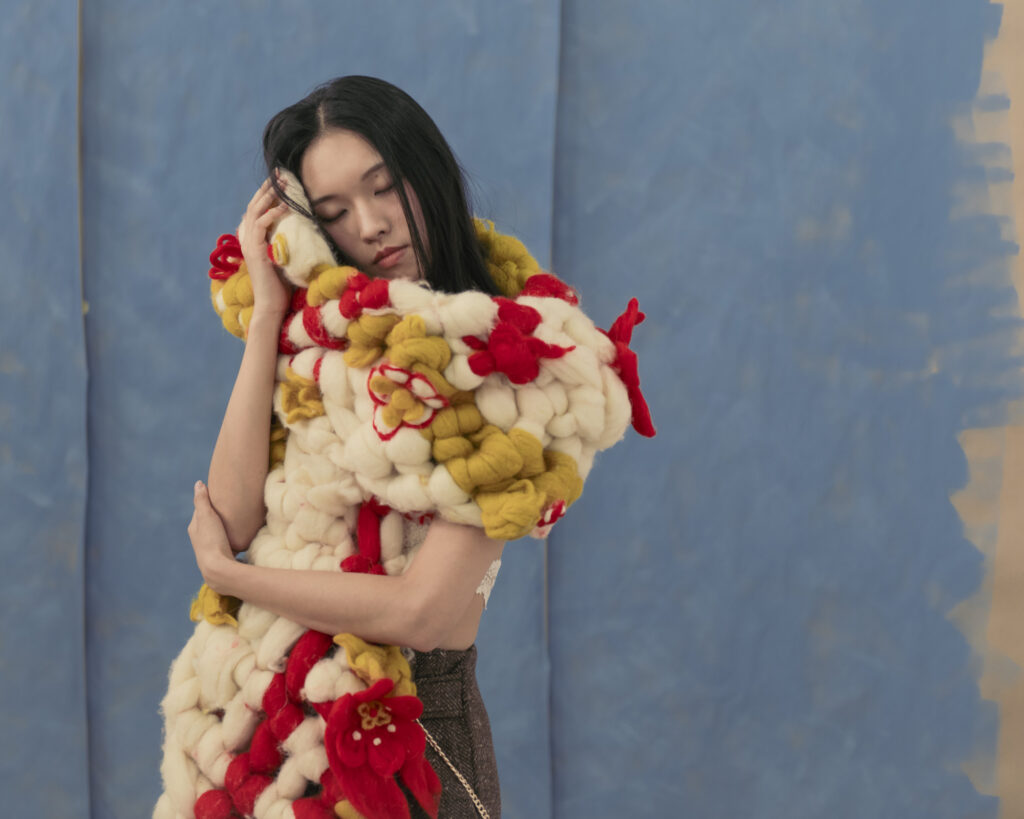
At the heart of the collection is a desire to create clothing that supports real life, not just visual identity. “I want people to feel grounded, maybe a bit more certain of themselves, when they wear my clothes,” Flood says. “Like they’ve remembered something important.” Her designs are not meant to transform the wearer into something new, but to reflect who they already are, or could become.
Looking ahead, Flood is preparing for her first independent New York Fashion Week presentation, where she plans to expand on the ideas of Poseur ou Pionnier. The upcoming work explores the metaphor of a message in a bottle, a way of sending thoughts out into the world without knowing who will receive them. “It’s a continuation of the same inquiry,” she says. “This time it’s about the hope that someone’s listening.”
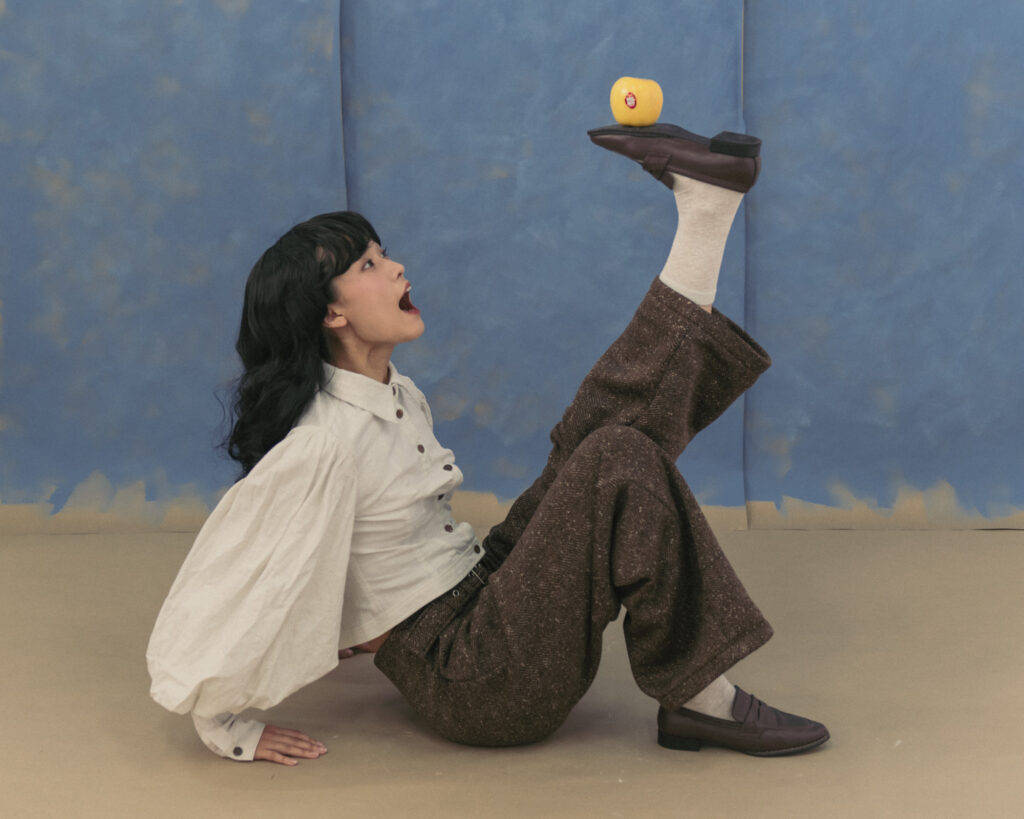
In a fashion industry that often prioritizes spectacle, speed, and certainty, Flood’s approach stands out for its calm introspection. She isn’t interested in making loud declarations. Instead, she offers space, for questions, for memory, for meaning. “Success to me isn’t just visibility,” she says. “It’s having the freedom to ask better questions.”
With Poseur ou Pionnier, Becca Flood invites us to consider that fashion can be more than statement-making. It can be an honest form of thinking, a slow, steady way to understand the world.